Essenes
The Essenes were an ancient Jewish ascetic sect flourishing from the 2nd century BCE to the 1st century CE, known for their communal living, strict adherence to Mosaic law, and contemplative practices, often associated with the Dead Sea region. Their teachings and lifestyle have been linked to early Christianity and other spiritual traditions.
Where the word comes from
The origin of "Essenes" is debated, with Blavatsky suggesting a Hebrew root "Asa" meaning "healer." Other scholarly theories propose connections to Aramaic terms like "ose" (pious) or "ezra" (to help), or even Greek roots. The term first appears in classical sources in the 1st century CE.
In depth
A lielleiiized word, from the Hebrew Asa, a "healer". A mysterious sect of Jews said by Pliny to have lived near the Dead Sea per miUia saculorum — for thousands of ages. "Some have supposed them to be extreme Pharisees, and others — which may be tne true theory '-the descendants of the B( nim-nahim of the BihU , and think that they were 'Kenites' and Nazarites. They had many Buddhistic ideas and practices; and it is noteworthy that the priests of the Gnat Mothrr at Ephesus, Diana-Bhavani witli many breasts, were also so denominated. Eusebius, and after him l)e Quincey, declared them to be the same as the early Christians, which is more than probable. The title 'brother', used in the early Church, was Essenean ; they were a fraternity, or a koinohion or community like the early converts." {Isis Unveiled).
How different paths see it
What it means today
The Essenes, a name that whispers from the shores of the Dead Sea, represent a fascinating eddy in the great river of human spiritual seeking. Blavatsky’s etymological leap to "healer" hints at a core purpose, a communal endeavor to mend the fractured self and the world through disciplined devotion. Their existence, documented by Pliny, Philo, and Josephus, paints a picture of a community that deliberately stepped out of the bustling marketplace of ancient life to cultivate an inner sanctuary.
Mircea Eliade, in his exploration of the sacred and the profane, would likely see in the Essenes a prime example of the "man of the sacred," one who consciously withdraws from the temporal to engage with the eternal. Their communal living, their ritualistic purity, and their contemplative practices are not mere historical curiosities but archetypal expressions of the human need for structure in the pursuit of transcendence. They echo the monastic ideals found in Buddhism, where the Sangha provides a crucible for spiritual transformation, and the yogic ashrams of India, where disciplined practice leads to liberation.
The perceived parallels with early Christianity, as noted by Eusebius, are particularly striking. The early Church, in its nascent form, was a koinonia, a community of shared life and purpose, much like the Essene "koinohion." This suggests a common wellspring of spiritual aspiration, a shared language of brotherhood and mutual support that transcended specific dogmas. Carl Jung, in his work on archetypes, might interpret the Essenes as embodying the archetype of the ascetic sage, a figure who renounces worldly attachments to gain profound wisdom. Their emphasis on knowledge and spiritual discipline resonates with the Gnostic traditions, which also sought liberation through esoteric understanding.
The Essenes remind us that the path to deeper meaning often involves a deliberate turning inward, a willingness to create spaces—whether physical communities or internal states of being—where the soul can unfurl without the constant distractions of the mundane. Their legacy is not merely historical; it is a persistent invitation to consider the power of communal discipline and contemplative withdrawal in our own quest for wholeness.
Related esoteric terms
Books on this concept
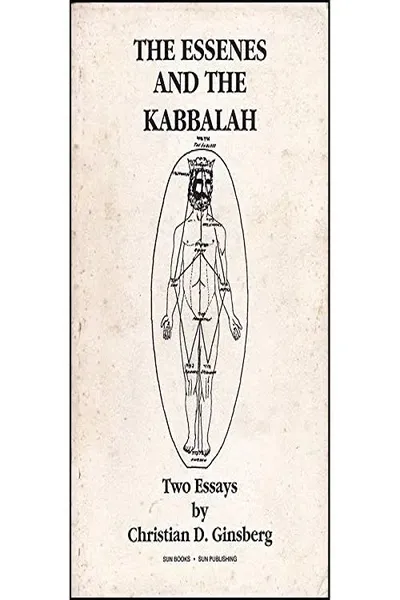







No reflections yet. Be the first.
Share your interpretation, experience, or question.
