Durga
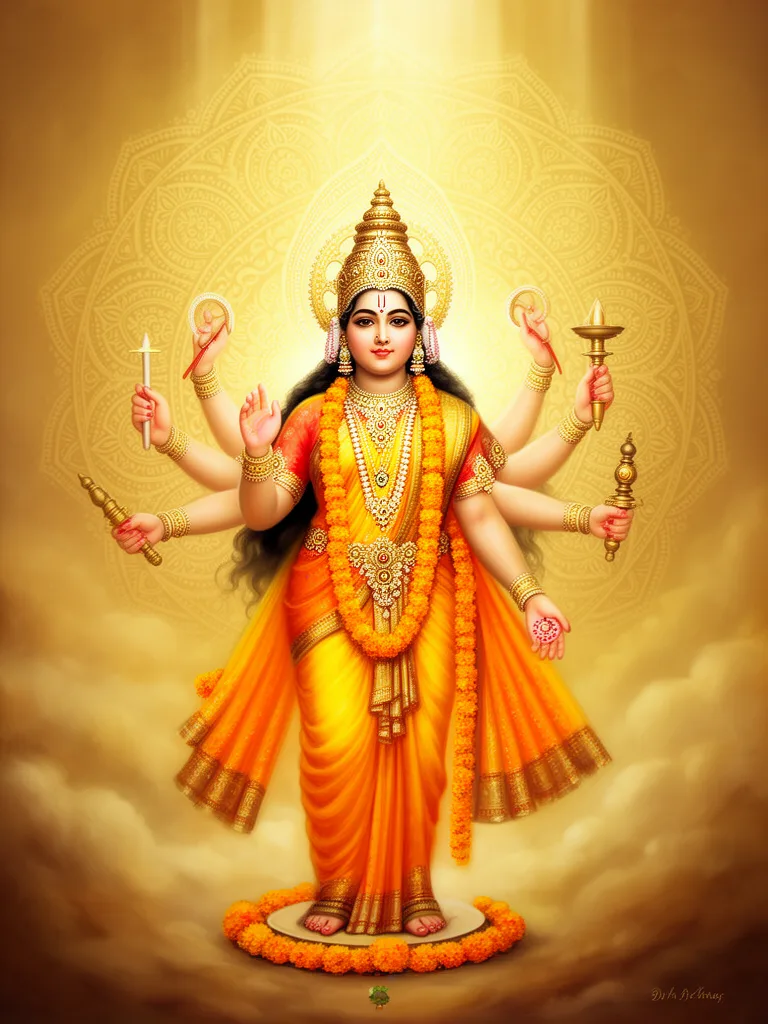
Durga is a principal Hindu goddess, a fierce warrior deity representing divine feminine power and protection. She is often depicted as a warrior riding a lion or tiger, combating evil forces and restoring cosmic order, embodying strength, courage, and maternal ferocity.
Where the word comes from
The Sanskrit word "Durga" (दुर्गा) translates to "inaccessible" or "unconquerable." This etymology suggests a divine entity beyond ordinary human reach or comprehension, a formidable presence that cannot be easily overcome by malevolent forces or ordinary means.
In depth
Lit., "inaccessible". The female potency of a god; thr name of Kali, the wife of Siva, tinMahxsvuni, or "tlie great god".
How different paths see it
What it means today
The name "Durga" itself, meaning "inaccessible," hints at a divine presence that is not merely distant but fundamentally beyond the grasp of mundane understanding or the reach of destructive forces. She is the potent force of the feminine divine, the Shakti, that animates and protects the cosmos. As Mircea Eliade observed in his work on shamanism and archaic religions, the divine often manifests in ways that are both awe-inspiring and terrifying, demanding a transformation of the seeker's perception. Durga's iconography, a warrior astride a lion or tiger, battling demons, is not simply a narrative of conflict but a symbolic representation of the inner struggle against ignorance and ego.
This goddess embodies a profound paradox: she is the fierce protector, the slayer of the buffalo demon Mahishasura, a manifestation of divine wrath against cosmic imbalance. Yet, she is also the benevolent mother, the source of all strength and courage for her devotees. This duality, explored in various mythologies, suggests that true power often requires both ferocity and compassion. Carl Jung might see in Durga a powerful archetype of the anima, the feminine principle within the psyche, which, when integrated, offers immense creative and protective potential. Her inaccessible quality, then, is not an absence but a transcendence, a reminder that the deepest wells of power and protection lie beyond the superficial. To invoke Durga is to call upon a force that is both an external bulwark against chaos and an internal wellspring of resilience, a potent reminder that the divine feminine is a force of both creation and formidable preservation.
RELATED_TERMS: Shakti, Kali, Mahishasuramardini, Devi, Prakriti, Kundalini, Divine Feminine, Archetype ---
Related esoteric terms
Books on this concept








No reflections yet. Be the first.
Share your interpretation, experience, or question.
