Crystal gazing
Crystal gazing, also known as crystallomancy, is an ancient practice of seeking visions or insights by gazing into a reflective surface, typically a crystal ball. It's a form of scrying or divination, historically believed to reveal the future or divine truths, though modern interpretations suggest it accesses the seer's subconscious.
Where the word comes from
The term "crystal gazing" is descriptive. "Crystallomancy" derives from the Greek "krystallos" (ice, crystal) and "manteia" (divination). This practice, predating written records, likely emerged independently across cultures, with early forms potentially involving water or polished stones before the widespread use of glass or quartz crystals.
In depth
Crystal gazing or crystallomancy is a method for seeing visions achieved through trance induction by means of gazing at a crystal, commonly in the form of a crystal ball. Traditionally, it has been seen as a form of divination or scrying, with visions of the future and of the divine, though research into the content of crystal-visions suggest the visions are related to the expectations and thoughts of the seer.
How different paths see it
What it means today
The practice of crystal gazing, or crystallomancy, invites us to consider the porous boundary between the seer and the seen. It is not merely a quaint relic of divination but a profound exercise in focused attention, a deliberate engagement with the mind's own generative power. Mircea Eliade, in his studies of shamanism and archaic techniques of ecstasy, noted how altered states of consciousness are often facilitated by repetitive sensory stimuli, and the steady gaze into a luminous, ambiguous surface provides precisely this. The crystal ball, a smooth, reflective void, becomes a canvas upon which the mind projects its latent imagery.
This is not to dismiss the historical belief in external revelation. For the Hermeticist, the crystal might be a conduit to the celestial spheres, a polished surface reflecting the divine order. In the alchemical tradition, such practices were sometimes seen as a means to perceive the subtle essences of matter, the anima mundi stirring within the substance. However, as modern psychology, influenced by figures like Carl Jung, has illuminated, the symbols that emerge from the unconscious are deeply personal yet universally resonant, archetypal in their structure. The visions glimpsed in the crystal are often less about predicting a fixed future and more about illuminating the present psychological dynamics that will shape what is to come.
The practice demands a particular kind of surrender, a willingness to let go of conscious control and observe what arises without judgment. It is akin to the Zen koan, a paradox designed to exhaust the rational mind and open a space for intuitive insight. The seer becomes both the observer and the observed, the projector and the projected. The crystal, in this light, is not a magical tool but a sophisticated psychological instrument, a focal point for the mind's own exploration, a quiet space where the whispers of the subconscious can be heard above the din of everyday thought. It reminds us that true wisdom often emerges not from external pronouncements, but from the patient, introspective observation of our own inner workings.
Related esoteric terms
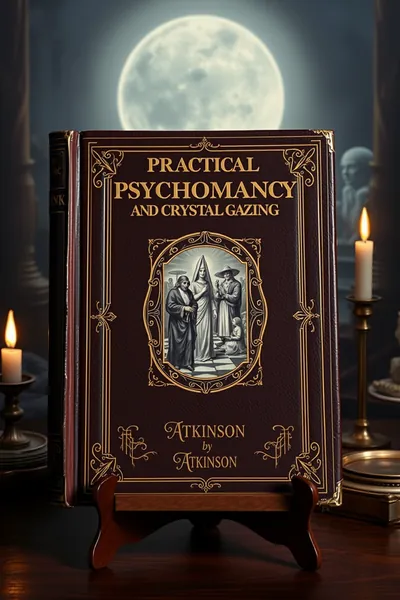
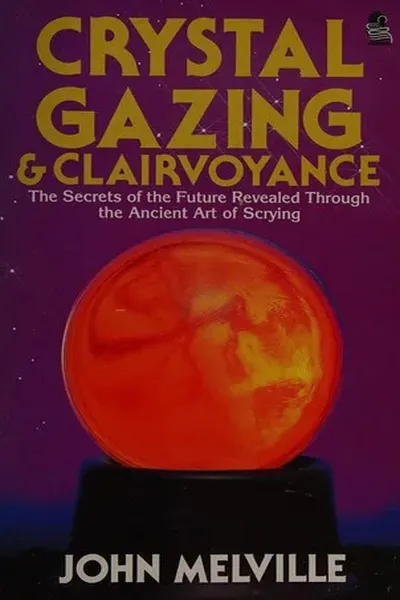
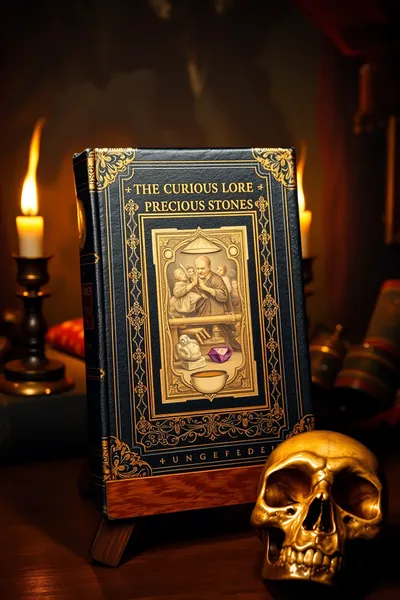
Books on this concept




No reflections yet. Be the first.
Share your interpretation, experience, or question.
