Cosmic Consciousness
Cosmic Consciousness refers to a hypothesized state of awareness transcending the individual ego, characterized by a profound sense of unity with the universe and a direct apprehension of universal truths. It suggests an evolutionary leap in human perception, moving beyond ordinary sensory and intellectual understanding to a holistic, intuitive grasp of existence.
Where the word comes from
The term "Cosmic Consciousness" gained prominence in popular discourse through Richard Maurice Bucke's 1901 book of the same name. While Bucke coined the specific phrase in English, the concept it describes has ancient roots, drawing from mystical traditions worldwide that speak of universal awareness or divine consciousness, often expressed through terms like "Brahman" or "The All."
In depth
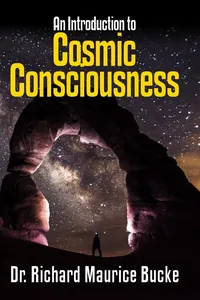
Cosmic Consciousness: A Study in the Evolution of the Human Mind is a 1901 book by the psychiatrist Richard Maurice Bucke, in which the author explores the concept of cosmic consciousness, which he defines as "a higher form of consciousness than that possessed by the ordinary man".
How different paths see it
What it means today
The notion of Cosmic Consciousness, as popularized by Bucke and echoed in myriad spiritual traditions, invites us to consider the human mind not as a closed system but as a potential conduit for a vaster, more encompassing awareness. Mircea Eliade, in his studies of shamanism and archaic religions, charted the recurring human impulse to transcend ordinary consciousness, to touch the sacred and the boundless. This is not a mere intellectual pursuit, but a deeply felt, often sudden, apprehension of interconnectedness. Think of the alchemist's quest for the Philosopher's Stone, not just as a material transformation, but as a metaphor for the transmutation of consciousness. Or consider the Sufi concept of fana, the annihilation of the self in God, a state where the individual ego dissolves into the divine ocean of being, as described by Annemarie Schimmel. This is not a loss of self in a nihilistic sense, but a discovery of a self that is infinitely larger than the personal identity we typically inhabit. The experience, when it occurs, is often described with metaphors of light, of sudden clarity, of an overwhelming sense of love and belonging. Carl Jung's exploration of archetypes and the collective unconscious hints at a shared psychic substrate, a universal mind from which individual consciousness emerges and to which it can, in moments of profound insight, reconnect. It suggests that the universe is not an external, indifferent entity, but a living, breathing whole of which we are an intrinsic, inseparable part. The challenge for the modern seeker lies in distinguishing genuine moments of expanded awareness from mere flights of fancy or intellectual speculation, grounding these profound intuitions in a way that enriches, rather than alienates, our lived experience. It is the realization that the grand cosmic drama is, in some ineffable way, our own intimate story.
Related esoteric terms
Books on this concept






No reflections yet. Be the first.
Share your interpretation, experience, or question.
