Autosuggestion
Autosuggestion is the practice of directing one's own thoughts and beliefs to influence one's own mental or physical state, often through repeated affirmations. It is a self-directed mental discipline that harnesses the power of the mind over the body and emotions.
Where the word comes from
The term "autosuggestion" is a modern coinage, combining the Greek prefix "auto-" meaning "self" and the Latin word "suggestio" meaning "a proposal" or "hint." It emerged in psychological discourse in the late 19th and early 20th centuries to describe the phenomenon of self-induced mental influence.
In depth
Autosuggestion is a psychological technique related to the placebo effect, popularized internationally by pharmacist Émile Coué in the 1920s. It is a form of self-induced suggestion in which individuals guide their own thoughts, feelings, or behavior. The technique is often used in self-hypnosis. While Émile Coué created an autosuggestion craze in America in the 1920s, the technique had already been developed and widely taught by Dr. Herbert A. Parkyn through experimentation at his Chicago School...
How different paths see it
What it means today
The concept of autosuggestion, though popularized by early 20th-century psychologists like Émile Coué, resonates deeply with ancient contemplative practices. It speaks to the mind's profound capacity to shape not only its internal landscape but also its perceived external reality. Mircea Eliade, in his studies of shamanism and archaic techniques of ecstasy, observed how the disciplined repetition of mantras, incantations, or visualizations could induce altered states of consciousness and facilitate profound personal transformation. These were not simply affirmations but carefully constructed mental engagements designed to reorient the practitioner's entire being.
In the Hermetic tradition, this principle is foundational. The axiom "As above, so below; as within, so without" suggests a direct correspondence between the inner mental realm and the outer manifest world. Autosuggestion, then, becomes a deliberate act of aligning the inner "mental" state with the desired "above" or "without," a conscious participation in the universal creative process. For the Christian mystic, this might manifest as the fervent repetition of a divine name or a scriptural passage, not as a rote exercise, but as a means of imbuing the soul with the divine presence, allowing the truth of the words to permeate and transform the self, akin to how a seed germinates when conditions are right.
The modern non-dual perspective offers a further refinement, viewing autosuggestion not as a manipulation of external circumstances, but as a practice of recognizing and releasing limiting self-identifications. By consistently suggesting more expansive and compassionate thoughts, one begins to dismantle the ingrained patterns of scarcity or fear, thereby aligning with the inherent abundance and peace of one's true nature. It is a gentle but persistent redirection, a conscious cultivation of awareness that, over time, can dissolve the illusion of separation and limitation, revealing the underlying unity. The practice, therefore, is less about imposing one's will and more about aligning with a deeper, more authentic potential.
Related esoteric terms
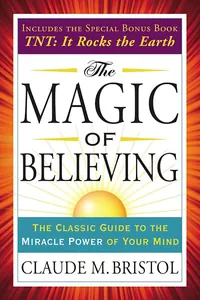
Books on this concept







No reflections yet. Be the first.
Share your interpretation, experience, or question.
