Ashtavakra Gita
The Ashtavakra Gita is an ancient Indian text, presented as a dialogue between the sage Ashtavakra and King Janaka. It expounds profound Advaita Vedanta philosophy, focusing on self-realization and the illusory nature of the material world. This dialogue offers practical guidance for attaining liberation through wisdom.
Where the word comes from
The name "Ashtavakra Gita" translates to "Song of Ashtavakra." Ashtavakra, meaning "eight bends" or "crooked," refers to the sage's physical deformities. The term "Gita" signifies "song" or "discourse," akin to the Bhagavad Gita. Its precise origin date is debated, but it is considered a classical Vedanta scripture.
In depth
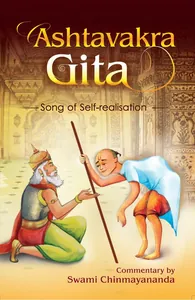
The Ashtavakra Gita (Sanskrit: अष्टावक्रगीता; IAST: aṣṭāvakragītā) or Song of Ashtavakra is a classical Vedanta text in the form of a dialogue between the sage Ashtavakra and Janaka, king of Mithila.
How different paths see it
What it means today
In the grand cathedral of Indian spiritual literature, the Ashtavakra Gita stands as a stark, unadorned monument to pure non-duality. Unlike the more narrative or allegorical scriptures, it plunges directly into the heart of existential inquiry, a searing dialogue between the physically contorted sage Ashtavakra and the enlightened King Janaka. Mircea Eliade, in his exploration of shamanism and archaic techniques of ecstasy, noted how certain traditions bypass elaborate ritual for direct, often jarring, experiential insight. The Ashtavakra Gita operates on a similar principle, its verses cutting through the accumulated layers of egoic identification with an almost surgical precision.
The text, steeped in the Advaita Vedanta tradition, does not speak of gradual progress or the arduous climb towards enlightenment. Instead, it declares, with unwavering conviction, that the individual soul, the Atman, is identical with Brahman, the ultimate reality. The perceived world, with all its joys and sorrows, its attachments and aversions, is but Maya, an illusion. This is not a passive philosophical assertion; it is an invitation to a radical reorientation of consciousness. As Carl Jung observed the power of archetypes to shape our perception, the Ashtavakra Gita offers an archetype of the liberated mind, one that sees through the phantasmagoria of the mundane.
The beauty of the Gita lies in its directness, its refusal to equivocate. It speaks of the self as pure consciousness, untouched by the ephemeral transformations of the body and mind. This echoes the insights of mystics across traditions, from the Christian apophatic theology that describes God as beyond all conceptualization, to the Zen Buddhist emphasis on sudden enlightenment, as elucidated by D.T. Suzuki. The practice it implies is not one of accumulation, but of cessation—the cessation of thought, of desire, of the very sense of a separate self. It is a call to awaken to what has always been, a homecoming to the boundless awareness that precedes all form. The Ashtavakra Gita, in its unvarnished truth, offers not a path to be walked, but a realization to be recognized.
Related esoteric terms
Books on this concept



No reflections yet. Be the first.
Share your interpretation, experience, or question.
