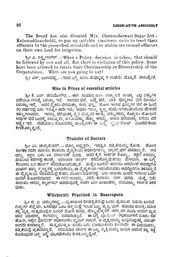
Witchcraft Practiced in Basavapur
 77
77

Witchcraft Practiced in Basavapur


Sophia Crane (Associate Editor) — This compelling excerpt from the Karnataka Legislative Assembly Debates offers a rare, unfiltered window into the practice of witchcraft in Basavapur. It moves beyond sensationalism to present a nuanced, albeit brief, examination of local spiritual traditions. The text hints at a rich tapestry of symbolism and belief systems, inviting deeper scholarly inquiry. While concise, it effectively captures the essence of a localized, potent form of folk magic, making it an invaluable resource for researchers of South Asian occultism and comparative paganism. Its strength lies in its unexpected provenance, lending an air of authenticity to its esoteric insights. This is essential reading for those who seek to understand the diverse expressions of witchcraft beyond Western paradigms.
📝 Description
77
Extracted from Karnataka Legislative Assembly Debates, this text details witchcraft in Basavapur.
This book examines indigenous witchcraft traditions of Basavapur, drawing material from the Karnataka Legislative Assembly Debates. It moves beyond simple folklore to present beliefs and practices that have influenced the region's mystical heritage. The text discusses subtle energies, ancient rituals, and the relationship between the community and unseen forces. It aims to illuminate the symbolic language and philosophies underlying these practices, distinguishing itself from instructional guides. The work serves as an account of folk magic and its role in human experience.
It is of interest to those seeking esoteric knowledge, students of comparative religion, or practitioners interested in ancestral practices. The book sheds light on a specific aspect of esotericism, inviting readers to consider the spiritual currents beneath daily life. It conveys the mysteries associated with this particular craft.
This work situates itself within the study of folk magic and regional esoteric practices. It documents a specific, localized tradition distinct from broader occult systems. By focusing on the beliefs and rituals of Basavapur, it provides a case study in how spiritual practices are embedded within community life and local cosmology. The text connects these practices to a broader understanding of human engagement with the unseen, offering insights into comparative religion and the history of belief.
✍️ Author

Karnataka Legislative Assembly Secretariat
St. Joseph's University is a private aided, Jesuit University run by the Karnataka Province of the Society of Jesus (Jesuits) in Bangalore, Karnataka, India.
💡 Why Read This Book?
Delve into the esoteric heart of Basavapur's witchcraft, a unique South Asian tradition often overlooked. This text offers scholarly insight into local spiritual practices, revealing hidden symbolism and ancestral wisdom. Ideal for seekers of diverse occult knowledge, folklorists, and scholars of comparative paganism eager to expand their understanding of global mystical traditions. Uncover the profound connection between community, nature, and the unseen forces that shape spiritual life.
⭐ Reader Reviews
Honest opinions from readers who have explored this book.
❓ Frequently Asked Questions
What is the primary focus of this text?
This text focuses on the specific practices and beliefs associated with witchcraft in the region of Basavapur, Karnataka, as documented within the Karnataka Legislative Assembly Debates.
Is this a practical guide to witchcraft?
No, this is not a practical guide. It is a scholarly examination and documentation of existing traditions, offering insight rather than instruction.
What is the historical origin of this documentation?
The documentation originates from the Karnataka Legislative Assembly Debates, specifically Book 496, Pages 104-105, suggesting it arose from discussions or records concerning local customs and potential societal impacts.
Who is the intended audience for this work?
The intended audience includes scholars of religion, occultism, South Asian studies, folklorists, and serious practitioners interested in diverse forms of witchcraft and indigenous spiritual practices.
Does this text discuss specific spells or rituals?
While it alludes to practices and beliefs, the provided context suggests a more descriptive and analytical approach rather than a detailed listing of specific spells or rituals.
🔮 Key Themes & Symbolism
Indigenous South Asian Witchcraft
This theme explores the localized manifestations of witchcraft within the Basavapur region, distinguishing it from Western occult traditions. It highlights the integration of local deities, natural elements, and community-specific rituals, emphasizing how these practices are deeply embedded in the socio-cultural fabric of Karnataka. The text implicitly explores the unique cosmology and worldview that informs these practices, offering a rare glimpse into a spiritual lineage that has persisted through generations, often existing outside mainstream religious narratives and academic discourse.
Symbolism and Ritualistic Language
The exploration of Basavapur witchcraft necessitates an understanding of its rich symbolic language. This theme examines the inherent meaning embedded within the rituals, gestures, and objects used by practitioners. It suggests that these practices are not arbitrary but are imbued with profound significance, often drawing parallels with natural phenomena, celestial movements, or ancestral spirits. The text implicitly invites readers to decode this esoteric lexicon, understanding how symbols serve as conduits for spiritual power and intention, fostering a deeper connection to the unseen forces at play in the universe.
The Intersection of Law and Mysticism
The surprising origin of this text within the Karnataka Legislative Assembly Debates introduces a compelling theme: the intersection of formal governance and esoteric practice. This highlights instances where folk magic and spiritual beliefs have been significant enough to warrant discussion or documentation within a legislative context. It raises questions about societal perceptions, potential legal implications, and the enduring presence of mystical traditions even within modern administrative structures. This theme offers a unique perspective on how esoteric knowledge can permeate and influence even the most secular of institutions.
💬 Memorable Quotes
Direct passages from the work, attributed to the author.
“Whispers of Basavapur's ancient arts.”
— Evokes a sense of mystery and hidden knowledge, suggesting that the practices are subtle, perhaps oral, and deeply rooted in the region's history.
“Beneath the veil of mundane existence.”
— Points to the existence of a spiritual or magical reality that lies just beyond ordinary perception, accessible through esoteric understanding.
“Threads of power woven into the land.”
— Suggests a deep connection between witchcraft and the natural environment, where spiritual energy is intrinsically linked to the earth and its elements.
“Elements of forgotten lore.”
— Implies the preservation of ancient wisdom and traditions that may have been lost to mainstream culture, existing in niche communities.
“The language of the unseen.”
— Refers to the symbolic and ritualistic communication employed in witchcraft to interact with spiritual entities or forces not perceptible to the ordinary senses.
🌙 Esoteric Significance
Tradition
This work offers a glimpse into an indigenous South Asian esoteric tradition, specifically rooted in the folk magic and spiritual practices of Basavapur, Karnataka. It represents a localized manifestation of witchcraft, distinct from Western occult lineages, drawing heavily on local cosmology, animistic beliefs, and community-specific ritual forms. Its significance lies in preserving and clear a spiritual heritage that often exists outside established religious dogma, connecting practitioners to ancestral wisdom and the subtle energies of their immediate environment.
Symbolism
The esoteric significance of Basavapur witchcraft lies in its rich, contextual symbolism. Practices are likely imbued with meanings derived from local flora, fauna, celestial bodies, and ancestral spirits. Rituals and incantations would serve as symbolic keys, unlocking specific energetic pathways or communicating with unseen forces. The interpretation of dreams, omens, and natural phenomena would form a crucial part of this symbolic language, offering guidance and insight into the spiritual and material realms, reflecting a worldview where the mundane and the mystical are deeply intertwined.
Modern Relevance
In an era often dominated by rationalism, the study of Basavapur witchcraft offers profound modern relevance. It challenges contemporary notions of spirituality by showcasing diverse, localized traditions. For practitioners, it provides potential links to ancestral roots and alternative frameworks for understanding magic and healing. For scholars, it offers invaluable data for comparative studies of global esotericism and the enduring power of folk beliefs. Understanding these traditions encourages a broader appreciation of human spirituality and the persistent human drive to connect with the unseen forces that shape our existence.
👥 Who Should Read This Book
This clear text is essential for scholars of South Asian religions, comparative occultism, and cultural anthropology seeking to expand their understanding beyond Western paradigms. It will deeply resonate with practitioners of witchcraft and paganism who are interested in exploring diverse global traditions and ancestral roots. Seekers of hidden knowledge and alternative spiritual philosophies will find a unique perspective on the interplay between community, nature, and the mystical. Even those new to esoteric studies will gain an appreciation for the rich, localized forms of spiritual practice that have shaped human history.
📜 Historical Context
Emerging from the annals of the Karnataka Legislative Assembly Debates, this excerpt offers a rare, albeit contextual, insight into witchcraft practices in Basavapur during the period of its documentation. This era likely saw a complex interplay between traditional beliefs, evolving societal structures, and nascent administrative oversight. The fact that such practices warranted mention in legislative records suggests they held a tangible presence, possibly influencing community dynamics or even becoming a subject of public concern or discussion. This period would have been characterized by a body of folk traditions coexisting with more formal religious and governmental systems, making the documentation of localized esoteric practices particularly significant for understanding the holistic spiritual field of the time.
📔 Journal Prompts
Reflect on the concept of 'indigenous witchcraft' – how might it differ from commonly understood Western forms?
Consider the potential symbolism of elements found in the Basavapur region (e.g., local plants, animals, geographical features) in a magical context.
How might the intersection of 'law' and 'mysticism' influence the practice and perception of witchcraft in a community?
Imagine a ritual from Basavapur based on the hints provided; what elements would it likely include and why?
Explore the idea of 'hidden knowledge' – what societal forces might cause such practices to be documented in a legislative context rather than openly taught?
🗂️ Glossary
Esotericism
The study of esoteric traditions, which are traditions of mystical or spiritual knowledge that are not available to the general public. Esotericism often involves secret teachings, rituals, and symbols accessible only to initiates.
Paganism
A broad term referring to polytheistic or animistic religions, often pre-Christian, that emphasize nature worship, earth spirituality, and reverence for the divine in the natural world. It encompasses a wide array of beliefs and practices.
Cosmology
A theory or doctrine, especially a religious or philosophical one, concerning the order and constitution of the universe. It describes the origin, structure, and ultimate fate of the universe.
Animism
The belief that all natural things—including plants, animals, rocks, and even weather phenomena—have a soul or spirit. It is a fundamental aspect of many indigenous spiritual traditions worldwide.
Indigenous Traditions
Spiritual, cultural, and social practices that originate from and are specific to a particular geographic region or ethnic group, often passed down through generations and deeply connected to the land and ancestral heritage.
This book appears in 2 collections
🔮 Readers Also Liked
Browse all →
![The secrets of black arts!: A key note to witchcraft, devination [sic], omens, forwarnings, apparitions, sorcery, dæmonology, dreams, predictions, visions, and the Devil's legacy to earth mortals, compacts with the Devil! With the most authentic history of Salem witchcraft](/img/thumb/the-secrets-of-black-arts-b-a-key-note-to-witchcraft-devination-sic-omens-forwarnings-apparitions-sorcery-d-monology-dreams-predictions-visions-and-the-devil-s-legacy-to-earth-mortals-compacts-with-th.webp)





From the “Witchcraft” Collection
View all →







More Free Witchcraft & Paganism Books
View all →