Witchcraft, Intimacy, and Trust: Africa in Comparison

 72
72

Witchcraft, Intimacy, and Trust: Africa in Comparison



Silas Hawthorne (Hermetic Studies Editor) — 'Witchcraft, Intimacy, and Trust' is a revelation for those who seek to understand the esoteric underpinnings of social order. Geschiere masterfully decodes the symbolic language of African witchcraft, revealing its profound connection to trust and intimacy within communities. This work offers a rare glimpse into a form of knowledge that is both deeply spiritual and fundamentally practical, challenging Western preconceptions. Its strength lies in its comparative approach, drawing illuminating parallels across diverse African societies. Essential for scholars of comparative religion, anthropology, and advanced practitioners seeking to broaden their understanding of global esoteric traditions.
📝 Description
72
Peter Geschiere's 1997 book examines witchcraft not as superstition, but as a force shaping African societies.
Peter Geschiere’s 'Witchcraft, Intimacy, and Trust: Africa in Comparison' was published in 1997. The book looks at African witchcraft not as a collection of superstitions but as a dynamic force that influences social life. Geschiere argues that sorcery is deeply tied to communal bonds and individual fates, acting as a significant power within these societies.
The work analyzes the symbolic language of witchcraft and its role in maintaining social cohesion. It considers how beliefs and rituals interact with the structure of society, affecting both collective and personal experiences. The book invites readers to understand these practices as integral to the human experience and the development of belief systems.
This book engages with the study of witchcraft as a social and symbolic phenomenon, rather than a supernatural one. It approaches the topic from an anthropological and sociological perspective, placing it within broader discussions of belief systems and cultural practices. The work contributes to an understanding of how seemingly esoteric concepts function within specific cultural frameworks, influencing social relationships and perceptions of power. It is part of a tradition that analyzes the meaning and function of cultural phenomena outside of Western rationalist frameworks.
💡 Why Read This Book?
Uncover the hidden architecture of trust and social bonds as understood through African witchcraft. This book offers a rare, nuanced perspective, revealing how seemingly esoteric practices are deeply intertwined with everyday life and community cohesion. Ideal for seekers of hidden knowledge, comparative religion scholars, and practitioners interested in the global manifestations of spiritual and social ordering.
⭐ Reader Reviews
Honest opinions from readers who have explored this book.
❓ Frequently Asked Questions
What is the primary focus of this book regarding witchcraft?
The book focuses on understanding African witchcraft not as primitive superstition, but as a complex system deeply intertwined with the establishment and maintenance of trust and intimacy within communities, exploring its social and symbolic dimensions.
How does Geschiere approach the comparison of different African societies?
Geschiere employs a comparative anthropological method, analyzing diverse case studies to identify common underlying principles and variations in how witchcraft beliefs and practices shape social relationships across different cultural contexts.
Is this book suitable for beginners in occult studies?
While academic in rigor, the book is accessible to dedicated beginners interested in the anthropology of belief systems and the socio-spiritual functions of witchcraft. Prior familiarity with anthropological concepts would be beneficial.
What are the key themes explored beyond witchcraft itself?
Beyond witchcraft, the book delves into themes of power dynamics, social control, the nature of trust, the formation of community, and the symbolic representation of the unseen in human societies.
Does the book offer practical witchcraft techniques?
No, this is an academic and anthropological study. It focuses on the cultural, social, and symbolic significance of witchcraft rather than providing practical instructions or rituals for its practice.
🔮 Key Themes & Symbolism
The Symbiotic Dance of Witchcraft and Trust
This theme explores the paradoxical relationship between witchcraft, often perceived as a destructive force, and the fundamental need for trust within African societies. Geschiere illustrates how the very fear of witchcraft can paradoxically solidify communal bonds, creating an intricate system of social monitoring and accountability. The perceived threats from sorcery compel individuals to adhere to social norms and foster mutual reliance, thereby reinforcing the very fabric of intimacy and collective security. It's a profound examination of how perceived darkness can illuminate the paths to communal light and shared understanding.
Symbolism as Social Architecture
The book meticulously dissects the rich symbolic language embedded within African witchcraft practices. These symbols are not mere decorative elements but serve as the very architecture of social order, conveying complex meanings about power, relationships, and the unseen forces that govern existence. Geschiere reveals how the interpretation and manipulation of these symbols are central to social control, conflict resolution, and the negotiation of power dynamics. Understanding this symbolic lexicon unlocks a deeper comprehension of the societal structures and belief systems that have endured for generations.
The Comparative Lens on Hidden Knowledge
Geschiere's comparative approach is crucial to understanding the universal human quest for meaning and order. By examining witchcraft across diverse African societies, he exposes recurring patterns and unique adaptations of spiritual and social systems. This broad perspective challenges ethnocentric views and highlights the sophisticated, often hidden, knowledge systems that have developed independently to address fundamental human needs. It underscores that 'esoteric' knowledge is not confined to singular traditions but is a pervasive aspect of human culture, manifesting in diverse and powerful ways.
💬 Memorable Quotes
Direct passages from the work, attributed to the author.
“Intimacy is not merely personal; it is a social contract woven with threads of the unseen.”
— This highlights the idea that deep personal connections are intrinsically linked to societal structures and the influence of spiritual or metaphysical beliefs, emphasizing the collective aspect of human relationships.
“To understand trust, one must first understand its absence, often embodied by the sorcerer.”
— This points to the importance of understanding betrayal and its symbolic representation (the sorcerer) as a means to fully grasp the value and mechanisms of trust within a society.
“The language of sorcery is a dialect of social navigation.”
— This metaphor suggests that the beliefs and practices surrounding witchcraft are not random but form a structured system that individuals use to understand and interact within their social environment.
“In the shadow of the witch, the bonds of the village are forged.”
— This evocative statement expresses the central thesis that the perceived threat of witchcraft can serve to unify and strengthen the social connections within a community.
💡 Key Ideas
Editorial paraphrase of the work's core concepts — not direct quotes.
The fear of witchcraft is often the bedrock upon which trust is built.
This quote suggests a counter-intuitive principle: that the very threat posed by witchcraft can, paradoxically, compel individuals to behave in ways that foster trust and strengthen community bonds through shared vigilance and adherence to norms.
🌙 Esoteric Significance
Tradition
While not directly tied to a singular Western esoteric tradition, Geschiere's work illuminates the universal quest for understanding hidden forces and their impact on human life. It speaks to traditions that explore the interconnectedness of the seen and unseen, the power of belief, and the symbolic nature of reality. The study of African witchcraft, as presented, offers a profound, cross-cultural perspective on the human engagement with the numinous and the construction of shared realities through ritual and symbolic discourse.
Symbolism
The book is rich with the symbolism of African witchcraft, where figures like the witch, the sorcerer, and the various spiritual entities represent not just abstract concepts but tangible forces influencing social dynamics. Symbols of transformation, hidden knowledge, and the dual nature of power (creation and destruction) are central. Geschiere unpacks how these symbols are employed in rituals, oral traditions, and daily interactions to mediate social relationships, enforce moral codes, and read through the complex interplay between individual desires and communal expectations.
Modern Relevance
In an increasingly globalized and interconnected world, understanding diverse belief systems is paramount. Geschiere's work offers critical insights into how societies construct trust and manage conflict, offering valuable lessons for contemporary social cohesion. The exploration of symbolic language and the power of shared belief systems provides a framework for understanding phenomena ranging from online communities to political movements, demonstrating the enduring relevance of these ancient patterns of human interaction and spiritual engagement.
👥 Who Should Read This Book
This useful work is essential for anthropologists and sociologists seeking to understand the complexities of social order in Africa. Scholars of comparative religion and cultural studies will find its nuanced analysis invaluable. For seekers of hidden knowledge and practitioners of esoteric arts, it offers a profound exploration of how belief systems shape reality and community. Beginners interested in the anthropology of witchcraft and its spiritual dimensions will benefit from its clear yet deep exposition, while advanced students will appreciate its rigorous scholarship and thought-provoking conclusions.
📜 Historical Context
Published in the late 20th century, Peter Geschiere's 'Witchcraft, Intimacy, and Trust' emerged during a period of intense academic re-evaluation of indigenous African religions and social structures. Following colonial-era dismissals of these practices as mere superstition, scholars began to recognize the profound sophistication and functional importance of belief systems like witchcraft. This era saw a move towards more nuanced, emic (insider) perspectives, challenging Western anthropological paradigms. Geschiere's work contributes significantly to this shift, engaging with theories of power, social construction, and the enduring influence of symbolic systems in post-colonial African societies. It stands as a evidence of the intellectual ferment seeking to understand the complexities of human culture beyond simplistic binaries.
📔 Journal Prompts
Reflect on a time when a perceived threat (personal or communal) strengthened your bonds with others. How did this experience parallel the dynamics described in the book?
Explore the symbolic language you use in your daily life to navigate social interactions or understand complex emotions. How does this compare to the symbolic systems of African witchcraft?
Consider the concept of 'trust' in your own community. What are the unwritten rules or unspoken expectations that uphold it?
How might the fear of 'the other' or perceived societal breakdown influence the way trust is established or eroded in contemporary societies?
Meditate on the idea of 'hidden knowledge'. Where do you encounter it in your life, and how does it shape your understanding of the world or yourself?
🗂️ Glossary
Witchcraft
In the context of this book, witchcraft refers to a complex set of beliefs and practices, often involving the perceived ability to harness supernatural forces for personal gain or to cause harm, deeply integrated into the social and spiritual fabric of African societies.
Intimacy
Beyond personal affection, intimacy here signifies the deep, often unspoken, bonds of trust, shared understanding, and mutual reliance that characterize relationships within a community, profoundly influenced by witchcraft beliefs.
Sorcerer
Often distinguished from a witch, a sorcerer is typically understood as one who actively employs magical means or spiritual pacts to manipulate events or individuals, representing a tangible threat to social harmony and trust.
Emic Perspective
The viewpoint of a culture's members; an 'insider's' understanding of their own beliefs, practices, and social structures, as opposed to an outsider's (etic) interpretation.
Symbolic Language
A system of signs, images, and actions that convey deeper meanings beyond their literal interpretation, used within witchcraft beliefs to communicate social norms, power dynamics, and spiritual realities.
This book appears in 2 collections
🔮 Readers Also Liked
Browse all →









More by Peter Geschiere
All books →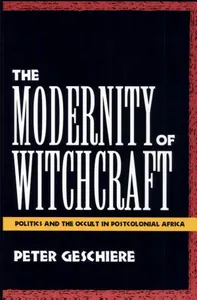
From the “Witchcraft” Collection
View all →








More Free Witchcraft & Paganism Books
View all →