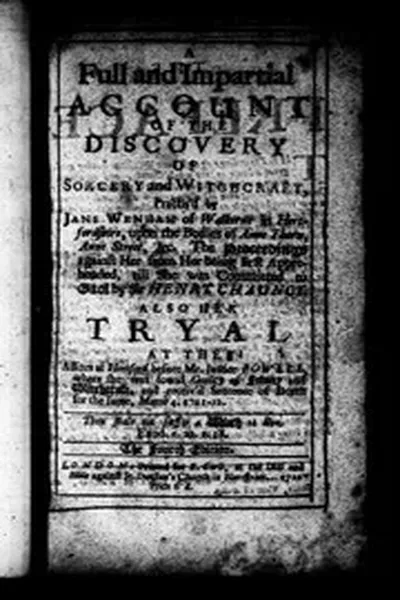
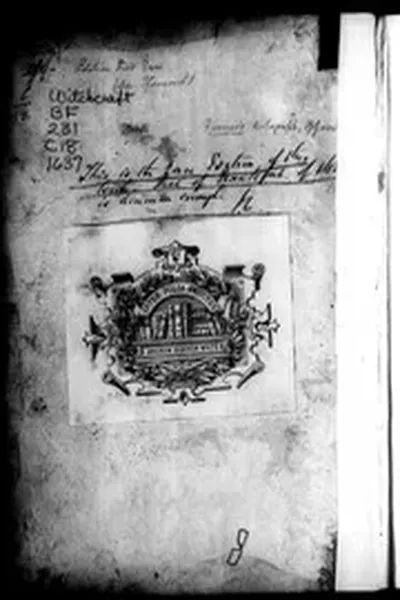
A defense of the proceedings against Jane Wenham, wherein the possibility and reality of witchcraft are demonstrated from Scripture, ... 1712: Iss 154

 71
71

A defense of the proceedings against Jane Wenham, wherein the possibility and reality of witchcraft are demonstrated from Scripture, ... 1712: Iss 154



Isolde Whitaker, Sacred Texts Editor — Francis Bragge's 'A Defense of the Proceedings Against Jane Wenham' is a foundational document for understanding early modern witchcraft discourse. Bragge's erudite defense, grounded in a rigorous, albeit biased, exegesis of Scripture, lays bare the intellectual framework that supported the prosecution of alleged witches. The work is invaluable for its detailed articulation of the 'proofs' of witchcraft prevalent at the time, offering profound insights into the era's theological anxieties and its perception of malevolent spiritual forces. While not an endorsement of its conclusions, the text's historical and psychological depth makes it indispensable for scholars and seekers alike interested in the persistent human fascination with the occult and the darker manifestations of spiritual belief.
📝 Description
71
Francis Bragge's 1712 defense argued for the reality of witchcraft using Scripture and contemporary anxieties.
Published in 1712, Francis Bragge's 'A Defense of the Proceedings Against Jane Wenham' examines the prevailing beliefs and fears surrounding witchcraft in early 18th-century England. Bragge builds his case by referencing biblical texts and societal concerns, aiming to prove the tangible existence of sorcery during a time when the spiritual world held significant sway. The book operates as both a legal defense and a theological study, grappling with religious doctrine and human misconduct.
This work invites readers to consider the mindset and spiritual beliefs of a past society. It shows how supernatural notions influenced legal proceedings and everyday existence. The book highlights the connection between religious conviction, fear, and the perceived manipulation of unseen powers. It offers insight into the thinking of individuals who both believed in and prosecuted those accused of practicing witchcraft.
This text emerges from a period where the line between religious belief, folk magic, and learned occultism was often blurred. Bragge's work engages directly with theological interpretations of demonic influence and divine law, which were common frameworks for understanding supernatural phenomena. It reflects a broader cultural engagement with the unseen, a context that informed both popular belief and more formalized intellectual discussions about magic and its practitioners. The book's focus on demonstrating witchcraft's reality places it within a tradition of apologetics for supernatural claims, albeit from a perspective that aligns with established religious authority.
💡 Why Read This Book?
Uncover the theological justifications and societal fears that fueled witchcraft accusations in early 18th-century England. This text offers a direct, albeit partisan, perspective on the perceived reality of sorcery and its Scriptural basis. Ideal for students of history, religious studies, and occult traditions seeking to understand the intellectual underpinnings of historical witch trials and the enduring power of belief.
⭐ Reader Reviews
Honest opinions from readers who have explored this book.
❓ Frequently Asked Questions
What is the primary purpose of this defense?
The primary purpose is to justify and validate the legal proceedings and accusations of witchcraft against Jane Wenham, arguing for the reality and possibility of witchcraft based on Scriptural interpretation and contemporary societal fears.
What scriptural arguments does Bragge use?
Bragge likely draws upon Old and New Testament passages that condemn sorcery, reference demonic influence, and outline divine judgments against those who practice forbidden arts, interpreting these texts to support the existence of active witchcraft.
Who was Jane Wenham?
Jane Wenham was an elderly woman accused of witchcraft in Hertfordshire, England, in 1712. Her trial and conviction, though later commuted, became a significant event in the history of English witchcraft prosecutions, marking a period of waning but not extinguished belief.
What is the historical significance of this publication?
Published in 1712, it represents one of the later significant defenses of witchcraft beliefs and prosecutions in England, occurring at a time when skepticism was beginning to grow, making it a crucial artifact of transitional thought.
Is this text sympathetic to witchcraft?
No, this text is a strong defense of the prosecution of witchcraft. It argues vehemently for the reality of witchcraft and the guilt of the accused, reflecting the prevailing fears and beliefs of a segment of society at the time.
🔮 Key Themes & Symbolism
Theological Justification of Witchcraft
This theme looks at how Bragge employs Scriptural exegesis to construct a robust theological argument for the existence and reality of witchcraft. It explores the specific verses and interpretations used to frame sorcery as a direct violation of divine law and a manifestation of demonic power. Understanding this theme is crucial for grasping the intellectual and spiritual framework that legitimized witch trials, revealing how deeply held religious convictions were weaponized to identify and condemn perceived practitioners of forbidden arts. It highlights the era's obsession with divine order and the fear of its subversion through supernatural means.
The Social and Legal Construction of Guilt
This section examines how 'A Defense' illustrates the process by which individuals, particularly marginalized figures like Jane Wenham, were socially and legally constructed as guilty of witchcraft. It analyzes the types of 'evidence' and testimony Bragge deems credible, reflecting societal anxieties and prejudices. The text reveals the potent blend of rumor, accusation, and theological interpretation that could condemn an individual. Understanding this theme provides insight into the mechanisms of historical persecution, showing how fear and belief, amplified by legal and religious authority, could lead to the ruin of innocent lives.
The Enduring Power of Supernatural Belief
This theme explores the profound and persistent belief in the supernatural that permeated early 18th-century society, as evidenced by Bragge's defense. It highlights how, even as Enlightenment ideas began to emerge, the conviction in the active influence of witchcraft and demonic forces remained potent. The text serves as a proof of the deep-seated human need to explain the inexplicable, often through the lens of malevolent spiritual agents. It underscores the psychological impact of such beliefs and their role in shaping societal responses to misfortune, illness, and perceived threats.
💬 Memorable Quotes
Direct passages from the work, attributed to the author.
“The possibility and reality of witchcraft are demonstrated from Scripture.”
— This foundational statement asserts the author's core thesis: that divine texts irrefutably prove the existence and active presence of witchcraft in the world.
“The Devil works his malice through the hands of his servants.”
— This highlights the prevalent belief in a direct link between demonic agency and human practitioners of witchcraft, portraying witches as conduits for evil.
“Justice must be served against these wicked arts.”
— This emphasizes the author's conviction that legal and moral imperatives demand the persecution and punishment of those accused of practicing witchcraft.
“The proceedings against Jane Wenham were lawful and righteous.”
— This directly defends the specific legal actions taken against Wenham, asserting their legitimacy and moral correctness within the framework of the time.
💡 Key Ideas
Editorial paraphrase of the work's core concepts — not direct quotes.
To deny witchcraft is to deny the Word of God.
This quote frames belief in witchcraft as a matter of religious orthodoxy, equating skepticism with heresy and profound spiritual error.
🌙 Esoteric Significance
Tradition
This text is deeply rooted in the Judeo-Christian theological tradition, specifically its interpretation of divine law and the perceived existence of malevolent spiritual forces. It reflects a particular strain of religious thought prevalent in early modern Europe that viewed the world as a battleground between God and Satan, with human practitioners of 'witchcraft' acting as agents of the latter. While not aligning with modern esoteric practices, it provides essential context for understanding the historical roots of many Western occult beliefs and the societal anxieties that shaped them.
Symbolism
The primary symbolic weight in Bragge's work lies in the figure of the witch, who symbolizes a transgression against divine order and a conduit for chaotic, malevolent forces. Scripture itself is treated as a symbolic text, its passages imbued with layers of meaning that reveal hidden truths about spiritual warfare and divine judgment. The proceedings against Jane Wenham become a symbolic act of restoring cosmic balance and defending the community against unseen threats. The very act of 'demonstrating' witchcraft from Scripture symbolizes the attempt to rationalize and legitimize fear through appeals to higher, immutable authority.
Modern Relevance
While the literal belief in the forms of witchcraft described by Bragge has largely faded, the text remains relevant for understanding the enduring human tendency to scapegoat and fear the 'other,' particularly during times of societal stress or uncertainty. It offers insights into the psychological mechanisms of belief, the power of narrative, and how fear can be manipulated through appeals to authority, be it religious, legal, or ideological. For contemporary practitioners and scholars of esoteric traditions, it provides a crucial historical lens through which to view the evolution of occult thought and the societal forces that shaped its perception.
👥 Who Should Read This Book
Scholars of religious history, theology, and the occult will find 'A Defense' an indispensable primary source for understanding early modern witchcraft beliefs and their justification. Students of social history and legal studies will gain insight into the mechanisms of historical persecution and the construction of guilt. For esoteric practitioners, it offers a vital historical context, useful the roots of Western occult fears and beliefs. Beginners interested in the darker aspects of historical spiritualism and the psychology of belief will find this a compelling, albeit challenging, entry point into a significant chapter of human history.
📜 Historical Context
Published in 1712, Francis Bragge's 'A Defense of the Proceedings Against Jane Wenham' emerges from a period of significant societal and intellectual transition in England. While the Enlightenment was gaining momentum, fostering rationalism and skepticism, deeply entrenched beliefs in the supernatural, including witchcraft, persisted in many quarters. The notorious trial of Jane Wenham in Hertfordshire in the same year provided a focal point for these lingering anxieties and convictions. Bragge's work represents a powerful articulation of the more conservative, religiously orthodox viewpoint that still held sway, seeking to reaffirm the reality of witchcraft and the divine mandate for its prosecution. It stands as a crucial document illustrating the cultural and intellectual tensions of an era grappling with the decline of old beliefs and the rise of new ways of understanding the world, demonstrating that the fear of the occult and its perceived agents remained a potent force.
📔 Journal Prompts
How do Bragge's interpretations of Scripture reflect the anxieties of his time regarding supernatural threats?
Consider the 'evidence' Bragge finds compelling. What does this reveal about the social and psychological range of early 18th-century England?
In what ways does Bragge's argument for the reality of witchcraft echo or contrast with modern conspiracy theories or beliefs in hidden forces?
Reflect on the power of language and rhetoric in shaping belief. How does Bragge use these tools to persuade his audience?
Imagine you are a skeptical individual living in 1712. How might you respond to Bragge's defense of witchcraft proceedings?
🗂️ Glossary
Scripture
The sacred writings of the Christian religion, particularly the Old and New Testaments, which Bragge uses as the primary source for his arguments about the existence and nature of witchcraft.
Proceedings
The legal actions, trials, and judgments undertaken against individuals accused of witchcraft, such as the case of Jane Wenham, which Bragge seeks to defend and legitimize.
Witchcraft
The practice of magic or sorcery, often believed to be carried out with the aid of demonic powers, and considered a serious offense against God and society in the context of this text.
Demonic
Relating to or characteristic of devils or demons; Bragge posits that witchcraft is often facilitated by the malevolent influence and power of these supernatural entities.
Exegesis
Critical explanation or interpretation of a text, especially of the Bible. Bragge's defense relies heavily on his particular exegesis of Scriptural passages to prove the existence of witchcraft.
This book appears in 2 collections
🔮 Readers Also Liked
Browse all →






From the “Witchcraft” Collection
View all →






More Free Witchcraft & Paganism Books
View all →