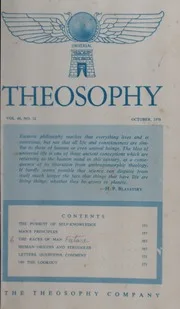
Theosophy Vol-64 No-1 November-1975

 71
71

Theosophy Vol-64 No-1 November-1975

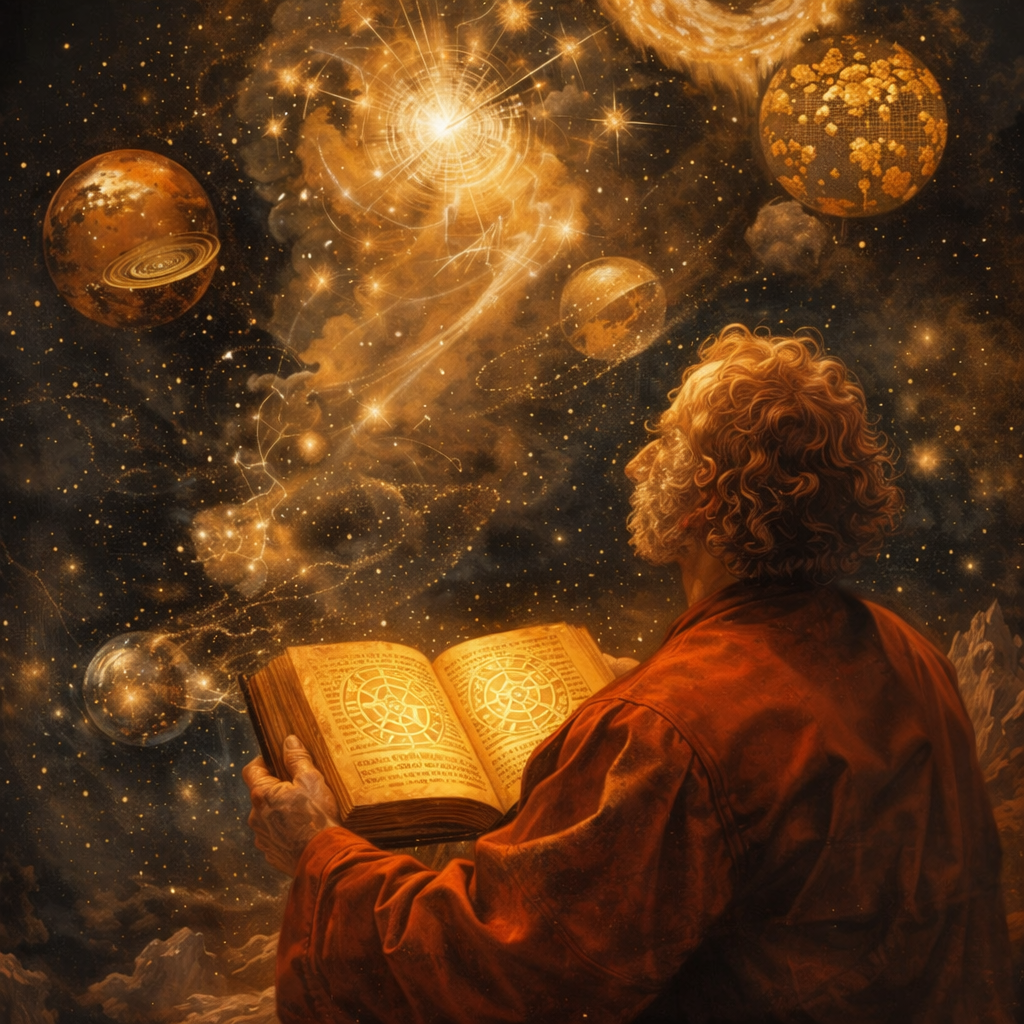

By Marcus Thorne (Esoteric Sciences Reviewer) — This November 1975 issue of 'Theosophy' is a profound repository of esoteric insights, offering a rare glimpse into the foundational principles of the Theosophical movement. The articles, though unsigned, resonate with the depth and clarity characteristic of classic Theosophical literature. It excels in its exploration of subtle energies, spiritual hierarchies, and the interconnectedness of all life. Ideal for those already initiated into or deeply curious about occult philosophy and its practical applications for personal transformation.
📝 Description
71
The November 1975 issue of Theosophy (Vol-64 No-1) examined the soul's nature and cosmic law.
This 1975 issue of Theosophy addresses fundamental questions about the soul and the principles governing the universe. It discusses how spiritual evolution unfolds and what role humanity occupies within a larger cosmic order. The content encourages a thoughtful approach to understanding oneself and the world.
The publication invites readers to move beyond everyday concerns and consider deeper spiritual insights. It aims to provide a framework for personal growth and a clearer perspective on existence. The articles within this issue are suited for those interested in the philosophical underpinnings of spiritual thought.
Published in 1975, this issue of Theosophy aligns with the broader esoteric tradition that emerged in the late 19th century. Theosophy, as a movement, sought to synthesize Eastern and Western spiritual philosophies, drawing on ancient wisdom traditions. It typically addresses subjects like reincarnation, karma, the evolution of consciousness, and the hidden laws of nature. This particular volume likely continues that lineage, examining these concepts through a specific lens of inquiry relevant to its time.
💡 Why Read This Book?
Unearth timeless wisdom on spiritual evolution and cosmic principles. This issue is a treasure trove for seekers of hidden knowledge, students of comparative religion, and practitioners of esoteric arts. It provides foundational understanding for those striving to comprehend the deeper realities beyond the material world and to integrate this wisdom into their lives.
⭐ Reader Reviews
Honest opinions from readers who have explored this book.
❓ Frequently Asked Questions
What is the primary focus of this Theosophy issue?
This issue delves into core Theosophical concepts, including spiritual evolution, cosmic laws, the nature of consciousness, and the symbolic interpretation of ancient wisdom traditions, offering profound philosophical and metaphysical insights.
Is prior knowledge of Theosophy required to understand this volume?
While some familiarity is beneficial, the articles are written to be accessible to dedicated seekers. The language, though rich, aims to elucidate complex ideas for those genuinely interested in esoteric philosophy.
What are some of the key themes explored within this specific issue?
Key themes include the journey of the soul, the underlying unity of all existence, the role of spiritual teachers, and the practical application of esoteric principles for personal and planetary betterment.
Who would benefit most from reading this publication?
Students of esoteric philosophy, spiritual seekers, practitioners of occult arts, and scholars of comparative religion will find immense value in the profound wisdom and contemplative material presented.
Where can I find more information about the Theosophical Society?
Further information can typically be found on the official website of the Theosophical Society, which provides details about their history, principles, and extensive literature.
🔮 Key Themes & Symbolism
The Unfolding of Consciousness
This theme explores the many-sided journey of human consciousness through various stages of evolution, from its nascent beginnings to its eventual spiritual apotheosis. It looks at the concept of reincarnation and karma as integral mechanisms driving this cosmic unfolding, offering a profound perspective on personal growth and the interconnectedness of all sentient beings. The articles illuminate the subtle planes of existence and the inner mechanics that govern our spiritual progression towards higher awareness.
Cosmic Law and Universal Harmony
This section investigates the immutable laws that govern the cosmos, from the smallest atom to the grandest celestial bodies. It emphasizes the principle of interconnectedness, where every action has a ripple effect throughout the universal fabric. The exploration of divine order and inherent harmony aims to provide readers with a framework for understanding their place within the grand design and the ethical implications of living in accordance with these fundamental principles. It offers a vision of a universe guided by wisdom and compassion.
The Language of Symbolism and Myth
Explore the profound power of symbolism, the archetypal language that transcends cultural and temporal boundaries. This theme deciphers the hidden meanings embedded within ancient myths, sacred texts, and esoteric imagery. It reveals how symbols serve as keys to unlock deeper spiritual truths and universal archetypes, offering a pathway to understanding the subconscious mind and the collective unconscious. The exploration encourages readers to engage with these potent symbols as guides on their own inner journeys.
💬 Memorable Quotes
Direct passages from the work, attributed to the author.
“The universe is a thought expressed.”
— This profound statement suggests that reality itself is a manifestation of divine consciousness, implying that our thoughts and intentions can shape our experience.
“Truth is not a destination, but a journey.”
— This aphorism emphasizes the ongoing nature of spiritual seeking and understanding, highlighting that true wisdom is found in the continuous process of exploration and discovery.
“Every atom vibrates with divine life.”
— This highlights the pervasive presence of spirit throughout all creation, suggesting that nothing is truly inanimate and that life force animates every particle of existence.
“The veil is thin for those who look.”
— This encourages active engagement with the unseen realms, implying that spiritual perception is not a passive gift but an earned ability through focused intent and inner vision.
💡 Key Ideas
Editorial paraphrase of the work's core concepts — not direct quotes.
Seek within, for the kingdom is nigh.
This quote points to the inner nature of spiritual realization, suggesting that the answers and divine presence we seek are not external but reside within our own being.
🌙 Esoteric Significance
Tradition
This publication is firmly rooted in the Theosophical tradition, which draws upon ancient wisdom, Eastern philosophies (particularly Hinduism and Buddhism), and Western Hermeticism. It seeks to synthesize these diverse streams into a universalist spiritual philosophy, emphasizing the brotherhood of humanity, comparative religion, and the study of latent human powers and the unexplained laws of nature.
Symbolism
The issue likely employs rich symbolic language, drawing from alchemical, astrological, and mythological archetypes. Key symbols may include the serpent, the lotus, the eye, and various geometric forms, each representing profound cosmic principles, stages of spiritual development, or divine forces. Understanding these symbols is crucial for unlocking the deeper layers of meaning within the texts.
Modern Relevance
In an age increasingly characterized by information overload and existential questioning, the contemplative depth and timeless wisdom offered by this issue remain profoundly relevant. It provides a framework for understanding consciousness, ethics, and the interconnectedness of life, offering solace and guidance for reading through the complexities of the modern world and fostering a more holistic and spiritually aware perspective.
👥 Who Should Read This Book
This issue is a vital resource for dedicated students of esoteric philosophy, spiritual seekers starting the path of self-discovery, and scholars interested in the history and tenets of Theosophy. It will particularly resonate with those who feel a deep calling to understand the underlying principles of the universe and their role within it. Practitioners of meditation and contemplative practices will find valuable insights to deepen their inner work. Beginners to Theosophy may find it a challenging yet rewarding introduction to its core concepts, while seasoned practitioners will appreciate its nuanced exploration of profound spiritual truths.
📜 Historical Context
Published in November 1975, this issue emerges from a period of significant societal introspection and a burgeoning interest in alternative spiritualities and Eastern philosophies. The late 20th century witnessed a widespread questioning of materialist paradigms, leading many to seek deeper meaning and esoteric knowledge. Theosophy, as a movement, had already laid considerable groundwork in reintroducing ancient wisdom traditions to the West. This particular volume likely reflects the ongoing discourse within the Theosophical Society, addressing themes that resonated with a generation exploring consciousness, mysticism, and the interconnectedness of existence, often as a counterpoint to the prevailing scientific and secular viewpoints of the era.
📔 Journal Prompts
Reflect on a personal experience where you felt a deep sense of cosmic connection. How did this experience influence your perception of reality?
Consider the concept of 'karma' as presented in Theosophy. How might understanding its workings influence your daily choices and interactions?
Explore a symbol that holds personal significance for you. What deeper meanings or archetypal associations does it evoke?
How can the principle of the 'brotherhood of humanity' be more actively applied in your immediate community and in your personal life?
What does 'spiritual evolution' mean to you, and what steps can you take to consciously foster your own growth in this area?
🗂️ Glossary
Theosophy
A mystical philosophy that seeks to understand the divine wisdom underlying all religions and philosophies, emphasizing the spiritual evolution of humanity and the universe.
Esoteric
Relating to or accessible only by a small number of people with a specialized knowledge or interest; inner or hidden knowledge.
Karma
The principle of cause and effect, where actions in this life determine one's future circumstances and spiritual progression.
Reincarnation
The philosophical or religious concept that the non-physical essence of a living being begins a new life in a different physical form or organism after biological death.
Archetype
A very typical example of a certain person or thing; a recurring symbol or motif in literature, art, and mythology that represents universal patterns of human nature.
This book appears in 2 collections
🔮 Readers Also Liked
Browse all →





From the “Theosophy” Collection
View all →




More Free Theosophy & Anthroposophy Books
View all →