The Voice of the Silence
 84
84

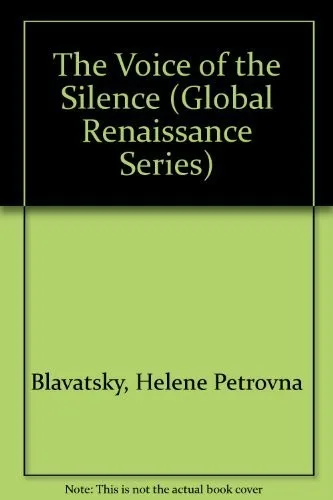
The Voice of the Silence
Helena Blavatsky’s The Voice of the Silence offers a stark, unvarnished portrayal of the spiritual aspirant’s path, presented as distilled wisdom from ancient Eastern sources. Its strength lies in its directness; it does not coddle the reader but demands intense self-application. The section "The Two Paths" particularly sharpens the focus on ethical and spiritual choices, framing the choice between self-salvation and universal compassion as a pivotal, demanding decision. A limitation, however, is the text’s inherent density and reliance on a specific Theosophical framework, which can make its pronouncements feel somewhat abstract without prior context or dedicated contemplation. The concept of the "Great Sacrifice," the choice to delay Nirvana for humanity, is a powerful, albeit challenging, ideal presented here. Ultimately, The Voice of the Silence serves as a potent, albeit austere, spiritual whetstone for the dedicated student.
📝 Description
84
Helena Blavatsky published The Voice of the Silence in 1889.
This text presents itself as a compilation of ancient teachings for the disciple, the 'chela,' on the path of spiritual development. It is not a narrative but a series of direct instructions and pronouncements designed to guide the earnest seeker through inner transformation. The book is structured into three fragments: 'The Voice of the Word,' 'The Two Paths,' and 'The Seven Portals.' These sections offer specific advice on cultivating detachment, refining perception, and understanding the nature of the spiritual journey.
Its counsel is directed toward individuals committed to serious spiritual discipline, particularly those interested in the Theosophical perspective on Eastern mysticism. The work addresses those ready to move beyond superficial spiritual inquiry and confront the demands of self-mastery. Readers seeking a direct, unadorned guide to the practical disciplines of the spiritual path, rather than purely theoretical discussion, will find its guidance applicable. It speaks to the disciplined aspirant ready for rigorous practice.
First appearing in 1889, The Voice of the Silence emerged during a surge of Western interest in Eastern religions and philosophies. Helena Blavatsky, a central figure in this movement, co-founded the Theosophical Society in 1875 with the goal of synthesizing ancient wisdom traditions. This work was part of a broader late 19th-century esoteric literature that drew heavily on Hindu and Buddhist concepts, alongside publications by contemporaries such as Annie Besant and William Quan Judge. It was received by a readership seeking authentic spiritual instruction.
💡 Why Read This Book?
• Understand the demanding nature of the spiritual path through the explicit contrast presented in "The Two Paths," clarifying the ethical weight of spiritual progress. • Grasp the concept of the "Great Sacrifice," a core tenet for those seeking a path of altruistic service beyond personal spiritual attainment. • Explore the symbolic "Seven Portals," offering a structured, albeit esoteric, framework for inner purification and the stages of spiritual awakening.
⭐ Reader Reviews
Honest opinions from readers who have explored this book.
❓ Frequently Asked Questions
When was Helena Blavatsky's The Voice of the Silence first published?
The Voice of the Silence by Helena Blavatsky was first published in 1889. This places its release within a significant period of Western engagement with Eastern esoteric philosophies.
What is the primary purpose of The Voice of the Silence?
Its primary purpose is to serve as a guide for the spiritual aspirant, or 'chela,' detailing the discipline, detachment, and ethical choices required on the Path to spiritual liberation.
Who is the intended audience for this book?
The text is aimed at dedicated students of esoteric spirituality, particularly those within the Theosophical tradition or those interested in its interpretation of Eastern mystical teachings.
What does the concept of "The Two Paths" refer to in the book?
"The Two Paths" contrasts the pursuit of individual enlightenment (the Lanoo path) with the path of selfless service to humanity, advocating for the latter as the supreme choice.
Is The Voice of the Silence considered a primary source for Buddhism?
While drawing inspiration from Buddhist concepts, The Voice of the Silence is primarily a Theosophical text interpreting these ideas through Blavatsky's unique lens, rather than a direct Buddhist scripture.
What is the 'Great Sacrifice' mentioned in the text?
The 'Great Sacrifice' refers to the profound ethical decision to forgo personal Nirvana or liberation in order to remain and assist humanity's spiritual evolution.
🔮 Key Themes & Symbolism
The Chela's Path
The book frames the spiritual journey as a rigorous path for the "chela," or disciple. It details the internal discipline required, emphasizing detachment from worldly illusions and the cultivation of inner perception. The text is less about theory and more about the practical application of effort, discernment, and unwavering focus on the goal of spiritual realization. It outlines the internal struggles and necessary ethical groundwork for anyone aspiring to progress on this demanding road to higher consciousness.
The Two Paths
This central theme presents a stark dichotomy: the path of individual liberation (Arhatship) versus the path of compassionate service to all sentient beings, even at the cost of personal enlightenment (the Bodhisattva ideal, termed the "Great Sacrifice"). Blavatsky champions the latter, presenting it as the ultimate expression of spiritual evolution, where the aspirant chooses to remain connected to the suffering of the world to aid its upliftment. This concept challenges conventional notions of salvation.
Inner Perception and Illusion
A core teaching involves developing the capacity to see beyond the material world's transient forms. The text instructs the aspirant on how to quiet the lower mind and senses to perceive the subtler realities of the inner planes. It highlights the illusory nature of sensory experience and the importance of distinguishing true spiritual knowledge from mere intellectual understanding or psychic phenomena. This cultivation of inner sight is crucial for working through the "Seven Portals."
The Seven Portals
These represent stages of spiritual advancement and purification. Each portal signifies a deepening of understanding and a shedding of personal limitations. The journey through these portals demands increasing levels of detachment, wisdom, and compassion. They serve as a symbolic map of the inner transformation required to move from ordinary consciousness towards higher spiritual states and eventual liberation or enlightened service.
💬 Memorable Quotes
Direct passages from the work, attributed to the author.
“Thy soul has to become the pupil of thine own mind.”
— This highlights the internal nature of spiritual training. True learning and growth come from the disciplined, self-directed application of one's own consciousness, rather than external instruction alone.
“For the human "brain-mind" is the slaughter-house of truth.”
— This suggests that the analytical, rational mind, when unrefined, can be an obstacle to spiritual insight, often distorting or rejecting truths that do not conform to its limited framework.
“Renounce thy life in the body, if it be the cause of thy discipleship.”
— This emphasizes the need for extreme detachment from physical existence and its demands when they impede one's spiritual progress. It points to the willingness to sacrifice worldly ties for the sake of the Path.
“The sublimer the attainment, the greater the potential fall.”
— This warns that the higher one ascends spiritually, the greater the risks and the more profound the consequences of error or spiritual pride. It underscores the need for constant vigilance and humility.
“The path is one and the same for all: but there are no two feet which walk the same path.”
— This acknowledges the universal nature of the spiritual quest while stressing the unique, individual experience of each aspirant. Each journey, though following the same principles, is deeply personal.
🌙 Esoteric Significance
Tradition
This work is foundational to modern Theosophy, a syncretic spiritual movement that drew heavily on Eastern (particularly Hindu and Buddhist) philosophies and Western Hermetic traditions. It interprets these ancient streams through Blavatsky's unique framework, presenting a distinct path for the spiritual aspirant ('chela') that emphasizes inner discipline, ethical conduct, and the pursuit of higher consciousness. It departs from purely devotional or ritualistic approaches, focusing instead on psychological and ethical transformation.
Symbolism
Key symbols include "The Seven Portals," representing stages of inner purification and spiritual attainment, guiding the aspirant through progressive levels of consciousness. "The Two Paths" symbolize the crucial ethical choice between personal liberation and altruistic service to humanity (the Bodhisattva ideal). The "Voice of the Word" itself can be interpreted as the inner, intuitive wisdom that guides the disciple beyond the limitations of the rational mind.
Modern Relevance
Contemporary spiritual seekers interested in comparative mysticism, theosophy, and the practical application of Eastern ethical principles continue to engage with this text. It informs modern interpretations of the Bodhisattva path and the concept of self-transcendence for universal benefit. Thinkers and practitioners in fields like consciousness studies and integral spirituality often reference its stark portrayal of the challenges and ethical demands inherent in profound spiritual development.
👥 Who Should Read This Book
• Aspiring Theosophists and students of Blavatsky's work seeking direct instruction on the spiritual path. • Dedicated practitioners of meditation and self-discipline looking for guidance on inner purification and ethical development. • Researchers of comparative religion and esoteric traditions interested in late 19th-century interpretations of Eastern spirituality.
📜 Historical Context
Published in 1889, The Voice of the Silence emerged from Helena Blavatsky's fertile engagement with Eastern spiritual traditions, particularly Hinduism and Buddhism, filtered through a Western esoteric lens. It arrived during the late Victorian era, a time when interest in theosophy, spiritualism, and comparative religion was burgeoning. The Theosophical Society, co-founded by Blavatsky in 1875, actively promoted these ideas, seeking to synthesize ancient wisdom. This work appeared in a range of burgeoning esoteric literature, including contemporaries like Annie Besant and William Quan Judge, who also explored similar themes. While embraced by its followers as profound spiritual guidance, it existed alongside more conventional academic and religious discourse, often facing dismissal from established Western institutions. Its reception was largely within a dedicated spiritual community seeking alternatives to materialism.
📔 Journal Prompts
The nature of the "Great Sacrifice" and its implications for individual spiritual goals.
Reflect on the "slaughter-house of truth" metaphor and its relevance to your own thinking patterns.
The distinctions between the "Lanoo" path and the path of "Great Sacrifice" as presented.
How the concept of the "Seven Portals" might map onto personal spiritual experiences.
The pupil-mind relationship: assessing when your mind serves and when it obstructs your spiritual path.
🗂️ Glossary
Chela
A Sanskrit term meaning 'disciple' or 'pupil.' In the context of The Voice of the Silence, it refers to an earnest student committed to the rigorous path of spiritual development under the guidance of a guru or inner wisdom.
Lanoo
A term used in the text, related to 'chela,' specifically referring to a disciple on the Path who is focused on achieving personal liberation or enlightenment.
Arhat
In Buddhist traditions, an 'Arhat' is one who has attained Nirvana. The text contrasts the Arhat path with the Bodhisattva path, presenting the former as focused on individual salvation.
Bodhisattva
An enlightened being who delays their own final Nirvana out of compassion to help all sentient beings achieve enlightenment. This is the ideal represented by the "Great Sacrifice."
Nirvana
A Sanskrit term signifying the ultimate state of liberation, peace, and the cessation of suffering and rebirth, achieved through spiritual enlightenment.
Brain-Mind
Refers to the ordinary, analytical, rational human intellect, which the text suggests can be a barrier ('slaughter-house') to higher spiritual truths if not disciplined and purified.
Inner Planes
Esoteric concept referring to subtle areas of existence beyond the physical, accessible through advanced spiritual development, meditation, and heightened consciousness.
🔮 Readers Also Liked
Browse all →








More by Елена Петровна Блаватская
All books →





More Free Theosophy & Anthroposophy Books
View all →