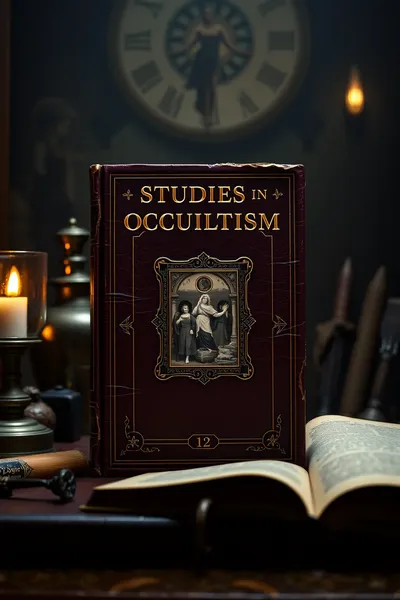
Occultism Of The Secret Doctrine

 80
80

Occultism Of The Secret Doctrine

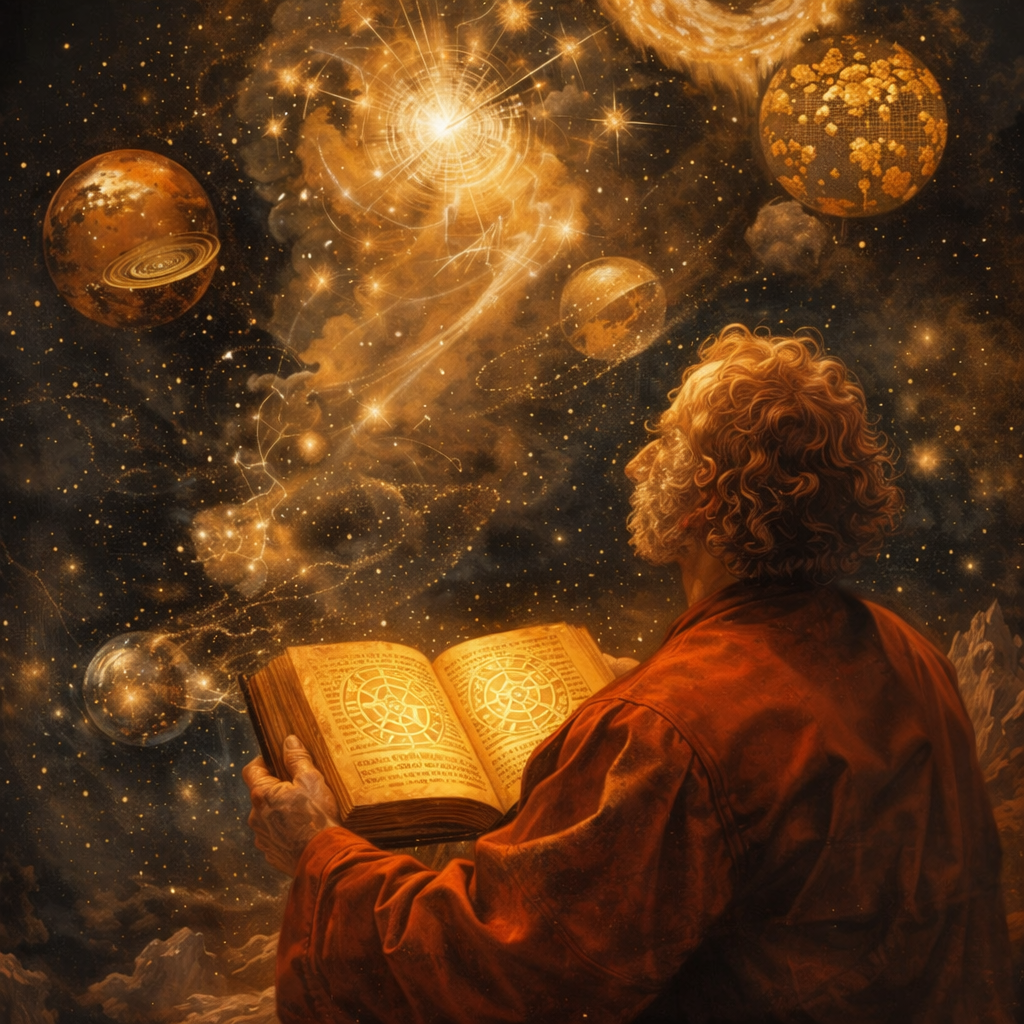

The ambition of Occultism Of The Secret Doctrine is considerable: to render comprehensible the dense, often allegorical, pronouncements of Helena Blavatsky's The Secret Doctrine. The work succeeds in presenting a more digestible framework for Blavatsky's vast cosmology, particularly in its explication of the Root Races and their evolutionary schema. However, its interpretative lens, while focused, sometimes oversimplifies the polysemous nature of Blavatsky's original prose. A notable strength lies in its clear delineation of the Seven Planes of Existence, a concept central to Theosophical metaphysics. A potential limitation is the inherent challenge of capturing the full speculative breadth of Blavatsky's vision within a concise analytical format. The discussion of the 'Monadic Essence' offers a particularly lucid entry point into the book's core teachings. Ultimately, it serves as a valuable, if condensed, companion for navigating The Secret Doctrine's labyrinthine philosophies.
📝 Description
80
### What It Is
Occultism Of The Secret Doctrine is a focused examination of Helena Blavatsky's foundational esoteric text, The Secret Doctrine. This work distills and clarifies the complex philosophical and cosmological systems presented in Blavatsky's magnum opus, making its arcane teachings more accessible. It aims to elucidate the occult underpinnings of her philosophy, exploring the intricate relationships between ancient wisdom traditions, modern science, and spiritual evolution as conceived by Theosophy.
### Who It's For
This book is intended for serious students of Theosophy, comparative mythology, and ancient religions. It will appeal to those who have encountered Blavatsky's original work and seek a deeper understanding of its esoteric mechanics, or those new to Theosophical concepts who require a guided exploration of its core tenets. It is also valuable for scholars of late 19th-century occult movements and spiritualist phenomena.
### Historical Context
Published initially in 2004, Occultism Of The Secret Doctrine engages with the legacy of Helena Blavatsky's The Secret Doctrine, first published in 1888. Blavatsky's work emerged during a period of intense spiritual and intellectual ferment in the late Victorian era, a time marked by the rise of Spiritualism, the revival of Hermeticism, and burgeoning interest in Eastern philosophies. Her synthesis of these disparate elements created a profound impact, influencing subsequent occult and New Age movements.
### Key Concepts
The text elaborates on concepts such as the Seven Planes of Existence, the Root Races and their cycles of evolution, and the fundamental unity of all religions. It addresses the intricate cosmology presented by Blavatsky, focusing on the interplay of divine consciousness, cosmic laws, and the material manifestation of the universe. The work also touches upon the nature of karma, reincarnation, and the ultimate spiritual destiny of humanity as outlined in Theosophical doctrine.
💡 Why Read This Book?
• Gain a structured understanding of the Seven Planes of Existence as presented in Blavatsky's work, offering a conceptual map of consciousness and matter not readily found elsewhere. • Explore the cyclical evolution of Root Races, a specific Theosophical doctrine with implications for understanding humanity's past and future, distinct from standard historical narratives. • Decipher the concept of 'Monadic Essence,' a fundamental principle of Blavatsky's cosmology, revealing a unique perspective on the animating force behind all existence.
⭐ Reader Reviews
Honest opinions from readers who have explored this book.
❓ Frequently Asked Questions
What is the primary goal of Occultism Of The Secret Doctrine?
The primary goal is to clarify and distill the complex occult and cosmological concepts presented in Helena Blavatsky's seminal work, The Secret Doctrine, making its esoteric teachings more accessible to students.
Who is Helena Blavatsky and why is The Secret Doctrine important?
Helena Blavatsky (1831-1891) was a key figure in the development of Theosophy. The Secret Doctrine (1888) is her most significant work, presenting a vast synthesis of ancient religions, philosophies, and scientific theories, intended to reveal universal truths.
Does this book offer new interpretations of Blavatsky's work?
It offers a focused interpretation aimed at clarity and accessibility, rather than proposing entirely novel theories. It seeks to illuminate the existing esoteric framework of The Secret Doctrine.
What are some key concepts discussed in Occultism Of The Secret Doctrine?
Key concepts include the Seven Planes of Existence, the cycles of Root Races, the Monadic Essence, and the underlying unity of world religions as interpreted through a Theosophical lens.
Is this book suitable for beginners in esoteric studies?
It is suitable for beginners who are specifically interested in Theosophy and Blavatsky's writings, providing a more structured entry point than tackling The Secret Doctrine directly.
When was Occultism Of The Secret Doctrine first published?
Occultism Of The Secret Doctrine was first published in 2004, making it a modern commentary on a late 19th-century esoteric text.
🔮 Key Themes & Symbolism
Cosmic Evolution and Root Races
The work scrutinizes Blavatsky's intricate model of cosmic evolution, detailing the seven planes of existence and the progressive development of humanity through successive Root Races. It explains how each race represents a stage in the unfolding of consciousness and form, guided by an overarching spiritual hierarchy. This cyclical view of human history and destiny is presented as a fundamental aspect of Theosophical cosmology, distinct from linear historical progression.
The Monadic Essence
Central to Blavatsky's philosophy is the concept of the Monadic Essence, the divine spark or animating principle inherent in all beings. This theme explores its journey through various stages of manifestation and evolution across different planes and kingdoms. The text elucidates how the Monad, originating from the Absolute, progressively incarnates and learns, driving the evolutionary process towards ultimate spiritual reintegration.
Unity of Religions and Ancient Wisdom
This theme addresses Blavatsky's assertion that all major world religions and esoteric traditions stem from a single, ancient source of wisdom. The book examines how The Secret Doctrine attempts to demonstrate this underlying unity through comparative analysis of myths, symbols, and philosophies from diverse cultures. It highlights the esoteric interpretation of religious narratives as vehicles for universal spiritual truths.
The Seven Planes of Existence
Occultism Of The Secret Doctrine maps out the complex stratification of the universe according to Theosophical teachings, specifically the seven planes ranging from the purely spiritual to the dense physical. Understanding these planes is crucial for grasping Blavatsky's cosmology, as they represent different states of matter and consciousness through which existence unfolds and evolves.
💬 Memorable Quotes
“The Monadic Essence is the divine spark within.”
— This encapsulates the Theosophical belief in an eternal, spiritual nucleus within every entity, which guides its evolutionary path from primal unity towards complex manifestation and eventual return.
“Humanity progresses through distinct Root Races.”
— This refers to Blavatsky's concept of vast evolutionary epochs, where humanity undergoes physical and spiritual transformation, moving through seven major racial stages on Earth.
“The seven planes structure all reality.”
— This highlights the layered nature of existence in Theosophy, positing that reality is composed of distinct but interconnected levels of being, from the most subtle spiritual to the most concrete material.
“All religions share a common esoteric source.”
— This paraphrase points to Blavatsky's central thesis that diverse religious doctrines are but exoteric expressions of a single, ancient, universal wisdom tradition.
“The Secret Doctrine reveals universal laws.”
— This interpretation suggests the book's aim is not merely theological or philosophical, but to uncover the fundamental, unchanging principles governing the cosmos and consciousness.
🌙 Esoteric Significance
Tradition
This work firmly situates itself within the Theosophical tradition, a lineage heavily influenced by Helena Blavatsky. Theosophy itself draws from Neoplatonism, Hermeticism, Kabbalah, and Eastern religions (particularly Vedanta and Buddhism), synthesizing them into a unique spiritual philosophy. Occultism Of The Secret Doctrine serves as a guide to this synthesis, explaining its cosmology and evolutionary theories as a departure from conventional Western esotericism while building upon its foundational concepts.
Symbolism
The text often delves into the symbolic language of The Secret Doctrine. Key symbols include the Serpent, representing cyclicality, cosmic wisdom, and eternity; the Triangle, signifying the divine trinity or the interplay of Spirit, Matter, and Consciousness; and the Ankh, an ancient Egyptian symbol often interpreted as the key to life or the union of male and female principles, reflecting Blavatsky's syncretic approach to universal symbolism.
Modern Relevance
Contemporary esoteric thinkers and groups continue to draw upon Blavatsky's foundational concepts. Modern Theosophical societies worldwide still study The Secret Doctrine, and its ideas have permeated New Age thought, influencing concepts of evolution, consciousness, and interconnectedness. Modern practitioners of Western esotericism may also reference its cosmology when exploring comparative spirituality or seeking alternative metaphysical frameworks beyond traditional religious structures.
👥 Who Should Read This Book
• Students of Theosophy seeking a clearer exposition of Blavatsky's complex doctrines, particularly the Seven Planes and Root Races. • Comparative religion scholars interested in late 19th-century esoteric movements and their attempt to synthesize Eastern and Western spiritual traditions. • Individuals exploring alternative cosmological models and evolutionary theories beyond mainstream scientific and religious perspectives.
📜 Historical Context
Occultism Of The Secret Doctrine engages with the profound impact of Helena Blavatsky's The Secret Doctrine, first published in 1888. This period, the late Victorian era, was fertile ground for esoteric movements, fueled by the rise of Spiritualism and a reaction against prevailing materialism. Blavatsky's work synthesized esoteric traditions from East and West, presenting a comprehensive cosmology that challenged established scientific and religious paradigms. It drew heavily on Hindu and Buddhist philosophies, alongside Hermetic and Kabbalistic lore, aiming to present a 'scientific' basis for occultism. Blavatsky's Theosophical Society, founded in 1875, became a nexus for intellectuals and spiritual seekers. The Secret Doctrine itself faced significant scrutiny, notably from figures like Richard Hodgson of the Society for Psychical Research, whose 1885 report (though later questioned) cast doubt on Blavatsky's authenticity, highlighting the contentious reception of her work.
📔 Journal Prompts
The Monadic Essence's journey across planes.
Reflections on the cyclical nature of Root Races.
Comparing the esoteric unity of religions.
The significance of the Seven Planes of Existence.
Blavatsky's concept of divine hierarchies.
🗂️ Glossary
Theosophy
A spiritual philosophy founded by Helena Blavatsky in the late 19th century, aiming to reveal the underlying unity of all religions and to promote the study of comparative religion, philosophy, and science.
The Secret Doctrine
Helena Blavatsky's magnum opus, first published in 1888, which presents a complex cosmological and anthropological system intended to elucidate universal truths from ancient sources.
Root Races
In Theosophical doctrine, successive stages of human evolution, each characterized by distinct physical, mental, and spiritual development, occurring over vast geological epochs.
Seven Planes of Existence
A Theosophical concept describing a hierarchical structure of reality, comprising different levels of matter and consciousness, from the purely spiritual to the physical.
Monadic Essence
The divine spark or spiritual individuality within every being, considered the ultimate source of consciousness that undergoes a long process of evolution through various manifestations.
Esotericism
Belief systems and practices that are concerned with the inner, hidden, or secret knowledge, often contrasted with exoteric or outward, public teachings.
Cosmology
The study or theory of the origin, nature, and development of the universe; in this context, referring to the specific Theosophical model presented by Blavatsky.