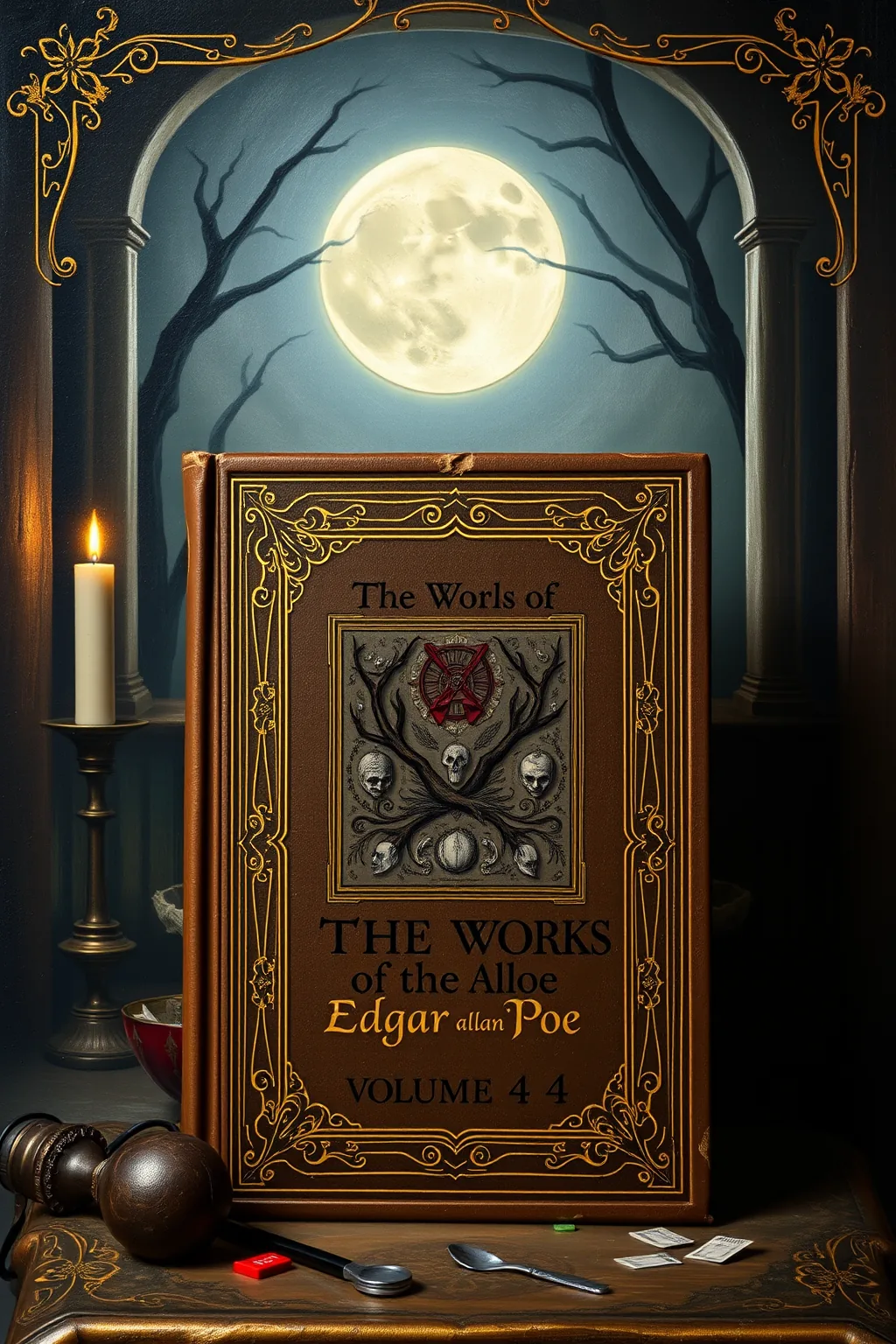
The Works of Edgar Allan Poe, Volume 4
 82
82

The Works of Edgar Allan Poe, Volume 4


Aurelia Blackwood (Occult Philosophy Critic) — 'The Works of Edgar Allan Poe, Volume 4' stands as a testament to Poe's unparalleled ability to tap into the collective unconscious. This collection is a treasure trove for occult scholars, offering potent insights into themes of spiritual decay, the nature of phantasmagoria, and the psychological impact of forbidden knowledge. Poe's narratives function as potent meditations on the shadow self and the fragility of perceived reality. The intricate symbolism embedded within these tales provides fertile ground for esoteric interpretation, making this volume an indispensable addition to any practitioner's library. It is a rare work that not only entertains but also profoundly challenges the reader's understanding of the spiritual and psychological realms, making it a cornerstone for serious study.
📝 Description
82
Published posthumously, 'The Works of Edgar Allan Poe, Volume 4' gathers tales of psychological dread and the supernatural.
This collection presents Edgar Allan Poe's distinctive contributions to supernatural and occult fiction. Poe's stories often feature narrators grappling with mental instability, obsession, and encounters with unexplained phenomena. The narratives are characterized by their atmospheric intensity, complex symbolism, and exploration of the darker aspects of the human psyche. Readers will find tales that blur the lines between reality and illusion, sanity and madness.
Each story is a carefully constructed piece, employing rich language to build suspense and evoke a sense of unease. Poe's work here touches upon themes of mortality, the nature of consciousness, and the human fascination with the unknown. This volume serves as a significant compilation for those interested in the literary traditions that explore the uncanny and the subconscious mind.
Poe's writings resonate with a tradition that examines the hidden dimensions of human experience, often touching upon themes found in occult philosophy. His focus on altered states of consciousness, the power of suggestion, and encounters with the spectral aligns with currents of thought that question materialist explanations for reality. The symbolic language and psychological depth in these stories invite interpretations that go beyond the literal, suggesting a connection to forces or states of being that lie outside conventional understanding, a hallmark of esoteric inquiry.
✍️ Author
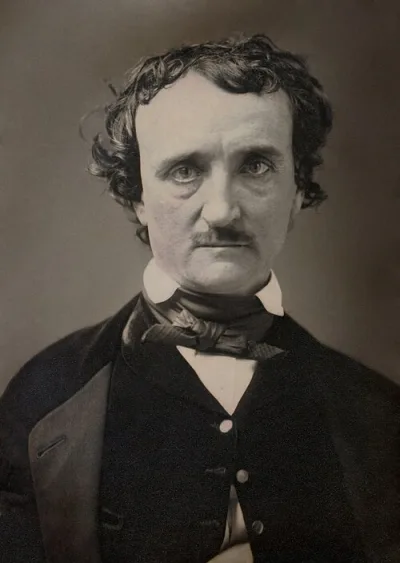
Edgar Allan Poe
American writer, poet, and critic, Edgar Allan Poe is best known for his tales of mystery and the macabre.
💡 Why Read This Book?
This volume is a gateway for seekers of hidden wisdom and scholars of the macabre. It offers profound explorations of the human psyche, symbolic language, and the allure of the supernatural. For practitioners, Poe's tales serve as rich parables for confronting inner demons and understanding archetypal forces. Read it to unlock veiled truths and enrich your understanding of Gothic literature's esoteric roots.
⭐ Reader Reviews
Honest opinions from readers who have explored this book.
❓ Frequently Asked Questions
What makes this volume particularly relevant to esoteric studies?
This volume delves deeply into themes of the subconscious, spectral phenomena, and psychological disintegration, all of which are central concerns in many esoteric traditions exploring the hidden aspects of reality and the human mind.
How does Poe's work connect to the Gothic tradition?
Poe is a foundational figure in Gothic literature, utilizing its tropes of decay, mystery, and the supernatural to explore profound psychological and existential anxieties, often with an undercurrent of the occult.
Are these tales suitable for beginners in esoteric literature?
Yes, while complex, Poe's accessible yet potent prose makes these stories an engaging entry point for those new to esoteric themes, offering both narrative pleasure and intellectual depth.
What kind of symbolism can be found in Poe's stories?
Expect rich symbolism related to death, the afterlife, madness, hidden knowledge, the duality of human nature, and the uncanny manifestations of the subconscious.
Is this volume a complete collection of Poe's short stories?
While this is Volume 4, it focuses on a significant selection of his compelling short fiction, offering a substantial and representative body of his masterful storytelling.
🔮 Key Themes & Symbolism
The Descent into Madness
This theme explores the fragile boundary between sanity and the abyss of mental dissolution. Poe's characters often grapple with internal demons, paranoia, and hallucinations, reflecting an esoteric understanding of the mind as a landscape susceptible to spectral intrusions and self-inflicted psychological torment. The narratives serve as cautionary tales and profound explorations of the shadow self, where the ego dissolves and the unconscious erupts with terrifying clarity.
The Unseen and the Spectral
Poe masterfully conjures an atmosphere of the uncanny, where the veil between the physical and spiritual realms is perpetually thin. This theme studies the nature of ghosts, hauntings, and preternatural occurrences, not merely as plot devices, but as manifestations of deeper metaphysical realities. The stories invite contemplation on the persistence of consciousness beyond death and the subtle energetic currents that permeate our existence, hinting at a universe far more alive and mysterious than perceived.
Symbolism of Decay and Mortality
The pervasive imagery of decay, death, and ruin in Poe's work transcends mere Gothic aesthetics. It functions as a profound symbolic language for the ephemeral nature of life, the inevitable march of time, and the spiritual stagnation that can afflict the soul. These symbols explore the alchemical process of transformation through dissolution, suggesting that confronting mortality is a necessary prelude to spiritual rebirth and the attainment of hidden wisdom.
💬 Memorable Quotes
Direct passages from the work, attributed to the author.
“Deep into that darkness peering, long I stood there wondering, fearing, Doubting, dreaming dreams no mortal ever dared to dream before.”
— Represents the explorer of hidden knowledge, venturing into the unknown psychological or spiritual realms, confronting profound existential doubts and forbidden concepts.
“All that we see or seem Is but a dream within a dream.”
— A philosophical statement on the illusory nature of reality, suggesting that our perceived world is a mere construct, a layer of consciousness obscuring a deeper, more fundamental truth.
“I became possessed of a dread which I could scarcely understand.”
— Illustrates the uncanny and inexplicable fears that Poe's characters often experience, pointing to subconscious anxieties or psychic sensitivities to unseen forces.
“It is a fact, however, that the madman is not always the man who is mad.”
— A subtle commentary on the nature of perception and societal definitions of sanity, suggesting that true madness may lie in conformity or in the unrecognized depths of the 'sane'.
💡 Key Ideas
Editorial paraphrase of the work's core concepts — not direct quotes.
The boundaries which divide Life from Death are at best shadowy and indistinct.
This quote expresses Poe's fascination with the liminal spaces between existence and non-existence, hinting at a spiritual continuity or unknown realm beyond mortal life.
🌙 Esoteric Significance
Tradition
Poe's work resonates deeply with the hermetic and alchemical traditions, particularly in its exploration of psychological transformation and the symbolic representation of inner states. His narratives can be interpreted as allegories for the alchemical process of 'nigredo' (blackening or dissolution) and the subsequent stages of spiritual purification and individuation, exploring the subconscious as a crucible for profound change.
Symbolism
Key symbols include the raven (omen, darkness, forbidden knowledge), the premature burial (fear of entrapment, subconscious confinement), the labyrinthine settings (psychological complexity, existential confusion), and the motif of the doppelgänger (duality of self, fragmented identity). These elements serve as potent archetypal representations of internal struggles and the hidden forces influencing human destiny.
Modern Relevance
In an age saturated with digital distractions and superficial anxieties, Poe's exploration of profound dread, existential questioning, and the depths of the human psyche remains remarkably relevant. His work offers a timeless lens through which to examine societal fears, individual isolation, and the enduring power of the uncanny in a seemingly rational world, providing solace and insight to those seeking deeper meaning.
👥 Who Should Read This Book
This volume is indispensable for scholars of Gothic literature and American Romanticism, offering a foundational understanding of Poe's contribution to these genres. Seekers of esoteric wisdom and those fascinated by the occult will find rich symbolic language and profound psychological insights. Practitioners of contemplative arts and those interested in Jungian psychology will appreciate the exploration of archetypes and the shadow self. Beginners to metaphysical literature can find an engaging and potent entry point through Poe's masterful, evocative storytelling.
📜 Historical Context
Published posthumously in the late 19th century, 'The Works of Edgar Allan Poe, Volume 4' emerged during a period of significant intellectual and artistic ferment. The Victorian era was marked by a fascination with spiritualism, the burgeoning fields of psychology, and a continued engagement with Romantic and Gothic literary traditions. Poe's innovative approach, however, pushed these boundaries, foreshadowing modernist sensibilities with his intense focus on subjective experience, psychological realism, and the exploration of the subconscious. His work resonated with a readership increasingly interested in the darker, more complex aspects of human nature and the mysteries of existence, influencing subsequent generations of writers in horror, detective fiction, and Symbolist poetry.
📔 Journal Prompts
Reflect on a moment when you felt the 'shadowy and indistinct' boundary between life and death or reality and illusion. Describe the sensation and its impact.
Analyze a recurring symbol in Poe's tales (e.g., the raven, the house, the eye). How might it represent an aspect of the human psyche or a universal archetype?
Write a short narrative about confronting a profound, irrational fear. What is the source of this fear, and how does it manifest?
Consider the concept of 'dreams no mortal ever dared to dream before.' What forbidden knowledge or existential truths might these dreams represent?
Explore the idea that 'all that we see or seem is but a dream within a dream.' How does this perspective alter your perception of your daily life and reality?
🗂️ Glossary
Phantasmagoria
A sequence of humorous, disturbing, or surreal imagery, often experienced in dreams or as a result of hallucination. In Poe's context, it refers to vivid, often unsettling, mental projections.
The Uncanny
A concept describing the feeling of unease or dread evoked by something that is simultaneously familiar and strangely alien, often associated with repressed thoughts or primal fears.
Archetype
In Jungian psychology, a universal, archaic pattern and image that derives from the collective unconscious and is the psychic counterpart of an instinct. Poe's characters and settings often embody these.
Liminal
Relating to a transitional or initial stage of a process, or occupying a position at, or on both sides of, a boundary or threshold. Often used to describe states of consciousness or spiritual transition.
Subconscious
The part of the mind of which we are not aware but which influences actions and feelings. Poe masterfully studies its depths, revealing its power and terror.
This book appears in 1 collection
🔮 Readers Also Liked
Browse all →






More by Edgar Allan Poe
All books →




From the “Transcendental Meditation” Collection
View all →







More Free Supernatural & Occult Fiction Books
View all →