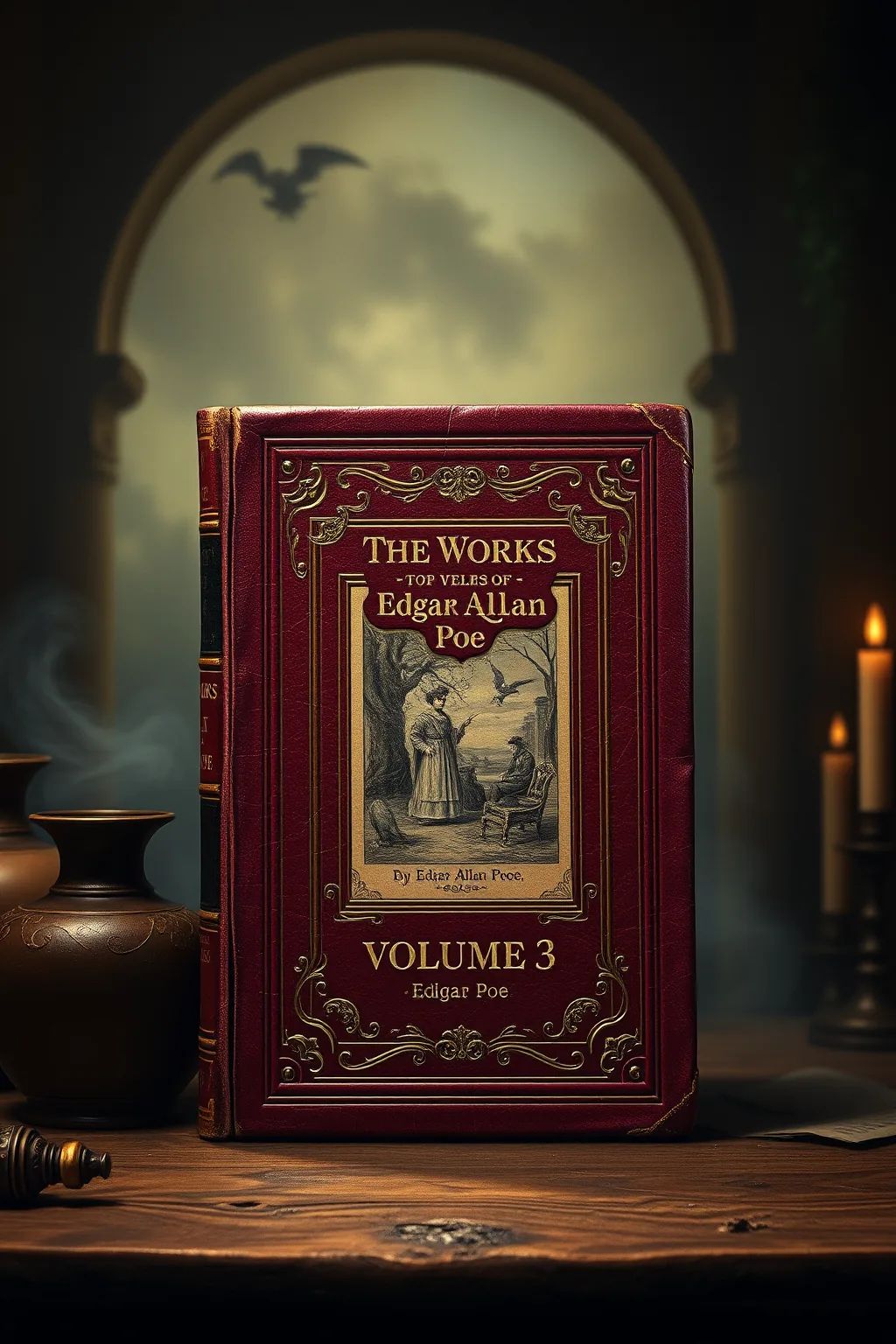
The Works of Edgar Allan Poe, Volume 3
 82
82

The Works of Edgar Allan Poe, Volume 3


Celeste Moreau (Divination & Symbolism Reviewer) — Edgar Allan Poe's 'Volume 3' continues to resonate with profound esoteric insights, solidifying his legacy as a chronicler of the soul's darkest chambers. This collection masterfully weaves tales steeped in symbolism, hinting at occult undercurrents and the interconnectedness of fate and madness. Poe's exploration of guilt, perception, and the supernatural is particularly potent, offering fertile ground for contemplation on mortality and the unseen forces that shape our reality. Ideal for scholars of Gothic literature, practitioners of symbolic interpretation, and any seeker drawn to the deeper, often unsettling, truths of human experience. A timeless testament to the power of shadow and mystery.
📝 Description
82
The 1850 posthumous edition of Edgar Allan Poe's works, Volume 3, collects stories exploring the supernatural and the occult.
This volume gathers tales originally published in the mid-19th century, showcasing Edgar Allan Poe's distinctive contributions to Gothic horror and early detective fiction. The stories examine psychological distress, the allure of the forbidden, and the lingering effects of past events. Poe's writing style creates palpable atmospheres of unease and contemplation, drawing readers into the dark interior lives of his characters.
These narratives are more than simple tales of terror. They question the boundaries of sanity, confront the finality of death, and touch upon hidden or occult knowledge. The collection serves as a significant example of American Romantic literature, particularly its darker strains. It appeals to those interested in the psychological underpinnings of fear and the exploration of mortality through fiction.
Poe's work in this collection engages with the occult and supernatural themes prevalent in 19th-century spiritualist and mesmerist currents. While not a direct practitioner or theorist of occultism, Poe tapped into a public fascination with hidden forces, the afterlife, and the darker aspects of human consciousness. His stories often feature elements that echo alchemical symbolism or explore states of altered perception, aligning with a broader literary trend of examining the mystical and the hidden. This volume reflects a period where the boundaries between psychological exploration and supernatural phenomena were frequently blurred in popular and literary imagination.
✍️ Author
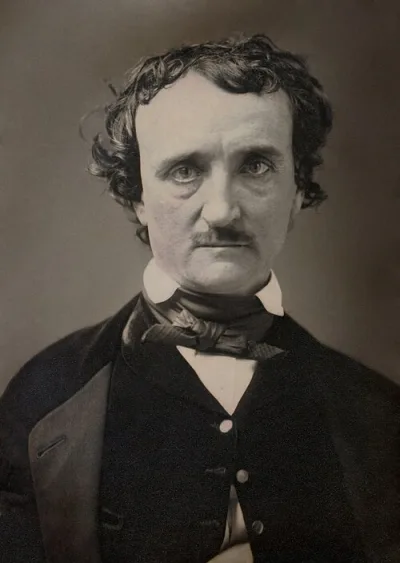
Edgar Allan Poe
American writer, poet, and critic, Edgar Allan Poe is best known for his tales of mystery and the macabre.
💡 Why Read This Book?
Uncover profound psychological landscapes and explore the liminal spaces where reality blurs. This volume is essential for seekers of hidden meanings, scholars of Gothic and occult literature, and practitioners interested in the symbolic language of dread and the subconscious. Poe's masterful prose offers a unique lens through which to examine timeless human anxieties and the allure of the unknown.
⭐ Reader Reviews
Honest opinions from readers who have explored this book.
❓ Frequently Asked Questions
What makes this volume particularly relevant to esoteric studies?
This volume delves into themes of subconscious dread, the supernatural, and the blurred lines of perception, aligning with explorations in esoteric traditions that examine the inner workings of the mind and the subtle forces of existence.
Does this book contain explicit spells or rituals?
No, the book contains fictional narratives that explore psychological and supernatural themes through rich symbolism and atmosphere, rather than explicit magical instructions.
Who was Edgar Allan Poe?
Edgar Allan Poe (1809-1849) was an American writer, poet, editor, and literary critic. He is best known for his poetry and short stories, particularly his tales of mystery and the macabre.
What is the significance of the posthumous publication?
The posthumous publication in 1850 allowed for a more comprehensive gathering of Poe's works, providing a structured collection that cemented his enduring influence on literature and the imagination.
Are the stories in this volume suitable for beginners to Poe's work?
While Poe's work can be intense, this volume offers a compelling entry point into his darker, more symbolic narratives, suitable for readers with an interest in the macabre and philosophical underpinnings of his fiction.
🔮 Key Themes & Symbolism
The Descent into Madness and Illusion
Poe masterfully charts the precarious terrain of the human mind, where sanity frays under the weight of grief, guilt, or inexplicable phenomena. These tales explore the subjective nature of reality, the unreliable narrator, and the terrifying possibility that the most profound horrors reside within our own consciousness. Readers are invited to contemplate the fragility of perception and the seductive allure of delusion, often mirroring esoteric concepts of illusion (maya) and the challenges of attaining true enlightenment through self-awareness.
The Unseen and the Supernatural
This volume is a wide range of spectral presences, uncanny coincidences, and the pervasive sense of a world governed by forces beyond human comprehension. Poe's narratives often touch upon themes that resonate with occult traditions, hinting at a hidden spiritual or energetic reality that influences mortal affairs. Whether it's the lingering spirits of the departed or the unsettling manifestations of the subconscious, these stories invite contemplation on the nature of the soul, the afterlife, and the persistent whispers of the supernatural that echo through human folklore and esoteric thought.
Symbolism of Death and Transformation
Death is not merely an ending in Poe's world, but a potent symbol of transition, revelation, and often, a catalyst for profound, albeit terrifying, transformations. The pervasive imagery of decay, burial, and the spectral realm serves as a potent allegory for the shedding of the old self and the potential, however dark, for rebirth or a horrifying continuation. These explorations of mortality and its symbolic weight align with ancient mysteries and alchemical processes that view death as a necessary stage in spiritual evolution, a concept deeply embedded in many esoteric philosophies.
💬 Memorable Quotes
Direct passages from the work, attributed to the author.
“I have been and still am, a man of imagination.”
— Poe emphasizes the power of the mind and its capacity to conjure realities, a theme central to understanding how perception shapes our experience of the world.
“The mystery of the universe is profound.”
— This reflects a deep contemplation of the unknown and the vastness of existence, a sentiment echoed in many spiritual and philosophical quests for understanding.
“All that we see or seem is but a dream within a dream.”
— A powerful articulation of solipsism or the illusory nature of reality, suggesting that our perceived world may be a mere construct of consciousness.
“Sleep, those phantoms of the dead, have their dominion.”
— This personifies sleep as a realm connected to the spectral, blurring the lines between conscious rest and the uncanny influence of the deceased.
💡 Key Ideas
Editorial paraphrase of the work's core concepts — not direct quotes.
The boundaries which divide Life from Death are at best shadowy and vague.
This quote suggests a fluid, permeable barrier between existence and non-existence, hinting at the potential for spectral or spiritual continuations beyond the physical realm.
🌙 Esoteric Significance
Tradition
Poe's works resonate deeply with Hermeticism and Gnosticism, particularly in their exploration of subjective reality, the illusion of the material world, and the search for hidden knowledge. His focus on the power of the mind, the descent into inner darkness, and the symbolic representation of spiritual states aligns with the Hermetic principle that 'As Above, So Below,' reflecting the microcosm of the human psyche mirroring the macrocosm of the universe.
Symbolism
Key symbols abound: the raven signifies ill omen and persistent memory; the decaying mansions represent the inner decay of the psyche or lineage; eyes often symbolize perception, soul, or windows to unseen realms. The motif of premature burial speaks to the fear of being trapped, both physically and spiritually, and the potential for awakening from a false state of being.
Modern Relevance
In an age increasingly dominated by digital illusions and existential anxieties, Poe's exploration of psychological depth and the fragility of reality remains profoundly relevant. His work offers a powerful lens for understanding modern fears, the impact of trauma, and the persistent human fascination with the unknown, making it a timeless resource for those seeking to understand the shadows within themselves and the world.
👥 Who Should Read This Book
This volume is a treasure for the discerning reader. **Beginners** to Poe will find a compelling entry into his signature style, marked by atmospheric dread and psychological intensity. **Scholars** of Gothic literature and American Romanticism will appreciate its place within the canon and its rich symbolic language. **Seekers** of esoteric and philosophical depth will discover profound meditations on consciousness, mortality, and the supernatural. **Practitioners** interested in archetypal symbolism, the psychology of fear, and the exploration of the shadow self will find fertile ground for contemplation and inspiration within Poe's masterfully crafted narratives.
📜 Historical Context
Published posthumously in 1850, 'The Works of Edgar Allan Poe, Volume 3' emerged during a period of significant intellectual and artistic ferment in America. The mid-19th century saw the rise of Romanticism's darker strains, a fascination with the supernatural, and burgeoning interest in psychology and the subconscious. Poe's work resonated with a culture grappling with rapid industrialization, the shadows of slavery, and a growing unease about the human condition. His tales of horror and mystery tapped into these societal anxieties, offering a gothic escape and a profound exploration of the inner self. This era's embrace of the macabre and the exploration of forbidden knowledge provided fertile ground for Poe's enduring literary legacy, influencing subsequent generations of writers and thinkers interested in the darker aspects of human experience.
📔 Journal Prompts
Reflect on a recurring dream or nightmare: what symbols or emotions stand out, and how might they relate to an 'unseen' aspect of your life?
Consider a moment when your perception of reality felt unstable or altered. How did you navigate that experience, and what did it reveal about your inner world?
Explore the concept of 'transformation' as depicted in Poe's tales. In what ways has change, particularly difficult change, reshaped your understanding of yourself or the world?
Write about an object or place that holds a strong, almost spectral, memory for you. What narrative does it evoke, and what emotions does it stir?
Imagine a 'decaying mansion' as a metaphor for a part of yourself that needs attention or release. What elements comprise this mansion, and what steps could lead to its restoration or dismantling?
🗂️ Glossary
Gothic Fiction
A literary genre characterized by elements of horror, death, and gloom, often set in ancient castles or desolate landscapes, exploring themes of madness, the supernatural, and psychological terror.
Macabre
A style that features a morbid fascination with death, decay, and the gruesome, often used to evoke feelings of unease and dread in the reader.
Psychological Horror
A subgenre of horror fiction that focuses on the mental and emotional state of characters, using suspense, dread, and internal conflict to create fear.
Symbolism
The use of objects, characters, or events to represent abstract ideas or qualities, adding layers of meaning beyond the literal interpretation.
Unreliable Narrator
A narrator whose credibility has been compromised, often due to mental instability, bias, or deliberate deception, forcing the reader to question the presented narrative.
This book appears in 1 collection
🔮 Readers Also Liked
Browse all →




More by Edgar Allan Poe
All books →





From the “Transcendental Meditation” Collection
View all →




More Free Supernatural & Occult Fiction Books
View all →