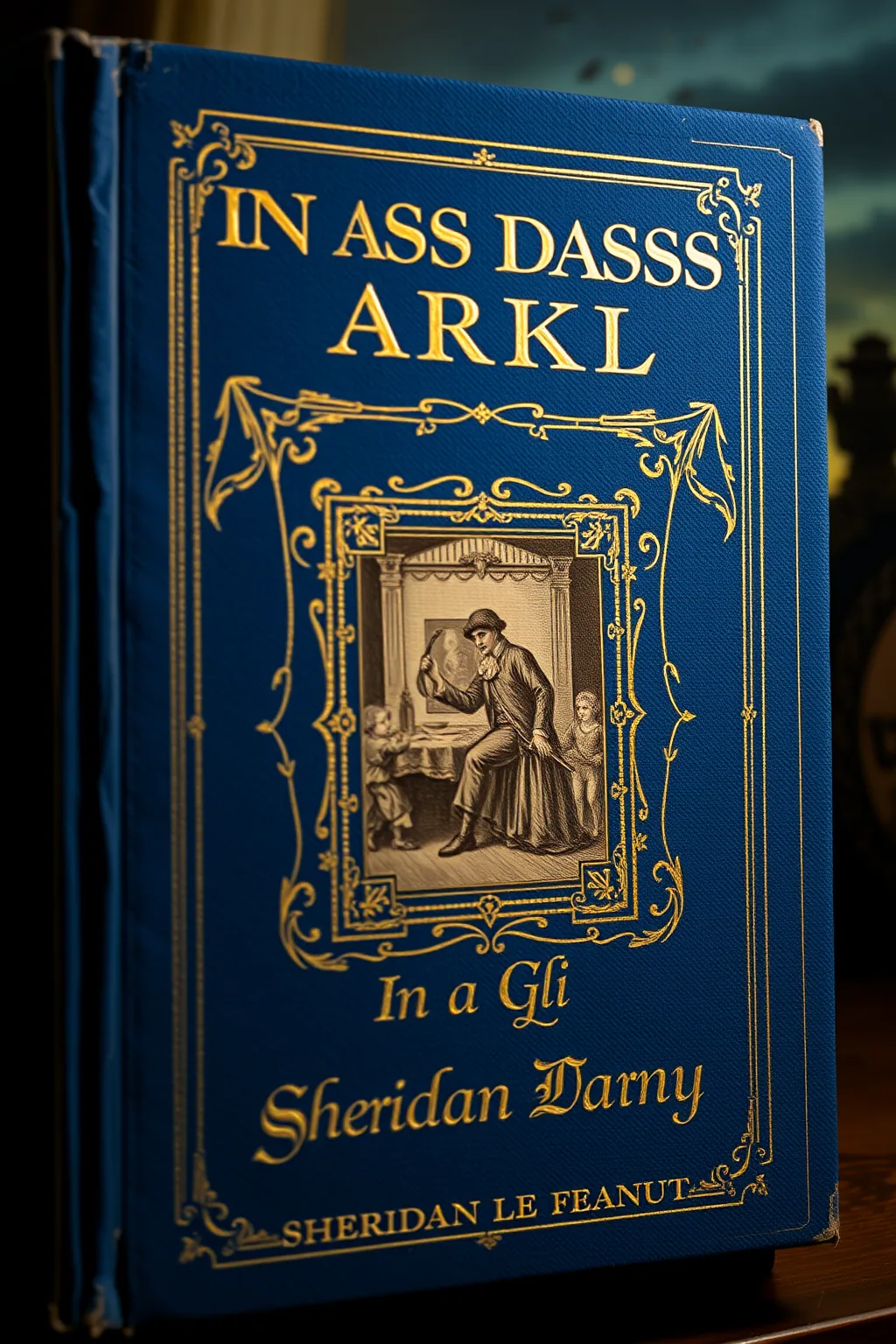
In a Glass Darkly
 76
76

In a Glass Darkly


Alaric Kestrel (Metaphysical Studies Reviewer) — 'In a Glass Darkly' remains a cornerstone for anyone interested in the confluence of psychological horror and esoteric thought. Le Fanu, through the persona of Dr. Hesselius, meticulously dissects the manifestations of the supernatural, hinting at underlying spiritual or psychological phenomena often dismissed by rationalism. The tales are rich with symbolism, exploring themes of possession, karmic retribution, and the perilous pursuit of forbidden knowledge. This collection is not for the faint of heart but for the dedicated student of the uncanny, offering profound insights into the nature of fear and the permeable boundary between the material and the spectral. Highly recommended for practitioners and scholars of the occult and Gothic literature.
📝 Description
76
Sheridan Le Fanu compiled five supernatural case studies in 'In a Glass Darkly,' published in 1872.
Published in 1872, Sheridan Le Fanu's 'In a Glass Darkly' presents five tales framed as the case files of Dr. Martin Hesselius, an occult investigator. These narratives are not simple ghost stories; they concern the edges of perception and the intrusion of the supernatural into ordinary life.
Le Fanu constructs tales rich with psychological unease and arcane lore. The collection examines the consequences of acquiring forbidden knowledge and the impact of unseen influences on individuals. Each story acts as a carefully constructed piece, drawing the reader into confrontations with personal anxieties and the mysteries surrounding existence. The book appeals to readers interested in more than just scares, offering a thoughtful engagement with the human mind's vulnerability to the spectral.
As a collection of occult case studies, 'In a Glass Darkly' belongs to a Victorian literary tradition that grappled with spiritualism and the supernatural. Dr. Hesselius functions as an early example of the occult detective, a figure who attempts to rationalize or document inexplicable phenomena. The stories reflect a cultural fascination with the unknown and the perceived thinning of the veil between the material world and other dimensions, common in esoteric circles of the era.
✍️ Author
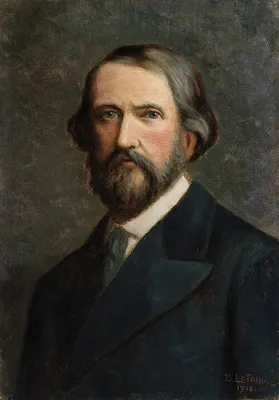
Sheridan Le Fanu
Joseph Thomas Sheridan Le Fanu was an Irish writer of Gothic tales, ghost stories, and mystery novels.
💡 Why Read This Book?
Delve into the foundational texts of supernatural horror and explore the psychological depths of Victorian Gothic. 'In a Glass Darkly' is essential for seekers of arcane lore, students of the uncanny, and practitioners intrigued by the subtle interplay of mind and spirit. Experience tales that have shaped modern ghost stories and continue to provoke reflection on the hidden forces within and around us. A must-read for any serious collector of metaphysical literature.
⭐ Reader Reviews
Honest opinions from readers who have explored this book.
❓ Frequently Asked Questions
What is the overall tone of 'In a Glass Darkly'?
The tone is predominantly one of creeping dread, psychological unease, and intellectual mystery. Le Fanu masterfully builds atmosphere through vivid descriptions and a focus on the internal states of his characters, blending suspense with a profound sense of the uncanny.
Who is Dr. Martin Hesselius?
Dr. Martin Hesselius is the fictional editor and collector of the tales within 'In a Glass Darkly.' He is presented as an enigmatic physician with a keen interest in the supernatural and psychological phenomena, acting as a narrator and frame for the collected stories.
Are these stories purely supernatural or do they have psychological interpretations?
Le Fanu expertly blurs the lines. While overtly supernatural, the stories are deeply rooted in psychological horror, exploring themes of obsession, madness, guilt, and the power of the subconscious. The supernatural often serves as a metaphor for internal turmoil.
What makes this collection a 'cornerstone of Gothic literature'?
'In a Glass Darkly' is foundational due to its sophisticated blend of psychological realism and supernatural dread, its masterful pacing, and its enduring influence on subsequent ghost stories and horror fiction. It elevated the genre beyond simple hauntings.
Is 'Carmilla' a standalone story or part of the collection?
'Carmilla,' one of the most famous vampire novellas, is indeed one of the five integral stories included within 'In a Glass Darkly.' It is presented as another case study investigated by Dr. Hesselius.
🔮 Key Themes & Symbolism
The Nature of the Unseen
Le Fanu probes the existence and influence of forces beyond empirical observation. The collection meticulously details encounters with spectral entities, demonic presences, and uncanny phenomena, suggesting that a hidden dimension of reality profoundly impacts human lives. This theme invites contemplation on the limitations of rationalism and the vastness of the unknown, exploring how unseen powers can manipulate events and torment the human psyche. It is a journey into the permeable membrane separating the mundane from the truly inexplicable.
Psychological Torment and Manifestation
A central tenet of 'In a Glass Darkly' is the intricate relationship between internal psychological states and external supernatural manifestations. Characters often grapple with guilt, obsession, and profound existential dread, which seem to attract or give form to spectral visitations. Le Fanu masterfully uses the supernatural as a lens through which to examine the darkest corners of the human mind, suggesting that our deepest fears and traumas can indeed take on a life of their own, becoming tangible threats.
Forbidden Knowledge and Its Perils
Several tales in the collection explore the dangerous allure of forbidden knowledge, particularly in the field of the occult and spiritualism. Characters who delve too deeply into arcane secrets or attempt to commune with unseen forces often face dire consequences, highlighting a cautionary aspect of the pursuit of such wisdom. This theme speaks to classical myths of hubris and punishment, emphasizing that some doors are best left unopened, and that the price of illicit knowledge can be one's sanity or soul.
💬 Memorable Quotes
Direct passages from the work, attributed to the author.
“There are more things in heaven and earth, Horatio, than are dreamt of in your philosophy.”
— Echoing Shakespeare, this implies a vast, unknown universe of spiritual and supernatural forces that defy conventional scientific or philosophical understanding.
“The mind can be a haunted house.”
— This highlights the psychological dimension, suggesting that internal fears, traumas, and obsessions can manifest as powerfully as any external ghost.
“Some souls carry their own darkness.”
— This points to the idea of inherent corruption or predisposition to malevolent influences, suggesting that external evil may find fertile ground within certain individuals.
“The veil is thin for those who seek.”
— This suggests that individuals actively pursuing spiritual or occult knowledge may be more susceptible to encountering the supernatural realm.
💡 Key Ideas
Editorial paraphrase of the work's core concepts — not direct quotes.
The world is not what it seems.
This quote captures the collection's core message: that appearances are deceptive and a hidden, often terrifying, reality lies just beneath the surface of the mundane.
🌙 Esoteric Significance
Tradition
While not explicitly tied to a single esoteric tradition, Le Fanu's work draws heavily from themes prevalent in Western occultism, demonology, and early psychological mysticism. The exploration of spectral entities, curses, and the influence of unseen forces aligns with concepts found in Hermeticism, Kabbalah, and folk magic. Dr. Hesselius himself can be seen as a proto-occultist investigator, attempting to rationalize and document phenomena that transcend mundane understanding, reflecting a broader societal interest in charting the unseen world.
Symbolism
The collection is rich in symbolism, with the 'glass darkly' itself representing a distorted, incomplete, or spiritual perception of reality, a concept echoing Pauline epistles. Dreams, visions, and spectral apparitions serve as potent symbols of repressed fears, subconscious desires, or spiritual messages. Animals, particularly cats and dogs, often carry symbolic weight, acting as omens or conduits for supernatural influence. The very structure of the book, as a casebook, symbolizes the attempt to categorize and understand the unknowable, much like an alchemist or astrologer attempting to map cosmic forces.
Modern Relevance
The enduring relevance of 'In a Glass Darkly' lies in its prescient exploration of psychological horror and the human fascination with the boundary between reality and illusion. In an age saturated with digital media and subjective experiences, Le Fanu's nuanced portrayal of how internal states can manifest externally, and how the unseen can profoundly affect us, resonates deeply. His work continues to inspire authors and filmmakers, offering a timeless examination of fear, the supernatural, and the persistent human quest to understand our place within a potentially haunted cosmos.
👥 Who Should Read This Book
This collection is indispensable for readers captivated by the darker currents of literature. **Beginners** to Gothic horror will find it an accessible yet profoundly unsettling introduction. **Scholars of literature and folklore** will appreciate its historical significance and literary craftsmanship. **Spiritual seekers and practitioners** will find resonance in its exploration of unseen forces, psychic phenomena, and the human condition's susceptibility to the uncanny. Those interested in **psychological thrillers and the roots of modern horror** will discover a foundational text that continues to chill and provoke thought.
📜 Historical Context
Published in 1872, 'In a Glass Darkly' emerged during the height of the Victorian era, a period of immense scientific advancement and industrialization, yet also a time of profound spiritual questioning and fascination with the supernatural. The rise of spiritualism, séances, and interest in occult societies created a fertile ground for Gothic literature. Le Fanu, working within this context, masterfully tapped into the era's anxieties about the unknown, the limits of science, and the potential for unseen forces to disrupt the ordered, rational world that Victorian society strove to uphold. His work reflects a deep understanding of the prevailing intellectual currents and the enduring human fascination with the spectral and the arcane.
📔 Journal Prompts
Reflect on a time you felt an unseen presence or a sense of unease that couldn't be explained rationally. How did your mind interpret it?
Consider the concept of 'forbidden knowledge.' What are some modern-day equivalents of seeking knowledge that might be considered dangerous or taboo?
If Dr. Hesselius were to investigate a modern-day mystery with a supernatural element, what kind of case do you imagine he would take on?
Analyze the symbolism of the 'glass darkly' in your own life. What aspects of reality do you perceive as distorted or incomplete?
How do your personal fears or anxieties sometimes manifest as 'internal hauntings,' influencing your perceptions or decisions?
🗂️ Glossary
Gothic Fiction
A literary genre characterized by elements of horror, death, and romance, often set in ancient castles or decaying mansions, featuring an atmosphere of mystery and dread.
Supernatural
Attributed to forces beyond the laws of nature; paranormal or uncanny phenomena that cannot be explained by scientific reasoning.
Uncanny
A psychological concept referring to something familiar yet strangely unsettling or eerie, often evoking feelings of unease or dread.
Esoteric
Intended for or likely to be understood by only a small number of people with a specialized knowledge or interest, particularly in mystical or occult subjects.
Metaphysical
Concerned with abstract thought or subjects that are beyond the physical world, often relating to the nature of reality, existence, and knowledge.
This book appears in 1 collection
🔮 Readers Also Liked
Browse all →






More by Sheridan Le Fanu
All books →



From the “Transcendental Meditation” Collection
View all →







More Free Supernatural & Occult Fiction Books
View all →