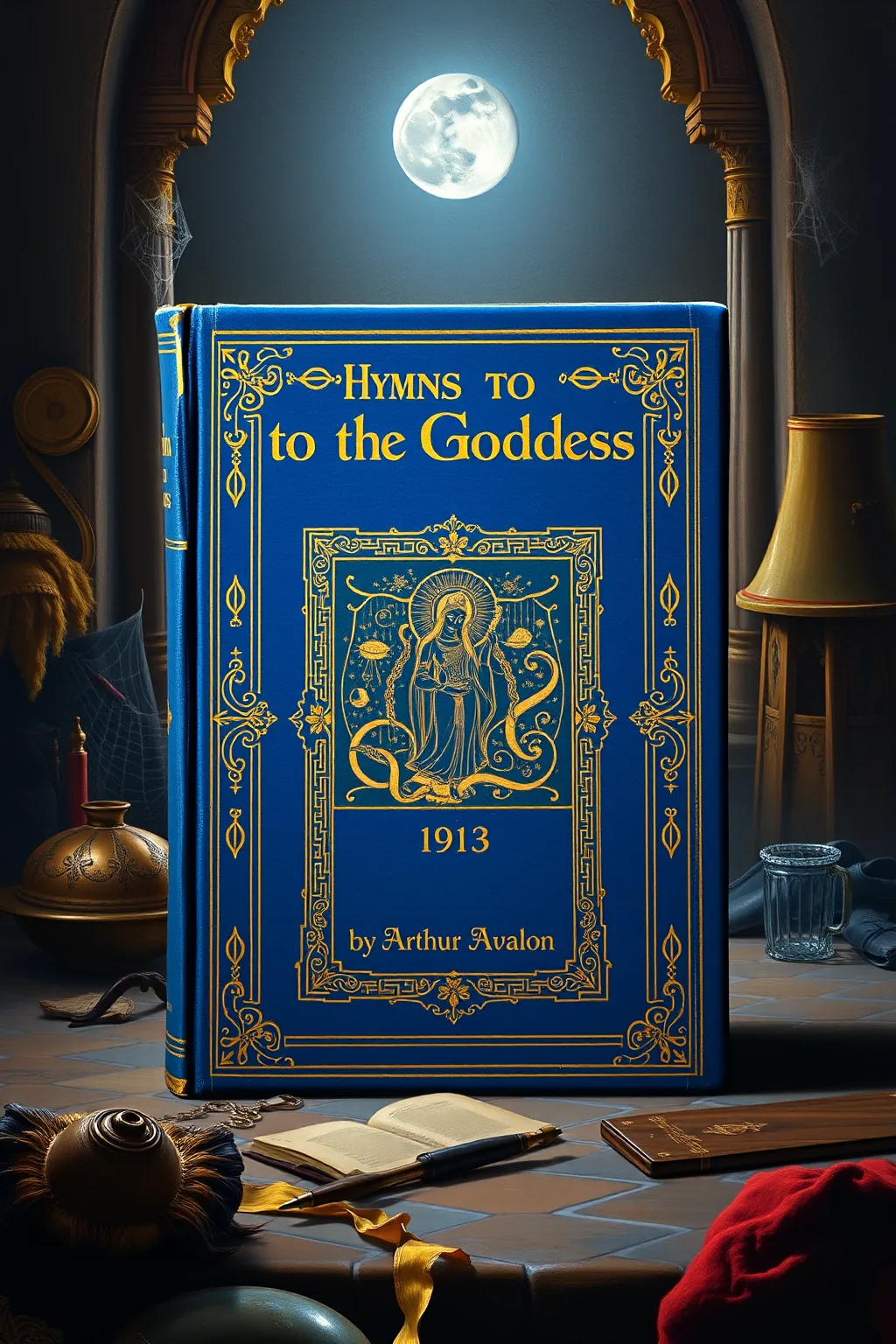
Hymns to the Goddess
 79
79

Hymns to the Goddess


Ophelia Vance (Mystical Literature Reviewer) — Arthur Avalon's 'Hymns to the Goddess' remains a cornerstone for serious students of esoteric spirituality. This meticulously translated anthology offers unparalleled access to the devotional heart of Indian Tantra and Puranic lore, illuminating the multifaceted nature of the Divine Feminine. Avalon's profound scholarship provides context, making the intricate symbolism and philosophical depth accessible without sacrificing its inherent mystery. The collection's strength lies in its breadth, encompassing diverse hymns that celebrate the Goddess in her myriad forms. It is an essential text for practitioners seeking to understand Shakti's power and for scholars exploring the rich traditions of South Asian mysticism.
📝 Description
79
First published in 1913, Arthur Avalon's 'Hymns to the Goddess' collects English translations of Sanskrit devotional poetry.
Arthur Avalon, the pen name of scholar John Woodroffe, compiled this volume in 1913. It presents English translations of Sanskrit hymns addressed to various forms of the Goddess. The texts draw from sources like Tantra, Puranic literature, the Mahābhārata, and the works of sages such as Śaṅkarācārya. The collection includes invocations like 'Waves of Bliss' and 'Mother of the Whole Universe.'
Avalon intended this anthology to introduce Western readers to Indian devotional practices and the philosophical ideas behind them. It goes beyond simple poetry, aiming to convey a sense of cosmic unity and the immanent creative power. The book is for those interested in the Goddess in Hinduism, the tantric path, and Eastern metaphysics.
This collection belongs to the study of Indian spiritual traditions, particularly those focused on the Divine Feminine. It brings together devotional literature that explores Shakti as the primordial cosmic energy. The hymns are rooted in Tantra and Puranic traditions, offering a view into practices and philosophies that see the Goddess as the source of creation and cosmic order. Avalon's work made these texts accessible to a Western audience interested in esoteric Indian thought.
✍️ Author
💡 Why Read This Book?
Embark on a profound journey into the heart of the Divine Feminine. 'Hymns to the Goddess' offers direct access to ancient Sanskrit hymns celebrating Shakti, the cosmic creative force. Ideal for spiritual seekers, practitioners of yogic and tantric traditions, and scholars of Eastern mysticism, this volume unlocks profound devotional insights and esoteric wisdom, fostering a deeper connection to the sacred feminine.
⭐ Reader Reviews
Honest opinions from readers who have explored this book.
❓ Frequently Asked Questions
What is the primary focus of 'Hymns to the Goddess'?
The book primarily focuses on English translations of Sanskrit hymns that praise and invoke the Divine Feminine, particularly Shakti, the cosmic creative energy in Hindu traditions.
Who was Arthur Avalon?
Arthur Avalon was the pseudonym of Sir John Woodroffe, a prominent British scholar and jurist who was a pioneer in introducing Indian philosophy and spirituality, especially Tantra, to the Western world.
What kind of Sanskrit texts are included in this collection?
The collection draws from various significant Sanskrit sources including the Tantras, Puranas, the Mahābhārata, and works attributed to revered sages like Śaṅkarācārya and Vālmīki.
Is prior knowledge of Hinduism required to appreciate this book?
While some familiarity can enhance appreciation, the translations and Avalon's introductory notes provide sufficient context for readers interested in exploring spiritual and metaphysical themes.
What is the spiritual significance of these hymns?
These hymns are significant for their devotional expression towards the Divine Feminine, offering insights into concepts of cosmic creation, divine power (Shakti), and the interconnectedness of the universe.
🔮 Key Themes & Symbolism
The Primordial Goddess: Shakti Incarnate
This theme explores the central concept of Shakti, the supreme, unmanifest energy that is the source of all creation and existence. The hymns personify this energy as the Goddess, manifesting in countless forms to govern the cosmos. It looks at her roles as creator, preserver, and destroyer, highlighting her immanence and transcendence. Readers will discover the profound philosophical implications of viewing the ultimate reality through a feminine lens, understanding her as the vibrant, dynamic force that animates the universe and imbues life with consciousness.
Tantric Devotion and Mystical Union
The collection offers a window into the devotional practices and esoteric philosophies rooted in Tantra. It showcases how these hymns are not just prayers but also powerful tools for spiritual transformation and union with the Divine. The emphasis is on direct experience and the harnessing of internal energies, often symbolized through the Goddess. This theme illuminates the path of yogic and tantric practitioners who seek to awaken Kundalini and achieve liberation through devotion and ritual, understanding the Goddess as the ultimate object of their spiritual quest.
Cosmic Motherhood and Universal Creation
A significant thread running through the hymns is the portrayal of the Goddess as the Universal Mother, the womb from which all beings and phenomena emerge. This theme explores her nurturing, sustaining, and life-giving aspects, emphasizing her role as the origin and sustainer of the cosmic order. It highlights the profound connection between the feminine principle and the act of creation itself, offering a vision of the universe as a divine manifestation of her boundless love and creative power. Readers gain insight into the reverence for the feminine as the ultimate source of all.
💬 Memorable Quotes
Direct passages from the work, attributed to the author.
“She is the source of all bliss.”
— This concise statement captures the ecstatic nature of divine experience, portraying the Goddess as the wellspring of ultimate joy and spiritual fulfillment.
“The Mother of the Whole Universe.”
— A powerful declaration of the Goddess's omnipresence and all-encompassing nature, positioning her as the progenitor and sustainer of all existence.
“Waves of Bliss.”
— This poetic phrase describes the overwhelming, transcendent joy that arises from spiritual communion with the Divine Feminine, a profound experience of bliss.
“The Power that governs all.”
— This emphasizes the Goddess's role as the supreme active principle, the dynamic force that orchestrates the workings of the entire cosmos.
💡 Key Ideas
Editorial paraphrase of the work's core concepts — not direct quotes.
Her form is light and consciousness.
This quote points to the subtle, luminous nature of the Goddess, identifying her essence with pure awareness and illumination beyond material form.
🌙 Esoteric Significance
Tradition
The primary esoteric tradition explored is Tantra, particularly the Shakta tradition within Hinduism, which venerates the Goddess (Devi) as the supreme reality. The hymns reveal tantric concepts of Shakti as the primordial cosmic energy, the Divine Feminine principle that drives creation, sustenance, and dissolution. It also touches upon devotional aspects found in Puranic and Vedic lore, offering a holistic view of feminine divinity within the Indian spiritual landscape.
Symbolism
Key symbols include the Goddess herself in her myriad forms (e.g., Durgā, Kāli, Lalitā), representing different aspects of divine power and cosmic function. Symbols like the 'waves of bliss' (Ānandalaharī) represent ecstatic spiritual experience, while terms like 'Mother of the Whole Universe' signify her all-encompassing creative and nurturing nature. The hymns often employ potent imagery related to nature, cosmic phenomena, and spiritual transformation, all pointing to the immanent and transcendent power of the feminine divine.
Modern Relevance
In an era increasingly exploring gender equality and the divine feminine, 'Hymns to the Goddess' offers profound historical and spiritual context. It provides a rich source for understanding the deep roots of feminine divinity in a major world tradition, challenging patriarchal norms and offering a framework for integrating masculine and feminine energies. For practitioners of yoga, meditation, and contemporary Goddess-centered spirituality, these ancient hymns offer timeless wisdom and devotional pathways.
👥 Who Should Read This Book
This volume is a treasure for spiritual seekers yearning to connect with the Divine Feminine, offering direct access to ancient devotional practices and philosophies. Scholars of comparative religion, Eastern mysticism, and gender studies will find it an invaluable primary source, shedding light on the historical and textual foundations of Shakta traditions. Practitioners of Tantra, Yoga, and those interested in esoteric traditions will benefit from the useful insights into Shakti worship and its transformative potential. Even those new to these concepts will find the hymns and their underlying themes accessible and spiritually resonant.
📜 Historical Context
Published in 1913, Arthur Avalon's 'Hymns to the Goddess' emerged during a period of burgeoning Western interest in Eastern philosophies and religions. The late Victorian and Edwardian eras saw a fascination with mysticism, the occult, and alternative spiritualities, often fueled by colonial encounters and the translation of ancient texts. John Woodroffe (Avalon), a British judge in India, was at the forefront of this movement, meticulously translating and interpreting Sanskrit esoteric traditions, particularly Tantra, which had been largely misunderstood or sensationalized in the West. His work provided a scholarly and devotional bridge, explaining complex concepts and presenting them with reverence. This book contributed significantly to the Orientalist scholarship of the time while simultaneously offering genuine spiritual nourishment to a Western audience seeking deeper meaning beyond conventional religious frameworks.
📔 Journal Prompts
Reflect on the diverse manifestations of the Goddess presented in the hymns. Which aspect resonates most deeply with you and why?
Consider the concept of Shakti as the primordial creative energy. How might this understanding influence your perception of your own creative potential?
The hymns often speak of 'waves of bliss.' Describe a moment in your life when you experienced profound spiritual joy or ecstasy.
How does the portrayal of the Divine Feminine in these ancient texts compare to modern societal views? What lessons can be learned?
Meditate on the idea of the Goddess as the 'Mother of the Whole Universe.' What does this cosmic motherhood signify for your understanding of interconnectedness?
🗂️ Glossary
Shakti
The primordial cosmic energy, the Divine Feminine principle that is the source of all creation, sustenance, and dissolution in Hindu philosophy, particularly in Tantra.
Tantra
A complex and diverse set of esoteric traditions originating in India, focusing on ritual, meditation, and the harnessing of spiritual energy to achieve liberation or supernatural powers.
Puranas
A vast genre of Sanskrit literature in Hinduism that narrates cosmology, mythology, genealogies of deities, kings, and sages, often serving as devotional texts.
Ānandalaharī
Literally 'Waves of Bliss,' this is a significant Sanskrit hymn often attributed to Śaṅkarācārya, celebrating the Goddess and the ecstatic spiritual states attained through her devotion.
Devi
A Sanskrit term meaning 'Goddess,' used in Hinduism to refer to the Divine Feminine as the supreme deity or as the feminine aspect of any deity.
This book appears in 1 collection
🔮 Readers Also Liked
Browse all →







More by Arthur Avalon
All books →





From the “Transcendental Meditation” Collection
View all →






More Free Spiritual Development Books
View all →