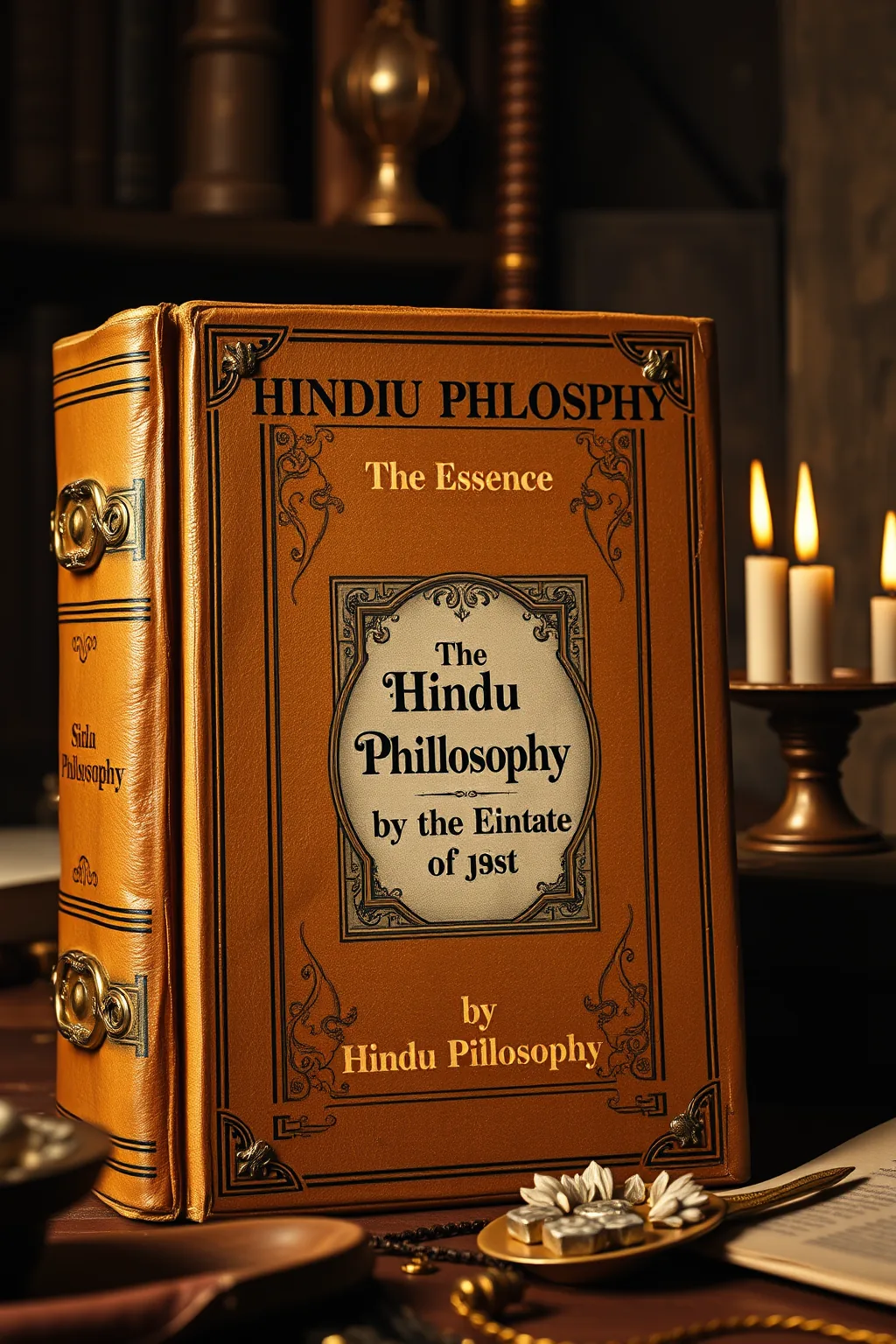
Hindu Philosophy
 84
84

Hindu Philosophy



Isolde Whitaker, Sacred Texts Editor: 'The Essence of the Six Classic Systems of Hindu Philosophy' is a masterful distillation of India's most influential philosophical schools. The author masterfully navigates the intricate doctrines of Nyaya, Vaisesika, Samkhya, Yoga, Mimamsa, and Vedanta, revealing their shared quest for ultimate truth. This work is particularly valuable for its clarity in presenting complex metaphysical concepts, making them accessible without sacrificing their profound depth. Its strength lies in its ability to connect these distinct systems, showcasing them not as isolated theories but as complementary facets of a unified spiritual vision. Ideal for both neophytes and seasoned practitioners seeking to deepen their understanding of the Hindu path.
📝 Description
84
This 1977 volume details the six classical schools of Hindu philosophy.
The Essence of the Six Classic Systems of Hindu Philosophy, published in 1977, presents the core doctrines of Nyaya, Vaisesika, Samkhya, Yoga, Mimamsa, and Vedanta. The book moves beyond simple academic summaries, aiming to reveal the mystical and esoteric dimensions embedded within these traditions. It explains how each philosophical system offers distinct perspectives on reality, consciousness, and spiritual liberation.
The text aims to connect with readers interested in the deeper aspects of existence. It covers the metaphysical frameworks that have influenced spiritual thought for centuries, using symbolic language and philosophical analysis. The aim is to provide a clear understanding of these complex ideas for those drawn to spiritual inquiry.
This book situates itself within the long tradition of Indian philosophical inquiry that seeks not only intellectual understanding but also spiritual realization. The six systems discussed, particularly Yoga and Vedanta, have historically incorporated meditative practices and contemplations aimed at direct experience of reality. The work touches on how these philosophies provide frameworks for understanding inner states and the path toward liberation, connecting the intellectual pursuit of truth with practical spiritual discipline.
✍️ Author
The Essence of the Six Classic System
The Six-Day War, or the 1967 Arab–Israeli War, was fought between June 5 and June 10, 1967, by Israel and the neighboring states of Egypt (known then as the United Arab Republic, UAR), Jordan, and Syria. The origins of the war include both longstanding and…
💡 Why Read This Book?
Unlock the foundational wisdom of Hindu thought, exploring six classic philosophical systems that form the bedrock of spiritual inquiry. This book is essential for seekers of truth, scholars of comparative religion, and practitioners of Yoga and meditation who wish to grasp the profound metaphysical frameworks underlying these disciplines. Gain a comprehensive understanding of reality, consciousness, and liberation through accessible yet deep philosophical insights.
⭐ Reader Reviews
Honest opinions from readers who have explored this book.
❓ Frequently Asked Questions
What are the six classic systems of Hindu philosophy covered in this book?
The book delves into Nyaya (logic and epistemology), Vaisesika (atomism and metaphysics), Samkhya (dualism and cosmology), Yoga (meditation and spiritual discipline), Mimamsa (hermeneutics and ritual), and Vedanta (the study of ultimate reality and consciousness).
Is prior knowledge of Hindu philosophy required to understand this book?
While prior knowledge can enhance comprehension, the book is designed to introduce the essence of these systems, making it accessible to those new to Hindu philosophy. However, understanding the six classic systems is presented as foundational for grasping advanced concepts like Kashmir Shaivism.
What is Kashmir Shaivism and why is it included?
Kashmir Shaivism is an additional school presented, offering a detailed analysis of the Ultimate Principle. It is included because it builds upon and, in some ways, synthesizes the insights of the six classic systems, providing a deeper exploration of divine consciousness.
What is the primary goal of these philosophical systems?
The primary goal of these systems is to achieve liberation (moksha) from the cycle of birth and death, and to attain self-realization or union with the Ultimate Reality through various paths of knowledge, action, and meditation.
How does this book relate to spiritual development?
By elucidating the core principles of these philosophies, the book provides a roadmap for inner transformation, ethical conduct, and the cultivation of wisdom, thereby facilitating profound spiritual development and self-discovery.
🔮 Key Themes & Symbolism
The Interconnectedness of the Six Darshanas
This theme explores how the six orthodox schools of Hindu philosophy, while distinct in their methodologies and emphases, are not isolated doctrines but rather complementary facets of a unified quest for truth. From the logical rigor of Nyaya and Vaisesika to the contemplative depths of Samkhya and Yoga, the ritualistic precision of Mimamsa, and the ultimate metaphysical inquiry of Vedanta, each system offers a unique lens through which to perceive reality. Understanding their synergistic relationship reveals a holistic framework for comprehending consciousness, the cosmos, and the path to liberation, demonstrating how they collectively build upon and inform one another.
The Path to Moksha: Liberation and Self-Realization
Central to all six systems is the ultimate goal of moksha, or liberation from the cycle of suffering and rebirth. This theme studies the diverse strategies and philosophical underpinnings that each school proposes for achieving this profound state. Whether through the rigorous pursuit of valid knowledge, the understanding of cosmic principles, the discipline of the mind, or the performance of duty, the book illuminates the various pathways to transcending the mundane and realizing one's true, divine nature. It highlights the transformative potential inherent in these ancient philosophies for achieving ultimate freedom and spiritual enlightenment.
Metaphysics and Epistemology: Understanding Reality
This theme unpacks the profound metaphysical and epistemological frameworks presented by the six classic systems. It examines their differing views on the nature of reality, the existence of God, the composition of the universe, and the means by which true knowledge can be attained. From the atomic theories of Vaisesika to the causal principles of Samkhya and the investigative methods of Nyaya, the book provides a foundational understanding of how these philosophies conceptualize existence and the methods they prescribe for discerning truth from illusion, paving the way for deeper spiritual insight.
💬 Memorable Quotes
Direct passages from the work, attributed to the author.
“All other schools of thought are but variations of these six.”
— This statement underscores the foundational nature of the six classic systems, positioning them as the primary archetypes from which other philosophical branches emerge, highlighting their seminal importance.
“The essence of the six classic systems.”
— This phrase implies a distilled, potent wisdom, suggesting that the book offers the core, potent truths of these ancient philosophies, stripped of extraneous detail.
“Only one additional school is presented in the book, the Kasmir Saivism.”
— This highlights a special focus, indicating that while the six are foundational, Kashmir Shaivism is offered as a peak of understanding, suggesting it provides a more comprehensive or advanced perspective.
“Which gives the most detailed analysis of the Ultimate Principle.”
— This points to the profound, perhaps even mystical, depth of Kashmir Shaivism, suggesting it offers exceptional insight into the fundamental nature of existence and consciousness.
“It can hardly be fully understood until the other six systems are comprehended.”
— This emphasizes a hierarchical understanding, suggesting that mastery of the foundational six systems is a prerequisite for truly grasping the more advanced teachings of Kashmir Shaivism, creating a structured learning path.
🌙 Esoteric Significance
Tradition
This book is deeply rooted in the Vedic and Upanishadic traditions, forming the core of orthodox Hindu philosophy (Astika Darshanas). It represents a lineage of profound contemplative inquiry aimed at uncovering the hidden laws of the universe and the true nature of the self, aligning with a long-standing esoteric quest for gnosis and spiritual awakening.
Symbolism
The text is rich with symbolic language, from the conceptual 'atoms' of Vaisesika to the cosmic Purusha of Samkhya and the subtle body explored in Yoga. These symbols are not mere representations but potent keys designed to unlock deeper layers of understanding about reality, consciousness, and the divine, serving as mnemonic devices and conceptual maps for the inner journey.
Modern Relevance
In a world seeking meaning and inner peace, these ancient philosophies offer timeless wisdom. They provide robust frameworks for ethical living, mental discipline, and understanding our place in the cosmos. The principles of Yoga and Vedanta, in particular, continue to be highly relevant for modern practitioners seeking stress reduction, self-awareness, and a deeper connection to the spiritual dimension of life.
👥 Who Should Read This Book
This key work is important for a wide spectrum of readers. **Beginners** will find it an accessible yet profound introduction to the foundational thought of Hinduism, offering a clear pathway into complex ideas. **Scholars of religion and philosophy** will appreciate its comprehensive overview and its role in understanding the historical development of Indian thought. **Spiritual seekers** will discover practical insights and philosophical underpinnings for their personal journey towards self-awareness and enlightenment. **Practitioners of Yoga, meditation, and mindfulness** will gain a deeper appreciation for the philosophical roots and advanced concepts that inform their practices, enriching their understanding and deepening their commitment.
📜 Historical Context
The philosophies explored in 'The Essence of the Six Classic Systems of Hindu Philosophy' emerged and evolved over millennia in ancient India, a period of immense intellectual and spiritual ferment. These systems, known as the 'Darshanas,' were developed as frameworks for understanding existence, consciousness, and the ultimate purpose of life, often in response to societal needs and the quest for spiritual liberation. They flourished in a culture where philosophical discourse was deeply intertwined with religious practice, ascetic traditions, and the patronage of scholars. The compilation and refinement of these schools reflect a sophisticated tradition of debate, commentary, and synthesis, aiming to provide a coherent worldview and practical guidance for achieving enlightenment. Their enduring influence underscores their profound relevance and the timeless nature of the human quest for meaning.
📔 Journal Prompts
Reflect on the concept of 'Dukkha' (suffering) as presented in the philosophies and how it speaks to your own experiences.
Consider the different epistemological tools (pramanas) discussed and how you verify truth in your daily life.
Explore the idea of 'Prakriti' and 'Purusha' from Samkhya. How do you perceive the interplay of matter and consciousness in your own being?
Journal about the principles of Yoga and how they can be integrated more consciously into your daily routine beyond physical practice.
Contemplate the ultimate goal of Moksha. What does liberation mean to you personally, and what steps can you take towards it?
🗂️ Glossary
Nyaya
One of the six orthodox systems of Hindu philosophy, focusing on logic, epistemology, and the theory of knowledge. It provides a systematic framework for valid inference and reasoning.
Vaisesika
A realist and atomistic school of Hindu philosophy, concerned with metaphysics and the categorization of reality into fundamental substances (dravya).
Samkhya
A dualistic system of Hindu philosophy that posits two ultimate realities: Purusha (consciousness) and Prakriti (matter/nature). It offers a cosmology and a path to liberation through discrimination.
Yoga
One of the six orthodox systems, focused on practical methods for controlling the mind and senses to achieve liberation (moksha) through meditation, ethical discipline, and physical postures.
Vedanta
The 'end' or 'culmination' of the Vedas, a broad school of Hindu philosophy that explores the nature of Brahman (the Absolute) and its relationship with Atman (the individual soul), often emphasizing knowledge and realization.
This book appears in 3 collections
🔮 Readers Also Liked
Browse all →








From the “Yoga” Collection
View all →






More Free Spiritual Development Books
View all →