The Gospel of Judas
 75
75

The Gospel of Judas
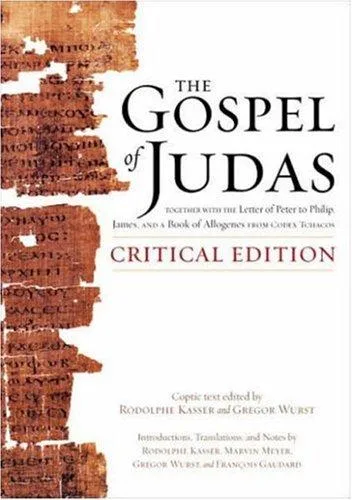
The 2006 Kasser, Meyer, and Wurst translation of the Gospel of Judas offers a crucial window into an early Christian text that has been largely defined by its antagonists for centuries. The strength of this edition lies in its scholarly apparatus, providing essential context for a document that is otherwise dense and theologically specific. The meticulous work of the translators and editors clarifies the Gnostic cosmology and Judas's pivotal, albeit unconventional, role. However, the text's inherent esoteric nature means it can be challenging for readers unfamiliar with Gnostic thought, demanding a certain level of prior knowledge or a willingness to engage with complex metaphysical ideas. A particularly striking aspect is the portrayal of Jesus entrusting Judas with the "mystery of the kingdom," an interpretation that fundamentally alters the traditional narrative of betrayal. This gospel is not a simple historical account but a theological testament from a distinct early Christian perspective.
📝 Description
75
### What It Is The Gospel of Judas is a significant Coptic text, one of the Gnostic gospels discovered near Nag Hammadi, Egypt. Its existence was known from early Christian writings, particularly Irenaeus's condemnation in the late 2nd century CE, but the manuscript itself was not unearthed until the 1970s. This edition, first published in 2006 by Rodolphe Kasser, Marvin Meyer, and Gregor Wurst, presents a scholarly translation and analysis of this controversial text.
### Who It's For This work is intended for serious students of early Christianity, Gnosticism, and comparative religion. Scholars, theologians, and independent researchers seeking to understand alternative early Christian traditions will find its detailed analysis and translation invaluable. It is also for those interested in the historical figure of Judas Iscariot, moving beyond traditional demonization to explore a complex portrayal within a specific theological framework.
### Historical Context The Gospel of Judas emerged from the vibrant, often contentious, landscape of early Christianity. Gnostic groups, with their distinct theological interpretations of Christ and salvation, flourished alongside proto-orthodox Christianity. The text's likely composition date, around the 3rd century CE, places it squarely within this period of theological diversity and debate. Its eventual suppression and the subsequent loss of the manuscript for centuries highlight the power struggles and doctrinal definitions that shaped the canon of early Christian scripture.
### Key Concepts The central figure, Judas Iscariot, is re-envisioned not as a betrayer but as the principal apostle, privy to Jesus's innermost teachings. The text presents a dualistic cosmology, common in Gnosticism, with a material world seen as a flawed creation separate from a true, spiritual realm. Jesus's passion is interpreted as a spiritual release, a shedding of the material body for Judas to facilitate. The concept of the 'Great Aeon' and the 'foreknowledge' of Jesus are also crucial to understanding the narrative's theological underpinnings.
💡 Why Read This Book?
• Gain a counter-narrative to the traditional portrayal of Judas Iscariot, learning how this text reinterprets his role as the primary disciple, as detailed in the translation by Kasser, Meyer, and Wurst. • Understand the Gnostic worldview by exploring its dualistic cosmology and the concept of the 'Great Aeon,' offering a perspective distinct from orthodox Christianity. • Examine the spiritual interpretation of Jesus's passion, where Judas facilitates a divine release rather than a mere execution, as presented in the translated text.
⭐ Reader Reviews
Honest opinions from readers who have explored this book.
❓ Frequently Asked Questions
When and where was the Gospel of Judas discovered?
The Gospel of Judas manuscript was discovered in the 1970s near Nag Hammadi, Egypt, within a collection of Coptic texts. Its existence was previously known only through the writings of early church fathers who condemned it.
What is the primary theological difference between the Gospel of Judas and canonical Gospels?
The primary difference lies in the portrayal of Judas Iscariot. While canonical Gospels depict him as a betrayer, this text presents him as Jesus's most trusted apostle, chosen to facilitate Jesus's spiritual liberation.
What does the Gospel of Judas say about the material world?
The text reflects a Gnostic dualistic view, suggesting the material world was created by a lesser deity (the 'Demiurge') and is therefore flawed. True spiritual existence is seen as separate from this material realm.
Who are the main scholars credited with the 2006 publication of the Gospel of Judas?
The 2006 edition, a significant publication for its time, was co-authored and translated by Rodolphe Kasser, Marvin Meyer, and Gregor Wurst, presenting a scholarly interpretation of the Coptic text.
What is the significance of the 'Great Aeon' in the Gospel of Judas?
The 'Great Aeon' refers to the divine, eternal realm in Gnostic cosmology. The text explores the relationship between this supreme spiritual realm and the flawed material creation, with Jesus acting as a messenger from the Aeon.
How does the Gospel of Judas interpret Jesus's crucifixion?
Instead of viewing the crucifixion as a sacrifice for sins, the Gospel of Judas interprets it as a spiritual release for Jesus, a shedding of the material body that Judas assists in achieving, allowing Jesus's true spiritual self to return to the divine realm.
🔮 Key Themes & Symbolism
Judas as the True Apostle
This theme reconfigures Judas Iscariot from the archetypal betrayer to the preeminent disciple. The text suggests Jesus singled out Judas for a special understanding of his mission, entrusting him with divine mysteries. Judas's act is portrayed not as treachery but as obedience to Jesus's will, facilitating the Master's spiritual liberation from the material body. This interpretation challenges the foundational narrative of early Christianity, offering a perspective where Judas plays a crucial, even redemptive, role within the Gnostic framework.
Gnostic Dualism and Cosmology
The Gospel of Judas is steeped in Gnostic cosmology, positing a radical distinction between the spiritual and material realms. The material world is depicted as an imperfect creation, often attributed to a lesser, ignorant deity (the Demiurge). The text explores concepts like the 'Great Aeon,' the ultimate divine reality, and the 'powers' that govern the cosmos. Jesus's role is to reveal the path back to the Aeon, a journey of spiritual awakening and escape from the limitations of the material existence overseen by lower powers.
The Nature of Jesus's Passion
Rather than a salvific sacrifice for humanity's sins, Jesus's passion in this gospel is understood as a spiritual event. It represents the shedding of the material vessel, the body, allowing the divine spirit to return to its true home in the 'Great Aeon.' Judas's participation is framed as assisting in this divine process, a misunderstood act of spiritual service. This perspective shifts the focus from atonement to liberation and the unveiling of divine knowledge.
Sacred Knowledge and Revelation
A central tenet is the transmission of secret knowledge ('gnosis') from Jesus to his disciples, particularly Judas. This knowledge is not about worldly affairs but about the true nature of reality, the divine, and the path to spiritual freedom. The text emphasizes the importance of receiving and understanding these revelations, which are essential for salvation in the Gnostic understanding. The act of revealing these mysteries is Jesus's primary purpose in this narrative.
💬 Memorable Quotes
“And he said, 'You will go on to them, and you will speak to them about my kingdom.'”
— This paraphrase captures the essence of Jesus's instruction to Judas. It highlights the core mission of the gospel: Judas is tasked with disseminating knowledge about the spiritual kingdom, positioning him as a messenger of divine truth rather than a simple informant.
“But I, for my part, am afraid of your ignorance.”
— This reflects a common Gnostic concern: the danger posed by a lack of true spiritual understanding. The quote suggests that ignorance is a form of spiritual peril, and that true knowledge is essential for liberation from the material world.
“For the light of the men is in them, and it is the light that is in the light.”
— This phrase points to the divine spark or inner light believed to reside within individuals in Gnostic thought. It signifies the potential for spiritual awakening and the connection to the ultimate divine source, the 'light that is in the light'.
“Then Jesus said to his disciples, 'Why are you arguing? What is the cause of your dispute?'”
— This reflects Jesus's concern with his disciples' earthly squabbles and their lack of understanding of his true spiritual mission. It underscores the theme of spiritual ignorance versus divine revelation presented in the text.
“When Judas heard this, he left them.”
— This signifies Judas's departure from the other disciples, not in disgrace, but to undertake the special task Jesus has given him. It marks his separation from the conventional understanding of Jesus's followers and his embrace of a unique, divinely appointed role.
🌙 Esoteric Significance
Tradition
The Gospel of Judas is firmly rooted in Gnosticism, a diverse set of religious movements prevalent in the early centuries CE. It shares core Gnostic tenets such as dualism, the concept of a flawed material creation, and the belief in salvation through secret knowledge (gnosis). This text fits within the broader Gnostic tradition by offering a unique interpretation of a canonical figure, Judas, and recontextualizing key events like the Passion through a Gnostic lens, emphasizing spiritual liberation over material sacrifice.
Symbolism
Key symbols include the 'Great Aeon,' representing the ultimate divine realm of perfection and light, contrasted with the flawed, material cosmos created by a lesser deity. The 'powers' symbolize the various angelic or demonic forces that govern the material world and obstruct spiritual ascent. Jesus's body is symbolically understood as a garment or vessel to be shed, representing the liberation of the divine spirit from material constraints. Judas himself becomes a symbol of the true initiate, chosen for his understanding.
Modern Relevance
The Gospel of Judas continues to be relevant for contemporary Gnostic practitioners and scholars of comparative religion. Its reinterpretation of Judas challenges traditional moral binaries and encourages critical examination of religious narratives. Modern thinkers and spiritual seekers interested in alternative spiritualities, the nature of consciousness, and the esoteric interpretations of early Christianity find resonance in its themes of hidden knowledge and the spiritual escape from material limitations.
👥 Who Should Read This Book
• Students of early Christianity and Gnosticism: To gain a primary source perspective on a key Gnostic text and understand its divergence from proto-orthodox Christianity. • Comparative religion scholars: To analyze the theological and cosmological frameworks present in early Christian diversity and compare them with other mystical traditions. • Readers interested in alternative interpretations of biblical figures: To explore a radically different portrayal of Judas Iscariot and its implications for understanding betrayal and discipleship.
📜 Historical Context
The Gospel of Judas emerged from the fertile, yet often contentious, theological environment of 2nd and 3rd century CE Christianity. During this period, diverse interpretations of Jesus's teachings flourished, including various Gnostic schools. These groups often presented alternative cosmologies and soteriologies that contrasted sharply with the developing proto-orthodox doctrines championed by figures like Irenaeus of Lyon. Irenaeus, in his work *Against Heresies* (circa 180 CE), explicitly condemned the Gospel of Judas, referring to it as a fabrication designed to corrupt the teachings of Christ. This early opposition highlights the text's radical departure from emerging orthodox views and its significance as a document representing a distinct branch of early Christian thought. The survival of the Coptic manuscript, discovered in the 1970s, provided concrete evidence of the traditions Irenaeus sought to suppress, offering scholars a direct link to the Gnostic milieu.
📔 Journal Prompts
The 'Great Aeon' as a concept: how does it contrast with perceived earthly realities?
Judas's commission to speak of the kingdom: what does this reveal about divine trust?
Reflecting on the material world as a flawed creation: what personal associations arise?
The nature of spiritual liberation: how does the text's interpretation differ from common understandings?
Jesus's 'foreknowledge': consider its implications for free will and destiny within this text.
🗂️ Glossary
Gnosticism
A diverse set of religious movements in early Christianity that emphasized salvation through secret knowledge (gnosis). Gnostics often viewed the material world as imperfect or evil, created by a lesser deity, and sought spiritual liberation through divine revelation.
Coptic
The final stage of the ancient Egyptian language, written using the Greek alphabet with some additional letters. Coptic became the liturgical language of Egyptian Christians and was used for many important Gnostic texts discovered in Egypt.
Great Aeon
In Gnostic cosmology, the Great Aeon refers to the supreme, perfect, and eternal divine realm. It is the source of all spiritual being, from which the material world is seen to be a distant, flawed emanation.
Demiurge
In Gnostic and Platonic thought, the Demiurge is the creator of the material universe. In Gnosticism, the Demiurge is typically depicted as an ignorant or malevolent being, distinct from the true, supreme God.
Gnosis
The Greek word for 'knowledge.' In Gnosticism, gnosis refers to a special, intuitive, or revealed knowledge of divine mysteries that leads to spiritual salvation and liberation from the material world.
Aeon
In Gnostic cosmology, Aeons are divine beings or powers that emanate from the supreme God. They constitute the 'Pleroma' or fullness of the divine realm, and their interactions can sometimes lead to the creation of lesser beings or worlds.
Apostle
In early Christianity, an apostle was a follower of Jesus Christ who was commissioned to spread his teachings. The Gospel of Judas reinterprets the role of Judas Iscariot, portraying him as the chief or primary apostle.