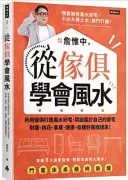
從傢俱學會風水
 71
71

從傢俱學會風水
詹惟中's work approaches Feng Shui through the lens of household furnishings, a refreshingly concrete angle. Rather than relying on abstract principles, the text anchors its advice in the tangible reality of chairs, tables, and beds. A notable strength is its directness, offering specific suggestions for item placement that aim to cultivate positive *qi*. For instance, the discussion on the ideal positioning of a desk to enhance career prospects offers practical utility. However, the book could benefit from deeper exploration into the symbolic resonance of materials beyond common wood and metal, perhaps engaging more with rarer elements or textiles. The sheer volume of furniture types and their potential energetic impacts means some sections feel slightly cursory. Ultimately, it serves as a pragmatic, accessible primer on domestic Feng Shui, particularly for those who prefer actionable guidance over theoretical discourse.
📝 Description
71
Published in 2022, this text teaches Feng Shui through furniture arrangement.
This book approaches Feng Shui by examining the impact of furniture on a home's energy. It moves past general theories to focus on specific household items, connecting their type, material, and placement to favorable or unfavorable energetic conditions. The author aims to simplify Feng Shui's application in daily life, offering straightforward advice for residents and designers.
The work is intended for anyone interested in applying Feng Shui to their living spaces. It suits newcomers seeking clear guidance and experienced practitioners interested in furniture's specific role. Interior designers and architects may also find it useful for integrating traditional Chinese environmental ideas into modern interiors. Those wanting to improve their home or work environment through object arrangement will find practical insights.
Feng Shui originated in ancient China, with principles recorded as early as the 4th century BCE. This book engages with that tradition by simplifying complex theories for contemporary home arrangements. It reflects a recent interest in traditional practices, adapting them for modern lifestyles. The focus on furniture continues a trend in Feng Shui literature that shifts from large-scale environmental analysis to smaller, personal space interventions.
💡 Why Read This Book?
• Gain actionable strategies for arranging furniture to influence your home's *qi*, moving beyond abstract concepts to concrete household items as discussed in chapters on specific furniture types. • Learn how to identify and mitigate negative *sha qi* through furniture placement, a practical skill directly applicable to improving your immediate living environment as detailed in sections on energy flow. • Understand the symbolic meanings of common furniture pieces within the Feng Shui tradition, enabling more intentional design choices, as explored through the discussion of elemental associations.
⭐ Reader Reviews
Honest opinions from readers who have explored this book.
❓ Frequently Asked Questions
What is the core philosophy behind using furniture in Feng Shui according to 詹惟中?
The core philosophy is that furniture, as a significant element in any room, actively influences the flow of *qi* (vital energy). Strategic placement and selection of furniture can either enhance positive energy or inadvertently create blockages and negative currents, impacting inhabitants' well-being.
When was '從傢俱學會風水' first published?
The book '從傢俱學會風水' was first published in 2022.
Does the book offer advice for specific rooms, like bedrooms or offices?
Yes, the work likely provides tailored advice for various rooms, addressing the unique energetic needs and common furniture arrangements found in spaces such as bedrooms, living rooms, and home offices.
Is 詹惟中 a recognized authority in Feng Shui?
詹惟中 is a recognized figure in the field of Feng Shui, particularly in Taiwan, known for his accessible approach to the ancient practice. His work often aims to demystify complex concepts for a broader audience.
Can beginners apply the principles from this book effectively?
Absolutely. The book's focus on tangible items like furniture makes its principles highly applicable for beginners seeking to implement Feng Shui in their homes without needing extensive prior knowledge.
What does 'qi' refer to in the context of this book?
'Qi' (氣) refers to the vital life force or energy that permeates all things. In Feng Shui, managing and harmonizing the flow of qi within a space is considered essential for health, prosperity, and overall well-being.
🔮 Key Themes & Symbolism
Furniture as Energetic Anchors
This work posits that furniture items are not merely decorative or functional but act as significant anchors and conduits for *qi*. The shape, material, and placement of each piece—from a sofa to a dining table—are analyzed for their potential to either amplify positive energy (*sheng qi*) or create stagnation and negative currents (*sha qi*). The book likely details how specific furniture configurations can establish energetic foundations within a room, influencing the mood and fortunes of the occupants.
The Bagua and Domestic Layouts
A central theme involves the application of the Bagua map to residential interiors, using furniture placement as the primary tool. Each of the nine life areas (e.g., wealth, health, relationships) is associated with specific positions within the home. The book explains how selecting and situating particular types of furniture can either enhance or diminish the *qi* in these corresponding Bagua sectors, offering guidance for optimizing domestic harmony and personal aspirations.
Mitigating Sha Qi with Household Objects
The text addresses the pervasive issue of *sha qi*, or negative energy, often generated by sharp corners, cluttered spaces, or misaligned structures. A key contribution of this book is demonstrating how strategic furniture arrangement can act as a buffer or redirector of *sha qi*. This includes advice on softening harsh lines, creating clear pathways, and using specific furniture items to symbolically block or dissipate detrimental energy flows within the home.
Symbolism of Materials and Forms
Beyond mere placement, the book explores the inherent energetic properties attributed to different furniture materials and forms within traditional Chinese metaphysics. Wood, metal, stone, and textiles are likely discussed in terms of their elemental associations and how they interact with the surrounding *qi*. Similarly, the shapes of furniture—curved versus angular, solid versus open—are presented as carrying distinct energetic signatures that influence the overall atmosphere of a space.
💬 Memorable Quotes
Direct passages from the work, attributed to the author.
“The arrangement of your sofa dictates the flow of conversation and familial harmony.”
— This highlights the book's core premise: everyday furniture items possess an energetic influence that directly impacts social dynamics and emotional well-being within the home.
“A bed positioned with its back to a solid wall offers security; one facing a door invites unease.”
— This illustrates the practical application of Feng Shui principles to a critical piece of furniture, emphasizing how orientation affects feelings of safety and psychological comfort.
“Dining tables are centers of nourishment; their shape and stability are paramount for prosperity.”
— This points to the symbolic importance of furniture, suggesting that the dining table's characteristics are linked to the sustenance and abundance of the household.
“Clutter around your primary workspace generates stagnant qi, hindering career advancement.”
— This interpretation focuses on the relationship between orderliness, energy flow, and professional success, directly linking physical environment to personal ambition.
“The energy of a room begins with the placement of its largest pieces.”
— This suggests a hierarchical approach to Feng Shui, prioritizing the impact of substantial furniture items in establishing the foundational energy of any space.
🌙 Esoteric Significance
Tradition
This work engages with the broad tradition of Chinese geomancy, known as Feng Shui. While not strictly tied to a single esoteric lineage like Taoism or Buddhism, its principles are deeply rooted in Taoist cosmology, particularly the concepts of *qi* and the balance of Yin and Yang. It represents a contemporary adaptation of these ancient practices, making them accessible for modern domestic environments, moving away from complex divination or spiritual rituals towards practical home harmonization.
Symbolism
Key symbols include the Bagua, a foundational octagonal map used to delineate energetic zones within a space, and the concept of *qi* itself, representing vital life force. Furniture items act as symbolic representations: a sturdy desk signifies stability and support in one's career, while a well-placed bed relates to rest, rejuvenation, and relational harmony. The deliberate arrangement of these symbols aims to create auspicious energetic patterns.
Modern Relevance
Contemporary thinkers and practitioners focusing on holistic living, mindfulness in design, and minimalist lifestyles often draw upon Feng Shui principles. Architects and interior designers seeking to create balanced and supportive environments for clients find value in its practical applications. The work appeals to those interested in creating 'sacred spaces' within their homes, blending traditional metaphysics with modern aesthetics and well-being practices.
👥 Who Should Read This Book
• Homeowners and renters seeking practical, actionable advice for improving their living environment's energy, particularly those who find traditional Feng Shui overwhelming. • Interior design students and professionals interested in integrating traditional Chinese spatial theories into contemporary design projects, offering a unique perspective on furniture's role. • Individuals curious about the intersection of metaphysics and everyday objects, looking for a grounded introduction to how physical surroundings can influence psychological and energetic states.
📜 Historical Context
Published in 2022, 詹惟中's work arrives amidst a sustained global interest in practical applications of Feng Shui, particularly within domestic settings. This contemporary resurgence builds upon centuries of tradition, tracing back to classical texts like the *Book of Burial* (c. 4th century BCE) and later developments during the Song Dynasty. Unlike earlier scholarly or landscape-focused treatises, modern works like this often emphasize micro-environmental adjustments easily implemented by homeowners. It engages with a popular understanding of Feng Shui that sometimes diverges from strict classical interpretations, focusing instead on accessible, tangible interventions. While competing schools of thought exist, from the Compass School to the Form School, 詹惟中's approach appears to favor a more generalized, intuitive application centered on common household objects, reflecting a broader trend towards democratizing esoteric knowledge.
📔 Journal Prompts
Reflect on the dominant *qi* emanating from your primary seating area.
Analyze the energetic implications of your bedroom's furniture arrangement.
Consider the symbolic message conveyed by your main dining furniture.
Identify one piece of furniture whose placement could be optimized for better *sha qi* mitigation.
Explore how the materials of your key furniture pieces contribute to the room's overall energy.
🗂️ Glossary
Qi (氣)
The fundamental concept of vital life force or energy that flows through all things. In Feng Shui, the goal is to harmonize and optimize the flow of qi within a space for well-being and prosperity.
Bagua (八卦)
An octagonal map used in Feng Shui, divided into nine sectors, each corresponding to specific life areas (e.g., wealth, health, career) and elements. It guides the placement of furniture and objects.
Sheng Qi (生氣)
Positive, auspicious, or life-generating energy. Feng Shui aims to cultivate and encourage the flow of sheng qi within a home or environment.
Sha Qi (煞氣)
Negative, disruptive, or harmful energy. This can arise from sharp corners, clutter, or specific environmental factors, and Feng Shui offers methods to mitigate it.
Yin and Yang
The Taoist concept of complementary, interconnected opposites (e.g., dark/light, passive/active). Feng Shui seeks to balance these energies within a space.
Gua (卦)
A trigram, one of the eight basic symbols composed of three lines (solid for Yang, broken for Yin) used in the Bagua. Each Gua represents different energies and concepts.
The Five Elements
Wood, Fire, Earth, Metal, and Water. These elements are fundamental to Chinese cosmology and Feng Shui, representing different energies and cycles that influence the environment.




![Is Ignorance Bliss? [microform] : the Interrelation of Consciousness-expansion and Empowerment in Nepalese Women's Literacy](/img/thumb/is-ignorance-bliss-microform-the-interrelation-of-consciousness-expansion-and-empowerment-in-nepales-961746.webp)