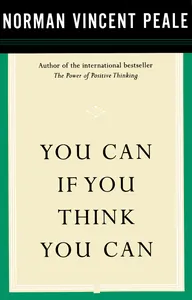
You can if you think you can
 83
83

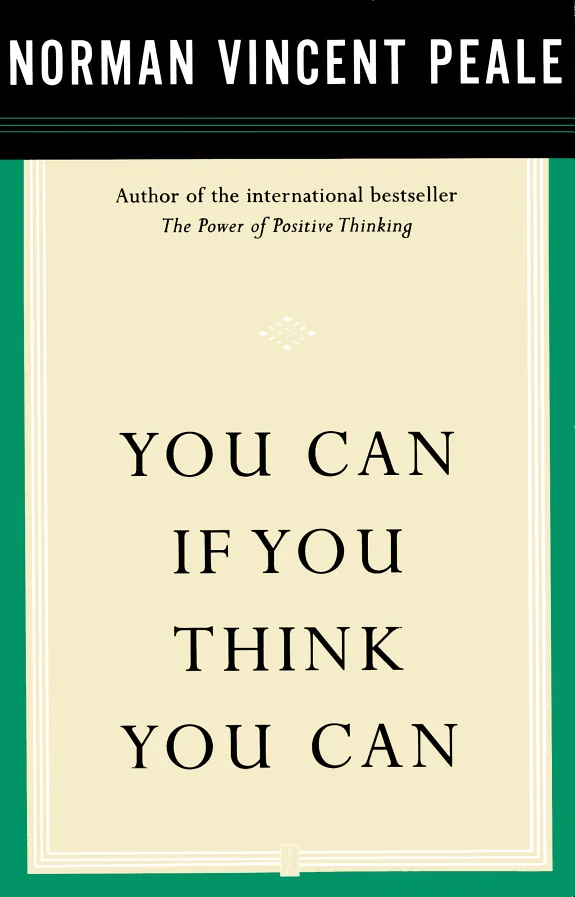
You can if you think you can
Norman Vincent Peale’s 1984 offering, "You Can If You Think You Can," revisits familiar territory, though with a slightly different emphasis than his earlier, more widely known "The Power of Positive Thinking." The book operates on a fundamental premise: that internal belief systems are the primary architects of external reality. Peale's strength lies in his accessible prose and his consistent focus on actionable advice, drawing heavily on anecdotal evidence and his pastoral experience. The core argument, that a disciplined, positive mental attitude can overcome obstacles, is presented with a conviction that has resonated with millions. However, the work's primary limitation is its inherent repetition; many of the core ideas feel like rephrased versions of concepts explored previously. A passage discussing the "imaging" of success, while intended to be empowering, can sometimes feel overly simplistic, overlooking systemic barriers that simple mental projection cannot surmount. The book’s ultimate verdict is that it remains a foundational text for those new to positive psychology principles, but offers little novel insight for seasoned practitioners.
📝 Description
83
### What It Is
Norman Vincent Peale's "You Can If You Think You Can," first published in 1984, presents a framework for harnessing the power of thought to achieve personal goals and overcome challenges. It’s not a manual for manipulating external circumstances but rather an exploration of internal mental processes. The work guides readers through understanding how belief systems and self-perception directly influence outcomes, offering practical techniques to cultivate a more positive and empowered mindset. The book emphasizes the interconnectedness of mental attitude and tangible results, suggesting that a shift in one's internal landscape can lead to significant external changes.
### Who It's For
This volume is aimed at individuals seeking self-improvement and a more resilient approach to life's adversities. It speaks to those who feel stuck, overwhelmed, or limited by their current circumstances and are looking for actionable strategies to effect change from within. Readers interested in the psychological underpinnings of success, the power of affirmation, and the practical application of positive psychology will find value here. It is particularly suited for those who are open to introspective work and willing to actively engage with the principles presented to foster personal growth and a greater sense of agency.
### Historical Context
Published in 1984, "You Can If You Think You Can" emerged during a period where the New Thought movement and self-help literature were gaining considerable traction. Peale, already a prominent figure from his earlier work "The Power of Positive Thinking" (1952), tapped into a cultural zeitgeist that increasingly valued individual empowerment and the mind-body connection. This era saw a burgeoning interest in psychology and personal development, with figures like Tony Robbins beginning to rise. Peale's approach, rooted in a blend of Christian principles and psychological techniques, offered a more accessible, faith-based alternative to purely secular self-help, positioning it within a broader conversation about mental well-being and aspirational living.
### Key Concepts
The core of Peale's message revolves around the principle that one's thoughts possess a generative power capable of shaping reality. This includes the concept of "faith-power," which suggests that unwavering belief in a positive outcome is a critical precursor to achieving it. The book also details techniques for "imaging," or mentally rehearsing success, and overcoming "fear-thinking," the tendency to anticipate negative results. Another significant theme is the importance of "practical faith," which involves not just believing but also acting upon that belief with conviction and determination. The work posits that by consciously directing one's mental energy, individuals can break through perceived limitations and unlock their potential.
💡 Why Read This Book?
• Gain actionable techniques for mental reframing, as detailed in chapters discussing "fear-thinking" and "practical faith," allowing you to confront challenges with a more empowered internal dialogue. • Understand the concept of "imaging," a specific mental rehearsal strategy Peale advocates for, to better prepare yourself for desired outcomes and build self-confidence. • Explore the influence of belief systems on tangible results, a core principle exemplified by Peale's own extensive work in pastoral counseling since the mid-20th century.
⭐ Reader Reviews
Honest opinions from readers who have explored this book.
❓ Frequently Asked Questions
What is the core message of Norman Vincent Peale's "You Can If You Think You Can"?
The book's central thesis, first explored significantly in his 1952 work, is that one's thoughts and beliefs possess a powerful influence over their life experiences and outcomes. It teaches readers to cultivate positive thinking to overcome obstacles and achieve goals.
When was "You Can If You Think You Can" by Norman Vincent Peale originally published?
This particular title, "You Can If You Think You Can," was first published in 1984, building upon the established principles of positive thinking that Peale had been advocating for decades.
Does "You Can If You Think You Can" incorporate religious or spiritual elements?
Yes, as Norman Vincent Peale was a minister, the book integrates Christian principles and faith-based perspectives with psychological techniques to encourage readers. It emphasizes a connection between spiritual belief and mental fortitude.
What are some practical techniques suggested in the book?
The book suggests techniques such as "imaging" (mentally rehearsing success), practicing "practical faith" by acting on beliefs, and consciously combating "fear-thinking" by replacing negative anticipations with positive affirmations.
How does this book relate to "The Power of Positive Thinking"?
"You Can If You Think You Can" revisits and expands upon the themes introduced in Peale's 1952 bestseller, "The Power of Positive Thinking." It offers further practical applications and reinforces the core message of mental discipline.
Who is the intended audience for "You Can If You Think You Can"?
The book is intended for individuals seeking personal growth, self-improvement, and a more optimistic outlook. It appeals to those facing challenges who wish to harness their mental power to achieve success and overcome adversity.
🔮 Key Themes & Symbolism
The Power of Belief
At its core, the book champions the idea that deeply held beliefs act as blueprints for reality. Peale illustrates how convictions, whether positive or negative, actively shape an individual's experiences and outcomes. He posits that by consciously cultivating faith in one's ability to succeed, one can overcome perceived limitations. This theme is explored through numerous anecdotes and practical exercises designed to instill a robust belief system, suggesting that true change begins not in external circumstances but in the internal landscape of the mind.
Overcoming Fear-Thinking
A significant portion of the work is dedicated to identifying and dismantling "fear-thinking" – the pervasive habit of anticipating negative outcomes and dwelling on potential failures. Peale argues that this mental pattern is a primary barrier to success and personal fulfillment. He provides strategies for recognizing these thought processes and replacing them with constructive, positive visualizations and affirmations. The goal is to retrain the mind to focus on possibilities rather than perceived threats, thereby reducing anxiety and increasing resilience.
Practical Faith and Action
Peale emphasizes that faith is not passive but an active force that must be coupled with decisive action. "Practical faith" involves not just believing in a desired outcome but also taking concrete steps toward its realization. This theme underscores the importance of willpower and consistent effort, guided by a positive mental attitude. The book encourages readers to move beyond mere wishful thinking, urging them to apply their newfound beliefs to everyday challenges and opportunities with confidence and determination.
Mental Imaging for Success
The technique of "imaging" is presented as a powerful tool for manifesting desired realities. This involves vividly visualizing oneself achieving goals and experiencing success. Peale suggests that by consistently engaging in mental rehearsal, individuals can prepare their minds and actions to align with their aspirations. This practice aims to build psychological momentum and create a mental framework that supports the attainment of objectives, effectively programming the subconscious for positive results.
💬 Memorable Quotes
“Believe you can and you're halfway there.”
— This concise statement encapsulates the book's central tenet: the power of self-belief as a foundational element for achieving any goal. It suggests that the internal conviction of possibility is as significant as the subsequent actions taken.
“The tendency to worry is a habit. You can break it.”
— Here, Peale frames worry not as an inherent trait but as a learned behavior, akin to "fear-thinking." This interpretation offers hope by suggesting that, like any habit, it can be consciously unlearned and replaced with more constructive mental patterns.
“Empty your mind of all of its negative thoughts.”
— This is a directive to actively cleanse one's mental space of detrimental thinking. It implies a deliberate process of identifying and purging negative thought forms to make room for positivity and constructive ideas.
“You are what you think you are.”
— This aphorism directly links self-perception to identity. It suggests that one's self-concept, shaped by continuous thought patterns, ultimately defines who they are and what they are capable of achieving.
“Faith is the cure for the disease of fear.”
— This metaphorical statement positions faith as an antidote to the debilitating effects of fear. It highlights faith not just as belief, but as an active, potent force capable of neutralizing and overcoming mental anxieties.
🌙 Esoteric Significance
Tradition
While not strictly an esoteric text in the vein of Hermeticism or Kabbalah, Peale's work draws heavily from the principles of the New Thought movement, which emerged in the 19th century. New Thought itself has esoteric underpinnings, emphasizing the power of the mind to influence reality, a concept found in various mystical traditions. Peale's interpretation is a more democratized, faith-based version, accessible to a broad Christian audience, yet it shares the core tenet of mind-over-matter found in more arcane systems.
Symbolism
The book doesn't rely on overt symbolic language but rather on the symbolic power of concepts. "Faith" itself acts as a primary symbol, representing an active, creative force. "Fear" is depicted as a debilitating shadow, an obstacle to be overcome. The act of "imaging" success functions symbolically, representing the mind's ability to pre-create desired realities, akin to a form of mental manifestation or psychic projection.
Modern Relevance
Peale's emphasis on the mind's power to shape reality remains highly relevant in contemporary self-help and positive psychology. Concepts like "growth mindset" and "manifestation" practiced by many modern spiritual and wellness influencers echo Peale's core ideas. His work provides a foundational understanding for many current practices that focus on cognitive reframing, affirmation, and visualization as tools for personal transformation and goal attainment.
👥 Who Should Read This Book
• Individuals seeking to reframe negative thought patterns: Those struggling with self-doubt or persistent pessimism will find practical strategies for cultivating a more optimistic and resilient mindset. • Aspiring achievers looking for motivational support: Readers aiming for specific goals in their careers, relationships, or personal development can benefit from Peale's emphasis on belief and proactive action. • Those interested in the intersection of psychology and faith: Individuals who appreciate a blend of psychological principles with Christian teachings will find Peale's approach particularly resonant and applicable.
📜 Historical Context
Norman Vincent Peale's "You Can If You Think You Can," released in 1984, emerged from a landscape deeply influenced by the New Thought movement, which had been gaining momentum since the late 19th century. Peale himself was a key figure, building on the success of his 1952 book, "The Power of Positive Thinking." This period saw a proliferation of self-help literature, with authors like Zig Ziglar and later Tony Robbins also focusing on motivation and personal achievement. Peale's approach, however, was distinct in its explicit integration of Christian theology with psychological principles, positioning it within a broader religious-based self-improvement discourse. While secular psychology was exploring cognitive behavioral therapy, Peale offered a more spiritually grounded path. His work was widely popular but also faced criticism from some psychological circles for its perceived oversimplification of complex issues, though its reception among the public was overwhelmingly positive, cementing his status as a leading voice in optimistic self-development.
📔 Journal Prompts
The impact of "fear-thinking" on your daily decisions.
How "practical faith" can be applied to a current challenge.
Visualizing success: Crafting your "imaging" scenario.
Identifying personal beliefs that may be limiting potential.
The role of positive self-talk in overcoming obstacles.
🗂️ Glossary
Fear-Thinking
A psychological habit characterized by anticipating negative outcomes, dwelling on potential failures, and allowing anxiety to dictate one's outlook and actions. Peale advocates for identifying and replacing this pattern.
Faith-Power
The concept that unwavering belief in a positive outcome or one's own capabilities acts as a potent force that can influence events and lead to success. It's belief coupled with conviction.
Imaging
A mental technique involving vividly visualizing oneself achieving desired goals or experiencing success. It's a form of mental rehearsal intended to prepare the mind and align actions with aspirations.
Practical Faith
An active form of belief that requires not just internal conviction but also taking concrete steps and actions towards realizing one's goals. It combines mental fortitude with deliberate effort.
Mental Attitude
The overall disposition and mindset of an individual, encompassing their beliefs, expectations, and emotional responses. Peale stresses that a positive mental attitude is crucial for overcoming challenges and achieving success.
Affirmation
Positive statements deliberately repeated to oneself to challenge or overcome self-sabotaging and negative thoughts. They are used to reinforce new, more positive beliefs and self-perceptions.
Willpower
The ability to control one's impulses, emotions, and actions to pursue long-term goals. Peale emphasizes its importance in maintaining a positive mindset and taking consistent action.