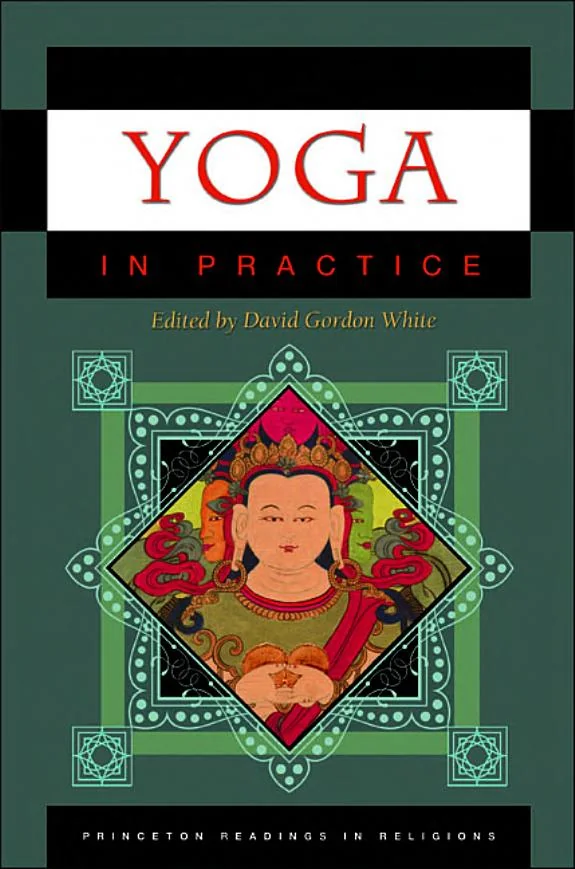
Yoga in Practice
 84
84

Yoga in Practice
David Gordon White’s anthology, Yoga in Practice, steers clear of the popular, often sanitized, modern interpretations of yoga. Instead, it offers a starkly academic, yet compelling, collection of primary source materials that illustrate the sheer diversity of lived yogic traditions. The strength lies in its unvarnished presentation of historical accounts, revealing practices far removed from contemporary studio settings. A notable passage details the ascetic practices of certain yogis, emphasizing their stark contrast to modern postural yoga. However, the sheer volume and density of the primary sources, while valuable for scholars, can be daunting for the casual reader seeking a more guided exploration. The lack of extensive connective commentary means the reader must actively bridge the gaps between disparate accounts. Ultimately, Yoga in Practice serves as a vital, albeit demanding, corrective to simplistic understandings of yogic history.
📝 Description
84
### What It Is Yoga in Practice, first published in 2012 by David Gordon White, presents a compilation of source texts from various yoga traditions. It moves beyond theoretical discussions to highlight the actual experiences of individuals practicing yoga across different cultures and historical periods. The anthology focuses on primary materials, offering direct access to the diverse expressions of yoga as a lived practice rather than a monolithic philosophy.
### Who It's For This volume is intended for scholars, advanced practitioners, and anyone interested in the historical and experiential dimensions of yoga. It caters to those who seek to understand yoga not merely as physical postures but as a multifaceted discipline with roots in Indian, Asian, and Western contexts. Readers will find value in its direct engagement with historical accounts and personal testimonies.
### Historical Context The book emerges from a scholarly landscape in the early 21st century increasingly interested in the lived, practical aspects of religious and philosophical traditions, moving away from purely textual analysis. White’s work situates yoga within a broad geographical and temporal scope, acknowledging its evolution and adaptation across cultures. This contrasts with earlier, more narrowly focused studies that often emphasized Sanskrit philosophical texts without sufficient attention to their practical application or regional variations.
### Key Concepts Central to Yoga in Practice is the concept of yoga as an embodied, lived experience. The texts explore various techniques, rituals, and states of consciousness achieved through practice, demonstrating the breadth of what has been understood as 'yoga' throughout history. It highlights the individual's journey and the diverse paths taken within the larger yoga tradition, emphasizing personal engagement and transformation.
💡 Why Read This Book?
• Gain direct access to primary texts from diverse yoga traditions, allowing you to understand yoga as it was historically practiced, not just as it is presented today, as exemplified by the collection’s focus on lived experiences. • Appreciate the historical evolution and geographical spread of yoga, moving beyond singular narratives to recognize its adaptation across India, greater Asia, and the West since its early manifestations. • Engage with accounts of yogic practice that highlight varied techniques and states of consciousness, offering a more nuanced perspective than often found in contemporary yoga literature.
⭐ Reader Reviews
Honest opinions from readers who have explored this book.
❓ Frequently Asked Questions
What kind of primary texts are included in Yoga in Practice?
The anthology features a wide array of primary sources, including historical accounts, personal testimonies, and textual fragments drawn from various yoga traditions across India, Asia, and the West, offering direct insight into lived yogic experiences.
Is Yoga in Practice suitable for beginners to yoga?
While valuable for its historical depth, the book's focus on primary source materials and academic presentation may be more suited for advanced practitioners or scholars interested in the historical context of yoga, rather than absolute beginners.
How does Yoga in Practice differ from modern yoga books?
Unlike many contemporary books, Yoga in Practice prioritizes original source materials and the lived experiences of practitioners across different eras and cultures, rather than focusing solely on modern postural practices or philosophical overviews.
What is the main focus of David Gordon White's anthology?
The primary focus is on the diverse, lived experiences of yoga practitioners throughout history and across various geographical regions, presenting a broad spectrum of yogic traditions beyond a single, unified definition.
Does the book cover the origins of yoga?
The book explores the diverse manifestations and practices of yoga across different historical periods and regions, providing a comprehensive look at its evolution and varied applications rather than solely focusing on its earliest origins.
Can Yoga in Practice help me understand different schools of yoga?
Yes, by presenting primary texts from numerous traditions, the book allows readers to directly encounter and compare the distinct practices, philosophies, and lived realities of various yogic lineages.
🔮 Key Themes & Symbolism
Embodied Yogic Experience
The core of this work lies in documenting yoga not as abstract philosophy but as a tangible, lived practice. It emphasizes the physical, mental, and spiritual engagements of individuals across centuries and continents. Through primary texts, readers encounter the diverse ways yogis have historically interacted with their bodies, environments, and inner states, highlighting the personal and often arduous nature of yogic discipline.
Diversity of Traditions
Yoga in Practice underscores that 'yoga' is not a singular, static entity. The anthology showcases a spectrum of practices originating from India, extending through greater Asia, and influencing the West. It reveals how distinct cultural contexts shaped yogic expression, from ascetic renunciations to meditative disciplines, challenging monolithic interpretations and celebrating the multifaceted history of this practice.
Historical Authenticity
By compiling firsthand accounts and historical records, White prioritizes authenticity over modern interpretations. The texts presented offer a direct window into the actual experiences of yogis, detailing their methods, goals, and the societal roles they occupied. This focus provides a crucial counterpoint to popularized versions of yoga, grounding understanding in historical reality.
The Yogi's Path
The book explores the personal journeys of individuals dedicated to yogic paths. It illuminates the often-unseen aspects of their lives, including their motivations, challenges, and the profound transformations they sought or achieved. This perspective humanizes the history of yoga, revealing the dedication and varied circumstances of its practitioners.
💬 Memorable Quotes
“The anthology focuses on the lived experiences in the many worlds of yoga.”
— This core statement emphasizes that yoga is not a single, uniform practice but a vast constellation of diverse traditions and personal engagements that have evolved across different times and cultures.
“Primary texts drawn from the diverse yoga traditions of India, greater Asia, and the West.”
— This highlights the geographical and cultural breadth of the collection, indicating that the book aims to represent yoga's expansive reach and adaptation beyond its Indian origins.
“An anthology of primary texts...”
— This signifies the book's scholarly approach, prioritizing direct historical sources over secondary interpretations or modern commentaries, allowing readers to engage with original material.
“Focuses on the lived experiences...”
— This interpretation underscores the book's commitment to understanding yoga through the actual practices and personal accounts of its adherents, rather than through abstract theory alone.
“Many worlds of yoga.”
— This phrase suggests the immense variety and distinctiveness of yogic practices and philosophies that have emerged and flourished in different societies and historical epochs.
🌙 Esoteric Significance
Tradition
While not explicitly aligned with a single Western esoteric lineage like Hermeticism or Kabbalah, Yoga in Practice offers foundational material for understanding practices that have informed various esoteric paths. Its focus on yogic states, disciplines, and the transformation of consciousness resonates with perennialist and Gnostic interests in hidden knowledge and spiritual liberation accessible through disciplined practice, albeit rooted in Eastern traditions.
Symbolism
The texts within the anthology likely explore various yogic symbols, such as the lotus (representing purity and spiritual unfolding), the mantra (sound as a vehicle for transformation), and the chakra system (energy centers within the subtle body). These symbols, when understood through the lens of lived practice, point towards esoteric concepts of inner cosmology and the unlocking of latent spiritual potentials within the practitioner.
Modern Relevance
Contemporary thinkers and practitioners interested in embodiment, consciousness studies, and the historical roots of contemplative practices draw heavily on works like this. Esoteric schools exploring cross-cultural mystical traditions find value in its documentation of diverse yogic paths, informing modern integrations of yoga with other disciplines like Western occultism or depth psychology.
👥 Who Should Read This Book
['• Scholars of religious studies and South Asian history seeking primary source material on the practical and experiential aspects of yoga across different eras and regions.', '• Advanced yoga practitioners interested in understanding the historical evolution and diverse manifestations of yoga beyond contemporary postural practices.', "• Researchers in comparative mysticism and consciousness studies looking for documented accounts of yogic techniques and their impact on practitioners' states of being."]
📜 Historical Context
Published in 2012, David Gordon White’s Yoga in Practice emerged during a period of heightened academic scrutiny of religious traditions, moving beyond purely theological or philosophical analysis to embrace socio-historical and experiential dimensions. The work situates itself against a backdrop where yoga was increasingly globalized and commodified, offering a corrective by presenting its complex, often ascetic, historical realities. This contrasts with earlier scholarship that might have focused more narrowly on the philosophical underpinnings found in texts like the Yoga Sutras of Patanjali. White’s broad geographical scope, encompassing India, greater Asia, and the West, acknowledges yoga’s adaptability and diffusion. The book’s emphasis on primary texts provides direct access to the diverse practices and lived experiences of yogis, eschewing generalized narratives. While specific contemporary engagement is not detailed, the work implicitly engages with scholars like Georg Feuerstein, who also explored yogic history but often with different methodological emphases. The reception of such anthologies in academic circles generally values their contribution to understanding the historical breadth and practical manifestations of traditions.
📔 Journal Prompts
The lived experiences documented in Yoga in Practice: What common threads emerge across disparate traditions?
Analyze the concept of 'many worlds of yoga' presented in the anthology.
Reflect on the contrast between historical yogic practices and modern interpretations.
Consider the role of primary texts in understanding the evolution of spiritual disciplines.
How do the diverse practices described challenge singular notions of enlightenment?
🗂️ Glossary
Anthology
A collection of selected literary works, such as poems, short stories, or essays, often compiled by an editor. In this context, it refers to a collection of primary source texts related to yoga.
Primary Texts
Original documents or writings from a specific historical period or by a particular author, offering firsthand accounts or direct evidence of a subject, as opposed to secondary interpretations.
Lived Experience
The subjective, personal reality of an individual's engagement with a practice, belief system, or phenomenon, emphasizing practical application and felt reality over theoretical understanding.
Yoga Traditions
The various historical, philosophical, and practical lineages and schools that have developed around the practice of yoga, originating primarily in India but spreading and diversifying globally.
Greater Asia
A broad geographical term encompassing East Asia, Southeast Asia, and South Asia, indicating the wide cultural and historical reach of yoga beyond its immediate origins.
Asceticism
A lifestyle characterized by abstinence from various types of worldly pleasures, often for the pursuit of spiritual goals. Many historical yogic practices involved significant ascetic elements.
Source Texts
Synonymous with primary texts; original writings or documents that serve as the foundation for study or interpretation within a particular field or tradition.