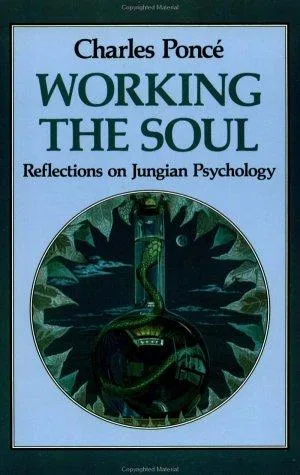
Working the soul
 72
72

Working the soul
Charles Ponce's 'Working the Soul' offers a dense, intellectually rigorous exploration of esoteric psychology that rewards patient study. Rather than offering simple platitudes, Ponce demands engagement, presenting the soul as a complex engine of transformation rather than a passive recipient of grace. The strength of the book lies in its ambitious synthesis of diverse esoteric traditions with psychological frameworks, particularly Jungian thought. However, its density can also be a limitation; readers unfamiliar with concepts like the 'occult anatomy' or specific Gnostic terminology might find certain passages challenging without significant prior knowledge. A particularly striking section discusses the 'Great Work' not as an external achievement but as an ongoing internal process of soul integration, urging the reader towards consistent practice. It's a demanding but ultimately illuminating text for those committed to the path of inner development.
📝 Description
72
### What It Is 'Working the Soul' is Charles Ponce's examination of esoteric psychology and the practice of inner transformation. Published in 1988, it engages with the psychological and spiritual dimensions of human existence, drawing parallels between ancient wisdom traditions and modern psychological thought. The book aims to provide a framework for understanding the soul not as an abstract concept, but as a dynamic entity accessible through conscious effort and inner work. It explores the relationship between the individual psyche and the wider cosmos, positioning personal growth as a process of aligning with universal principles.
### Who It's For This work is intended for serious students of esoteric philosophy, comparative religion, and depth psychology. It will appeal to those who are not content with superficial understandings of spirituality and seek a more rigorous, integrated approach to self-discovery. Readers interested in the intersection of psychology and mysticism, particularly those familiar with Jungian archetypes or Gnostic cosmology, will find fertile ground here. It requires a willingness to engage with complex ideas and a commitment to introspection.
### Historical Context 'Working the Soul' emerged in 1988, a period when interest in Jungian psychology and esoteric studies was experiencing a resurgence. The book reflects a broader intellectual current seeking to synthesize Western esoteric traditions with contemporary psychological theories. Ponce's work can be seen in dialogue with figures like Carl Jung, whose concepts of individuation and the collective unconscious provided a psychological lens for understanding archetypal patterns. The era saw a growing demand for texts that offered practical applications of mystical concepts, moving beyond purely theoretical discussions and engaging with the lived experience of transformation.
### Key Concepts The book delves into the concept of the soul as a locus of consciousness and potential, distinct from the ego or personality. It examines the role of archetypes, not just as psychological constructs but as active forces in the spiritual life. Ponce introduces ideas about the "occult anatomy" of the human being, exploring subtle bodies and energy centers as described in various traditions. The process of "working the soul" itself is presented as a form of spiritual alchemy, where inner obstacles are transmuted into wisdom and strength.
💡 Why Read This Book?
• Understand the soul as an active force of transformation, not a passive entity, by engaging with Ponce's exploration of "occult anatomy" and subtle bodies. • Connect with the historical dialogue between psychology and esotericism, particularly the influence of Jungian concepts on esoteric thought from the late 20th century. • Gain practical methods for inner work by examining Ponce's approach to spiritual alchemy as a process of transmuting internal obstacles into wisdom.
⭐ Reader Reviews
Honest opinions from readers who have explored this book.
❓ Frequently Asked Questions
What is the primary focus of Charles Ponce's 'Working the Soul'?
'Working the Soul' focuses on esoteric psychology and the practical application of inner transformation. It explores the soul as a dynamic entity accessible through conscious effort, drawing parallels between ancient wisdom and modern psychological concepts.
When was 'Working the Soul' first published?
Charles Ponce's 'Working the Soul' was first published in 1988, reflecting a period of renewed interest in esoteric studies and their integration with psychological theories.
What esoteric traditions does 'Working the Soul' draw upon?
The book draws upon a range of esoteric traditions, including Hermeticism, Gnosticism, and concepts related to subtle anatomy and spiritual alchemy, synthesizing them with psychological frameworks.
Is 'Working the Soul' suitable for beginners in esoteric studies?
While accessible to dedicated students, the book's dense intellectual content and reliance on complex esoteric and psychological concepts make it more suited for those with some prior background in these fields.
What is the concept of the 'Great Work' as presented by Ponce?
Ponce interprets the 'Great Work' not as an external goal but as an ongoing internal process of integrating and transforming the soul, aligning it with universal principles through consistent practice.
How does 'Working the Soul' relate to Carl Jung's work?
The book engages with Carl Jung's psychological theories, particularly concepts like archetypes and individuation, reinterpreting them within a broader esoteric and spiritual context.
🔮 Key Themes & Symbolism
The Soul as Active Agent
Ponce posits the soul not as a static essence but as a vital, active principle requiring conscious engagement. This perspective challenges traditional views of the soul as merely something to be saved or judged. Instead, 'Working the Soul' emphasizes the soul's inherent capacity for transformation through disciplined inner effort. This involves understanding its subtle anatomy and energetic functions, moving beyond the ego-centric personality to access deeper layers of consciousness and potential.
Esoteric Psychology and Archetypes
The book bridges the gap between esoteric cosmology and modern psychology, particularly Jungian thought. Ponce explores archetypes not just as psychological patterns but as active, spiritual forces that shape human experience. He suggests that working with these archetypes, understanding their influence on our inner lives, is crucial for spiritual development and achieving a more integrated self, moving towards what he terms the 'Great Work'.
Spiritual Alchemy of the Psyche
A core theme is the concept of spiritual alchemy applied to the inner life. Ponce frames the process of self-transformation as a form of inner alchemy, where the raw materials of the psyche—including its limitations and shadow aspects—are transmuted into higher spiritual qualities. This involves diligent practice, self-awareness, and a deep understanding of the symbolic language of the soul's journey towards integration and wholeness.
Cosmic Consciousness and the Individual
Ponce explores the intricate relationship between individual consciousness and the broader cosmos. He suggests that the human soul is a microcosm reflecting the macrocosm, and that aligning the inner life with universal principles is key to spiritual realization. This perspective encourages readers to see their personal journey of self-work as part of a larger cosmic unfolding, fostering a sense of interconnectedness.
💬 Memorable Quotes
“The soul is not an object of belief, but a field of work.”
— This statement reorients the reader's perception, shifting focus from passive faith to active participation. It implies that spiritual understanding and growth are achieved through diligent, conscious effort rather than mere intellectual assent.
“Archetypes are the living forces of the inner cosmos.”
— This highlights Ponce's view of archetypes as dynamic, potent energies rather than static psychological concepts. They are presented as fundamental components of our inner reality, influencing our thoughts, emotions, and spiritual trajectory.
“Inner alchemy transmutes the lead of the personality into the gold of the spirit.”
— This is a classic alchemical metaphor applied to psychological transformation. It suggests that the base elements of the ordinary personality, when subjected to spiritual discipline, can be refined into higher, more luminous spiritual qualities.
“To work the soul is to engage in the Great Work of being.”
— This links the personal endeavor of inner development to the grand, cosmic process of existence. It elevates the practice of soul-work from a personal hobby to a fundamental participation in the nature of reality itself.
“The path involves understanding the subtle anatomy of consciousness.”
— This points to the technical aspect of Ponce's approach, suggesting that a detailed map of consciousness and its energetic structures is necessary for effective spiritual practice and transformation.
🌙 Esoteric Significance
Tradition
Ponce's work is deeply rooted in Western Esotericism, particularly drawing from Hermeticism and Gnosticism, while also incorporating elements of Jungian psychology. It fits within the lineage of authors who sought to synthesize ancient wisdom traditions with modern psychological understanding, aiming to provide a practical framework for inner transformation that goes beyond mere intellectual study. It aligns with traditions that view the soul as a complex entity requiring deliberate work and refinement.
Symbolism
Key symbols include the 'Great Work,' representing the ultimate process of spiritual integration and self-realization, often framed through alchemical metaphors. The concept of the 'subtle anatomy' of the human being, referencing energy centers and subtle bodies found in various esoteric systems, is also central. Archetypes, as living forces shaping consciousness, function as symbolic motifs that Ponce uses to decode the inner life and its relationship to the cosmos.
Modern Relevance
Contemporary thinkers and practitioners in depth psychology, comparative mysticism, and esoteric philosophy continue to engage with Ponce's synthesis. His work remains relevant for those seeking to bridge the gap between psychological self-understanding and spiritual attainment. Modern schools of integral spirituality and psycho-spiritual development often draw upon similar frameworks that integrate archetypal psychology with esoteric cosmology, making 'Working the Soul' a foundational text for such explorations.
👥 Who Should Read This Book
• Students of Jungian psychology seeking to explore the esoteric dimensions of archetypes and the unconscious beyond strictly academic psychological interpretations. • Practitioners of Western Esotericism interested in a structured, psychologically informed approach to inner work and spiritual alchemy. • Readers of comparative religion and mythology who are drawn to understanding the practical, transformative applications of ancient wisdom traditions in contemporary life.
📜 Historical Context
Charles Ponce's 'Working the Soul,' published in 1988, arrived during a period of significant interest in the intersection of psychology and esoteric traditions. The late 20th century saw a continued fascination with Carl Jung's work, particularly his exploration of archetypes and the collective unconscious, which provided a fertile ground for integrating psychological insights with older mystical systems. Ponce's approach can be seen as a continuation of this trend, seeking to offer a practical, psychologically-informed path to spiritual development. In this era, figures like Joseph Campbell were popularizing mythology and comparative religion, while the New Age movement explored various spiritual practices. Ponce's work distinguished itself by its rigorous, less New Age-oriented approach, focusing on specific esoteric lineages and demanding a higher level of intellectual and practical engagement. The book offered a structured alternative to more diffuse spiritual explorations, grounding esoteric concepts in a more systematic framework.
📔 Journal Prompts
The soul as a field of work: Identify one area of your inner life you are currently 'working on'.
Reflect on the 'living forces of the inner cosmos' – which archetypes feel most active in your life?
Spiritual alchemy: What 'base' quality within yourself could be transmuted through conscious effort?
The subtle anatomy of consciousness: How might understanding your energetic patterns inform your daily practice?
The Great Work: How does your personal journey of self-development connect to a larger existential process?
🗂️ Glossary
The Great Work
In esotericism, this refers to the ultimate process of spiritual transformation and self-realization, often understood as the integration of all aspects of the self and alignment with divine principles. Ponce applies it to the ongoing work on the soul.
Occult Anatomy
A concept describing the non-physical or subtle structures of the human being, including energy centers (chakras), subtle bodies (e.g., astral, etheric), and their functions within esoteric traditions.
Archetype
In this context, archetypes are understood not just as psychological patterns (as in Jung) but as fundamental, living spiritual forces or patterns that structure both the inner human psyche and the outer cosmos.
Spiritual Alchemy
The application of alchemical principles and symbolism to the inner life, aiming to transmute base psychological qualities (like egoic tendencies or shadow aspects) into higher spiritual states of consciousness.
Ego
The conscious sense of self, the personality's center of identity. Ponce distinguishes this from the deeper, transpersonal nature of the soul, suggesting the ego must be understood and integrated, not merely discarded.
Subtle Bodies
Non-physical aspects or layers of the human being described in various esoteric traditions, such as the etheric body (life force), astral body (emotions), and mental body (thoughts), which interact with the physical body and consciousness.
Gnosis
Direct, intuitive knowledge of spiritual truths, often associated with Gnostic traditions. Ponce's work aims to facilitate a form of gnosis through psychological and esoteric practice.