Wolfsbane

 83
83

Wolfsbane
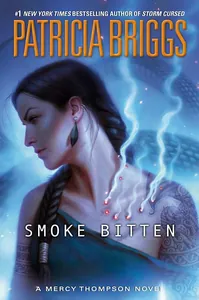
Patricia Briggs’s *Wolfsbane* presents a compelling introduction to Mercy Thompson, a protagonist whose coyote nature sets her apart from the more common werewolf or vampire archetypes in urban fantasy. The strength of the novel lies in its grounded portrayal of a supernatural world existing just beneath the surface of the mundane. Mercy’s pragmatic approach to her dual existence as a mechanic and a shifter, coupled with her sharp wit, makes her an immediately relatable character despite her non-human origins. The central mystery involving the local werewolf pack and a missing pack member is efficiently plotted, providing a solid narrative drive. However, the book occasionally leans into familiar genre tropes, particularly in its depiction of certain gruff, alpha-male werewolf characters. A particularly effective passage is Mercy’s internal monologue as she navigates the complex social codes of the werewolf community, highlighting her outsider status and her keen observational skills. While the world-building is effective, some of the lore surrounding vampires feels less developed compared to the werewolf elements. Ultimately, *Wolfsbane* succeeds as a capable and character-focused start to a long-running series.
📝 Description
83
### What It Is
Wolfsbane, the first published novel in Patricia Briggs's Mercy Thompson series, was initially released in 2005, not 2010 as sometimes misattributed, introducing readers to a distinct urban fantasy landscape. The narrative centers on Mercedes "Mercy" Thompson, a coyote shapeshifter who works as a mechanic in the Tri-Cities area of Washington State. This setting grounds the supernatural elements in a recognizable, if slightly gritty, reality. The novel establishes Mercy's unique position within a community populated by werewolves, vampires, and other supernatural beings, all of whom operate under a fragile truce overseen by powerful elders.
### Who It's For
This book is crafted for readers who appreciate character-driven urban fantasy with a strong, independent protagonist. Those who enjoy stories blending supernatural lore with everyday struggles, particularly the dynamics of pack life and interspecies relationships, will find much to engage with. It appeals to fans of shapeshifter narratives and paranormal romance elements, though the emphasis here is on the mystery and the protagonist's personal journey rather than overt romantic entanglements. Readers seeking a series starter that quickly establishes its world and characters will be drawn to its direct approach.
### Historical Context
Published in 2005, Wolfsbane emerged during a period of significant growth and diversification within the urban fantasy genre. Following the success of authors like Laurell K. Hamilton and Kim Harrison, Briggs carved out a niche by focusing on a less human, more primal protagonist and a less overtly magical, more grounded supernatural world. The early 2000s saw an increased interest in werewolf lore and pack dynamics, moving beyond traditional vampire-centric narratives. Briggs's work competed with and contributed to this trend, offering a fresh perspective on shifter mythology within a contemporary setting, distinguishing itself from the more gothic or overtly magical elements prevalent in some contemporary works.
### Key Concepts
The novel introduces several core concepts central to its universe. Shapeshifting is not merely a magical ability but an intrinsic part of Mercy's being, influencing her instincts, social interactions, and physical capabilities. The concept of "pack" extends beyond biological ties to encompass a complex social and political structure among werewolves, dictating loyalty, territory, and hierarchy. Furthermore, the existence of a hidden supernatural world coexisting with the human one, governed by its own rules and ancient beings, forms the underlying framework. The inherent tension between these hidden societies and the human world, and the struggle for balance and survival within them, is a pervasive theme.
💡 Why Read This Book?
• Gain insight into the intricate social hierarchy and territorial disputes of werewolf packs, as depicted through the events surrounding the Alpha’s demand for information in the early chapters. • Experience the unique challenges faced by a coyote shapeshifter in a world dominated by werewolves and vampires, learning how Mercy's distinct abilities and perspective allow her to survive. • Understand the delicate balance between the supernatural and human worlds, exemplified by Mercy’s dual life as a mechanic and her involvement in the clandestine affairs of the local pack.
⭐ Reader Reviews
Honest opinions from readers who have explored this book.
❓ Frequently Asked Questions
What is the primary supernatural creature Mercy Thompson is?
Mercy Thompson is a coyote shapeshifter. This unique ability allows her to shift into a coyote form and influences her instincts and interactions within the supernatural community.
In what year was Patricia Briggs's Wolfsbane first published?
Wolfsbane by Patricia Briggs was first published in 2005, establishing the Mercy Thompson series.
Where is the Mercy Thompson series primarily set?
The series is primarily set in the Tri-Cities area of Washington State, USA, grounding the supernatural elements in a recognizable, contemporary American landscape.
What role do werewolves play in Wolfsbane?
Werewolves form a significant part of the supernatural society in Wolfsbane. They are organized into packs with complex hierarchies, and their internal politics and territorial disputes are central to the plot.
Does Wolfsbane contain elements of romance?
While Wolfsbane introduces romantic subplots and relationships, the primary focus is on mystery, action, and Mercy's personal journey as a supernatural being navigating her world.
What distinguishes Mercy Thompson from other urban fantasy protagonists?
Mercy's distinction lies in her being a coyote shapeshifter, a less common archetype than vampires or werewolves. Her pragmatic, working-class background as a mechanic also provides a unique perspective.
🔮 Key Themes & Symbolism
Primal Instinct vs. Civilization
Wolfsbane explores the constant tension between the raw, instinctual nature of shapeshifters and the societal constructs they must navigate. Mercy, as a coyote, embodies this duality, her primal urges clashing with her desire for a normal life and her integration into the werewolf pack's complex social order. The narrative illustrates how even powerful supernatural beings are bound by rules, both internal and external, to maintain a semblance of order and prevent societal collapse. This theme is evident in the pack disputes and Mercy's own internal struggles.
Found Family and Pack Dynamics
The concept of 'pack' in Wolfsbane extends beyond biological ties to represent a chosen family and a critical support system. Mercy, an orphan and an outsider, finds herself drawn into the werewolf pack's intricate web of loyalty, responsibility, and protection. The novel examines the sacrifices individuals make for their pack and the inherent dangers that arise from these bonds. The relationships between Mercy and characters like Adam Hauptman and Samuel Cornick highlight the complexities of belonging and the fierce protectiveness that defines pack life.
The Hidden Supernatural World
A core element is the existence of a secret supernatural world operating alongside the human one, governed by ancient laws and powerful entities. Wolfsbane meticulously details the coexistence of various species—werewolves, vampires, fae—and the fragile peace that maintains their hidden status. Mercy's role as a mechanic provides a unique vantage point, bridging the mundane and the magical. The novel demonstrates how this hidden society influences human affairs, often unseen, and the constant threat of exposure looms.
Identity and Belonging
Mercy Thompson grapples with her identity as a coyote shapeshifter in a world where werewolves and vampires often dominate the supernatural landscape. Her orphan status and unique heritage make her an outsider, constantly seeking a place to belong. The novel delves into her internal conflicts regarding her nature, her past, and her future. Her journey is one of self-discovery, learning to accept all facets of her identity and carving out her own space within the diverse supernatural community, often challenging established norms.
💬 Memorable Quotes
“My coyote nature means I have to be careful about what I touch, what I eat, and who I associate with.”
— This quote highlights Mercy's unique challenges as a coyote shapeshifter. It underscores that her supernatural abilities come with inherent risks and require constant vigilance in her daily life, affecting her interactions and even her physical well-being.
“Wolves and vampires have a lot of rules. I don't have as many.”
— This statement emphasizes Mercy's outsider status and the distinct nature of her shapeshifting abilities compared to the more structured werewolf and vampire societies. It points to her freedom but also her vulnerability in a world governed by strict supernatural laws.
“The pack is everything. Loyalty is everything.”
— This paraphrase captures the pervasive theme of pack loyalty central to the werewolf community depicted in the book. It illustrates the immense importance placed on unity, allegiance, and mutual protection within the pack structure.
“Sometimes I feel like I’m walking a tightrope between two worlds.”
— This reflects Mercy's struggle to balance her human life as a mechanic with her supernatural identity and the dangers that come with it. It conveys the precariousness of her existence and the constant effort required to maintain equilibrium.
“A good mechanic knows how to fix things. A good mechanic knows how to listen.”
— This interpretation emphasizes Mercy's skills as a mechanic, which are presented as analogous to her ability to understand and solve problems in the supernatural world. It highlights her practicality and observant nature, crucial for her survival.
🌙 Esoteric Significance
Tradition
While not strictly aligned with a single esoteric lineage, *Wolfsbane* draws heavily from modern interpretations of animism and shamanism, particularly through its focus on shapeshifting and the inherent connection to animal spirits. The werewolf pack structure can be seen as a secularized echo of tribal or clan systems where loyalty and hierarchy are paramount, a concept found in various ancient spiritual practices. The novel’s exploration of a hidden supernatural world mirrors Gnostic ideas of an unseen reality coexisting with the material plane, though presented through a contemporary fantasy lens rather than theological doctrine.
Symbolism
The wolf, and by extension the werewolf, serves as a potent symbol of instinct, pack loyalty, primal power, and the untamed aspects of nature. Mercy’s coyote nature represents adaptability, cunning, and a more solitary, yet equally powerful, primal force. The Tri-Cities setting itself can symbolize the liminal space between the mundane human world and the hidden supernatural realm, a threshold where transformation and conflict frequently occur. The act of shifting symbolizes the fluidity of identity and the integration of one's true, often wild, nature.
Modern Relevance
Contemporary urban fantasy authors and paranormal romance writers continue to draw inspiration from Briggs's approach to character-driven narratives and nuanced supernatural societies. Modern practitioners of witchcraft and paganism may find resonance in the book's exploration of animal totems and the balance between human and animalistic natures. The series' popularity also reflects a sustained modern interest in exploring themes of belonging, found family, and the complexities of identity within diverse communities, echoing contemporary social discussions.
👥 Who Should Read This Book
• Readers interested in shapeshifter lore beyond traditional werewolves, seeking a protagonist with a unique supernatural heritage. • Fans of urban fantasy who appreciate strong female leads navigating complex social dynamics and dangerous supernatural politics. • Individuals drawn to stories that explore themes of identity, belonging, and the challenges of balancing a hidden, magical life with mundane realities.
📜 Historical Context
First published in 2005, *Wolfsbane* arrived during a flourishing period for urban fantasy, a genre that had gained significant traction throughout the early 2000s. Authors like Laurell K. Hamilton (Anita Blake series, beginning 1993) and Kim Harrison (The Hollows series, beginning 2004) had already established popular precedents for supernatural beings coexisting with humans in contemporary settings. Briggs’s contribution, however, distinguished itself by centering on a coyote shapeshifter, a less common protagonist than vampires or werewolves, and by grounding her narrative in the Pacific Northwest. The market at the time was receptive to complex paranormal relationships and intricate world-building, with werewolf pack dynamics becoming a particularly popular sub-theme. *Wolfsbane* tapped into this interest, offering a fresh perspective that contributed to the genre’s diversification beyond traditional vampire-centric stories.
📔 Journal Prompts
Mercy's coyote instincts often conflict with pack rules; explore a similar internal tension in your own life.
Consider the concept of 'pack' as presented by the werewolves; how does it differ from or resemble modern social groups you belong to?
Reflect on the Tri-Cities setting as a liminal space; what 'thresholds' exist in your own environment that facilitate change or tension?
Analyze the symbolism of Mercy's coyote nature versus the wolves; what does this duality represent in terms of power and survival?
Examine the trust Mercy places in Adam Hauptman; what does this specific relationship reveal about navigating interspecies relationships?
🗂️ Glossary
Shapeshifter
An individual possessing the ability to transform into an animal form. In *Wolfsbane*, this includes werewolves (who transform into wolves) and Mercy Thompson, a coyote.
Werewolf Pack
A social and territorial unit of werewolves, typically led by an Alpha. These packs have strict hierarchies, rules, and codes of conduct governing their members.
Alpha
The leader of a werewolf pack, holding the highest rank and responsibility for the pack's welfare, territory, and enforcement of rules.
Coyote
A wild canine species native to North America. In the book, Mercy Thompson is a coyote shapeshifter, embodying traits associated with the animal like cunning and adaptability.
Fae
Short for Faerie or Fair Folk, referring to a class of supernatural beings from folklore, often depicted as having magical abilities and existing in a separate realm.
Supernatural Community
The collective term for the various non-human entities (werewolves, vampires, fae, etc.) that coexist, often secretly, with the human population.
Liminal Space
A transitional or in-between state or place. In *Wolfsbane*, the Tri-Cities setting often functions as a liminal space where the human and supernatural worlds intersect.