Where the Mountain Meets the Moon
 82
82

Where the Mountain Meets the Moon
Grace Lin's "Where the Mountain Meets the Moon" presents a familiar quest structure but infuses it with a vibrant, authentic Chinese folklore that distinguishes it from generic fantasy. Minli's journey, while ostensibly a child's adventure, carries the weight of ancestral wisdom. The character of the Dragon King, initially arrogant but transformed by Minli’s actions, exemplifies the book’s nuanced approach to character development. However, the sheer density of folklore references, while enriching, occasionally slows the narrative pace in the middle sections, demanding a reader's sustained attention to absorb the cultural context. The portrayal of the Jade Emperor and his celestial court, though brief, offers a compelling glimpse into a hierarchical, yet ultimately benevolent, cosmic order. It’s a work that rewards patience with a profound sense of wonder and cultural immersion.
📝 Description
82
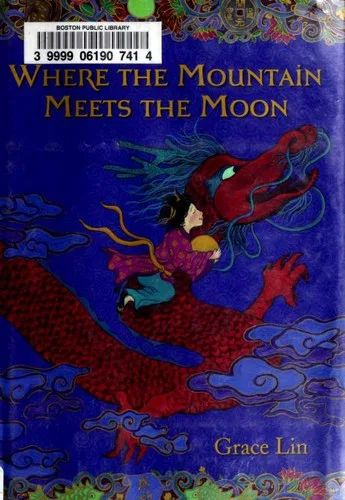
Grace Lin's 2016 novel, Where the Mountain Meets the Moon, weaves Chinese folklore into a quest for fortune.
Minli, a young girl from a poverty-stricken village, sets out to find the Old Man of the Moon. She hopes he can restore her father's lost fortune. Her journey takes her through a land filled with magical beings and perilous challenges. Along the way, Minli encounters characters like a dragon who cannot fly and a king who is afraid of silkworms. These encounters test her inherent kindness and courage.
The narrative draws directly from Chinese mythology and oral traditions. It presents a world where the supernatural is woven into the fabric of everyday life. Minli's quest is not just for wealth but for understanding and connection. The book uses these fantastical elements to explore deeper themes relevant to young readers.
The book draws on Taoist concepts of destiny and the interconnectedness of all things, central to East Asian spiritual traditions. It reflects a long history of Chinese storytelling that blends the mundane with the magical, often featuring mythical beings and divine intervention. The quest structure itself is a common trope in religious and philosophical literature, where the protagonist's trials lead to spiritual growth and enlightenment.
💡 Why Read This Book?
• You will learn how the concept of 'yuanfen'—destined connections—shapes character relationships and plot progression, a concept rarely explored with such clarity in Western children's literature, as seen in Minli's encounters. • You will experience the symbolic weight of mythical creatures like dragons and phoenixes not merely as fantastical beasts but as embodiments of ancient Chinese philosophical ideas, particularly concerning the Dragon King's transformation. • You will gain an appreciation for how a narrative can subtly integrate Taoist principles of balance and the interconnectedness of actions, exemplified by the consequences Minli faces and overcomes throughout her journey to find the Old Man of the Moon.
⭐ Reader Reviews
Honest opinions from readers who have explored this book.
❓ Frequently Asked Questions
What specific Chinese folklore elements are present in 'Where the Mountain Meets the Moon'?
The book prominently features figures from Chinese mythology such as the Old Man of the Moon (Yuelao), dragons (like the Dragon King), and celestial beings like the Jade Emperor, all integral to Chinese folklore and cosmology.
What is the significance of the Old Man of the Moon in the story?
The Old Man of the Moon, known as Yuelao, is a figure who ties the threads of fate and marriage. In the story, Minli seeks him to ask for fortune, highlighting his role as a powerful celestial arbiter.
What moral lessons does Minli learn on her quest?
Minli learns the value of kindness, perseverance, and generosity. Her interactions with various characters and mythical beings teach her that true fortune comes not from material wealth but from inner strength and compassion.
Is 'Where the Mountain Meets the Moon' part of a series?
Yes, 'Where the Mountain Meets the Moon' is the first book in Grace Lin's 'The Year of the Dog' series, followed by 'Starry River' and 'When the Sea Turned Silver'.
What is the cultural background of the author Grace Lin?
Grace Lin is an American author and illustrator of Taiwanese descent. Her work often draws upon her cultural heritage, infusing her stories with Chinese and Taiwanese folklore and traditions.
What is 'yuanfen' and how does it relate to the book?
'Yuanfen' is a concept referring to destiny or fate, particularly in the context of relationships. The book explores how 'yuanfen' influences the connections Minli makes on her journey, linking characters in predetermined ways.
🔮 Key Themes & Symbolism
Destiny and Yuanfen
The narrative is deeply influenced by the concept of 'yuanfen,' the belief in predestined connections and fate. Minli's journey is not merely a random adventure but a path guided by unseen forces, aligning her with characters and events that are meant to shape her destiny. The Old Man of the Moon, Yuelao, is the embodiment of this principle, subtly influencing the threads of fate that connect individuals. This theme underscores the idea that encounters, whether challenging or supportive, are part of a larger cosmic plan, encouraging acceptance and understanding of life's unfolding path.
The Nature of Fortune
Contrary to conventional notions of wealth, the book redefines fortune as intrinsic qualities rather than material possessions. Minli's quest is initially driven by a desire to restore her father's lost fortune, but her experiences reveal that true riches lie in courage, kindness, wisdom, and strong relationships. The characters she encounters, from the benevolent Dragon King to the wise Old Man of the Moon, impart lessons that elevate inner virtues above external wealth, suggesting that a life lived with integrity and compassion is the greatest fortune one can attain.
Filial Piety and Generosity
Filial piety, a core value in many East Asian cultures, is a primary motivator for Minli's quest. Her deep love and respect for her father compel her to undertake the dangerous journey. This dedication is mirrored in her interactions with others, where acts of generosity and selflessness are consistently rewarded, often in unexpected ways. The narrative suggests a karmic reciprocity: kindness begets kindness, and a generous spirit attracts fortunate circumstances, reinforcing the interconnectedness of actions and their consequences within the story's world.
Mythological World-Building
Lin masterfully constructs a world populated by figures from Chinese mythology, bringing them to life with distinct personalities and roles. The Dragon King, the Jade Emperor, and various spirits are not mere archetypes but characters who grapple with their own motivations and flaws. This integration of folklore creates a rich, immersive experience that educates young readers about a specific cultural heritage while simultaneously presenting universal themes of growth and self-discovery through a unique mythological lens.
💬 Memorable Quotes
Direct passages from the work, attributed to the author.
“The Dragon King, who had been so proud and angry, now bowed his head in shame.”
— This depicts the transformation of a key character. It illustrates how pride can lead to downfall and how genuine remorse and humility, often prompted by an innocent's actions, can lead to redemption and a change in one's nature.
“Minli’s heart ached for the lonely Dragon King.”
— This highlights Minli's core virtue: empathy. Her ability to feel compassion even for a creature who has caused trouble demonstrates her inherent goodness, which is often the catalyst for positive change in the story.
💡 Key Ideas
Editorial paraphrase of the work's core concepts — not direct quotes.
The Old Man of the Moon tied the red thread of fate between them.
This line expresses the book's central theme of 'yuanfen' or destiny. It signifies a predestined connection, often romantic but here extended to broader life-altering relationships, underscoring the belief that certain encounters are fated to shape one's path.
She knew that the journey was long and arduous, but she was determined.
This quote speaks to Minli's perseverance. It acknowledges the difficulty of her quest but emphasizes her unwavering resolve, a crucial trait that allows her to overcome the numerous obstacles placed in her path.
Kindness, she learned, was a fortune all its own.
This is a key realization for Minli, summarizing the book's redefinition of wealth. It suggests that true prosperity lies not in material gains but in the cultivation of compassionate actions and inner virtues.
🌙 Esoteric Significance
Tradition
While not explicitly aligned with a single Western esoteric tradition, "Where the Mountain Meets the Moon" draws heavily from East Asian philosophical and spiritual currents, particularly Taoism and Buddhism. The concept of 'yuanfen' (destined connections) and the emphasis on karma, balance, and the interconnectedness of all things are central. The narrative structure itself, a quest for wisdom and fulfillment mediated by celestial beings and magical trials, echoes archetypal spiritual journeys found across various traditions, including Gnostic narratives of descent and ascent.
Symbolism
The **Dragon** is a potent symbol, representing power, good fortune, and control over natural forces like water. Here, the Dragon King’s transformation from arrogance to humility signifies the esoteric principle that true power lies not in dominance but in wisdom and compassion. The **Red Thread of Fate**, tied by the Old Man of the Moon, symbolizes 'yuanfen,' the unseen connections that bind individuals and events, suggesting a divinely orchestrated or karmically determined universe where all actions have repercussions.
Modern Relevance
Contemporary thinkers and practitioners in fields like comparative mythology and cross-cultural psychology find value in Lin's work for its authentic representation of Chinese folklore. Its exploration of destiny, karma, and the redefinition of 'fortune' through inner virtues speaks to modern self-help and mindfulness movements that seek wisdom beyond materialism. The book serves as an accessible entry point for individuals interested in Eastern philosophies and their application to personal growth and understanding interpersonal dynamics.
👥 Who Should Read This Book
• Young readers aged 8-12 fascinated by adventure stories infused with magic and moral lessons, who will gain an engaging introduction to Chinese folklore and the concept of 'yuanfen'. • Parents and educators seeking literature that offers cultural diversity and teaches virtues such as kindness, perseverance, and filial piety through a compelling narrative. • Adults interested in comparative mythology, folklore studies, or those exploring Eastern philosophical concepts like destiny and karma in an accessible, story-driven format.
📜 Historical Context
Published in 2016, Grace Lin's "Where the Mountain Meets the Moon" arrived at a time when the children's literature landscape was increasingly seeking diverse voices and narratives rooted in non-Western traditions. Lin's work directly engaged with classical Chinese folklore and mythology, drawing parallels to epic quests found in seminal works like Wu Cheng'en's "Journey to the West" (16th century). This period saw a growing awareness of the need to move beyond Eurocentric storytelling, with authors like Lin providing authentic cultural perspectives. The book's success was notable, garnering positive reviews and accolades, signifying a positive reception from critics and readers alike who appreciated its rich world-building and thematic depth. It stood in contrast to the prevalent fairy tale adaptations and high-fantasy narratives common at the time, offering a unique cultural immersion that resonated with a broad audience.
📔 Journal Prompts
Minli's quest to find the Old Man of the Moon.
The transformation of the Dragon King.
The symbolic meaning of the red thread of fate.
The true nature of fortune as depicted in the story.
Acts of kindness performed by Minli and their consequences.
🗂️ Glossary
Yuanfen
A Chinese concept referring to destiny or fate, particularly in the context of relationships and significant life encounters. It suggests that connections between people are predetermined and meaningful.
Old Man of the Moon (Yuelao)
A figure in Chinese mythology believed to tie the red threads of fate between destined couples. In the story, he is sought for his ability to influence destiny and bring fortune.
Dragon King
A powerful mythological being in Chinese lore who controls the seas and weather. Often depicted as a ruler of an underwater palace, his character arc involves learning humility.
Jade Emperor
The supreme ruler of Heaven in Chinese mythology, presiding over celestial beings and earthly affairs. He represents ultimate authority in the celestial bureaucracy.
Filial Piety
A virtue of respect, obedience, and care for one's parents and elders. It is a foundational concept in Confucianism and a strong motivator for Minli's journey.
Taoism
An ancient Chinese philosophy and religion emphasizing living in harmony with the Tao (the Way). Key principles include balance, simplicity, and the interconnectedness of all things.
Karma
In Buddhist and Hindu traditions, the principle of cause and effect where one's actions influence future events. The book implies a similar cosmic balance of actions and consequences.
🔮 Readers Also Liked
Browse all →








More by Grace Lin, Janet Song
All books →
More Free Occult Philosophy Books
View all →