Way station
 73
73

Way station
Clifford D. Simak's "Way Station" offers a quiet contemplation on humanity's place in a sprawling galaxy, centered on Enoch Wallace and his unique position as the keeper of an interstellar crossroads. The novel excels in its depiction of a universe teeming with life, yet grounded in the intimate, solitary existence of its protagonist. Simak’s prose, characteristically gentle, imbues the narrative with a sense of wonder and melancholy. However, the plot can feel somewhat inert; the strength of the book lies not in dramatic events but in its philosophical undertones. A particular strength is the concept of the "galactic peace," a fragile, almost accidental harmony maintained by unseen forces and individuals like Wallace. Its limitation is the slow pacing, which might deter readers seeking more conventional plot propulsion. Nevertheless, for its evocative atmosphere and profound quietude, "Way Station" remains a significant work in thoughtful science fiction.
📝 Description
73
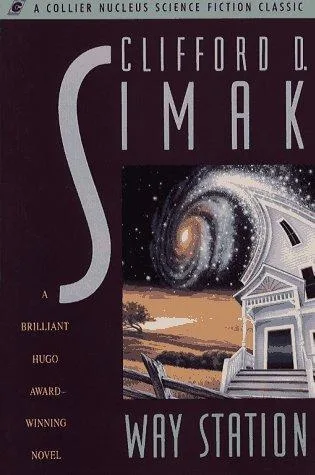
### What It Is Clifford D. Simak's "Way Station," first published in 1963, presents a unique narrative centered around Enoch Wallace, the solitary caretaker of a galactic crossroads. This interstellar hub, disguised as a humble farmhouse, serves as a meeting point for myriad alien species traversing the cosmos. Wallace, a human who has chosen this reclusive existence, acts as an unofficial diplomat and observer, his life intertwined with the silent passage of beings from across the universe. The novel explores themes of isolation, connection, and humanity's place within a vaster, cosmic order.
### Who It's For This work is suited for readers who appreciate science fiction that prioritizes philosophical inquiry and character introspection over action-packed plots. Those interested in the quiet contemplation of existence, the nature of communication across species, and the human condition viewed from an extraterrestrial perspective will find "Way Station" engaging. It appeals to individuals seeking a contemplative science fiction experience, particularly those drawn to Simak's distinctive, gentle prose and his focus on the human element amidst the grand scale of the universe.
### Historical Context Published in 1963, "Way Station" emerged during a fertile period for science fiction, a decade marked by the rise of the New Wave movement which sought to explore more literary and psychological themes. Simak, known for his more traditional, pastoral style, offered a counterpoint to the experimentalism of writers like J.G. Ballard or Michael Moorcock. The era was also one of burgeoning interest in space exploration, fueled by the Space Race, which provided a backdrop for speculative fiction pondering humanity's future among the stars. Simak's work often touched upon themes that mirrored societal anxieties and hopes regarding technological advancement and our cosmic destiny.
### Key Concepts The novel revolves around the concept of the "Way Station" itself—a nexus of interstellar travel and a symbol of universal convergence. Enoch Wallace's role as its keeper highlights the theme of chosen solitude and the quiet responsibilities that can arise from an unusual position. The narrative also engages with the idea of "galactic peace" and the subtle, often unnoticed, mechanisms that maintain it, suggesting that profound connections can exist beyond conventional understanding or direct interaction. The extraterrestrial visitors, though often glimpsed, represent the vast diversity of life and the potential for interspecies understanding.
💡 Why Read This Book?
• Gain an appreciation for the concept of the "galactic peace" as presented in the novel, understanding how Simak imagined interspecies harmony without overt conflict, a perspective unique to his 1963 work. • Experience the unique atmosphere of the "Way Station" itself, a literal and metaphorical crossroads, learning how its design and function reflect themes of connection and isolation explored by Simak. • Understand Enoch Wallace's role as the solitary keeper of the station, reflecting on his chosen existence and the quiet responsibilities he undertakes, a character study distinct in Simak's bibliography.
⭐ Reader Reviews
Honest opinions from readers who have explored this book.
❓ Frequently Asked Questions
What is the primary function of the Way Station in Clifford D. Simak's novel?
The Way Station serves as a clandestine interstellar crossroads, a point of transit for numerous alien species traveling across the galaxy. Its existence is hidden, with the farmhouse acting as a facade for this cosmic hub, overseen by its human caretaker.
Who is Enoch Wallace and what is his role in 'Way Station'?
Enoch Wallace is the solitary human caretaker of the Way Station. He has chosen this reclusive life, acting as an observer and unofficial facilitator for the alien travelers, embodying a quiet, introspective form of universal duty.
When was Clifford D. Simak's 'Way Station' originally published?
Clifford D. Simak's novel 'Way Station' was first published in 1963, placing it within the evolving landscape of science fiction literature during that era.
Does 'Way Station' involve extensive action sequences or philosophical contemplation?
The novel leans heavily towards philosophical contemplation and character introspection rather than action. Its strength lies in its atmosphere, the exploration of universal themes, and the quiet life of its protagonist.
What makes the Way Station concept unique in science fiction?
The Way Station's uniqueness lies in its low-key, almost mundane presentation as a farmhouse, concealing a vital galactic transit point. It emphasizes quiet diplomacy and observation over grand spectacle, a hallmark of Simak's approach.
Are there specific alien races mentioned by name in 'Way Station'?
While the book depicts numerous alien visitors, it often focuses on their presence and the atmosphere they create rather than providing detailed descriptions or names for each individual species, maintaining an air of mystery.
🔮 Key Themes & Symbolism
Cosmic Crossroads
The Way Station itself functions as a central metaphor, a nexus where diverse interstellar paths converge. It is not merely a physical location but a concept representing humanity's potential intersection with the wider universe. Simak presents this hub not as a bustling metropolis but as a quiet, almost hidden point, suggesting that profound cosmic interactions can occur in unassuming places. This theme explores the idea that Earth, or specific points upon it, could be significant, albeit covert, nodes in a vast galactic network, challenging anthropocentric views of universal importance.
Chosen Solitude
Enoch Wallace's existence as the keeper of the Way Station is defined by profound solitude, a deliberate choice to withdraw from conventional human society. This theme delves into the nature of isolation not as a punishment but as a chosen path, offering a unique perspective on connection. Wallace's interactions are with beings from across the cosmos, yet they are often fleeting and observational. His role highlights the idea that significant contributions can be made from the periphery, and that a life lived in quiet observation can hold deep meaning and responsibility within a larger, unseen framework.
Interspecies Harmony
The novel presents a vision of interspecies relations built on a subtle, often unacknowledged, 'galactic peace.' Simak suggests a universe where diverse life forms coexist, not necessarily through active alliance, but through a shared, unspoken understanding and a respect for established pathways. The Way Station embodies this principle, facilitating passage without demanding overt interaction or conflict. This theme reflects a more optimistic, less confrontational view of alien encounters, emphasizing passive coexistence and the potential for a universal order maintained by quiet adherence to natural laws.
Humanity's Place
Through Wallace's unique vantage point, "Way Station" contemplates humanity's position within the grand cosmic scheme. The presence of a human caretaker at a vital galactic hub suggests an unexpected significance for our species, or at least for certain individuals. The narrative questions whether humanity is a central player or a peripheral observer in the universe's unfolding drama. Simak uses this premise to explore existential questions about purpose, destiny, and the potential for humans to occupy roles far beyond their immediate terrestrial understanding.
💬 Memorable Quotes
“The door was always open. Not because he wanted company, but because it was the way of the Way Station.”
— This quote encapsulates the paradoxical nature of Enoch Wallace's role. His chosen solitude is maintained by an open door, symbolizing the passive yet essential function of the Way Station as a conduit for galactic traffic, highlighting how service can coexist with isolation.
“He was a gatekeeper, but not of a gate that could be locked.”
— This interpretation of Wallace's role emphasizes the inherent openness and uncontrollable nature of the Way Station. It suggests a cosmic order that cannot be contained or restricted by individual will, only facilitated, reflecting a theme of universal flow.
“There was a peace in the galaxy, a deep and abiding peace that was not the absence of war, but the presence of understanding.”
— This paraphrased concept speaks to the novel's core idea of 'galactic peace.' It posits that true harmony stems not from a lack of conflict, but from a fundamental, albeit subtle, interspecies understanding that governs cosmic interactions.
“He had seen things that would have driven lesser men mad, but he had only felt a quiet wonder.”
— This highlights Enoch Wallace's unique psychological fortitude and his capacity for serene observation. It contrasts the potentially overwhelming nature of cosmic phenomena with his placid acceptance and wonder, a key aspect of his character.
“The farmhouse was just a farmhous, but it was also the center of the universe for a thousand worlds.”
— This quote underscores the central metaphor of the Way Station. It juxtaposes the humble, earthly appearance of the farmhouse with its immense cosmic significance, illustrating how the extraordinary can be hidden within the ordinary.
🌙 Esoteric Significance
Tradition
While not overtly aligned with a specific esoteric tradition, "Way Station" resonates with Gnostic themes of a hidden spiritual order and a vast, often unseen, cosmic reality. The Way Station itself can be interpreted as a 'pleroma' or divine realm, accessible only through specific means or by chosen individuals like Enoch Wallace. Wallace's role as a solitary guardian echoes the Gnostic concept of the 'Sophia' or divine wisdom, seeking to facilitate understanding and passage in a complex, often indifferent, universe. His detachment from earthly concerns and his focus on a higher, cosmic purpose align with Gnostic ideals of spiritual transcendence.
Symbolism
The central symbol is the Way Station, representing a nexus of spiritual passage and cosmic convergence, a hidden gateway between realms. Enoch Wallace embodies the archetype of the solitary sage or the ascetic, who achieves profound insight through isolation and quiet observation of universal patterns. The various alien visitors, glimpsed rather than fully explored, symbolize the diverse manifestations of consciousness and existence throughout the cosmos, hinting at a universal animism or panpsychism. The farmhouse itself symbolizes the mundane concealing the sacred, the ordinary facade of extraordinary reality.
Modern Relevance
Contemporary thinkers in fields like speculative philosophy and certain strands of New Age spirituality find resonance in Simak's vision of a universe teeming with diverse intelligences and subtle interconnectedness. The novel's emphasis on quiet diplomacy and passive coexistence aligns with modern discussions on interspecies communication and the ethics of encountering alien life. Furthermore, Wallace's chosen solitude and his role as a facilitator of cosmic flow can inspire interpretations within self-help and mindfulness communities, highlighting the power of focused intention and detached observation in navigating life's complexities, even on a cosmic scale.
👥 Who Should Read This Book
• Beginning students of comparative mythology and speculative fiction who are exploring archetypal figures like the solitary guardian and the hidden portal. • Readers interested in quiet, introspective science fiction that prioritizes philosophical questions over action-packed narratives, particularly those drawn to the mid-20th-century literary landscape. • Individuals fascinated by the concept of alien contact and interspecies relations who prefer thoughtful explorations of potential harmony and coexistence over conflict-driven scenarios.
📜 Historical Context
Published in 1963, Clifford D. Simak's "Way Station" arrived during a pivotal era for science fiction. The decade saw the emergence of the New Wave, pushing boundaries with psychological depth and social commentary, exemplified by authors like J.G. Ballard. Simak, however, continued to refine his signature style of thoughtful, character-driven narratives, often set against pastoral backdrops, which offered a distinct alternative. The Cold War era and the burgeoning Space Race also permeated the cultural consciousness, fueling speculation about humanity's extraterrestrial future and its place among the stars. While Simak's work didn't engage directly with the more experimental aspects of the New Wave, it shared the era's underlying fascination with the cosmos and humanity's potential destiny within it. His focus on gentle aliens and quiet existentialism contrasted with the more confrontational or technologically focused themes prevalent in some other contemporary works, carving out a unique niche.
📔 Journal Prompts
Enoch Wallace's chosen solitude at the Way Station.
The concept of a 'galactic peace' as a form of understanding.
The farmhouse as a symbol of the mundane concealing the sacred.
The nature of the 'gatekeeper' role without a lockable gate.
Interstellar travelers passing through the Way Station.
🗂️ Glossary
Way Station
A clandestine interstellar crossroads disguised as a humble farmhouse, serving as a transit point for numerous alien species traversing the galaxy, overseen by its human caretaker, Enoch Wallace.
Enoch Wallace
The solitary human protagonist and caretaker of the Way Station. He has chosen a life of reclusion, observing and facilitating the passage of alien visitors, embodying quiet responsibility and cosmic awareness.
Galactic Peace
A concept presented in the novel suggesting a state of universal harmony not defined by the absence of war, but by a subtle, inherent understanding and respect for established pathways among diverse species.
Interstellar Crossroads
A metaphorical and literal point where the paths of various species from different parts of the galaxy converge, facilitating travel and interaction, often in subtle or unacknowledged ways.
Chosen Solitude
Enoch Wallace's deliberate withdrawal from human society to dedicate his life to the stewardship of the Way Station, highlighting isolation as a chosen path for a greater purpose.
Cosmic Order
The underlying structure or pattern governing the universe, suggested by the regular and peaceful transit of aliens through the Way Station, implying a natural law of coexistence.
Alien Visitors
The diverse extraterrestrial beings who utilize the Way Station for travel. They represent the vastness of life in the universe and are often depicted with an air of mystery, emphasizing their otherness.