Uprooted
 74
74

Uprooted
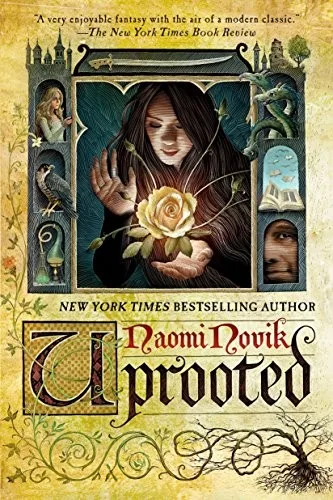
Naomi Novik's Uprooted presents a compellingly dark reimagining of folklore, eschewing typical fantasy tropes for something more primal. The novel's strength lies in its palpable atmosphere, particularly the oppressive presence of the Wood and the ancient, instinctual magic that Agnieszka gradually uncovers. The relationship between Agnieszka and the Dragon, a central pillar of the narrative, is complex and often fraught, providing a fascinating character study. However, the pacing occasionally falters in the middle sections as the plot navigates its magical complexities. A particular standout is the depiction of the 'sown' – the corrupted creatures and corrupted magic that the Wood manifests, which feels viscerally unsettling. Uprooted offers a potent, if sometimes uneven, exploration of wild magic and its custodians.
📝 Description
74
### What It Is Uprooted is a 2016 fantasy novel by Naomi Novik, drawing heavily on Eastern European folklore. It tells the story of Agnieszka, a young woman living in a village bordering a malevolent, sentient forest known as the Wood. Her life, and the lives of her community, are dictated by the presence of the Dragon, a powerful wizard who lives in a tower and claims a young woman from the village every ten years as payment for his protection against the Wood.
### Who It's For This novel appeals to readers who appreciate dark fairy tales and folk-inspired fantasy. Those interested in stories featuring strong female protagonists, complex magical systems rooted in nature, and explorations of the relationship between humanity and the wild will find much to engage with. It is suitable for young adults and adults seeking a more mature, character-driven narrative.
### Historical Context Published in 2016, Uprooted emerged during a period of renewed interest in fairy tale retellings and folklore-infused fantasy. Its narrative echoes the tradition of European folktales collected by figures like the Brothers Grimm, but Novik infuses these elements with a modern sensibility. The story’s focus on a wild, encroaching nature and the arcane pacts made to control it can be seen as a thematic counterpoint to the increasing anxieties around environmental change and the unknown forces that shape human lives.
### Key Concepts The novel explores the concept of "deep magic"—an ancient, wilder form of magic intrinsically tied to nature and instinct, contrasting with the more structured, learned magic practiced by the Dragon. The Wood itself functions as a potent symbol of untamed nature, chaos, and the primal forces that lie beyond human comprehension or control. The relationship between Agnieszka and the Wood, and her innate connection to this wild magic, forms a central tenet of the narrative's esoteric undercurrents.
💡 Why Read This Book?
• Learn about the nature of "deep magic," an instinctual, wild force tied to the natural world, as depicted in Agnieszka's evolving abilities. • Understand the symbolic power of the Wood, an ancient, sentient forest representing untamed nature and the primal forces beyond human control. • Explore the dynamic between structured, learned magic and wild, innate power through the contrasting methods of the Dragon and Agnieszka.
⭐ Reader Reviews
Honest opinions from readers who have explored this book.
❓ Frequently Asked Questions
What specific folklore traditions influence Naomi Novik's Uprooted?
Uprooted draws heavily on Eastern European folklore, particularly Polish tales. Elements like the sentient, dangerous forest (the Wood) and the wizardly protector (the Dragon) are common motifs in these traditions, reinterpreted by Novik.
How does the magic system in Uprooted differ from typical fantasy?
The novel contrasts the Dragon's learned, structured magic with Agnieszka's "deep magic." This deep magic is instinctual, wild, and deeply connected to the natural world, particularly the Wood, setting it apart from more conventional spellcasting.
What is the significance of the Wood in Uprooted?
The Wood is more than just a setting; it represents the untamed, chaotic, and ancient forces of nature. It acts as an antagonist and a source of corrupted magic, symbolizing the primal power that humanity struggles to comprehend or control.
Who is the Dragon in Uprooted?
The Dragon is a powerful, reclusive wizard who protects the valley from the Wood. He is a complex figure who claims a village girl every ten years as payment for his services, a pact central to the novel's plot.
Is Uprooted a retelling of a specific fairy tale?
While Uprooted is inspired by various Eastern European folktales and fairy tale structures, it is not a direct retelling of a single story. Novik synthesizes multiple folkloric elements into a unique narrative.
What is the relationship between Agnieszka and the Dragon?
Their relationship is initially one of student and master, but it evolves into a complex, often adversarial, partnership. Agnieszka's wild magic contrasts sharply with the Dragon's controlled sorcery, leading to conflict and eventual mutual respect.
🔮 Key Themes & Symbolism
The Wild vs. The Tamed
The novel starkly contrasts the encroaching, chaotic Wood with the ordered, protected world of the valley and the Dragon's tower. This duality explores the inherent tension between untamed nature and human civilization, order and chaos. The Wood embodies a primal, ancient magic that resists human control, while the Dragon's magic is learned and systematic. Agnieszka's journey involves bridging these two, understanding that true power might lie in embracing, rather than solely suppressing, the wild.
Deep Magic and Instinct
Central to the narrative is the concept of 'deep magic,' an intuitive, nature-bound form of power distinct from the Dragon's more scholarly approach. This magic is not learned from books but felt and lived, resonating with the very essence of the land. Agnieszka's innate connection to this magic, particularly her ability to understand and influence the Wood, highlights an esoteric perspective where raw, instinctual connection to the world is a potent force, often more effective than rote memorization of spells.
The Nature of Corruption
The Wood is not merely a physical threat but a source of corruption, twisting life and magic into monstrous forms. This corruption is presented as a perversion of natural order, a dark mirror reflecting the destructive potential inherent in unchecked power or imbalance. The narrative probes the origins of this corruption, suggesting it stems from ancient wounds or imbalances, presenting a nuanced view of evil not as an external force but as a distortion of natural energies.
Chosen One Tropes Reimagined
While Agnieszka initially seems like a typical village girl chosen for a great destiny, Novik subverts expectations. Her 'chosen' status is less about inherent superiority and more about her unique, unrefined connection to the deep magic that others fear or misunderstand. Her journey involves embracing her perceived flaws and unconventional abilities, challenging the traditional hero's narrative with a more grounded, often messy, path to power and understanding.
💬 Memorable Quotes
“The wood was not a place, but a being.”
— This interpretation highlights the Wood's sentience, framing it not as mere terrain but as a conscious entity with its own will and power, central to the novel's exploration of nature's active, often adversarial, role.
“Magic was not a gift, but a trade.”
— This concept underscores the transactional nature of magic in the novel, emphasizing that power, particularly the Dragon's, comes at a cost, often a significant personal sacrifice or pact, aligning with darker folkloric traditions.
“She understood the language of roots and stones.”
— This paraphrased concept speaks to Agnieszka's innate connection to the 'deep magic,' her ability to communicate with and draw power from the natural world in ways that transcend conventional magical study.
“The Dragon’s magic was sharp and clean, hers was tangled and wild.”
— This contrast captures the fundamental difference between the two primary magic systems in the book: the Dragon's learned, precise sorcery versus Agnieszka's instinctual, nature-bound abilities, a core thematic element.
“Corruption seeped from the wood like poison.”
— This evocative description illustrates the pervasive and destructive influence of the Wood, portraying it as a source of decay and perversion that infects the natural world and its inhabitants.
🌙 Esoteric Significance
Tradition
Uprooted does not align strictly with a single Western esoteric tradition like Hermeticism or Kabbalah. Instead, it draws inspiration from animistic and nature-based spiritualities found in folklore, where the natural world is imbued with consciousness and power. It echoes Gnostic themes of a fallen or corrupted creation and the search for true, inherent knowledge outside of rigid doctrines. The 'deep magic' represents a primal, immanent spiritual force, a departure from the more transcendent or intellectually focused systems common in many esoteric paths.
Symbolism
The Wood is a potent symbol of the collective unconscious, the untamed psyche, and the primal forces of nature that lie beyond human rationalization. It represents chaos, instinct, and the ancient, living spirit of the land. The Dragon's tower symbolizes structured knowledge, order, and the human attempt to control or contain the wild. Agnieszka herself becomes a symbol of the bridge between these realms, embodying the potential for integration between the instinctual and the rational, the wild and the civilized.
Modern Relevance
Contemporary paganism, eco-spirituality, and certain branches of modern witchcraft find resonance in Uprooted's depiction of nature as a sentient, powerful entity and magic as an intrinsic connection rather than mere technique. Thinkers and practitioners exploring the concept of the 'wild mind' or the sacredness of the Earth may draw parallels with Agnieszka's intuitive grasp of 'deep magic' and the Wood's symbolic power. The novel's themes of confronting and integrating primal forces speak to modern psychological and spiritual explorations of the shadow self and the natural world.
👥 Who Should Read This Book
• Readers interested in Eastern European folklore and dark fairy tales who seek narratives that explore the untamed aspects of nature and magic. • Aspiring practitioners of animistic or nature-based spiritualities who wish to explore symbolic representations of the Earth's consciousness and primal forces. • Students of comparative mythology and literary criticism examining how ancient motifs are adapted in contemporary fantasy, particularly regarding the wild versus the civilized.
📜 Historical Context
Naomi Novik’s Uprooted, published in 2016, arrived during a vibrant period for dark fantasy and fairy tale retellings, a trend seen in works by authors like Catherynne M. Valente and Katherine Arden. The novel taps into a long-standing tradition of Eastern European folklore, which often features sentient, dangerous forests and powerful, enigmatic sorcerers, distinct from the more Germanic motifs popularized by the Brothers Grimm. While not directly engaging with a specific intellectual movement, Uprooted's exploration of the wild, uncontrollable aspects of nature and magic can be seen as a thematic echo of contemporary anxieties surrounding environmentalism and the unknown. Its reception was largely positive, earning critical acclaim and winning the Nebula Award for Best Novel in 2016, solidifying its place within the contemporary fantasy landscape without direct engagement with a specific competing school of thought.
📔 Journal Prompts
The Wood's nature as a sentient being and its encroaching corruption.
Agnieszka's development of 'deep magic' versus the Dragon's structured sorcery.
The symbolic weight of the Dragon's tower and its protective pacts.
Reflections on the balance between embracing wild instinct and maintaining societal order.
The concept of magic as a 'trade' requiring sacrifice and its implications.
🗂️ Glossary
The Wood
A sentient, ancient, and malevolent forest bordering the valley, representing untamed nature, chaos, and a source of corrupted magic.
The Dragon
A powerful, reclusive wizard who protects the valley from the Wood in exchange for a village girl every ten years. His magic is learned and structured.
Deep Magic
An ancient, instinctual, and wild form of magic intrinsically tied to nature, which Agnieszka possesses and develops throughout the novel.
Sown
Creatures and corrupted magical manifestations created by the Wood, representing its twisted, destructive influence on life.
Valley
The village and surrounding lands protected by the Dragon from the Wood, representing the tamed, ordered human world.
Pact
A formal agreement, often involving sacrifice, between humans and magical entities or forces, such as the Dragon's pact with the valley.
Tainted
Describes things corrupted or made impure by the influence of the Wood, often referring to magic or living beings.