Tuck everlasting
 75
75

Tuck everlasting
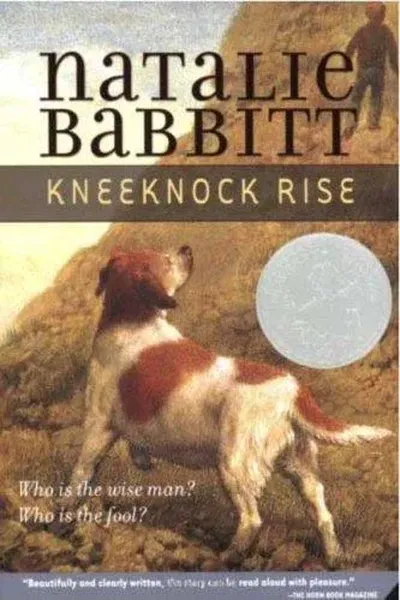
Natalie Babbitt’s *Tuck Everlasting* tackles the formidable subject of eternal life not as a wish-fulfillment fantasy, but as a profound existential burden. The novel’s strength lies in its unwavering commitment to exploring the downside of immortality, presenting the Tuck family not as blessed beings, but as prisoners of time. The depiction of their unchanging existence, devoid of the natural rhythm of life and death, is particularly striking. However, the narrative occasionally leans into sentimentality, particularly in Winnie’s internal monologues, which can feel somewhat didactic. A pivotal moment occurs when Jesse Tuck, despite his unending life, urges Winnie to live her own mortal life fully, a poignant paradox at the heart of the story. Babbitt’s prose offers a quiet but potent challenge to conventional desires for everlasting existence.
📝 Description
75
### What It Is Natalie Babbitt's *Tuck Everlasting*, first published in 2002, presents a narrative that, while often categorized as children's literature, engages with profound philosophical questions regarding mortality, the nature of life, and the human desire for immortality. The story centers on Winnie Foster, a young girl who stumbles upon the Tuck family, individuals who have achieved eternal life through a magical spring. Their secret, and Winnie's subsequent involvement, forms the core of the exploration into what it truly means to live.
### Who It's For This work will appeal to readers who appreciate allegorical storytelling and contemplate existence's fundamental questions. It is suitable for young adults grappling with concepts of change and permanence, as well as adults seeking a narrative that prompts reflection on life's finite nature and the value of experience over endless duration. Those interested in ethical dilemmas and the consequences of unnatural states will find fertile ground here.
### Historical Context Published in 2002, *Tuck Everlasting* emerged in a literary landscape where fantasy for younger audiences often explored themes of magic and adventure. Babbitt's approach, however, grounded its fantastical element—immortality—in a serious philosophical inquiry. This period saw continued interest in children's literature that offered deeper thematic content, following in the vein of authors like C.S. Lewis and Ursula K. Le Guin, who consistently infused their works with moral and existential weight. The book's reception highlighted a demand for stories that do not shy away from life's more somber realities.
### Key Concepts The narrative probes the concept of the 'eternal present' versus the 'cycle of life.' The Tuck family, living outside the natural progression of birth, aging, and death, experiences existence as a static, unchanging state. This contrasts sharply with the natural world's inherent impermanence, where every moment is fleeting and transformative. The story questions whether an unending existence, devoid of change and consequence, constitutes a life worth living, or if the very finiteness of human existence imbues it with its meaning and value.
💡 Why Read This Book?
• Gain insight into the philosophical implications of immortality through the specific portrayal of the Tuck family's static existence, challenging the common desire for eternal life. • Understand the concept of the 'natural cycle' as presented by the 2002 publication, contrasting it with an unending, unchanging state of being. • Reflect on the value of mortality by examining Winnie Foster's choice, realizing that life's meaning is often derived from its finite nature.
⭐ Reader Reviews
Honest opinions from readers who have explored this book.
❓ Frequently Asked Questions
What year was Tuck Everlasting first published?
Tuck Everlasting was first published in 2002. This edition continued Natalie Babbitt's exploration of themes introduced in her earlier works.
Who are the main characters in Tuck Everlasting?
The main characters are Winnie Foster, a young girl who discovers the secret of immortality, and the Tuck family, including Angus Tuck, Mae Tuck, Jesse Tuck, and Miles Tuck, who are immortal.
What is the central conflict or theme in Tuck Everlasting?
The central theme revolves around the choice between living an immortal, unchanging life and embracing the natural cycle of life, death, and change, exploring the value of mortality.
Does Tuck Everlasting have a happy ending?
The ending of Tuck Everlasting is bittersweet. Winnie chooses to live her mortal life, understanding the burden of immortality, and the story concludes with a sense of acceptance and the passage of time.
What esoteric concepts does Tuck Everlasting touch upon?
The book touches upon concepts of eternal life, the cyclical nature of existence versus stasis, and the philosophical implications of defying natural death, echoing ancient myths of immortality.
Is Tuck Everlasting based on a true story?
No, Tuck Everlasting is a work of fiction. Natalie Babbitt created the characters and the magical element of an immortal spring as a narrative device to explore philosophical themes.
🔮 Key Themes & Symbolism
The Burden of Immortality
The narrative profoundly interrogates the desirability of eternal life. The Tuck family, having drunk from a magical spring in 1880, are trapped in perpetual youth and existence. This state is depicted not as a blessing, but as an isolation from the natural world and human experience. They cannot age, die, or change, making their lives a monotonous, unchanging present. This exploration challenges the common human yearning for immortality, suggesting that the beauty and meaning of life are intrinsically linked to its finitude and the progression of time.
The Natural Cycle of Life
Central to the story is the concept of the 'natural cycle,' which the Tuck family has disrupted. Babbitt contrasts their static existence with the dynamic, ever-changing flow of life and death. The woods, the seasons, and indeed all living things are presented as part of a continuous process of renewal and decay. This theme underscores the idea that participation in this cycle, with all its joys and sorrows, is essential for a fulfilling existence. The 2002 publication reflects a continued engagement with such naturalistic philosophies in literature.
Choice and Consequence
Winnie Foster faces a profound choice: to drink from the spring and live forever with the Tucks, or to live out her mortal life. Her decision to refuse immortality highlights the narrative's moral core. The book suggests that true living involves embracing change, experiencing loss, and understanding the preciousness of fleeting moments. The consequences of the Tucks' choice—to drink from the spring—serve as a cautionary tale about the potential pitfalls of seeking to escape the natural order of existence.
The Meaning of Living
Ultimately, *Tuck Everlasting* questions what it means to truly live. Is it the quantity of years, or the quality of experience? The Tucks, despite their endless years, are largely stagnant, unable to fully engage with the world because they cannot experience its changes or consequences. Winnie’s realization, influenced by her encounters with the Tucks and particularly Angus Tuck's philosophical musings, leads her to value the richness of a finite life. The book posits that living is about growth, connection, and embracing the present, rather than simply existing indefinitely.
💬 Memorable Quotes
“The world is made for living, not for keeping.”
— This line encapsulates the core philosophy of the Tuck family and the book's central argument. It suggests that existence is meant to be experienced through change and passage, not preserved in an unchanging state.
“If you don’t drink, then you won’t have to worry about living forever. You can drink when you’re ready.”
— Jesse Tuck's offer to Winnie highlights the choice and the burden of immortality. It implies that eternal life is not an inherent right or a simple gift, but a decision with significant, potentially negative, consequences.
“‘Do you think,' he asked, ‘that being able to live forever would be a good thing?'”
— Angus Tuck’s direct question to Winnie probes the reader's own assumptions about immortality. It forces a contemplation of the downsides and potential curses associated with unending existence, rather than its perceived benefits.
“‘We are the only people who can’t die,’ said Miles. ‘And that’s a bad thing.’”
— This statement from Miles Tuck directly addresses the negative reality of their immortal state. It underscores that their unique condition, far from being a gift, is a profound affliction that separates them from the natural order and the human experience.
“‘If you live forever, you have to live in the middle of nowhere,’ Mae said.”
— Mae Tuck’s observation points to the isolation that comes with immortality. By being outside the natural cycle of life and death, the Tucks are fundamentally disconnected from the world and its ongoing narrative.
🌙 Esoteric Significance
Tradition
While not explicitly aligned with a single esoteric lineage, *Tuck Everlasting* engages with perennial themes found in Gnostic and Hermetic thought concerning the nature of existence and the pursuit of eternal life. The concept of the Tucks being 'trapped' outside the natural flow of creation resonates with Gnostic ideas of a flawed demiurge or a cosmic imprisonment. The narrative questions the pursuit of an 'unnatural' state of being, a common critique within various mystical traditions that emphasize harmony with natural law or divine order.
Symbolism
The magical spring represents the seductive, yet ultimately flawed, promise of immortality or an escape from the natural order. The 'tuck-away' nature of the Tuck family's existence symbolizes isolation and stagnation, a life lived apart from the natural cycles of growth and decay. The forest itself, particularly its hidden elements, can be seen as a symbol of the unknown and the natural mysteries that govern life and death, which the Tucks have attempted to circumvent.
Modern Relevance
In contemporary discourse, *Tuck Everlasting* remains relevant to discussions on transhumanism, bioethics, and the philosophical implications of life extension. Thinkers and writers exploring the potential downsides of radical life extension technologies often reference the book's core premise: that an unending existence might diminish the value and meaning of life. It continues to be a touchstone for exploring the human condition through the lens of mortality, prompting reflection on what truly constitutes a life well-lived.
👥 Who Should Read This Book
• Young adults and adult readers interested in philosophical allegories, particularly those exploring mortality, life, and death. • Students of comparative literature or mythology, seeking to analyze how themes of immortality are presented in contemporary fiction. • Individuals contemplating the nature of existence and the value of finite experiences, who appreciate narratives that prompt introspection and ethical consideration.
📜 Historical Context
Published in 2002, Natalie Babbitt's *Tuck Everlasting* arrived in a literary climate where children's and young adult fiction increasingly explored mature themes. While often grouped with fantasy, Babbitt’s work stands apart by using its magical premise—immortality—to engage in deep philosophical debate, rather than simple adventure. This was a period where authors like Philip Pullman were pushing boundaries with complex allegorical narratives, and Ursula K. Le Guin continued to explore societal structures and ethics through speculative fiction. Babbitt’s approach offered a quiet, introspective counterpoint to more overtly fantastical tales. The book’s focus on the existential burden of immortality, rather than its allure, was a departure from more traditional wish-fulfillment narratives and garnered attention for its mature handling of life, death, and choice.
📔 Journal Prompts
The concept of the 'eternal present' as experienced by the Tucks.
Winnie Foster's final decision regarding the spring.
Angus Tuck's reflections on the 'wheel' of life.
The contrast between the Tuck family's unchanging state and the natural world.
The perceived advantages and disadvantages of living forever.
🗂️ Glossary
The Tuck Family
A family who, after drinking from a magical spring in 1880, gained immortality. They are depicted as living outside the natural cycle of life and death, experiencing their existence as unchanging and isolated.
The Spring
A mystical source of water that grants eternal life to anyone who drinks from it. It represents a dangerous temptation to escape mortality and the natural order of existence.
The Natural Cycle
The continuous process of birth, growth, aging, death, and renewal that governs all living things. The Tuck family's immortality disrupts their participation in this fundamental aspect of life.
The Eternal Present
A state of perpetual stasis, where time does not progress and experiences do not change. This is the condition of the immortal Tuck family, who are unable to age or evolve.
Winnie Foster
The protagonist who discovers the secret of the Tucks. Her journey involves grappling with the implications of immortality and making a crucial choice about her own life.
Angus Tuck
The patriarch of the Tuck family, who often expresses the philosophical weight and sorrow of their unending existence, lamenting their separation from the natural flow of life.
The Man in the Yellow Suit
The antagonist who discovers the secret of the spring and seeks to exploit it for profit, representing greed and the desire to control natural forces.