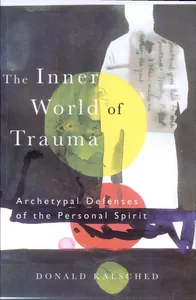
Trauma And The Soul A Psychospiritual Approach To Human Development And Its Interruption

 75
75

Trauma And The Soul A Psychospiritual Approach To Human Development And Its Interruption
Donald Kalsched’s "Trauma and the Soul" offers a compelling psychospiritual lens through which to view developmental disruptions. Unlike purely clinical accounts, Kalsched grounds his analysis in the language of the soul, positing that trauma leads not just to psychological fragmentation but to a spiritual severing. A notable strength is his integration of Jungian concepts, particularly the Self and archetypes, to describe the soul's inherent structure and its response to wounding. For instance, his discussion of the 'archetypal ego' and its vulnerability provides a rich conceptualization of how early trauma can impact one's sense of identity at a deep, almost cosmic level. However, the book's dense theoretical framework, while rewarding for those familiar with Jungian psychology, may present a barrier to readers seeking immediate, practical therapeutic guidance. The work's primary limitation lies in its abstract nature; while illuminating the 'why' of soul fragmentation, it offers less on the 'how' of immediate restoration. Nevertheless, Kalsched’s meticulous exploration of the soul's architecture in the face of profound injury is a significant contribution. It is a book that demands careful reading and reflection, offering a unique perspective on human suffering and resilience.
📝 Description
75
### Understanding the Soul's Path
Donald Kalsched's "Trauma and the Soul" presents a psychospiritual framework for understanding human development. It posits that the soul's journey is intrinsically linked to its capacity to integrate experiences, particularly those of a traumatic nature. The work aims to bridge the gap between analytical psychology and spiritual understanding, suggesting that disruptions to development, often stemming from early life traumas, can sever connections to the soul's innate wholeness and purpose.
### The Impact of Interrupted Development
The book explores how profound wounding, whether physical, emotional, or spiritual, can lead to a fragmentation of the self. Kalsched proposes that these interruptions can manifest as a "soul-loss" or a disconnect from one's authentic core. This disconnection, he argues, is not merely a psychological deficit but a spiritual crisis, impacting an individual's sense of meaning, vitality, and connection to the transpersonal.
### A Psychospiritual Synthesis
Kalsched's approach synthesizes concepts from depth psychology, particularly the work of Carl Jung, with a spiritual perspective. He draws upon archetypal imagery and the concept of the Self as a guiding principle. The book examines how early life experiences, especially those involving overwhelming threat or neglect, can create psychic structures that impede the soul's natural unfolding and its ability to access its inherent wisdom and resilience.
### Toward Wholeness and Integration
The ultimate aim of Kalsched's psychospiritual model is to illuminate a path toward healing and integration. By understanding the soul's architecture and the ways in which trauma can distort it, individuals can begin to reclaim fragmented parts of themselves. This process involves acknowledging the spiritual dimension of suffering and recognizing that true healing often requires a reconnection with the deeper, more resilient aspects of the soul.
💡 Why Read This Book?
• Gain a psychospiritual understanding of how early developmental interruptions, as discussed in Kalsched's framework, can lead to soul fragmentation, offering a perspective beyond purely clinical psychology. • Explore the concept of the 'archetypal ego' and its vulnerability to trauma, providing a unique Jungian-informed view of identity formation and its potential disruptions. • Discover a framework for understanding the spiritual dimension of psychological wounding, learning how trauma can disconnect individuals from their innate sense of wholeness and purpose.
⭐ Reader Reviews
Honest opinions from readers who have explored this book.
❓ Frequently Asked Questions
What is the core psychospiritual concept Donald Kalsched introduces regarding trauma?
Kalsched introduces the concept that severe trauma can lead to 'soul-loss,' a spiritual fragmentation where the individual becomes disconnected from their authentic core and purpose, impacting their overall development.
How does Kalsched's approach differ from standard psychological treatments for trauma?
Kalsched's approach integrates depth psychology, particularly Jungian concepts, with a spiritual perspective. It focuses on the soul's architecture and its response to wounding, viewing trauma as a spiritual crisis as well as a psychological one.
What is the significance of the 'archetypal ego' in Kalsched's theory?
The 'archetypal ego' represents the soul's innate potential for wholeness and its capacity to engage with the world. Kalsched theorizes that early trauma can severely wound this archetypal ego, leading to developmental interruptions.
When was Donald Kalsched's "Trauma and the Soul" first published?
The original publication of "Trauma and the Soul: A Psychospiritual Approach to Human Development and Its Interruption" by Donald Kalsched was in 2012.
What kind of reader would benefit most from Kalsched's book?
Readers interested in Jungian psychology, depth psychology, spiritual development, and the intersection of trauma with the soul's journey would find this book particularly beneficial.
Does the book offer practical exercises for healing trauma?
While the book offers a profound theoretical framework for understanding trauma's impact on the soul, its primary focus is conceptual and interpretive rather than providing direct therapeutic exercises.
🔮 Key Themes & Symbolism
Soul Fragmentation
Kalsched posits that severe trauma can lead to a fragmentation of the soul, a concept distinct from psychological dissociation. This fragmentation represents a severing from one's core being and spiritual purpose. The work explores how archetypal structures within the psyche are damaged, leading to a loss of vitality and meaning, and how this impacts the individual's capacity for healthy human development and connection to the transpersonal.
Archetypal Ego and Wounding
The book delves into the concept of the 'archetypal ego,' which represents the soul's inherent structure and potential for wholeness. Kalsched argues that early, overwhelming experiences can deeply wound this archetypal ego, creating psychic defenses and developmental interruptions. This wounding prevents the natural unfolding of the soul, leading to persistent difficulties in adult life and a distorted sense of self.
Psychospiritual Development
Kalsched's central thesis is that human development is a psychospiritual process. He synthesizes insights from depth psychology, particularly Carl Jung's work, with a spiritual understanding of the soul. The book frames trauma not just as a psychological event but as an interruption of the soul's innate journey toward integration and self-realization, emphasizing the need to address both psychological and spiritual dimensions of healing.
Integration and Wholeness
The ultimate goal presented in "Trauma and the Soul" is the integration of fragmented psychic and spiritual aspects of the self. Kalsched suggests that by understanding the soul's architecture and the impact of trauma, individuals can embark on a path toward reclaiming lost parts of themselves. This process involves acknowledging the spiritual nature of suffering and working towards a renewed connection with the soul's inherent wisdom and resilience.
💬 Memorable Quotes
“Trauma may cause the soul to withdraw from the ego.”
— This suggests that overwhelming negative experiences can lead to a profound disconnection between the conscious self (ego) and the deeper, spiritual essence (soul), impacting one's sense of presence and vitality.
“The soul's purpose is continuity and wholeness.”
— This highlights the inherent drive of the soul towards integration and enduring existence, suggesting that trauma represents a significant disruption to this natural, ongoing process.
“Early wounding can interrupt the natural flow of development.”
— This paraphrased concept points to how profound early life adversities can impede the soul's natural unfolding and maturation, creating lasting developmental deficits.
“The archetypal ego is vulnerable to overwhelming experiences.”
— This interpretation underscores that the soul's innate structure, its capacity for experiencing life, can be deeply impacted by events that exceed its protective capacities.
“Healing involves reclaiming fragmented parts of the soul.”
— This captures the essence of Kalsched's therapeutic vision: that recovery from trauma necessitates a process of re-integration, bringing back into conscious awareness and connection those aspects of the self that were lost or hidden.
🌙 Esoteric Significance
Tradition
Kalsched's work is deeply rooted in the post-Jungian analytical psychology tradition, which itself draws heavily from Hermetic and Gnostic concepts concerning the soul and its journey. He incorporates archetypal symbolism and the concept of the Self, which echo Gnostic ideas of a divine spark within humanity and the soul's potential for liberation from material suffering. While not explicitly aligned with a single esoteric school, his emphasis on the soul as a distinct, wounded, yet resilient entity connects him to broader Neoplatonic and esoteric spiritual philosophies that view human existence as a journey of the soul.
Symbolism
Central to Kalsched's symbolism is the concept of the 'soul' itself, not merely as a metaphor for psyche, but as a vital, wounded entity. He frequently employs imagery of fragmentation and wholeness, reflecting the soul’s state after trauma. The 'archetypal ego' can be seen as a symbolic representation of the soul's capacity to interface with the world, which becomes distorted or damaged. The idea of 'soul loss' functions as a potent symbolic motif, denoting a profound spiritual alienation and disconnection from one's essential nature.
Modern Relevance
Kalsched's psychospiritual approach continues to influence contemporary therapists, spiritual counselors, and depth psychologists. His work is particularly relevant to emerging fields that explore the intersection of trauma, consciousness, and spirituality. Thinkers and practitioners in somatic experiencing, integral psychology, and even certain strands of consciousness studies draw upon his framework to understand the deeper, non-material dimensions of healing and human development beyond symptom management.
👥 Who Should Read This Book
• Individuals interested in Jungian psychology and archetypal theory seeking to understand the spiritual dimensions of trauma and human development. • Therapists and counselors looking to integrate a psychospiritual perspective into their work with clients experiencing deep-seated psychological wounding. • Students of comparative religion and esoteric philosophy interested in how depth psychology engages with concepts of the soul and spiritual suffering.
📜 Historical Context
Published in 2012, Donald Kalsched's "Trauma and the Soul" emerged at a time when trauma studies were increasingly sophisticated, yet often remained confined within purely psychological or neurological frameworks. Kalsched's work distinguished itself by intentionally reintroducing a spiritual dimension, drawing heavily on the post-Jungian tradition. This was a period where thinkers like James Hillman were popularizing archetypal psychology, emphasizing the soul's importance, and Kalsched’s book resonated with this broader interest in depth psychology beyond its clinical applications. While academic psychology was grappling with empirical models of PTSD, Kalsched engaged with the more philosophical and spiritual implications of profound wounding, linking it to concepts like soul loss and archetypal damage. His work implicitly engaged with a lineage of thought that included figures like Carl Jung himself, who explored the spiritual dimensions of the psyche, and contrasted with more reductionist, purely materialist explanations of mental health prevalent in some scientific circles.
📔 Journal Prompts
Reflect on the concept of the 'archetypal ego' and its potential vulnerability to early life experiences.
Consider how 'soul fragmentation' might manifest in personal experiences or cultural narratives.
Explore the idea of the soul's journey being interrupted by trauma.
How does Kalsched's psychospiritual approach offer a different understanding of healing compared to purely clinical models?
What does the concept of 'reclaiming fragmented parts of the soul' mean in a practical sense?
🗂️ Glossary
Archetypal Ego
In Kalsched's framework, this refers to the soul's innate structure and capacity for experiencing life, distinct from the personal ego. It is seen as vulnerable to profound wounding.
Soul Loss
A concept suggesting that severe trauma can cause parts of the soul to become disconnected or withdrawn from the conscious personality, leading to a sense of fragmentation and loss of vitality.
Psychospiritual Development
The process of human growth that integrates psychological functioning with the soul's spiritual journey and connection to the transpersonal.
Developmental Interruption
A disruption in the natural unfolding and maturation of the soul and psyche, often caused by overwhelming experiences like trauma, which impedes healthy integration.
The Self
A central concept in Jungian psychology, representing the totality of the psyche, including the conscious and unconscious. Kalsched views it as the soul's guiding principle toward wholeness.
Wounding
Refers to profound psychological and spiritual injuries, particularly those occurring in early development, that impact the soul's structure and functioning.
Integration
The process of bringing fragmented parts of the psyche and soul back into conscious awareness and coherence, leading to greater wholeness.