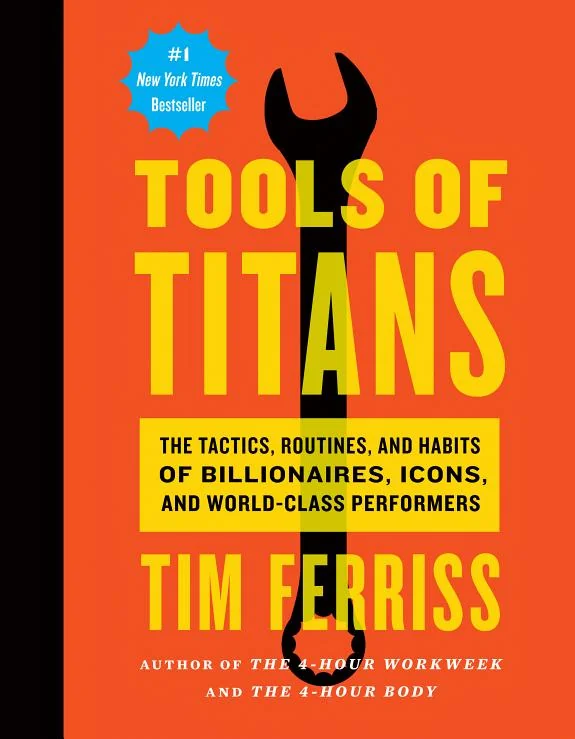
Tools of Titans
 74
74

Tools of Titans
Timothy Ferriss's "Tools of Titans" presents itself as a distillation of wisdom from hundreds of interviews, and in many ways, it succeeds. The sheer volume of diverse individuals profiled—from Navy SEALs to tech moguls—offers a broad spectrum of approaches to success. I found the section on "Healthy" particularly compelling, with its detailed exploration of practices like cold therapy and specific dietary regimens employed by elite athletes. Ferriss has a knack for extracting concrete, often unconventional, advice. However, the book's primary limitation is its encyclopedic nature. At over 600 pages, it can feel overwhelming, lacking a singular narrative thrust. While the organization by "Healthy, " "Wealthy, " and "Wise" provides structure, the constant jumping between individuals and topics can sometimes dilute the impact of individual insights. A passage detailing the specific meditation practices of meditation instructors and tech founders, for example, while interesting, feels disconnected without a stronger connective tissue. The book is a powerful reference for tactics, but less so for a cohesive philosophy. It’s a gym bag of tools, not a blueprint.
📝 Description
74
### What It Is Tools of Titans is not a narrative in the traditional sense. Instead, it's a curated compendium of insights, tactics, and routines gathered by Timothy Ferriss from over 200 interviews with world-class performers. These individuals span diverse fields, from venture capital and extreme sports to acting and scientific research. The book distills their wisdom into actionable advice, presenting a mosaic of what the author terms "life hacks" and "performance enhancers." It functions as a reference guide, allowing readers to dip into specific sections or follow thematic threads related to habits, mindset, and physical or mental optimization.
### Who It's For This volume is designed for individuals seeking to elevate their performance and well-being across various life domains. It appeals to entrepreneurs, athletes, artists, and anyone interested in dissecting the habits of successful individuals. Readers who appreciate a practical, experiment-driven approach to self-improvement will find value here. It is particularly suited for those who enjoy collecting diverse strategies and testing them against their own lives, rather than seeking a single, prescriptive path. The breadth of subjects covered makes it relevant to those interested in a wide array of human achievement.
### Historical Context Published in 2016, Tools of Titans emerged during a period of heightened interest in productivity culture and the science of success. The rise of podcasts, where many of these interviews originated, facilitated a direct engagement with high achievers. Ferriss himself had already established a significant following with his previous works like "The 4-Hour Workweek." This book built upon that foundation, offering a more expansive collection of interviews and distilled wisdom. It arrived at a time when figures like Cal Newport were also exploring deep work and focused productivity, suggesting a broader cultural fascination with optimizing mental output and achieving peak performance in an increasingly distracting world.
### Key Concepts The book is structured around three main sections: "Healthy, " "Wealthy, " and "Wise." Within these, Ferriss highlights recurring themes and actionable advice. Readers will encounter concepts like the "morning routine" – the specific rituals high performers engage in upon waking to set the tone for their day. Another prominent theme is the application of "anti-fragility," a concept borrowed from Nassim Nicholas Taleb, suggesting the development of systems and mindsets that benefit from stress and chaos. The book also frequently touches on the importance of "cold exposure" and various forms of physical training as pathways to mental resilience and improved health.
💡 Why Read This Book?
• Gain actionable strategies for physical and mental resilience by exploring the morning routines and cold exposure practices of individuals like David Goggins, as detailed in the 'Healthy' section. • Discover diverse wealth-creation tactics and investment philosophies from figures in venture capital and entrepreneurship, such as those interviewed in the 'Wealthy' section, offering practical financial frameworks. • Learn philosophical frameworks and wisdom-building techniques from diverse thinkers, including lessons on stoicism and mindfulness, presented in the 'Wise' section to cultivate a more robust worldview.
⭐ Reader Reviews
Honest opinions from readers who have explored this book.
❓ Frequently Asked Questions
What is the primary format of 'Tools of Titans'?
'Tools of Titans' is primarily a compilation of distilled wisdom and actionable advice from over 200 interviews conducted by Timothy Ferriss with high-performing individuals across various fields. It is structured into three main sections: Healthy, Wealthy, and Wise.
Who are some of the notable individuals interviewed in 'Tools of Titans'?
The book features interviews and insights from a wide array of figures, including athletes like David Goggins and Kelly Starrett, entrepreneurs like Reid Hoffman and Chris Sacca, scientists, artists, and investors, offering a broad spectrum of expertise.
What kind of advice does Timothy Ferriss focus on in this book?
Ferriss focuses on practical, often unconventional, "life hacks" and performance-enhancing strategies. These range from morning routines and dietary habits to mental models, investment philosophies, and effective training methods.
Is 'Tools of Titans' a narrative or a reference book?
It functions more as a reference book or compendium. Readers can dip into specific interviews or thematic sections that interest them, rather than following a linear narrative. Its strength lies in its breadth of curated information.
What does Timothy Ferriss mean by 'anti-fragility' in the context of this book?
Ferriss explores 'anti-fragility,' a concept he draws from Nassim Nicholas Taleb, to describe systems or individuals that not only withstand stress and shocks but actually benefit and grow stronger from them, often through deliberate exposure to challenges.
What is the significance of the 'Healthy, Wealthy, and Wise' structure?
This structure organizes the vast amount of information into three core pillars of human performance and well-being. It allows readers to focus on specific areas of interest, whether improving physical health, financial success, or mental/philosophical acuity.
🔮 Key Themes & Symbolism
Morning Rituals
Ferriss dedicates significant attention to the pre-dawn habits of elite performers. These are not mere suggestions but detailed breakdowns of specific practices, from meditation and journaling to specific exercises like Wim Hof's breathing techniques or cold plunges. The underlying esoteric angle is the deliberate cultivation of mental discipline and control over one's internal state, treating the start of the day as a ritualized act of self-mastery, thereby aligning oneself with a higher capacity for action and resilience. The emphasis is on creating a foundational state of being before external demands intrude.
Anti-Fragility
Drawing from Nassim Nicholas Taleb's work, Ferriss explores the concept of anti-fragility, which posits that certain systems or individuals benefit from disorder, volatility, and stress. This extends beyond mere resilience. In an esoteric context, it suggests an active engagement with chaos, viewing challenges not as obstacles but as catalysts for growth and adaptation. The book presents examples of this through extreme physical training, financial risk-taking, and deliberate exposure to discomfort, framing these as pathways to developing a robust, adaptable self capable of thriving under pressure.
Mindset and Mental Models
A substantial portion of the book dissects the mental frameworks and philosophies employed by successful individuals. This includes explorations of Stoicism, mindfulness, gratitude practices, and specific cognitive biases to avoid or leverage. The esoteric aspect lies in understanding how these mental models serve as inner technologies, shaping perception and reality. By adopting specific perspectives or philosophies, individuals are shown to effectively alter their energetic and psychological landscape, enabling them to approach challenges with clarity, purpose, and a heightened sense of agency, often tapping into archetypal patterns of resilience and wisdom.
Health as a Foundation
Ferriss consistently emphasizes that peak performance in any domain is underpinned by robust physical and mental health. The 'Healthy' section delves into diverse practices, from specific dietary protocols and sleep optimization to physical disciplines like Jiu-Jitsu and the aforementioned cold exposure. Esoterically, this highlights the body as a sacred vessel and a primary tool for spiritual or personal development. By optimizing physical well-being, practitioners are believed to clear energetic blockages, enhance cognitive function, and build the physical stamina necessary for sustained high-level endeavor, viewing health as a form of energetic alignment.
💬 Memorable Quotes
“The morning routine is the scaffolding on which your entire day is built.”
— This highlights the critical importance of the initial hours of the day. It suggests that establishing a deliberate and disciplined set of practices upon waking creates a strong foundation, influencing subsequent actions, focus, and overall productivity and well-being.
“The goal is not to avoid stress, but to become anti-fragile to it.”
— This paraphrase captures the essence of Taleb's concept as applied by Ferriss. It means developing the capacity to not just withstand difficult situations, but to actively benefit and grow stronger from them, turning adversity into an advantage.
“What if I told you that 80% of results come from 20% of the effort? That's the Pareto Principle.”
— This interpretation emphasizes the principle of 80/20. It suggests that a small fraction of actions or inputs typically yields a disproportionately large share of the outcomes, advocating for focus on the most impactful efforts.
“Sleep is the ultimate performance enhancer.”
— This emphasizes the foundational role of sleep in achieving peak physical and mental capabilities. It positions adequate rest not as a luxury but as a critical, non-negotiable element for optimal functioning and recovery.
“Cold exposure is a controllable stressor that builds resilience.”
— This interpretation focuses on the deliberate use of cold immersion as a tool. It suggests that by intentionally subjecting oneself to this discomfort, one can systematically build mental toughness and physical adaptability.
🌙 Esoteric Significance
Tradition
While not explicitly aligned with a single esoteric lineage, "Tools of Titans" draws heavily from practical philosophies that have esoteric undertones, particularly Stoicism and certain aspects of Hermeticism concerning the principle of 'as above, so below' (applied to mind-body connection). It embodies a modern, secularized approach to self-mastery, focusing on actionable techniques that, when practiced consistently, lead to profound internal shifts. The work can be seen as a contemporary manifestation of the perennial philosophy, distilling universal principles of wisdom and performance applicable across diverse traditions, albeit presented through a scientific and data-driven lens.
Symbolism
The book's structure itself acts as a symbolic framework, dividing life into "Healthy, " "Wealthy, " and "Wise." This tripartite division mirrors ancient concepts of the well-lived life, encompassing physical vitality, material sufficiency, and intellectual or spiritual enlightenment. Specific practices like cold exposure can be viewed as symbolic initiations into discomfort, testing the individual's will and capacity for transformation. Morning routines function as daily rituals, a symbolic recommitment to one's chosen path and a means of aligning personal actions with higher intentions, akin to alchemical processes of purification and refinement.
Modern Relevance
Contemporary thinkers and practitioners in fields ranging from biohacking and performance psychology to mindfulness and positive psychology frequently reference Ferriss's work. His emphasis on anti-fragility and deliberate practice continues to influence discussions on resilience and skill acquisition. Furthermore, his approach to distilling complex ideas into accessible, actionable steps has shaped how information is disseminated in the self-improvement space, encouraging a more experimental and personalized approach to well-being and achievement. Many modern coaches and content creators build upon the frameworks he popularized.
👥 Who Should Read This Book
• Individuals seeking practical, actionable strategies for performance enhancement across physical, mental, and financial domains, who appreciate a curated collection of diverse tactics. • Entrepreneurs and aspiring innovators looking to optimize their decision-making, resilience, and daily habits by learning from the routines of elite operators and investors. • Anyone interested in comparative psychology and philosophy, particularly those who want to understand the mindsets and practices of successful individuals from fields as varied as sports, arts, and technology.
📜 Historical Context
Published in 2016, "Tools of Titans" arrived during a period when the 'quantified self' movement and the popularization of productivity hacking were reaching a zenith. Timothy Ferriss had already cultivated a significant following with his "4-Hour" book series, which championed lifestyle design and efficiency. This book, however, represented an expansion, drawing from over 200 interviews conducted primarily for his podcast, "The Tim Ferriss Show." It tapped into a cultural zeitgeist fascinated by dissecting the habits of high achievers, often presented through a lens of experimental science and data-driven optimization. Contemporaries like Cal Newport were also exploring themes of deep work and focus, indicating a broader societal interest in optimizing cognitive output. Unlike earlier self-help literature, Ferriss’s approach was characterized by its eclectic, anecdotal, and highly actionable nature, often referencing scientific studies or philosophical concepts like Stoicism and anti-fragility.
📔 Journal Prompts
The "morning routine" as a daily ritual: Identify three core components from the book's examples that could form your ideal start to the day.
Applying the concept of "anti-fragility": Describe a recent challenge where you could have actively benefited from stress rather than just enduring it.
The "mindset" of peak performers: Reflect on a mental model discussed in the 'Wise' section that contrasts with your current default thinking.
The "Pareto Principle" in action: Pinpoint a 20% effort in your life that yields 80% of your desired results.
"Cold exposure" as a controlled stressor: Consider one small, controllable discomfort you can introduce into your week to build resilience.
🗂️ Glossary
Anti-fragile
A state or system that benefits from shocks, volatility, and stressors, growing stronger and more robust through exposure to disorder rather than merely withstanding it.
Morning Routine
A set of consistent, deliberate practices performed upon waking, designed to optimize physical, mental, and emotional states for the day ahead. Often includes meditation, journaling, or specific exercises.
Cold Exposure
The practice of intentionally exposing the body to cold temperatures, often through cold showers or ice baths, to build mental resilience, improve circulation, and potentially boost metabolic health.
Mindset
A set of beliefs, attitudes, and cognitive frameworks that shape how an individual perceives and responds to the world. Often referred to as mental models or philosophies.
Pareto Principle (80/20 Rule)
An observation that for many outcomes, roughly 80% of the effects come from 20% of the causes. In practice, it suggests focusing on the most impactful activities for maximum results.
Performance Enhancers
Tactics, habits, or strategies, whether physiological, psychological, or environmental, that demonstrably improve an individual's ability to perform at a high level in a given domain.
Jiu-Jitsu
A martial art and combat sport system emphasizing grappling, particularly ground fighting, where a smaller, weaker person can defend themselves against a larger, stronger assailant by using leverage and proper technique.