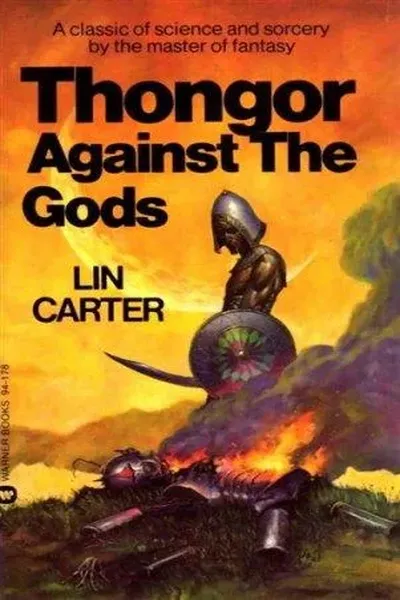
Thongor N The Wizard

 71
71

Thongor N The Wizard
Lin Carter's Thongor N The Wizard offers a solid entry into the sword-and-sorcery subgenre, channeling the spirit of early pulp fantasy with a direct narrative approach. The strength of the work lies in its unpretentious adventure; Thongor is a capable hero navigating predictable but engaging perils. Carter excels at depicting action sequences with a clear, energetic prose. However, the narrative occasionally feels derivative, relying on well-trodden fantasy tropes without significant innovation. A passage detailing Thongor's confrontation with a sorcerer using elemental magic, while functional, highlights this reliance on established archetypes. The book serves its purpose as escapist entertainment but lacks the deeper thematic resonance found in more sophisticated fantasy. It is a competent diversion for those seeking straightforward heroic fantasy.
📝 Description
71
### What It Is
Thongor N The Wizard, penned by Lin Carter and first published in 1976, presents a narrative steeped in sword-and-sorcery tropes. It follows the titular character, Thongor, on his adventures, often involving magical duels and perilous quests in fantastical realms. The work draws heavily on established fantasy conventions, focusing on heroic action and the exploration of ancient, often dangerous, settings. Carter's approach in this novel prioritizes a direct, engaging storytelling style, aiming to immerse the reader in a world of high stakes and arcane power.
### Who It's For
This book will appeal to readers who appreciate classic fantasy narratives, particularly those from the mid-to-late 20th century. Fans of authors like Robert E. Howard and Jack Vance, who established many of the genre's foundational elements, will find familiar ground here. It is suited for those seeking straightforward adventure with a strong protagonist, rather than complex philosophical allegories or intricate world-building. The focus is on character action and the immediate challenges faced by Thongor.
### Historical Context
Published in 1976, Thongor N The Wizard emerged during a period when sword-and-sorcery was experiencing a significant revival. Following the initial surge of popularity in the early 20th century with creators like Robert E. Howard, the genre saw renewed interest through paperback reprints and new authors. Carter himself was a prolific contributor to this resurgence, often engaging with the traditions of pulp fantasy. The literary landscape of the 1970s also included burgeoning high fantasy works by authors like J.R.R. Tolkien, creating a diverse spectrum of fantasy literature.
### Key Concepts
The narrative hinges on the concept of the 'wizard' as a figure of immense, often volatile, power. Thongor's abilities are not merely scholarly but deeply intertwined with primal forces, reflecting a pre-modern understanding of magic as an inherent, sometimes dangerous, aspect of the world. The stories frequently involve the discovery or use of ancient artifacts, which serve as conduits for this power, often unearthed from forgotten civilizations. These elements underscore a world where magic is a tangible, physical force, capable of shaping destinies and altering the course of events.
💡 Why Read This Book?
• You will learn about the foundational elements of 20th-century sword-and-sorcery by engaging with Thongor's direct confrontations with arcane forces, a hallmark of the genre's revival in the 1970s. • You will feel the pulse of classic pulp adventure through Lin Carter's energetic prose, experiencing a narrative style that prioritizes action and immediate peril over complex exposition. • You will gain an appreciation for the wizard archetype as a figure of raw, often dangerous power, as depicted in Thongor's encounters with ancient magic and artifacts.
⭐ Reader Reviews
Honest opinions from readers who have explored this book.
❓ Frequently Asked Questions
What is the primary genre of Thongor N The Wizard?
Thongor N The Wizard is primarily a sword-and-sorcery novel, a subgenre of fantasy literature. It features heroic action, magic, and often a focus on a powerful protagonist facing exotic threats.
Who is the author of Thongor N The Wizard?
The author is Lin Carter, a prolific writer known for his contributions to the fantasy and science fiction genres, particularly in the revival of sword-and-sorcery in the mid-20th century.
When was Thongor N The Wizard first published?
The book was first published in 1976, placing it within a period of renewed interest in sword-and-sorcery fiction.
Does Thongor N The Wizard feature complex magic systems?
The novel generally presents magic as a potent, often primal force rather than a system with intricate rules. Arcane powers are frequently tied to ancient artifacts or innate abilities.
What kind of protagonist is Thongor?
Thongor is portrayed as a capable and heroic figure, typical of the sword-and-sorcery tradition. He is often depicted as a warrior or sorcerer who directly confronts dangers.
What are the main influences on Thongor N The Wizard?
The work is heavily influenced by earlier sword-and-sorcery authors, most notably Robert E. Howard, creator of Conan the Barbarian, and the pulp fantasy tradition.
🔮 Key Themes & Symbolism
Heroic Confrontation
The narrative emphasizes the direct confrontation between the protagonist, Thongor, and the forces arrayed against him. This theme is central to the sword-and-sorcery genre, where heroes often face overwhelming odds through sheer force of will and skill. Thongor's battles, whether against monstrous beasts or rival sorcerers, highlight a primal struggle for survival and dominance. The emphasis is on immediate action and the protagonist's capacity to overcome obstacles through personal prowess rather than intricate planning or reliance on external systems. This focus creates a sense of urgent adventure.
Ancient and Lost Powers
A recurring element involves the rediscovery or manipulation of ancient powers and artifacts. These relics often originate from forgotten civilizations, imbuing them with a sense of mystery and immense, often dangerous, potential. Thongor's quests frequently lead him to such forgotten places, where he might unearth a powerful magical item or confront entities that have slumbered for ages. This theme taps into a fascination with lost knowledge and the idea that the world holds secrets from epochs long past, capable of reshaping the present.
The Nature of Wizardry
The book explores wizardry not just as a learned discipline but as an inherent, often untamed, force. Thongor himself may wield arcane abilities, but these are often presented as raw, elemental powers rather than codified magical systems. This perspective reflects an older, more mythic view of magic as an intrinsic part of the cosmos, capable of great creation and destruction. The dangers associated with such power, and the responsibility it entails, are often implicitly present in the narrative's conflicts.
Exotic and Perilous Realms
The settings within Thongor N The Wizard are typically alien and fraught with danger. These fantastical landscapes, often featuring ancient ruins, treacherous wildernesses, and mysterious cities, serve as more than mere backdrops. They are active participants in the narrative, presenting unique challenges and embodying the exoticism that defines the sword-and-sorcery genre. Exploration of these realms is integral to Thongor's adventures, requiring courage and adaptability from the hero.
💬 Memorable Quotes
“The sorcerer's incantations crackled with the raw energy of the storm.”
— This paraphrase captures the essence of how magic is often depicted in the book: not subtle or academic, but a potent, elemental force akin to natural phenomena, directly impacting the environment.
“He drew upon forgotten lore found within the crumbling obsidian tower.”
— This interpretation highlights the theme of ancient knowledge and lost civilizations. The 'crumbling obsidian tower' serves as a concrete symbol of a bygone era, holding secrets accessible only to the brave or foolish.
“Thongor faced the beast, his sword a mere glint against its monstrous hide.”
— This illustrates the classic sword-and-sorcery dynamic: a lone hero confronting a formidable, often supernatural, foe. The 'glint' emphasizes the disparity in power, relying on the hero's courage over brute strength.
“The amulet pulsed with a warmth that belied its age and the chill of the tomb.”
— This speaks to the concept of ancient artifacts possessing active, almost living power. The contrast between the amulet's warmth and the tomb's chill underscores its otherworldly nature and potential.
“His quest led him through lands where the very air seemed thick with old enchantments.”
— This conveys the pervasive nature of magic within the book's world. It suggests an environment saturated with arcane energies, where enchantment is not an event but a constant state.
🌙 Esoteric Significance
Tradition
While not explicitly aligned with a singular esoteric tradition like Hermeticism or Gnosticism, Thongor N The Wizard taps into a broader, archetypal understanding of magic prevalent in Western esotericism. The narrative embraces a worldview where potent forces, often ancient and untamed, shape reality. This resonates with older magical philosophies that viewed the cosmos as imbued with inherent powers, accessible through will, ritual, or inherent connection, rather than strictly codified systems. The wizard figure embodies this connection to primal energies.
Symbolism
The 'ancient artifacts' frequently sought or utilized by Thongor serve as potent symbols of lost knowledge and dormant power. They represent tangible links to forgotten epochs, embodying the idea that the past holds keys to understanding or manipulating the present. The 'crumbling obsidian tower' or similar decaying structures function as symbols of fallen civilizations, their remnants holding both danger and potential. These motifs evoke a sense of mystery and the cyclical nature of power and decay.
Modern Relevance
Contemporary fantasy authors and game designers continue to draw upon the archetypes and narrative structures popularized by Lin Carter and his contemporaries. The concept of the heroic adventurer wielding raw, often dangerous, magic against formidable foes remains a staple in many modern fantasy settings. The emphasis on exploration of exotic, perilous realms also finds echoes in role-playing games and digital entertainment, where players engage with similar narrative frameworks.
👥 Who Should Read This Book
• Fans of classic sword-and-sorcery seeking direct, action-packed narratives reminiscent of pulp fiction from the 1970s. • Readers interested in the evolution of fantasy literature who want to explore works that helped revive the genre in the post-Tolkien era. • Those who appreciate straightforward heroic protagonists and adventures set in fantastical, often dangerous, worlds without complex philosophical subtext.
📜 Historical Context
Lin Carter's Thongor N The Wizard, published in 1976, arrived during a vibrant resurgence of the sword-and-sorcery genre. This revival was significantly influenced by the enduring legacy of Robert E. Howard, whose Conan stories had captivated readers since the 1930s. Carter himself was a key figure in this renewed interest, actively writing and promoting within the pulp fantasy tradition. The literary landscape of the mid-1970s was diverse; while sword-and-sorcery flourished, epic fantasy was also gaining considerable traction, notably with the widespread popularity of J.R.R. Tolkien's works. Carter's approach, often more direct and action-oriented than Tolkien's, catered to an audience seeking visceral adventure. The era saw numerous authors contributing to the genre, solidifying its place in popular fiction, and Carter's Thongor series was part of this broader movement to revisit and expand upon the heroic fantasy template.
📔 Journal Prompts
Thongor's reliance on raw power versus learned magic: Which approach feels more potent?
Reflect on the symbolism of ancient artifacts discovered in perilous ruins.
Consider the archetype of the wizard as a figure embodying untamed cosmic forces.
Analyze the narrative function of exotic and dangerous settings in driving the plot.
How does Thongor's heroic confrontation style differ from other fantasy protagonists?
🗂️ Glossary
Sword-and-Sorcery
A subgenre of fantasy characterized by heroic protagonists, often warriors or wizards, engaging in direct combat with monsters and malevolent sorcerers in primitive or ancient settings.
Pulp Fantasy
Fantasy literature originally published in inexpensive 'pulp' magazines during the early to mid-20th century, known for its fast-paced action, clear heroes and villains, and often exotic settings.
Arcane Power
Mysterious or secret power, typically associated with magic. In this context, it often refers to potent, sometimes dangerous, forces not fully understood or controlled.
Ancient Artifact
Objects created in the distant past, often possessing magical properties or historical significance, frequently found in ruins or lost locations within fantasy narratives.
Wizard Archetype
A recurring character type representing a magic-user, often depicted as wise, powerful, and sometimes enigmatic, embodying humanity's fascination with the occult and supernatural.
Exotic Setting
A fictional location characterized by its unfamiliarity, strangeness, and often inherent danger, designed to evoke a sense of wonder and adventure for the reader.
Heroic Confrontation
A narrative scenario where a protagonist directly faces and engages with a significant threat, emphasizing personal courage, skill, and willpower over indirect methods.