Thomas

 73
73

Thomas
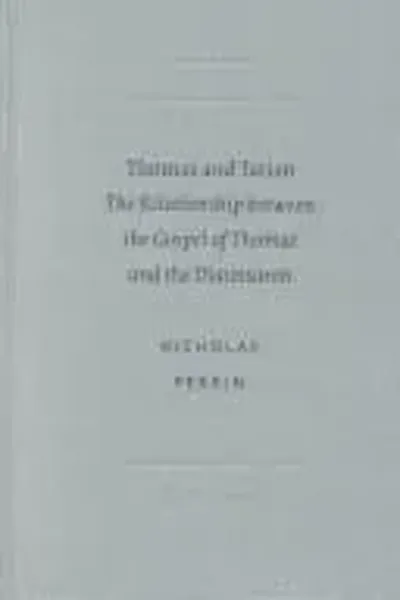
Nicholas Perrin’s Thomas presents a rigorous examination of the apostolic figure, moving beyond simple narratives of doubt. The strength of the work lies in its meticulous engagement with both canonical and non-canonical traditions, particularly the Gospel of Thomas itself. Perrin skillfully navigates the complex theological landscape of early Christianity, offering a nuanced perspective on the role of empirical evidence in spiritual conviction. A point of limitation, however, might be the dense academic prose, which could present a barrier for casual readers. The exploration of the apocryphal Gospel of Thomas, specifically its emphasis on esoteric knowledge, is particularly compelling, framing doubt not as an absence of faith but as a catalyst for deeper understanding. Perrin’s analysis offers a valuable contribution to understanding the diversity of early Christian thought.
📝 Description
73
### What It Is Thomas by Nicholas Perrin, first published in 2007, is a work that engages with the figure of Thomas the Apostle. It moves beyond hagiography to explore the theological and philosophical implications of his unique position within the early Christian narrative. The book examines traditions and interpretations that have surrounded Thomas, particularly his role as the doubter who demands empirical evidence before belief. Perrin’s approach is analytical, dissecting the scriptural accounts and subsequent theological developments.
### Who It's For This book is intended for readers interested in early Christian studies, the historical Jesus, and the development of doctrine. It will appeal to those who question traditional narratives and seek a deeper understanding of the foundational figures of Christianity. Academics in religious studies, theology students, and independent researchers exploring apocryphal texts and alternative Gnostic perspectives will find material here.
### Historical Context Published in 2007, Thomas emerged during a period of renewed academic and popular interest in the historical Jesus and non-canonical Gospels. Scholars were actively re-evaluating the Gnostic texts discovered at Nag Hammadi in 1945, which often presented alternative portraits of Christ and his disciples, including Thomas. Perrin's work engages with this broader scholarly conversation, which often contrasted with more orthodox interpretations of the apostolic tradition, notably those championed by figures like Bart Ehrman who also explored textual criticism of early Christian documents.
### Key Concepts The central concept is the exploration of 'doubting faith' as embodied by Thomas. The work delves into the scriptural and apocryphal traditions surrounding him, including the Gospel of Thomas, which posits a different kind of discipleship. It also touches upon the development of early Christian ecclesiology and the challenges of belief in the absence of direct testimony. The tension between faith and empirical evidence is a recurring motif.
💡 Why Read This Book?
• Gain a distinct perspective on the Apostle Thomas, moving beyond simple doubt to understand his role in early Christian epistemology, as detailed in analyses of the Gospel of Thomas. • Explore the tension between faith and empirical evidence within nascent Christianity, a concept central to the book’s argument regarding Thomas’s specific discipleship. • Understand the historical context of early Christian literature, including the significance of the Nag Hammadi discoveries and their impact on theological interpretation.
⭐ Reader Reviews
Honest opinions from readers who have explored this book.
❓ Frequently Asked Questions
When was Nicholas Perrin's book 'Thomas' first published?
Nicholas Perrin's 'Thomas' was first published in 2007, placing it within a period of significant scholarly re-examination of early Christian texts and figures.
What is the primary focus of Nicholas Perrin's 'Thomas'?
The book primarily focuses on the Apostle Thomas, examining his role, the traditions surrounding him, and the theological implications of his skepticism within early Christianity.
Does 'Thomas' by Nicholas Perrin discuss the Gospel of Thomas?
Yes, the book extensively engages with the Gospel of Thomas, a significant non-canonical text, to explore alternative discipleship and Gnostic perspectives.
Who is the intended audience for 'Thomas'?
The book is aimed at academics, theology students, and readers interested in early Christian studies, comparative religion, and the historical Jesus.
What makes Perrin's approach to Thomas unique?
Perrin's approach is analytical, dissecting scriptural and apocryphal accounts to explore the philosophical and theological dimensions of Thomas's faith, rather than presenting a devotional biography.
What historical discoveries influenced the context of this book?
The discovery of the Nag Hammadi library in 1945, which included the Gospel of Thomas, significantly shaped the scholarly environment in which Perrin's book was written.
🔮 Key Themes & Symbolism
The Skeptical Apostle
Perrin's 'Thomas' interrogates the traditional portrayal of the Apostle Thomas as merely a doubter. The work explores this skepticism as a crucial element of early Christian epistemology, particularly when contrasted with the faith espoused in canonical texts. It considers how Thomas’s demand for empirical evidence, as seen in the Gospel of John, positions him as a unique figure whose journey toward belief offers a distinct model of discipleship. This theme is central to understanding the diversity of spiritual paths within the nascent Christian movement.
Gnostic Gospels and Alternative Faith
A significant facet of the book involves the examination of apocryphal texts, most notably the Gospel of Thomas. Perrin situates this gospel within the broader landscape of early Christian literature, highlighting its Gnostic leanings and its emphasis on inner knowledge and esoteric wisdom over external pronouncements. The book contrasts the discipleship described in these texts with more orthodox interpretations, revealing a rich and complex spectrum of belief systems vying for influence in the early centuries CE.
The Nature of Belief
Beyond the specific figure of Thomas, the work delves into the fundamental nature of belief and faith. It probes the relationship between conviction and verifiable experience, a tension particularly relevant in spiritual and philosophical inquiry. By analyzing Thomas's journey, Perrin invites readers to contemplate what constitutes genuine faith and whether it requires absolute certainty or can coexist with questioning. This exploration is crucial for understanding how early Christian communities grappled with establishing their doctrines and identity.
Apostolic Authority
The book also touches upon the developing concept of apostolic authority in the early Church. By focusing on Thomas, one of the twelve, Perrin implicitly examines how the testimonies and roles of the apostles were understood and transmitted. The work considers how different narratives, including those from non-canonical sources, might have challenged or complemented the emerging hierarchical structures and the establishment of an orthodox canon, thereby influencing the very foundation of Christian tradition.
💬 Memorable Quotes
“Thomas's demand for empirical verification is not a rejection of faith, but a specific path toward it.”
— This interpretation highlights a central argument of the book: that Thomas’s skepticism should not be viewed as a simple lack of belief, but as a necessary step in his personal spiritual journey, emphasizing the intellectual and experiential dimensions of faith.
“The Gospel of Thomas offers a vision of discipleship centered on hidden knowledge.”
— This paraphrased concept points to the Gnostic elements within the Gospel of Thomas, suggesting that its teachings prioritize secret revelations and inner understanding, presenting a distinct form of spiritual pursuit compared to more public or communal expressions of faith.
“Early Christianity was a landscape of diverse interpretations, not a monolithic doctrine.”
— This interpretation underscores the book’s engagement with the historical context of early Christianity, emphasizing that various schools of thought and belief systems coexisted and competed, challenging the notion of a single, pre-determined orthodoxy.
“The tension between seeing and believing is a recurring motif in the apostolic narratives.”
— This refers to the fundamental conflict explored in the book concerning the role of physical evidence (seeing) versus spiritual conviction (believing), exemplified by Thomas's story and its implications for understanding divine revelation.
“Canonical and non-canonical texts provide complementary, sometimes conflicting, portraits of the apostles.”
— This interpretation suggests that the book draws from a wide array of sources, acknowledging that different writings offer varied perspectives on the same figures, thereby enriching and complicating our understanding of their historical and theological significance.
🌙 Esoteric Significance
Tradition
The work engages with traditions stemming from early Christianity, particularly those influenced by Gnostic thought. It departs from purely orthodox interpretations by giving serious consideration to texts like the Gospel of Thomas, which emphasize esoteric knowledge and inner illumination as pathways to salvation. This aligns with a broader esoteric interest in hidden teachings and alternative spiritual lineages that existed alongside, and often in tension with, mainstream religious development.
Symbolism
A primary symbol is the finger of Thomas, representing empirical verification and the tangible proof required for belief. This contrasts with the more ethereal or spiritual understanding of divinity often found in Gnostic traditions. The act of 'seeing' versus 'believing' becomes a symbolic representation of two distinct modes of apprehending truth, central to many esoteric systems that seek to bridge the material and immaterial realms.
Modern Relevance
Contemporary seekers interested in comparative religion, the historical Jesus, and alternative spiritualities often draw upon the insights found in works that explore non-canonical texts. Perrin's analysis of Thomas and the Gospel of Thomas provides a scholarly yet accessible entry point for understanding the diversity of early Christian beliefs, which resonates with modern movements that value personal gnosis and question established doctrines.
👥 Who Should Read This Book
• Students of early Christianity and Gnosticism interested in the diversity of foundational beliefs. • Readers seeking a deeper understanding of the historical and theological context of non-canonical Gospels like the Gospel of Thomas. • Those exploring the philosophical implications of faith, doubt, and empirical evidence in spiritual inquiry.
📜 Historical Context
Published in 2007, Nicholas Perrin's 'Thomas' emerged within a vibrant academic milieu dedicated to reassessing early Christian origins. The preceding decades had been profoundly shaped by the 1945 discovery of the Nag Hammadi library, which brought to light numerous Gnostic texts, including the Gospel of Thomas. This discovery challenged traditional understandings of the New Testament canon and the diversity of early Christian thought. Scholars like Elaine Pagels had already popularized explorations of Gnosticism and its varied interpretations of Jesus's teachings. Perrin's work contributes to this ongoing scholarly conversation, engaging directly with the implications of these non-canonical gospels for understanding figures like the Apostle Thomas. The book navigates the complex terrain where orthodox traditions, exemplified by the canonical Gospels, interacted with and often sought to distinguish themselves from emergent Gnostic and other heterodox movements that offered alternative paths to salvation and spiritual understanding.
📔 Journal Prompts
The concept of Thomas’s 'doubting faith' as a path to understanding.
The contrast between canonical and Gnostic interpretations of discipleship.
The role of empirical evidence versus inner knowing in spiritual conviction.
Reflecting on the significance of the Nag Hammadi discoveries for understanding early Christianity.
The implications of Thomas's specific journey for contemporary spiritual practice.
🗂️ Glossary
Apostle
In Christianity, one of the twelve disciples chosen by Jesus to spread his teachings. The role signifies direct authority and witness to Jesus's life and resurrection.
Gnosticism
A complex set of religious movements in early Christianity that emphasized knowledge (gnosis) as the means of salvation, often positing a dualistic worldview and secret teachings.
Gospel of Thomas
A non-canonical collection of sayings attributed to Jesus, discovered among the Nag Hammadi library. It emphasizes esoteric wisdom and inner spiritual understanding.
Canonical Texts
Religious writings accepted as authoritative and forming part of the official scripture of a religious tradition, such as the books of the New Testament.
Epistemology
The branch of philosophy concerned with the theory of knowledge, investigating its nature, origin, and scope, and the justification of belief.
Apocryphal Texts
Writings related to the Bible or other religious traditions that are not accepted as part of the canon. They often provide alternative narratives or teachings.
Nag Hammadi Library
A collection of Gnostic texts discovered in Egypt in 1945, providing invaluable insight into early Christian and Gnostic movements.