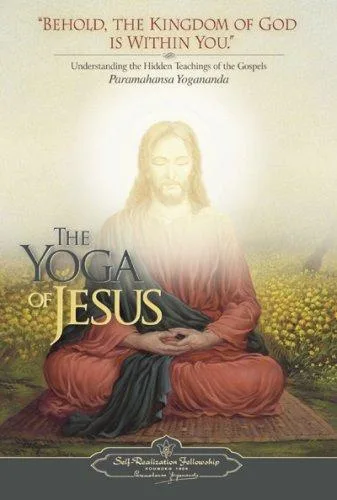
The yoga of Jesus
 83
83

The yoga of Jesus
Paramahansa Yogananda's The Yoga of Jesus is a fascinating, if at times overly earnest, attempt to synthesize the teachings of Christ with the yogic path. It’s a book that challenges readers to look beyond surface-level exegesis, particularly in its examination of Jesus's purported miracles as demonstrations of advanced yogic powers. Yogananda's interpretation of the 'Kingdom of God' as an inner state of consciousness, achievable through specific meditative practices, is compelling. However, the work occasionally suffers from a tendency to read every biblical passage through a single, predetermined lens, potentially overlooking the historical and cultural nuances of Jesus's original context. A strength lies in its consistent focus on practical spiritual application rather than purely academic theology. The section exploring Jesus's resurrection not as a unique event but as a state of cosmic omnipresence, accessible through yogic realization, is particularly striking. While not a scholarly treatise in the Western sense, it offers a unique spiritual perspective for those already inclined towards Yogananda's teachings. The book ultimately serves as an intriguing, if specialized, bridge between two profound spiritual traditions.
📝 Description
83
### What It Is
The Yoga of Jesus, penned by Paramahansa Yogananda and first published in 2016, presents a comparative theological study that seeks to bridge the perceived chasm between the teachings of Jesus Christ and the ancient Indian science of Yoga. It is not a hagiography but an analytical text examining the spiritual techniques and philosophical underpinnings shared by Christ's ministry and the yogic path. The work scrutinizes biblical narratives for esoteric interpretations, suggesting that many of Jesus' miracles and parables align with advanced yogic principles.
### Who It's For
This book is intended for sincere seekers of spiritual truth who are open to interfaith dialogue and the exploration of universal mystical principles. It will appeal to students of comparative religion, particularly those interested in the parallels between Eastern and Western spiritual traditions. Readers familiar with Yogananda's broader teachings on Kriya Yoga will find this work a focused application of his philosophy to a foundational figure in Western spirituality. It is also for those questioning the conventional interpretations of religious texts and seeking deeper, more unified understandings of divine wisdom.
### Historical Context
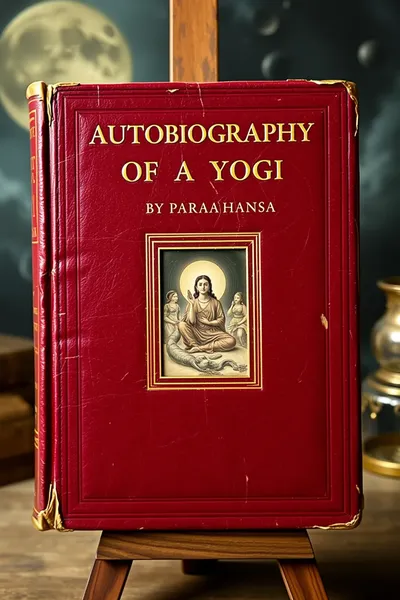
Paramahansa Yogananda (1893-1952) arrived in America in 1920, initiating a significant wave of Eastern spiritual thought. His lectures and writings, including Autobiography of a Yogi (1946), played a crucial role in popularizing Yoga and Vedanta in the West during a period when such philosophies were largely unknown or misunderstood. The Yoga of Jesus emerged within this milieu, a time when figures like Helena Blavatsky and Annie Besant had already begun to explore connections between Eastern and Western esotericism through organizations like the Theosophical Society. Yogananda's work, however, offered a more direct, personalized approach, grounded in his lineage of Kriya Yoga.
### Key Concepts
The core of The Yoga of Jesus lies in its exploration of 'Cosmic Consciousness,' a state of divine awareness attainable through spiritual discipline. Yogananda argues that Jesus's teachings on the 'Kingdom of God' are synonymous with this yogic goal. The book also delves into the concept of 'Saviour,' presenting Jesus not just as a historical figure but as an embodiment of the universal Christ Consciousness, a state accessible to all through self-realization. Techniques such as deep meditation, pranayama (breath control), and the application of divine will are presented as the practical means by which Jesus achieved and demonstrated his spiritual mastery.
💡 Why Read This Book?
• Gain a novel perspective on Jesus's teachings by understanding them through the lens of Kriya Yoga, specifically learning how concepts like the 'Kingdom of God' may align with yogic states of consciousness as presented in Yogananda's interpretive framework. • Explore the practical application of spiritual techniques attributed to Jesus, such as the role of pranayama and meditation in achieving states of divine awareness, as detailed within the book's comparative analysis. • Discover how Yogananda, through his work published posthumously in 2016, sought to demonstrate the universality of spiritual laws, potentially revealing common ground between Christianity and ancient yogic traditions that fosters a unified view of salvation.
⭐ Reader Reviews
Honest opinions from readers who have explored this book.
❓ Frequently Asked Questions
What is the main argument of Paramahansa Yogananda's The Yoga of Jesus?
The central argument is that the teachings and miracles of Jesus Christ are fundamentally consistent with the principles and practices of Yoga, particularly Kriya Yoga. Yogananda posits that Jesus was a master yogi who demonstrated the potential for achieving divine consciousness and performing miracles through yogic techniques.
When was The Yoga of Jesus first published and who is the author?
The Yoga of Jesus was first published in 2016, compiled from lectures and writings of Paramahansa Yogananda, a renowned yogi and guru who brought Kriya Yoga to the West starting in 1920.
Does the book suggest Jesus was an Indian yogi?
No, the book does not claim Jesus was an Indian yogi. Instead, it argues that Jesus possessed the same spiritual realization and abilities as the great yogis of India, achieved through universal spiritual laws that are taught in Yoga.
What is the concept of 'Cosmic Consciousness' in relation to Jesus's teachings?
Yogananda interprets Jesus's concept of the 'Kingdom of God' as synonymous with 'Cosmic Consciousness' – a state of divine awareness and oneness with God. The book suggests Jesus taught methods to attain this state, which aligns with the goals of advanced yogic practice.
Is this book a historical analysis or a spiritual interpretation?
The Yoga of Jesus is primarily a spiritual interpretation. While it references biblical accounts, its focus is on drawing parallels between Jesus's life and teachings with yogic philosophy and practice, aiming for spiritual understanding rather than strict historical documentation.
What esoteric traditions does Yogananda draw upon?
Yogananda draws heavily from the tradition of Kriya Yoga, an ancient Indian science of self-realization. He also integrates concepts from Vedanta philosophy and presents a comparative theological view that bridges Eastern and Western mystical thought.
🔮 Key Themes & Symbolism
Christ Consciousness as Cosmic Awareness
The work posits that Jesus's attainment of 'Christ Consciousness' is identical to the yogic concept of 'Cosmic Consciousness.' This state represents a unified awareness of all creation and direct communion with the Divine. Yogananda interprets biblical events and parables as manifestations of this elevated state, suggesting that Jesus's miracles were not supernatural interventions but natural outcomes of mastering the mind and universal energies through deep yogic practice and divine realization.
The Inner Kingdom of God
Paramahansa Yogananda reinterprets Jesus's frequent references to the 'Kingdom of God' not as a geographical heaven or a future event, but as an inner spiritual state accessible through meditation and self-discipline. This internal 'kingdom' is portrayed as a direct experience of God's presence within one's own consciousness, attainable by all sincere seekers who follow a path of spiritual purification and focused inner work, akin to the yogic pursuit of Samadhi.
Miracles as Yogic Demonstrations
A significant theme is the re-framing of Jesus's miracles—such as healing the sick, walking on water, and resurrection—as demonstrations of mastery over the laws of nature, achievable through advanced yogic powers. The book suggests that these feats were not unique divine interventions but were accomplished by Jesus utilizing the same principles of mind-control, energy manipulation (prana), and deep meditative concentration that are central to yogic science and the attainment of siddhis (spiritual powers).
The Universal Christ
Beyond the historical figure of Jesus, Yogananda emphasizes the concept of the 'Universal Christ'—an eternal, omnipresent spiritual reality that Jesus embodied and taught. This Universal Christ is presented as the underlying divine consciousness that pervades all existence, and which every individual can realize within themselves. This perspective aligns with the Vedantic concept of Brahman and the yogic goal of realizing the Self as one with the Divine.
💬 Memorable Quotes
“Jesus Christ was the most perfect yogi of the West.”
— This statement encapsulates the book's central thesis: that Jesus's spiritual mastery and teachings align with the highest ideals and practices of Yoga, positioning him as a supreme example of yogic attainment within the Western tradition.
“The Kingdom of God is within you.”
— Yogananda interprets this famous saying of Jesus not as a future paradise, but as the inner realm of divine consciousness and peace that can be experienced here and now through dedicated spiritual practice and self-realization.
“The Bible is a book of Yoga.”
— This provocative assertion suggests that beneath the surface narrative of the Bible lie profound yogic teachings and principles, which Yogananda aims to unveil for the modern seeker interested in spiritual unity.
“Jesus taught the science of God-realization.”
— This paraphrase highlights the book's view of Jesus's mission as imparting not just ethical or theological doctrines, but a practical science for achieving direct experience of God, mirroring the ultimate aim of Yoga.
“The power that raised Jesus from the dead is the same power that can raise you.”
— This interpretation frames the resurrection not as a singular miraculous event, but as an illustration of the immense spiritual power available through divine realization, a power that Yogananda suggests is accessible to all through yogic discipline.
🌙 Esoteric Significance
Tradition
This work firmly belongs within the lineage of Neo-Vedanta and Kriya Yoga, as transmitted by Paramahansa Yogananda. It extends the esoteric interpretation of religious texts, a practice common in traditions like Theosophy and certain branches of Hermeticism, by applying it specifically to Christianity. Yogananda's approach departs from traditional Western exegesis by positing Yoga not merely as a parallel spiritual path, but as the underlying science of spiritual realization that Jesus himself mastered and taught.
Symbolism
The book frequently reinterprets Christian symbols through a yogic lens. The 'Cross' can be seen as representing the five-dimensional man (spirit, intellect, emotion, energy, physical body) or the intersection of the earthly and divine. 'Resurrection' is often interpreted not just as a historical event but as the yogic awakening of the soul from material slumber into divine consciousness. 'Miracles' are presented as literal demonstrations of yogic control over the subtle energies (prana) and the material world.
Modern Relevance
Contemporary thinkers and practitioners in fields like comparative spirituality, consciousness studies, and integrative wellness draw upon Yogananda's work. His efforts to demonstrate the universality of spiritual laws continue to resonate with those seeking to synthesize Eastern and Western mystical traditions. Modern yoga instructors and spiritual teachers who emphasize the philosophical and meditative aspects of Yoga often reference Yogananda's interpretations of figures like Jesus, promoting a more unified global understanding of spiritual paths.
👥 Who Should Read This Book
• Christian seekers interested in exploring the esoteric dimensions of Jesus's teachings and potential parallels with Eastern spiritual practices, offering a unique perspective beyond conventional theology. • Practitioners of Yoga and Vedanta who wish to see how their own path's principles and techniques are interpreted within the context of a foundational Western religious figure. • Students of comparative religion and mysticism seeking to understand cross-cultural spiritual dialogues and how universal concepts of consciousness and salvation are expressed across diverse traditions.
📜 Historical Context
Paramahansa Yogananda's The Yoga of Jesus emerged from the intellectual currents of the early to mid-20th century, a period marked by increased Western interest in Eastern philosophies. Yogananda himself arrived in the United States in 1920, initiating a significant era of popularizing Yoga and Vedanta. His work, including this posthumously published 2016 compilation, builds upon the groundwork laid by earlier figures like Helena Blavatsky and the Theosophical Society, who had begun exploring esoteric connections between Eastern and Western religions. However, Yogananda offered a more direct, practical application of yogic principles, grounded in his specific lineage of Kriya Yoga. This period also saw competing schools of thought, such as the New Thought movement, which also focused on the power of the mind and spiritual healing, though often with different metaphysical underpinnings. Yogananda's approach was distinct in its direct lineage and emphasis on specific meditative techniques.
📔 Journal Prompts
The concept of the 'Kingdom of God' as an inner state: How does this interpretation align with your personal spiritual experiences?
Jesus's miracles as yogic feats: Reflect on a time you witnessed or experienced something that felt beyond ordinary explanation, and consider its potential energetic basis.
The Universal Christ: Explore the idea of an omnipresent divine consciousness and its implications for your relationship with others.
The yogic path to divine realization: How might the disciplined practices discussed in the book inform your own spiritual journey?
Bridging traditions: Consider the potential benefits and challenges of viewing Jesus's teachings through the lens of Yoga.
🗂️ Glossary
Kriya Yoga
An ancient yogic science of self-realization taught by Paramahansa Yogananda. It involves specific techniques of meditation and breath control (pranayama) aimed at accelerating spiritual evolution and achieving union with the Divine.
Cosmic Consciousness
A state of divine awareness where the individual soul realizes its oneness with God and all of creation. It represents the highest goal of yogic and spiritual practice, transcending ordinary individual consciousness.
Pranayama
The yogic practice of breath control. It involves regulating the breath to influence the flow of vital energy (prana) in the body, which is believed to affect mental states and spiritual development.
Siddhis
Spiritual powers or extraordinary abilities that are said to arise as a byproduct of advanced yogic practice and spiritual attainment. They are often described in ancient Indian texts.
Universal Christ
A concept referring to the omnipresent spiritual intelligence or divine consciousness that Jesus embodied and taught. It is seen as the underlying reality of creation, accessible to all through spiritual realization.
Self-Realization
The ultimate goal of Yoga, which is the direct experiential knowledge of one's true nature as divine and one with God. It signifies liberation from ignorance and suffering.
Samadhi
A state of profound meditative absorption or profound spiritual consciousness in Yoga, characterized by the stilling of the mind and a direct experience of divine reality or bliss.