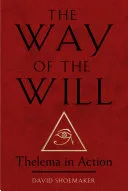
The Way of the Will
 83
83

The Way of the Will
David Shoemaker's "The Way of the Will" offers a welcome, grounded perspective on applying Thelemic principles. Unlike many texts that remain abstract, Shoemaker consistently anchors the discussion in tangible practice, a clear strength derived from his years of teaching. His exploration of the True Will, for instance, moves beyond mere definition to suggest actionable pathways for identification and alignment. A minor limitation, however, is the occasional density of the prose, which, while thorough, may require dedicated readers to revisit certain passages for full comprehension. The section detailing the 'steps' for discerning one's Will provides a particularly concrete and valuable takeaway, illustrating the book's practical bent. It serves as a solid manual for serious Thelemites.
📝 Description
83
### What It Is "The Way of the Will" functions as a detailed guide to implementing the philosophical and spiritual tenets of Thelema into the fabric of everyday existence. David Shoemaker, drawing from his extensive background as a teacher and writer within occult circles, presents a practical framework for this integration. The book is structured to offer actionable advice, moving beyond abstract theory to provide methods for personal development through the lens of Aleister Crowley's most influential system of magick and philosophy.
### Who It's For This work is primarily aimed at individuals already familiar with or actively exploring the principles of Thelema, particularly those interested in Aleister Crowley's life and teachings. It will appeal to students of Western esotericism, occult practitioners seeking structured approaches to spiritual growth, and readers who appreciate in-depth analyses of magickal philosophy applied to mundane challenges. Those who have followed Shoemaker's prior work, including his podcast contributions, will find a coherent expansion of his established thought.
### Historical Context Thelema, as codified by Aleister Crowley in the early 20th century, emerged from a period of intense spiritual and occult exploration in Europe. Its formalization, particularly after the reception of the Book of the Law in Cairo in 1904, positioned it as a distinct esoteric movement. Shoemaker's work contextualizes Thelema within this lineage, acknowledging its roots in Crowley's personal experiences and writings, and its subsequent evolution through various orders and individual practitioners.
### Key Concepts Central to "The Way of the Will" is the concept of the True Will, a core Thelemic doctrine that posits an individual's unique, inherent purpose or destiny. Shoemaker explores how understanding and aligning with this Will can lead to profound psychological and spiritual advancement. Other significant themes include the practical application of ritual, the nature of consciousness, and the ethical considerations inherent in the pursuit of one's Will, all framed within the specific lexicon and philosophical structure of Thelema.
💡 Why Read This Book?
• Gain a practical methodology for identifying and enacting your True Will, a core Thelemic concept articulated by Aleister Crowley, moving beyond theoretical understanding to applied spiritual direction. • Learn specific techniques for integrating Thelemic philosophy into daily routines, drawing from Shoemaker's experience teaching occult principles derived from his work since the early 2000s. • Understand the historical and philosophical underpinnings of Thelema, including its foundational texts and Crowley's own development, providing crucial context for practitioners engaging with this system.
⭐ Reader Reviews
Honest opinions from readers who have explored this book.
❓ Frequently Asked Questions
What is the primary focus of David Shoemaker's 'The Way of the Will'?
The book focuses on the practical integration of Thelemic spiritual principles into daily life, aiming to enhance psychological and spiritual growth through the understanding and application of Aleister Crowley's teachings.
Who is the author, David Shoemaker, and what is his background?
David Shoemaker is a recognized writer and teacher within occult and esoteric circles, known for his work on Aleister Crowley and Thelema, including contributions through podcasts and classes.
When was 'The Way of the Will' first published?
The book was first published on May 6, 2024, reflecting contemporary engagement with Thelemic philosophy.
What is the core concept of Thelema explored in the book?
The core concept is the 'True Will,' which Thelema posits as an individual's unique purpose or destiny, and the book explores how to align one's life with this principle.
Does the book require prior knowledge of Aleister Crowley?
While prior familiarity with Aleister Crowley and Thelema is beneficial, Shoemaker's approach aims to be accessible, providing context for those new to the specific teachings discussed.
What kind of practical advice can readers expect from 'The Way of the Will'?
Readers can expect advice on applying spiritual disciplines to everyday challenges, enhancing self-understanding, and structuring personal development according to Thelemic tenets.
🔮 Key Themes & Symbolism
The True Will
The central pillar of "The Way of the Will" is the practical exploration of the True Will, a concept foundational to Aleister Crowley's Thelema. Shoemaker moves beyond abstract definition to offer methods for discernment and alignment, framing it as an individual's unique life purpose or divine directive. The work emphasizes that actualizing this Will is the primary path to spiritual and psychological fulfillment, requiring dedicated effort and self-awareness to overcome internal and external obstacles that obscure one's true path.
Daily Thelemic Practice
This book serves as a manual for integrating Thelemic philosophy into the mundane aspects of life. Shoemaker details how rituals, meditations, and ethical considerations, all informed by Thelemic principles, can be applied consistently. The aim is to foster continuous growth and self-understanding, transforming everyday actions into expressions of one's spiritual path, moving beyond sporadic engagement to a sustained way of living informed by the Law of Thelema.
Psychological and Spiritual Growth
Shoemaker frames the pursuit of Thelemic ideals not merely as a mystical endeavor but as a potent engine for personal development. By engaging with the True Will and practicing Thelemic disciplines, individuals can achieve greater self-mastery, clarity of purpose, and psychological integration. The book suggests that this process leads to a more authentic and fulfilling existence, addressing both the inner landscape of the practitioner and their outward expression in the world.
Aleister Crowley's Legacy
The work is deeply rooted in the teachings and philosophy of Aleister Crowley (1875–1947), the architect of Thelema. Shoemaker draws extensively from Crowley's writings, particularly the Book of the Law, offering interpretations and practical applications relevant to contemporary practitioners. The book acknowledges Crowley's complex legacy while focusing on the enduring aspects of his system for those seeking spiritual advancement through esoteric means.
💬 Memorable Quotes
“The True Will is not a desire, but the essential nature of the individual.”
— This interpretation highlights the distinction between fleeting wishes and the core purpose that Thelema identifies. It suggests that aligning with the True Will involves understanding one's fundamental identity rather than pursuing superficial goals.
“Daily practice transforms abstract knowledge into embodied understanding.”
— This paraphrased concept emphasizes the book's practical orientation. It suggests that genuine comprehension of Thelemic principles comes not just from intellectual study but from consistent application in everyday life.
“The path of Thelema demands rigorous self-examination.”
— This points to the disciplined nature of Thelemic practice. It implies that significant personal growth requires honest introspection and a willingness to confront one's own limitations and conditioning.
“Understanding the interplay between Will and external forces is key.”
— This highlights a crucial aspect of navigating life according to Thelemic philosophy. It suggests that effective action requires awareness of both one's inner drive and the external circumstances one encounters.
“The goal is not mere happiness, but authentic fulfillment.”
— This contrasts the common pursuit of hedonic pleasure with the deeper satisfaction derived from living in accordance with one's true purpose, as defined within Thelemic doctrine.
🌙 Esoteric Significance
Tradition
Thelemic tradition, which "The Way of the Will" engages with, is a modern esoteric religion and philosophy founded by Aleister Crowley. It draws syncretically from various sources including Hermeticism, Kabbalah, Tantra, and Buddhism, but presents a unique synthesis centered on the Law of Thelema: "Do what thou wilt shall be the whole of the Law." Shoemaker's work fits within this lineage by providing practical guidance for practitioners, interpreting and applying Crowley's foundational texts for contemporary spiritual development.
Symbolism
Central symbols explored include the "Will" itself, representing an individual's unique destiny and divine purpose, often symbolized by the Uraeus serpent or the falcon. The concept of "Magick" is also paramount, understood not as stage illusion but as the science and art of causing change in conformity with Will. Shoemaker likely delves into the significance of the "Star of Babalon," representing the union of opposites, and the "Scarlet Woman," embodying the receptive, creative feminine principle essential for manifestation within the Thelemic framework.
Modern Relevance
Contemporary esoteric practitioners and scholars of Western esotericism continue to engage with Thelemic principles, often seeking structured methods for self-actualization. Thinkers and groups exploring consciousness studies, personal sovereignty, and applied magickal theory find value in Shoemaker's grounded approach. The emphasis on individual responsibility and the pursuit of authentic purpose resonates with modern interests in mindfulness, self-empowerment, and finding meaning in a complex world, making Thelemic concepts accessible beyond traditional occult circles.
👥 Who Should Read This Book
• Students of Aleister Crowley and Thelemic philosophy seeking to move beyond theoretical study to practical application of core principles like the True Will. • Practitioners of Western esotericism interested in integrating spiritual disciplines into their daily lives, looking for structured guidance and actionable techniques. • Individuals exploring personal growth and self-discovery who are drawn to esoteric frameworks that emphasize individual purpose and authentic living.
📜 Historical Context
"The Way of the Will" emerges from the enduring legacy of Thelema, a spiritual system formally established by Aleister Crowley following his reception of the Book of the Law in Cairo in 1904. This period, the early 20th century, was ripe with occult revivals and esoteric experimentation, influenced by movements like the Hermetic Order of the Golden Dawn and the Theosophical Society. Crowley's work, however, distinguished itself through its radical emphasis on individual liberty and the concept of the True Will, often drawing criticism and controversy, including scrutiny from occult rivals and even government agencies concerned with perceived sedition. Shoemaker's contemporary analysis places this historical context as vital for understanding the practical application of Thelemic principles today, acknowledging figures like Israel Regardie who later worked to preserve and disseminate Crowley's teachings.
📔 Journal Prompts
The concept of the True Will: How does its definition in "The Way of the Will" align with or challenge your current understanding of personal purpose?
Ritual in daily life: Identify one mundane activity that could be transformed into a Thelemic ritual according to Shoemaker's guidelines.
The interplay of Will and circumstance: Reflect on a recent challenge, analyzing how your Will and external factors interacted.
Self-examination: What is one persistent internal obstacle you must address to better align with your True Will?
The Law of Thelema: Consider the principle 'Do what thou wilt' in the context of your responsibilities and relationships.
🗂️ Glossary
Thelema
A spiritual philosophy and religion founded by Aleister Crowley, centered on the principle 'Do what thou wilt shall be the whole of the Law.' It emphasizes individual liberty, spiritual development, and the pursuit of one's True Will.
True Will
The unique, inherent purpose or destiny of an individual, as defined within Thelemic philosophy. Discovering and enacting the True Will is considered the primary goal of a Thelemite.
Magick
In Thelemic context, 'Magick' (with a 'k') refers to the science and art of causing change in conformity with Will. It is a practical discipline for achieving spiritual and material goals.
Book of the Law
The central sacred text of Thelema, allegedly received by Aleister Crowley in Cairo in 1904. It contains the fundamental doctrines and principles of the system.
Thelemites
Individuals who follow the principles and practices of Thelema. They strive to understand and enact their True Will.
Uraeus
An upright cobra symbol, often associated with divine authority and royalty in ancient Egypt. In Thelema, it can symbolize the awakened Will or divine power within.
Agape
Greek word for love, often interpreted in Thelemic context as a form of divine, selfless love or the union of opposites, distinct from personal affection.