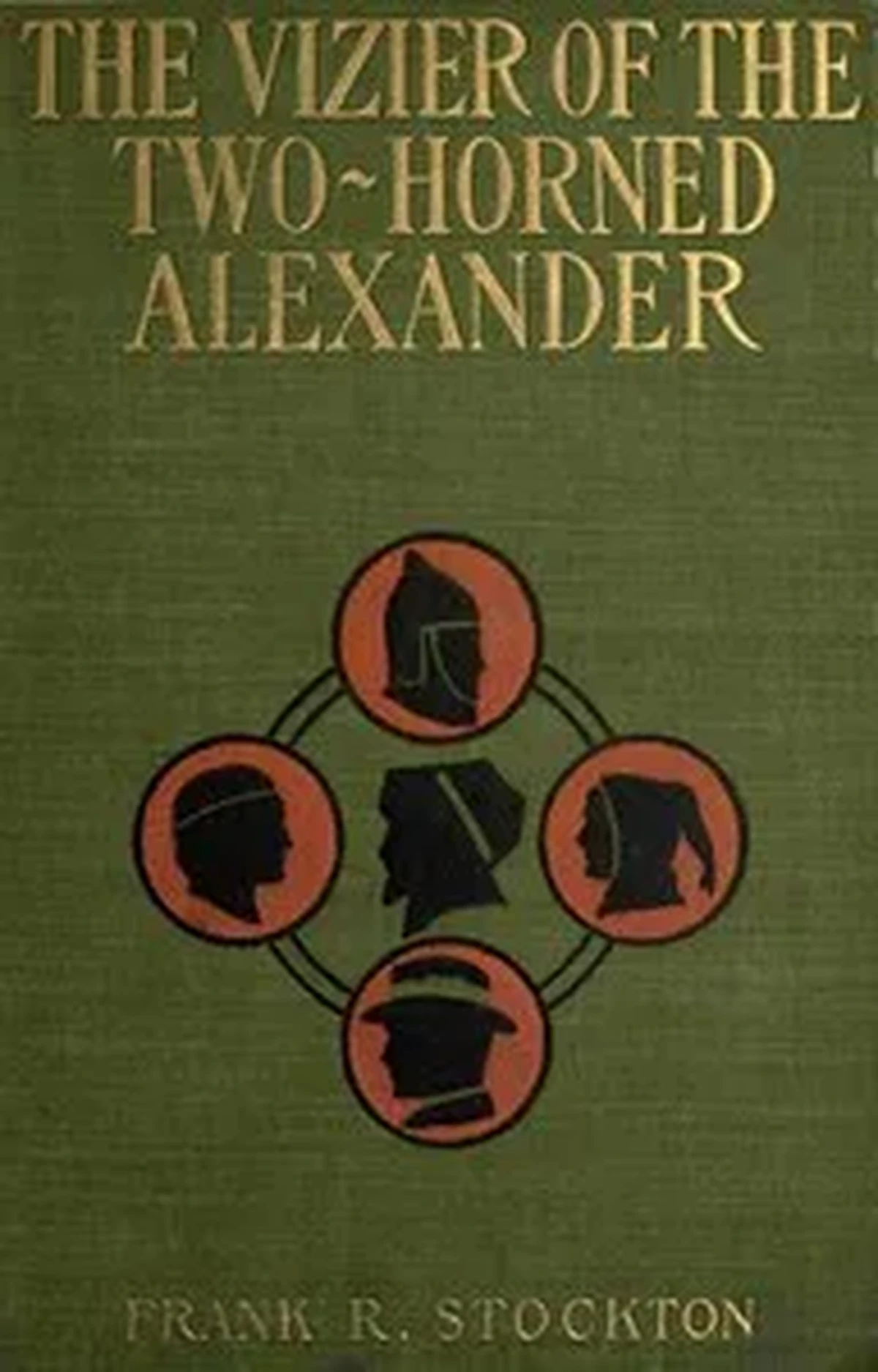
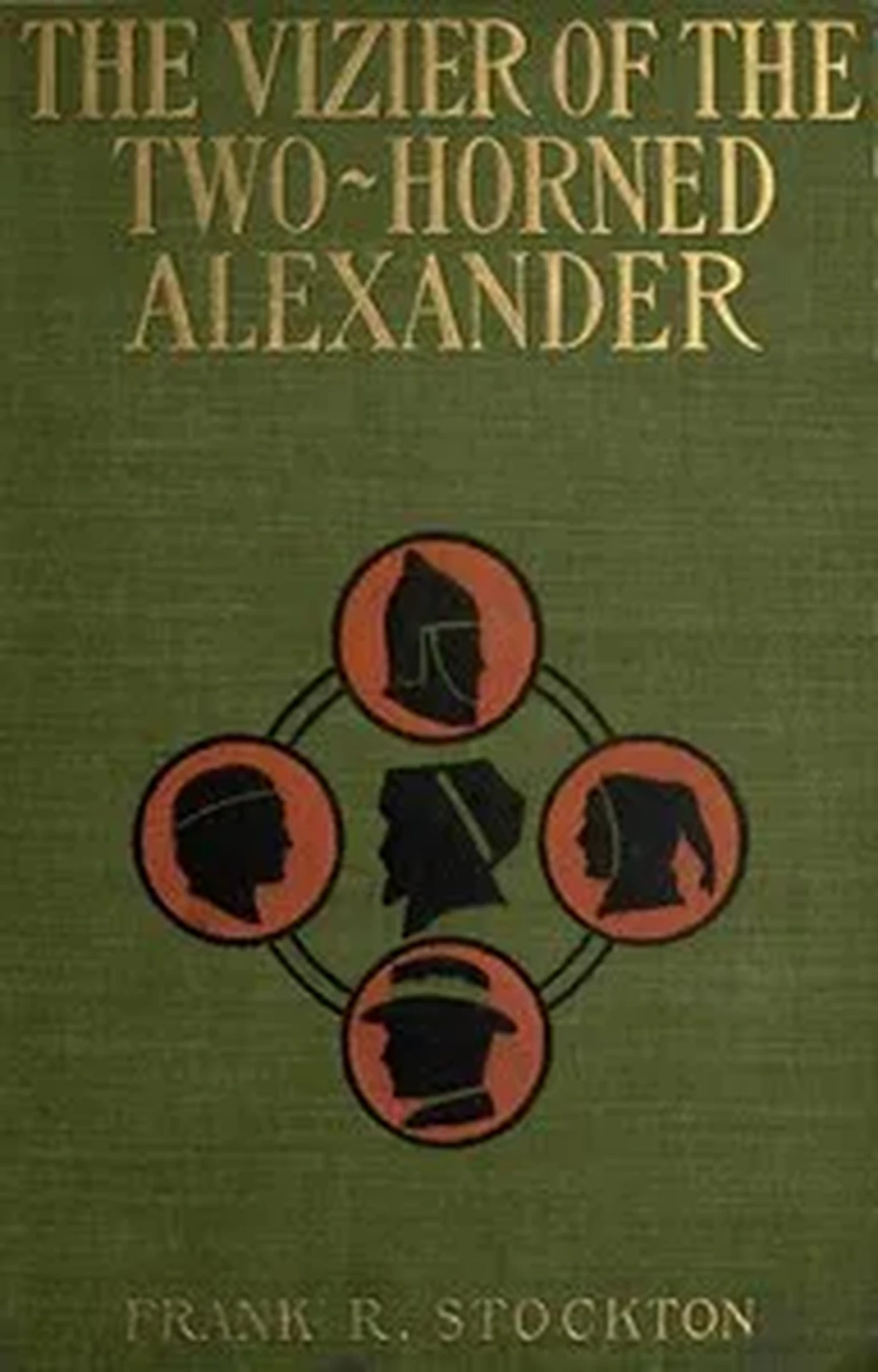
The vizier of the two-horned Alexander
 79
79

The vizier of the two-horned Alexander
Stockton’s “The Vizier of the Two-Horned Alexander” presents a peculiar, almost dryly humorous, recounting of fantastical events from the perspective of a supposed ancient vizier. The strength of the book lies in its audacious premise: a fictionalized confession of an advisor to Alexander the Great, incorporating elements of Islamic folklore and mythology. Stockton masterfully employs a detached narrative voice, making the extraordinary seem mundane, which is where the story’s unique charm resides. However, the book’s slow pacing and the somewhat archaic prose, characteristic of its 1899 publication, might present a hurdle for contemporary readers accustomed to more dynamic storytelling.
A particularly striking passage involves the vizier’s description of a conversation with a talking bird that offers cryptic advice, a moment that encapsulates the blend of the surreal and the historical. The limitation, perhaps, is the lack of overt esoteric doctrine, with the mysticism remaining largely atmospheric rather than didactic. Nevertheless, it offers a fascinating glimpse into late Victorian speculative fiction’s engagement with classical antiquity and legend.
Read more ↓
Stockton offers a subtle, engaging, and historically imaginative read for those willing to embrace its particular cadence.
📝 Description
79
### What It Is
Frank R. Stockton's "The Vizier of the Two-Horned Alexander," first published in 1899, is a curious fictional narrative framed as a historical account. It purports to be the confession of a vizier who claims to have served a ruler identified with Alexander the Great. The tale unfolds as the vizier recounts his encounters with supernatural and fantastical elements, all presented with a dry, matter-of-fact tone that belies the extraordinary nature of the events.
### Who It's For
This work is suited for readers who appreciate historical fiction with a speculative edge, particularly those interested in how later eras imagined ancient figures and their legends. It appeals to those who enjoy subtle fantasy woven into seemingly realistic settings and who are not deterred by the prose style of the late 19th century. Readers seeking allegorical depth or philosophical musings will find ample material.
### Historical Context
The late Victorian era was a period of intense interest in both ancient history and the burgeoning fields of archaeology and comparative mythology. Authors often engaged with classical figures, reinterpreting them through contemporary lenses. Stockton's work, while fictional, taps into this cultural fascination, blending historical allusion with imaginative storytelling. The late 1890s saw a surge in popular literature that explored exotic locales and ancient mysteries.
### Key Concepts
The narrative centers on the vizier's claimed audience with the "Two-Horned Alexander," a title often associated with Alexander the Great in Islamic tradition, particularly in the Quran. The vizier's journey involves encounters with jinn, magical artifacts, and mythical beasts, blurring the lines between historical possibility and folkloric invention. The work explores themes of destiny, the nature of rulership, and the subjective experience of history, all filtered through the vizier's unique perspective.
💡 Why Read This Book?
• Gain insight into the late 19th-century fascination with classical antiquity and its intersection with folklore, specifically through Stockton's imaginative portrayal of Alexander the Great's purported vizier in "The Vizier of the Two-Horned Alexander." • Experience a unique narrative voice that presents fantastical encounters, such as those with jinn and mythical creatures, with a disarming matter-of-factness, challenging conventional perceptions of historical accounts. • Explore the concept of the "Two-Horned Alexander," a title with roots in Islamic tradition (specifically the Quran), and how Stockton integrates this into a fictionalized historical confession.
⭐ Reader Reviews
Honest opinions from readers who have explored this book.
❓ Frequently Asked Questions
What is the "Two-Horned Alexander" mentioned in the book?
The "Two-Horned Alexander" is a title often associated with Alexander the Great, particularly in Islamic tradition and the Quran. Stockton uses this appellation to frame his narrative, drawing on these historical and religious associations.
When was "The Vizier of the Two-Horned Alexander" originally published?
The book was first published in 1899, placing it within the late Victorian era of literature.
Does the book contain verifiable historical facts about Alexander the Great?
While inspired by the legend of Alexander the Great and incorporating the title "Two-Horned Alexander," the narrative is a work of fiction. It blends historical allusion with fantastical elements rather than presenting factual biography.
What kind of tone does Frank R. Stockton use in this book?
Stockton employs a notably dry and matter-of-fact tone, even when describing extraordinary or supernatural events. This deadpan delivery is a key stylistic element of the book.
Is this book related to any specific esoteric traditions?
While not overtly tied to a single doctrine, the book draws on elements of folklore, mythology, and speculative history that often intersect with broader esoteric interests in ancient wisdom and hidden narratives.
What are some of the supernatural elements present in the story?
The vizier recounts encounters with jinn, mythical creatures, and other fantastical beings. These elements are woven into the narrative as if they were ordinary occurrences.
🔮 Key Themes & Symbolism
The Vizier's Perspective
The narrative is entirely filtered through the voice of the vizier, presenting his purported life experiences serving the "Two-Horned Alexander." This first-person account allows Stockton to explore themes of memory, truth, and the subjective nature of history. The vizier's calm recounting of miraculous events, such as conversing with mythical beasts or interacting with supernatural entities, highlights the potential for the extraordinary to become commonplace in one's personal history.
Mythological Blending
Stockton skillfully merges classical allusions to Alexander the Great with elements drawn from Islamic folklore, particularly the Quranic reference to Alexander as "Dhu al-Qarnayn" (the Two-Horned One). This fusion creates a unique literary landscape where historical figures and legendary beings, like jinn, coexist. The work examines how different cultural narratives can be interwoven to create new mythic interpretations.
The Nature of Power and Rule
Through the vizier's observations, the book touches upon the responsibilities and perceptions associated with great rulers. The vizier's service to Alexander, a figure of immense historical and legendary power, provides a backdrop for contemplating leadership, destiny, and the impact of a ruler's actions. The supernatural encounters can be interpreted as metaphors for the unique challenges and influences faced by those in positions of ultimate authority.
Speculative History
Written in 1899, the book reflects a late Victorian interest in reimagining the past through fiction. It treats historical figures and events as fertile ground for imaginative exploration, adding layers of myth and fantasy. The narrative functions as a piece of speculative history, posing 'what if' scenarios regarding Alexander's life and encounters, particularly those that might have occurred beyond conventional historical records.
💬 Memorable Quotes
“He was a man who would have made a great king, if he had lived in a less remarkable age.”
— This statement, likely a paraphrase of a sentiment within the text, suggests a commentary on the protagonist's character and the unusual circumstances of his life, hinting at a destiny or potential that transcended ordinary historical contexts.
“I had seen the Queen of the Fairies, and I had seen the King of the Jinn.”
— This declaration by the vizier signifies his direct encounters with supernatural or mythical beings, framing his life not just as a historical record but as an intersection with the unseen realms often explored in esoteric literature.
“The old man sat on the rocks and told me a story.”
— This simple phrasing introduces a narrative within a narrative, a common storytelling device. It suggests the transmission of wisdom or lore from an elder figure, potentially representing an ancient source of knowledge or a mythic encounter.
“It is the fate of men to be carried along by the current of events.”
— This reflects a deterministic view, suggesting that individual agency might be limited by larger forces or destiny. It's a philosophical observation on the human condition, particularly relevant in the context of a life as extraordinary as the vizier's.
“I have often thought that the great events of the world are brought about by small means.”
— This quote points to the idea that significant historical or cosmic shifts can originate from seemingly minor causes or individuals. It suggests a subtle interconnectedness of events and a hidden causality that is often overlooked.
🌙 Esoteric Significance
Tradition
The work draws loosely from traditions that engage with legendary historical figures and their purported encounters with the supernatural. While not strictly Hermetic or Gnostic, it aligns with a broader esoteric interest in exploring hidden histories and mythological layers behind historical events, particularly those concerning figures like Alexander the Great, who has accrued significant legendary status across cultures.
Symbolism
The "Two-Horned" aspect of Alexander is a key symbol, referencing his dual nature or cosmic authority as depicted in certain Islamic traditions. Jinn, beings from Islamic mythology, symbolize the unseen forces and elemental powers that can influence human affairs. The vizier's own role represents wisdom and counsel, a human element attempting to understand and navigate these powerful, often mystical, forces.
Modern Relevance
Contemporary writers and esotericists interested in the syncretic blending of historical legends and mythological narratives may find Stockton's approach valuable. It serves as an example of how late 19th-century authors engaged with cross-cultural mythologies, a practice that resonates with modern explorations of comparative religion and the archetypal significance of historical figures.
👥 Who Should Read This Book
• Students of late Victorian literature interested in how authors engaged with classical history and folklore. • Readers of speculative fiction who enjoy narratives that blend historical settings with fantastical elements and mythological allusions. • Those curious about the legend of Alexander the Great beyond conventional historical accounts, particularly the "Two-Horned Alexander" tradition.
📜 Historical Context
Published in 1899, "The Vizier of the Two-Horned Alexander" emerged during a period of intense late Victorian interest in ancient civilizations and mythologies. This era saw figures like Helena Blavatsky popularizing Theosophy, influencing a broader cultural fascination with esoteric knowledge and reinterpreted ancient histories. Authors frequently engaged with classical figures, producing works that blended scholarship with imaginative fiction, often drawing from comparative mythology and folklore studies that were gaining academic traction. Contemporaries like H. Rider Haggard explored similar themes of ancient wonders and lost worlds in novels such as "King Solomon's Mines" (1885). Stockton's work, while less overtly spiritual than Blavatsky's, taps into this zeitgeist by re-imagining Alexander the Great through a lens informed by Islamic tradition and folkloric embellishments, presenting a narrative that sits between historical fiction and speculative legend.
📔 Journal Prompts
The vizier's claim to have served the Two-Horned Alexander: how does this framing alter your perception of historical accounts?
Reflect on the vizier's matter-of-fact description of supernatural encounters; what does this stylistic choice suggest about the nature of belief?
Consider the blending of classical history with Islamic folklore in the narrative; what other historical figures lend themselves to such cross-cultural mythologizing?
Analyze the vizier's role as a counselor; what challenges might arise when advising a figure associated with immense power and legend?
Explore the concept of 'small means' leading to 'great events' as mentioned by the vizier; how might this apply to your own life or historical understanding?
🗂️ Glossary
Vizier
A high-ranking political advisor or minister in historical Islamic governments. In this context, the vizier serves as the narrator, recounting his experiences.
Two-Horned Alexander
An appellation for Alexander the Great, particularly prominent in Islamic tradition and the Quran (as Dhu al-Qarnayn). It signifies a figure of immense power and divine favor, often depicted with horns.
Jinn
Supernatural creatures from Arabian and Islamic mythology, believed to inhabit the world alongside humans. They can be benevolent, malevolent, or neutral, and possess various powers.
Folklore
The traditions, beliefs, customs, stories, and expressions of a community, passed down through generations, often orally. Stockton incorporates folkloric elements into his narrative.
Late Victorian Era
The period in British history roughly from 1870 to 1901, marked by significant social, technological, and intellectual changes, including a rise in interest in spiritualism and esoteric subjects.
Speculative Fiction
A broad genre of fiction that often deals with fantastical or futuristic premises, including themes of the supernatural, alternate history, and mythology. Stockton's work falls into this category.
Comparative Mythology
The study and comparison of myths and legends from different cultures and civilizations to understand their commonalities and differences.