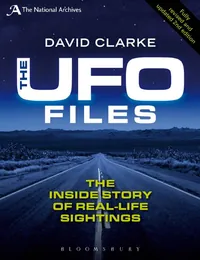
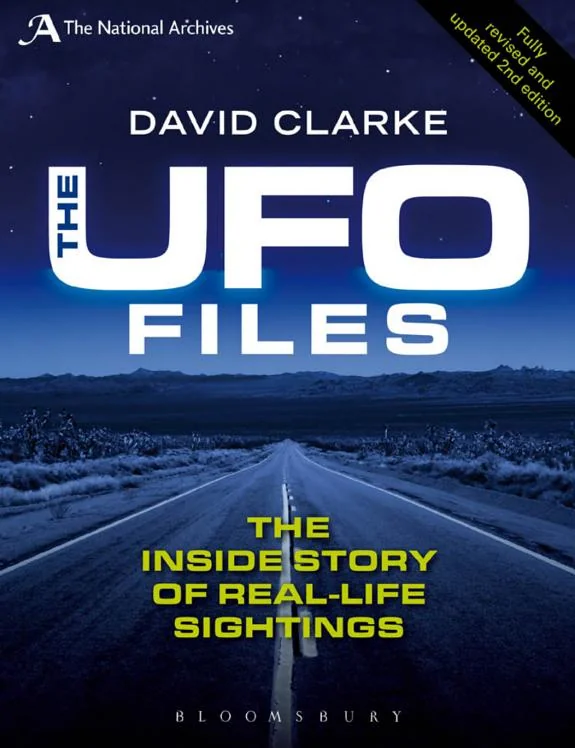
The UFO files
 78
78

The UFO files
David Clarke’s The UFO Files presents a meticulous, almost forensic, examination of Britain’s official engagement with unidentified aerial phenomena. Rather than sensationalism, Clarke offers a dispassionate cataloguing of declassified Ministry of Defence documents and witness accounts, particularly those from the 1970s and 1980s. A notable strength is the detailed breakdown of MoD file content, showing precisely what information was collected and, crucially, why it was often dismissed or categorized away from public view. One limitation is that the sheer volume of documentation, while comprehensive, can occasionally feel overwhelming, demanding a dedicated reader. The chapter detailing the Rendlesham Forest incident, while not new, benefits from the contextualization of its release within broader MoD disclosure policies. Clarke avoids speculative leaps, grounding his narrative in the verifiable facts presented within the files themselves. The work stands as a significant archival resource for understanding governmental handling of the unexplained.
📝 Description
78
### What It Is
The UFO Files is a collection of declassified documents, witness testimonies, and government reports concerning unidentified aerial phenomena. David Clarke, a journalist and researcher, compiles this material to present a comprehensive overview of the UK's engagement with the UFO question. The book moves beyond speculative narratives to examine official responses and the slow release of information by bodies such as the Ministry of Defence (MoD).
### Who It's For
This work is for serious researchers, investigators, and anyone seeking a factual account of how governments have handled UFO sightings. It appeals to those interested in bureaucratic processes, the history of science and belief, and the public perception of unexplained aerial events. It is particularly relevant for those focusing on the British context of UFO investigations.
### Historical Context
The publication of The UFO Files in 2009 occurred during a period of increased transparency regarding government UFO documentation worldwide. Following the US Freedom of Information Act, the UK MoD also began releasing substantial archives. Clarke's work sits within this broader trend of declassification, offering a curated look at the British experience, which often differed in its official approach from that of the United States.
### Key Concepts
Central to The UFO Files is the concept of bureaucratic obfuscation and the eventual, often reluctant, disclosure of information. Clarke examines the MoD's long-standing policy of not investigating UFOs, despite accumulating evidence. The book highlights the role of public pressure and media attention in prompting the release of files, revealing a pattern of official denial followed by gradual, partial admission.
💡 Why Read This Book?
• Understand the bureaucratic processes behind government UFO investigations, particularly the UK Ministry of Defence's decades-long stance, as detailed in the file summaries from the 1970s and 1980s. • Gain insight into the public release of classified information, learning how public pressure and the Freedom of Information Act influenced the declassification of specific UFO reports. • Analyze the official categorization of unexplained aerial phenomena, discerning the patterns of dismissal and non-investigation evident in the MoD's documented responses.
⭐ Reader Reviews
Honest opinions from readers who have explored this book.
❓ Frequently Asked Questions
What is the primary focus of David Clarke's 'The UFO Files' regarding UK government involvement?
The book primarily focuses on the declassified documents and official responses from the UK Ministry of Defence (MoD) concerning unidentified aerial phenomena, detailing their long-standing policy of non-investigation and eventual disclosure.
When was 'The UFO Files' first published and what is its significance?
First published in 2009, 'The UFO Files' is significant for compiling and analyzing official UK government documents released under freedom of information requests, offering a structured overview of the nation's UFO history.
Does 'The UFO Files' offer concrete evidence of alien visitation?
No, the book focuses on presenting declassified official documents and witness testimonies without making definitive claims about the nature of the phenomena, instead detailing the government's reactions and classifications.
What historical period does 'The UFO Files' primarily cover?
While touching on various decades, the book places significant emphasis on the documents and records from the mid-to-late 20th century, particularly the period when UFO sightings became a notable public and governmental concern.
Who is David Clarke and what is his background relevant to this book?
David Clarke is a journalist and researcher specializing in UFOs and paranormal phenomena. His background lends credibility to his methodical approach in compiling and analyzing official records for 'The UFO Files'.
How does 'The UFO Files' compare to US government UFO literature?
The book offers a distinct perspective on the UK's official approach, which historically differed from that of the United States, highlighting unique bureaucratic processes and disclosure timelines within the British context.
🔮 Key Themes & Symbolism
Bureaucratic Non-Investigation
A central theme in The UFO Files is the Ministry of Defence's persistent policy of stating it does not investigate UFOs. Clarke meticulously documents how, despite accumulating reports and witness accounts, the official stance remained one of non-involvement, often citing lack of resources or the phenomena being unthreatening. This theme is explored through the analysis of internal memos and directives within the declassified files, illustrating the institutional inertia that characterized the UK government's approach to the subject for decades. The book reveals the internal justifications for this non-investigative stance, contrasting it with the public's persistent interest and the sheer volume of reported sightings.
Information Disclosure and Control
The book details the slow and often reluctant process of information disclosure concerning UFOs in the UK. Clarke highlights how freedom of information requests and public pressure gradually led to the release of previously classified Ministry of Defence files. The work examines the strategies employed to control the release of information, including redaction of sensitive details and the categorization of sightings into mundane explanations, even when official records suggest otherwise. This theme underscores the tension between governmental secrecy and the public's right to know, as evidenced by the content and release history of the documents presented.
Witness Testimony and Official Records
The UFO Files juxtaposes raw witness testimonies with the official records created by government bodies. Clarke presents compelling accounts from individuals who observed unexplained aerial phenomena, alongside the subsequent reports and assessments made by military and civilian officials. This juxtaposition allows readers to evaluate the reliability of different sources and understand how official narratives were constructed, often downplaying or reinterpreting eyewitness accounts. The book demonstrates how the official record, even when intended to demystify, can sometimes raise more questions about the handling of credible reports.
The British UFO Phenomenon
Focusing specifically on the UK, this theme examines the unique characteristics of UFO sightings and governmental responses within Britain. Clarke's compilation reveals patterns distinct to the British Isles, including specific geographical hotspots for sightings and the particular terminology and bureaucratic channels used by the MoD. The work provides a contextualized history of the UFO phenomenon in Britain, distinct from its American counterpart, by presenting a curated selection of files that illustrate the national narrative and official engagement with these events.
💬 Memorable Quotes
“The Ministry of Defence states that it does not investigate UFOs.”
— This quote encapsulates the core official position documented extensively in the book. It highlights the consistent bureaucratic stance that, regardless of the volume or nature of sightings, active investigation was not part of the MoD's mandate, forming a key point of analysis.
“Details of the reports were often redacted or explained away.”
— This paraphrase reflects the common practice observed in declassified files where specific information was obscured or given mundane explanations, suggesting an effort to manage public perception and limit the implications of the reported phenomena.
“Public interest and FOI requests drove the release of many files.”
— This interpretation points to the mechanism by which much of the information in the book became available. It emphasizes the role of external pressures, like public curiosity and formal information requests, in overcoming governmental reluctance to disclose.
“The MoD maintained that UFOs posed no threat to national security.”
— This reflects a recurring justification within the documents for not pursuing investigations. By framing the phenomena as non-threatening, the Ministry could further deprioritize the need for in-depth official inquiry.
“The files reveal a consistent pattern of official disinterest.”
— This summarizes the overarching narrative found within the compiled documents. Clarke's work demonstrates that, despite individual reports, the institutional attitude towards UFOs remained largely one of disinterest or dismissal.
🌙 Esoteric Significance
Tradition
While not overtly aligned with a specific esoteric tradition like Hermeticism or Gnosticism, The UFO Files touches upon themes relevant to modern occultism and ufology as a sub-genre of esoteric inquiry. The systematic collection and analysis of anomalous phenomena, coupled with an examination of governmental secrecy and hidden knowledge, echoes concerns found in conspiracy theories and certain branches of esoteric thought that posit hidden forces influencing global events. It engages with the 'mystery' aspect that often draws individuals to esoteric studies, presenting a real-world case study of the unknown.
Symbolism
The primary 'symbol' explored is the UFO itself, which functions as a potent symbol of the unknown, the technologically advanced 'other,' and a challenge to established scientific and governmental paradigms. Declassified documents act as a secondary motif, symbolizing hidden truths and the potential for revelation. The very act of declassification can be seen as a symbolic opening, a crack in the edifice of secrecy, suggesting that what is hidden may eventually come to light, aligning with esoteric principles of unveiling.
Modern Relevance
Contemporary thinkers and researchers in fields ranging from ufology to critical conspiracy studies draw heavily on the type of archival work presented in The UFO Files. It informs discussions on government transparency, the psychology of belief, and the potential for non-human intelligence. Modern esoteric communities, particularly those incorporating ufological elements, utilize such declassified materials to support narratives of extraterrestrial contact, government cover-ups, and hidden agendas, treating the documents as evidence in a larger, ongoing cosmic drama.
👥 Who Should Read This Book
• Researchers of military history and governmental transparency, seeking to understand how official bodies have handled unexplained phenomena and managed public information flow. • Enthusiasts of UFOlogy and anomalous phenomena, who desire a factual, document-driven account of the UK's official engagement with the subject. • Students of modern history and sociology, interested in the interplay between public perception, media, and state bureaucracy regarding controversial topics.
📜 Historical Context
Published in 2009, David Clarke's The UFO Files emerged during a global surge in the declassification of government documents related to unidentified aerial phenomena. This period saw increased transparency, partly influenced by the US Freedom of Information Act and similar initiatives worldwide. The UK Ministry of Defence (MoD), which had long maintained a policy of not investigating UFOs, began releasing substantial archives of its historical UFO files. Clarke’s work is significant for consolidating and analyzing these releases, offering a British perspective that often contrasted with the more public-facing programs in the United States. While figures like J. Allen Hynek were prominent in the US, influencing scientific study, the UK's approach, as detailed by Clarke, was characterized by bureaucratic detachment and a focus on potential threats to air defence rather than the nature of the phenomena itself. The reception of these files was largely academic and investigative, with a growing community of researchers examining the implications of decades of official silence and eventual disclosure.
📔 Journal Prompts
The Ministry of Defence's stated non-investigation policy: Analyze its implications.
Bureaucratic categorization of sightings: How does it shape perception?
The impact of FOI requests on government transparency regarding UFOs.
Witness testimony versus official record: Identify discrepancies.
The symbol of the UFO in the context of governmental secrecy.
🗂️ Glossary
Unidentified Aerial Phenomena (UAP)
A modern term for objects or phenomena observed in the sky that cannot be readily identified. It is often used by official bodies as a more neutral descriptor than 'UFO'.
Ministry of Defence (MoD)
The government department responsible for the armed forces and defence in the United Kingdom. In the context of UFOs, its historical role was to monitor and catalogue reports.
Declassified Documents
Official government papers that were once classified or secret but have been released to the public, often through freedom of information legislation.
Freedom of Information Act (FOI)
Legislation that grants the public the right to access information held by public bodies. This act has been instrumental in the release of many UFO-related government files.
Witness Testimony
First-hand accounts provided by individuals who claim to have observed an event or phenomenon, such as a UFO sighting.
Official Record
The documentation and assessments produced by government agencies or military personnel regarding reported incidents, often distinct from original witness accounts.
Redaction
The process of blacking out or removing sensitive or classified information from documents before they are released to the public.