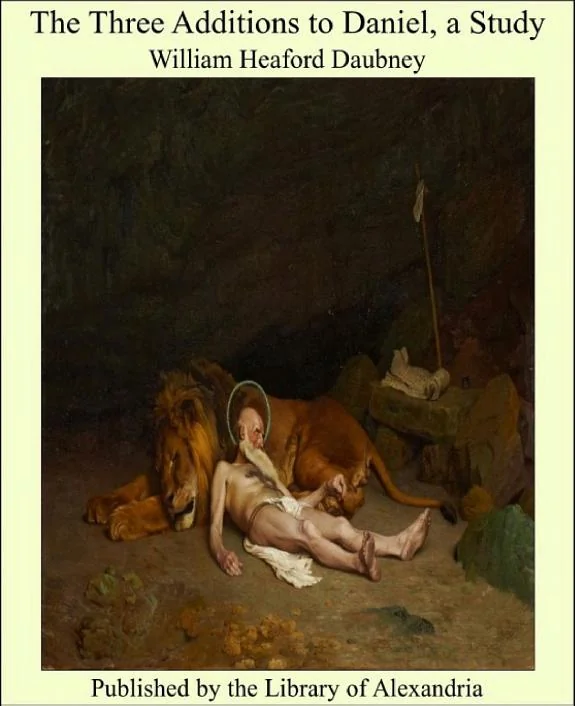
The Three Additions to Daniel, a Study
 80
80

The Three Additions to Daniel, a Study
William Heaford Daubney's "The Three Additions to Daniel, a Study" offers a commendable, if somewhat dry, dissection of apocryphal texts. The strength of this work lies in its rigorous textual analysis, meticulously comparing versions of Susanna, Bel and the Dragon, and the Prayer of Azariah. Daubney's dedication to historical criticism, particularly his engagement with the Septuagintal versions of Daniel, provides a solid foundation for understanding these often-overlooked biblical expansions. However, the book’s academic tone, while appropriate for its subject, can make for dense reading. A notable passage is the detailed examination of the legal intricacies within the story of Susanna, highlighting its narrative function and thematic concerns. While the work provides valuable insights into textual transmission and early Christian interpretation, its lack of broader engagement with later mystical or esoteric interpretations limits its appeal to a purely academic audience. It is a scholarly resource for those focused on textual history.
📝 Description
80
### What It Is
The Three Additions to Daniel, a Study, by William Heaford Daubney, is an academic examination of apocryphal biblical texts. It focuses specifically on the additions to the Book of Daniel found in the Septuagint and the Vulgate, texts that were not included in the Hebrew Bible. Daubney's work analyzes these additions, often referred to as Susanna, Bel and the Dragon, and the Prayer of Azariah and Song of the Three Holy Children, from a critical and historical perspective. The book scrutinizes their textual variations, literary merits, and theological implications within the broader context of ancient Jewish literature.
### Who It's For
This text is primarily for scholars, theologians, and serious students of biblical studies, particularly those interested in the Deuterocanonical books or Apocrypha. It will appeal to readers who seek a detailed, scholarly approach to texts that lie outside the standard Protestant canon. Individuals engaged in comparative religious studies or those researching the evolution of religious narratives and their textual transmission will find Daubney's meticulous analysis valuable. It is not a devotional text but a work of academic inquiry.
### Historical Context
Daubney's study emerges from a period of intense biblical scholarship in the late 19th and early 20th centuries, a time when critical methods were being rigorously applied to ancient texts. Scholars were actively debating the origins, authorship, and historical accuracy of biblical books, including those considered apocryphal. This era saw the rise of historical-critical methods influenced by figures like Julius Wellhausen and the development of source criticism. Daubney's work contributes to this scholarly conversation by offering a detailed examination of specific texts that often received less attention than the core books of the Old Testament. The reception of these texts varied widely, with some Christian traditions incorporating them into their Bibles while others excluded them, leading to ongoing theological and textual debates.
### Key Concepts
The book delves into the concept of textual criticism, exploring how variations between different manuscript traditions (like the Septuagint versus the Masoretic Text) affect our understanding of ancient religious narratives. It examines the literary genres present in the additions, such as the wisdom traditions and apocalyptic elements, and how these function within the narrative structure. Daubney also addresses the theological development within these texts, considering how they reflect evolving understandings of divine justice, intercession, and the role of prophets. The historical development and canonization of these texts are also central, tracing their inclusion or exclusion from various scriptural canons throughout history.
💡 Why Read This Book?
• Understand the textual variations of Daniel by examining the Septuagintal additions like "Bel and the Dragon," gaining insight into how different manuscript traditions shape narrative and theology. • Explore the historical-critical method applied to apocryphal texts, learning how scholars in the late 19th and early 20th centuries approached these works with specific analytical tools. • Appreciate the theological development within early Jewish literature by analyzing the "Prayer of Azariah," understanding its contribution to concepts of intercession and divine favor beyond the standard canon.
⭐ Reader Reviews
Honest opinions from readers who have explored this book.
❓ Frequently Asked Questions
What specific biblical texts does Daubney's "The Three Additions to Daniel" focus on?
The book concentrates on the "Additions to Daniel," specifically the stories of Susanna, Bel and the Dragon, and the Prayer of Azariah and Song of the Three Holy Children. These are texts found in the Septuagint and Vulgate but absent from the Hebrew Bible.
What is the primary scholarly approach taken in this study?
Daubney employs a historical-critical method. This involves examining the texts' origins, literary structure, textual variations across different versions (like the Septuagint), and theological content from a scholarly, historical perspective.
When was "The Three Additions to Daniel, a Study" likely published?
Based on the scholarly context described, the book likely emerged from the late 19th or early 20th century, a peak period for critical biblical scholarship.
Are these "Additions to Daniel" considered canonical?
Their canonical status varies. They are part of the Deuterocanonical books for Catholic and Orthodox Christians but are considered apocryphal by Protestants and Jews. Daubney's study treats them as important historical and literary texts regardless of canonical status.
Does the book discuss the mystical interpretations of these texts?
The primary focus is on historical and textual criticism. While it lays groundwork for understanding the texts, it does not extensively explore later mystical or esoteric interpretations that may have arisen.
Who would benefit most from reading Daubney's "The Three Additions to Daniel"?
Students of biblical studies, comparative religion, theology, and textual criticism will find this work most beneficial due to its in-depth academic analysis of these specific apocryphal narratives.
🔮 Key Themes & Symbolism
Textual Criticism and Canon
This work is fundamentally about the critical examination of texts that exist in multiple versions and canonical statuses. Daubney meticulously traces the textual lineage of the "Additions to Daniel," particularly highlighting discrepancies between the Septuagint, Vulgate, and the Hebrew Bible. This process underscores how textual variants can influence theological interpretation and demonstrates the historical debates surrounding which texts were accepted as authoritative scripture by different religious communities throughout history.
Literary and Narrative Analysis
Beyond mere textual comparison, Daubney delves into the literary qualities of Susanna, Bel and the Dragon, and the Prayer of Azariah. He analyzes their narrative structures, character development (or lack thereof), and thematic concerns, such as divine justice, wisdom, and persecution. The study positions these narratives within the broader landscape of ancient Jewish literature, exploring their genre conventions and storytelling techniques.
Theological Interpretation
The book explores the theological messages embedded within these apocryphal additions. It examines how they present concepts of God's intervention, the vindication of the righteous, and the nature of wisdom in ways that both complement and, at times, diverge from the core Book of Daniel. Daubney analyzes how these texts reflect evolving theological currents within Second Temple Judaism and early Christianity.
Historical Contextualization
A significant aspect of Daubney's study is placing the "Additions to Daniel" within their historical milieu. This involves understanding the socio-religious environment in which they were likely composed and circulated, and how they were received by various communities. The work implicitly engages with the historical debates of the late 19th and early 20th centuries regarding biblical authenticity and textual development.
💬 Memorable Quotes
“The Septuagintal additions to Daniel present narratives distinct from the Hebrew canonical text.”
— This paraphrased concept highlights the core subject of Daubney's work: the examination of biblical texts (Susanna, Bel and the Dragon, Prayer of Azariah) that exist in different forms and canonical inclusions depending on the textual tradition, emphasizing their unique literary and theological contributions.
“Analysis of textual variants reveals shifts in theological emphasis.”
— This interpretation points to Daubney's method of comparing different manuscript versions of the Additions to Daniel. It suggests that even minor textual differences can significantly alter the perceived message or theological focus of a passage, a key aspect of his critical approach.
“The Prayer of Azariah functions as a hymn of intercession and divine trust.”
— This paraphrase captures a thematic element Daubney likely explores within the "Prayer of Azariah." It emphasizes the text's role not just as a narrative element but as a devotional expression of faith and reliance on God's mercy, particularly in times of tribulation.
“Canonization debates influenced the scholarly reception of these texts.”
— This concept reflects the historical context Daubney operates within. It acknowledges that the differing canonical status of these additions across various Christian traditions significantly shaped how scholars approached and interpreted them over centuries.
“Literary structure informs the theological purpose of the narratives.”
— This interpretation suggests Daubney connects the way stories like Susanna or Bel and the Dragon are constructed to their underlying religious or moral messages. The arrangement of plot, characters, and dialogue serves to convey specific theological points.
🌙 Esoteric Significance
Tradition
While Daubney's work is primarily historical-critical, it touches upon traditions that later informed esoteric interpretations. The "Additions to Daniel" themselves, particularly the "Prayer of Azariah and Song of the Three Holy Children," contain elements of mystical prayer and divine revelation that resonate with Gnostic and Hermetic traditions emphasizing direct communion with the divine and hidden knowledge. The book's focus on textual variations also aligns with esoteric practices that seek deeper, hidden meanings within sacred texts, suggesting that canonical exclusion does not negate spiritual significance.
Symbolism
The "Prayer of Azariah and Song of the Three Holy Children" is rich with symbolism relevant to esoteric thought. The fiery furnace symbolizes trials and purification, a common motif in alchemical and mystical traditions representing transformation through hardship. The presence of the "fourth man" in the furnace (often interpreted as an angel or divine presence) signifies divine protection and the immanent nature of the sacred even amidst destruction. Bel and the Dragon offers symbolic critiques of idolatry, a theme explored in various mystical paths that seek to move beyond material representations to a direct experience of the divine.
Modern Relevance
Contemporary esoteric practitioners and scholars often revisit apocryphal texts for their unique perspectives on spirituality and the divine. While Daubney focuses on historical criticism, his detailed analysis of these additions provides a foundation for those seeking alternative theological narratives. Modern Gnostic revivalists, Hermetic students, and comparative religion scholars may draw upon his work to understand the textual and historical context of these scriptures, which offer different views on divine intervention, angelic beings, and the nature of wisdom than those found in the more commonly cited biblical texts.
👥 Who Should Read This Book
• Students of Biblical Studies and Apocrypha: Those seeking a detailed, scholarly examination of texts like "Susanna" and "Bel and the Dragon" beyond their canonical status. • Comparative Religion Researchers: Individuals interested in the diversity of ancient Jewish and early Christian literature and how different traditions interpreted sacred narratives. • Textual Critics and Historians: Scholars focused on the methods of analyzing ancient manuscripts, tracing textual evolution, and understanding the historical context of religious writings.
📜 Historical Context
William Heaford Daubney's "The Three Additions to Daniel, a Study" emerges from the fertile ground of late 19th and early 20th-century biblical scholarship. This era was characterized by the ascendance of historical-critical methods, championed by scholars who sought to understand ancient texts through rigorous analysis of their historical origins, literary development, and textual transmission. The work engages with a landscape where the authenticity and composition of biblical books were subjects of intense debate, influenced by figures like Julius Wellhausen. Daubney’s focus on the apocryphal additions to Daniel places his study within the ongoing discourse surrounding the canon of scripture. While the Protestant Reformation had largely excluded these texts, Catholic and Orthodox traditions retained them as Deuterocanonical. Daubney's meticulous examination contributes to a scholarly effort to understand these texts on their own merits, irrespective of their fluctuating canonical status, engaging with the critical scholarship of contemporaries who were similarly dissecting ancient religious literature.
📔 Journal Prompts
The textual variations of the Septuagintal Daniel, as discussed by Daubney, how might these differences alter theological understanding?
Analyze the narrative function of "Susanna" within its historical-critical framework.
Reflect on the symbolism of the fiery furnace in "The Prayer of Azariah and Song of the Three Holy Children."
Consider the implications of "Bel and the Dragon" for understanding early critiques of idolatry.
How does Daubney's approach to apocryphal texts contrast with purely devotional readings?
🗂️ Glossary
Septuagint
The ancient Greek translation of the Hebrew Bible, dating from the 3rd to 2nd centuries BCE. It includes texts not present in the Hebrew canon, such as the "Additions to Daniel."
Vulgate
The Latin translation of the Bible, primarily produced by St. Jerome in the late 4th and early 5th centuries CE. It also contains the "Additions to Daniel."
Apocrypha
A collection of Jewish books written in the period between the Old and New Testaments, often considered canonical by some Christian denominations (Deuterocanonical) but not by others.
Deuterocanonical
A term used by Catholic and Orthodox Christians to describe books found in their Bibles but not in the Hebrew Bible. Often synonymous with "Apocrypha" for Protestants.
Historical-Critical Method
A scholarly approach to studying religious texts that examines their historical origins, literary development, and textual transmission to understand their meaning and context.
Textual Criticism
The process of analyzing manuscript variations to determine the most likely original wording of a text and to understand its historical development.
Canonization
The process by which a particular set of texts is officially recognized as authoritative scripture within a religious tradition.