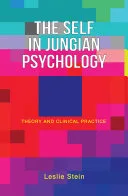
The Self in Jungian Psychology
 76
76

The Self in Jungian Psychology
Leslie Stein’s "The Self in Jungian Psychology" undertakes the formidable task of demystifying Jung’s most elusive concept. Stein’s success lies in the systematic collation of Jung’s scattered pronouncements on the Self, presenting a cohesive, albeit dense, exploration. The book is particularly strong in tracing the evolution of the Self as Jung’s own theoretical framework matured. However, the sheer volume of Jungian theory discussed can sometimes overwhelm the central thesis, making the text less accessible to those new to the field. A notable strength is the detailed analysis of how the Self, as a totality, differs from the ego, a distinction critical for any serious Jungian student. The limitation arises from the abstract nature of the subject, which Stein grapples with admirably but cannot entirely eliminate. For anyone dedicated to understanding the core of Jungian thought, this book offers substantial material, though it demands careful reading and prior familiarity with Jung's broader oeuvre.
📝 Description
76
### What It Is Leslie Stein's "The Self in Jungian Psychology" addresses a central, yet nebulous, concept within Carl Jung's analytical psychology. The Self, as defined by Jung, is not merely the ego but a superordinate totality encompassing consciousness and the unconscious, representing psychic wholeness and the organizing principle of the psyche. This work meticulously examines Jung's extensive writings, aiming to clarify the Self's function as the ultimate goal of individuation and its role in integrating the disparate elements of the personality.
### Who It's For This book is intended for students and practitioners of Jungian psychology, psychoanalysts, depth psychologists, and those interested in the philosophical underpinnings of the psyche. It will appeal to individuals seeking a structured understanding of a concept that Jung himself described as paradoxical and encompassing the mystery of existence. Readers should possess a foundational knowledge of Jungian terminology and concepts to fully appreciate Stein's synthesis.
### Historical Context Carl Jung, a contemporary and later dissenter from Sigmund Freud's psychoanalytic theories, developed the concept of the Self throughout his career, beginning in the early 20th century. His work emerged during a period of intense intellectual ferment in psychology and philosophy, influenced by Gnosticism, alchemy, and Eastern philosophies. While Freud focused on the repressed unconscious and the libido, Jung expanded the scope to include archetypes, the collective unconscious, and the process of individuation, with the Self at its apex. Stein's work revisits this foundational concept, situating it within the broader landscape of psychological thought.
### Key Concepts The book unpacks essential Jungian ideas such as individuation, the archetype of the Self, the relationship between the ego and the Self, and the Self's manifestation through symbols and dreams. It explores how the Self acts as both the source and the goal of psychic development, a unifying center that governs the psyche's movement towards wholeness. The work emphasizes the Self's transcendent quality, acknowledging its inherent mystery while striving to delineate its operational significance in psychological life.
💡 Why Read This Book?
• Gain a clarified understanding of the Self, Jung’s ultimate psychic goal, by examining Stein’s synthesis of Jung’s thousands of statements on the topic, a feat not easily replicated elsewhere. • Grasp the practical implications of the Self’s manifestation by exploring how Stein connects this abstract concept to tangible psychological processes and symbols originating from Jung's 20th-century work. • Appreciate the historical trajectory of Jungian thought by understanding how the Self concept evolved within the context of early 20th-century psychoanalysis, differentiating it from Freudian theories.
⭐ Reader Reviews
Honest opinions from readers who have explored this book.
❓ Frequently Asked Questions
What is the primary difference between the ego and the Self in Jungian psychology as explained by Leslie Stein?
Leslie Stein clarifies that the ego is the center of consciousness, while the Self is the total psyche, encompassing both conscious and unconscious aspects. The Self is the organizing principle and the goal of individuation, transcending the ego's limited perspective.
When was Leslie Stein's 'The Self in Jungian Psychology' first published?
Leslie Stein's 'The Self in Jungian Psychology' was first published on October 15, 2021, making it a contemporary analysis of a foundational Jungian concept.
How does Stein's book help clarify the concept of the Self in Jungian psychology?
The book synthesizes numerous statements made by Carl Jung about the Self, aiming to ground this abstract concept, unravel its purpose, and explore its potential for manifestation within the individual psyche.
Who would benefit most from reading 'The Self in Jungian Psychology'?
Students and practitioners of Jungian psychology, analysts, and individuals interested in the deeper philosophical and psychological aspects of the human psyche will find this work beneficial for understanding a core, yet complex, Jungian idea.
What is individuation according to the framework presented in the book?
Individuation, as explored in the book, is the lifelong psychological process of differentiation of the self, aimed at becoming an individual, and, in the strictest sense, at becoming one's true, integrated self. The Self is seen as both the goal and the driving force of this process.
Does the book discuss the manifestation of the Self?
Yes, a significant focus of the book is dedicated to understanding how the Self, despite its enigmatic nature, might manifest in an individual's psychological life, often through symbolic representations and archetypal patterns.
🔮 Key Themes & Symbolism
The Self as Psychic Totality
This theme centers on Stein's meticulous breakdown of the Self as the overarching organizing principle of the entire psyche, encompassing conscious and unconscious realms. It moves beyond the ego's limited perspective, representing wholeness and the ultimate goal of psychological development. The work details how Jung viewed the Self as a paradox – simultaneously the center and the circumference, the source and the goal of life's journey towards integration. Understanding this concept is crucial for grasping the entirety of Jung's therapeutic aims and his view of human potential.
Individuation and the Self
The book deeply explores the relationship between the Self and the process of individuation. Individuation, in Jungian terms, is the lifelong journey of becoming a whole, integrated individual. Stein elucidates how the Self acts as both the blueprint and the driving force for this process. It is the innate tendency towards psychic completion that guides the individual through the assimilation of unconscious contents and the differentiation of the personality, ultimately leading to a more authentic existence.
Manifestation and Symbolism
A key focus is how the abstract concept of the Self manifests in observable psychological phenomena. Stein examines the symbolic language through which the Self communicates its presence and guidance, often appearing in dreams, fantasies, and archetypal imagery. The work aims to demystify this manifestation, showing how individuals can recognize and engage with the Self's influence, thereby facilitating a deeper connection to their own totality and purpose, as conceptualized within Jung's analytical psychology.
The Self vs. The Ego
Stein’s analysis crucially distinguishes the Self from the ego. While the ego is the center of conscious awareness and identity, the Self is the far greater totality of the psyche. The book details how Jung perceived the ego's role as serving the Self, rather than dominating it. This dynamic is vital for psychological health, as an ego too identified with its own centrality can obstruct the individuation process and hinder the realization of psychic wholeness.
💬 Memorable Quotes
“The Self defines a center of our being that also embraces the mystery of existence.”
— This captures the paradoxical nature of the Self – it is both intimately personal, the core of one's being, and profoundly mysterious, extending beyond rational comprehension into the unknown.
“Realizing the Self is the absolute goal of Jungian psychology.”
— This statement underscores the ultimate aim of Jung's therapeutic approach, positioning the integration of the total psyche as the pinnacle of psychological development and well-being.
“The concept of the Self is impossibly vague.”
— This highlights the inherent difficulty in defining the Self using conventional language, acknowledging its transcendental quality and the limitations of intellectual grasp when attempting to describe psychic totality.
“This work synthesizes the thousands of statements Jung made about the Self.”
— This indicates the book's methodological approach: a comprehensive collation and analysis of Jung's extensive writings to bring clarity to a complex and multifaceted concept.
“To unravel its true purpose, and to understand how it might be able to manifest.”
— This reveals the book's investigative intent – to not only define the Self but to explore its functional role and observable expressions within the human psyche.
🌙 Esoteric Significance
Tradition
The concept of the Self in Jungian psychology draws heavily from esoteric traditions, particularly Gnosticism and Hermeticism, which posit an inner divine spark or totality within the human being. Jung's Self can be seen as a psychological interpretation of the Gnostic 'Monad' or the Hermetic 'All'. It departs from purely rationalistic psychology by acknowledging transcendent, archetypal realities and the potential for spiritual realization through psychological integration, aligning with the Hermetic principle 'As Above, So Below' applied to the psyche.
Symbolism
Key symbols associated with the Self include mandalas, the wise old man/woman, the divine child, and geometric perfection. The mandala, a frequently observed symbol in dreams and art, represents psychic totality and the ordering principle of the Self. Archetypal figures like the divine child embody potential and the nascent Self, while the wise elder signifies accumulated wisdom and the integrated Self. These symbols act as direct manifestations of the Self's presence and guidance, bridging the gap between the conscious ego and the unconscious totality.
Modern Relevance
Contemporary thinkers and practitioners in fields such as depth psychology, transpersonal psychology, and integral theory continue to draw upon Jung's concept of the Self. Schools of psychotherapy that emphasize individuation, archetypal patterns, and the integration of consciousness and unconsciousness are directly influenced by this work. Furthermore, spiritual and self-help movements that focus on inner wholeness, authentic living, and the realization of one's full potential often echo Jungian ideas about the Self, demonstrating its enduring impact on modern understandings of human development.
👥 Who Should Read This Book
• Students of Carl Jung's analytical psychology seeking a structured explanation of his most central concept. • Therapists and counselors interested in depth psychology and the process of individuation as a therapeutic goal. • Philosophers and spiritual seekers exploring the nature of consciousness, wholeness, and the self's place in the cosmos.
📜 Historical Context
Leslie Stein's "The Self in Jungian Psychology" engages with a concept central to Carl Jung's work, which emerged in the early to mid-20th century as a distinct branch of psychoanalysis. Jung, initially a collaborator with Sigmund Freud, diverged significantly in his theoretical focus. While Freud emphasized the id and repressed sexuality, Jung explored archetypes, the collective unconscious, and the process of individuation, with the Self as its ultimate aim. This conceptualization arose during a period of intense intellectual exchange, influenced by philosophy, mythology, and religious studies. Jung's ideas, particularly those concerning the Self, offered an alternative to the more deterministic models of his contemporaries. Unlike behaviorism, which focused on observable actions, or Freudian psychoanalysis, which centered on the ego and id conflicts, Jungian psychology posits a teleological drive towards wholeness. The reception of Jung's work, including concepts like the Self, has been varied, often seen as more spiritual or philosophical than empirical psychology, yet it continues to influence depth psychology and esoteric studies.
📔 Journal Prompts
The Self as a psychic totality: Reflect on moments when you felt a sense of profound inner unity.
Jung's concept of individuation: Consider your personal journey towards psychological integration.
The manifestation of the Self: Identify recurring symbols or motifs in your dreams or waking life.
The ego-Self axis: Analyze the dynamic between your conscious awareness and your deeper psychic potential.
The mystery of existence: Ponder the aspects of your being that transcend rational understanding.
🗂️ Glossary
The Self
In Jungian psychology, the Self is the archetype of wholeness and the central organizing principle of the psyche, encompassing both conscious and unconscious aspects. It is considered the goal of individuation.
Individuation
The lifelong psychological process of differentiation of the self, aimed at becoming an individual, and, in the strictest sense, at becoming one's true, integrated self. The Self is the driving force and goal of this process.
Ego
The center of consciousness; the part of the psyche that identifies with one's sense of self and is responsible for conscious thought, feeling, and action.
Archetype
Universal, archaic patterns and images that derive from the collective unconscious and are the psychic counterpart of the instinct. The Self is a primary archetype.
Collective Unconscious
A part of the unconscious mind derived from ancestral experience and inheritance, containing the archetypes. It is shared by all humans.
Psychic Totality
The entirety of the psyche, including all conscious and unconscious contents, governed and unified by the Self.
Manifestation
The process by which the Self, despite its abstract nature, becomes perceptible or apparent in an individual's psychological experience, often through symbols and archetypal imagery.