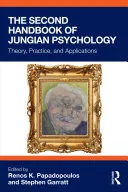
The Second Handbook of Jungian Psychology
 81
81

The Second Handbook of Jungian Psychology
The Second Handbook of Jungian Psychology, published in 2026, presents a contemporary engagement with Carl Jung’s analytical psychology. Papadopoulos and Garratt have assembled a collection that moves beyond mere historical accounting, demonstrating the active evolution of Jungian thought. The work is particularly effective in its exploration of how concepts like the collective unconscious and individuation offer frameworks for understanding contemporary societal anxieties and individual psychological landscapes. While the breadth of topics is commendable, some chapters feel more like extended summaries than deep dives, a common pitfall for edited volumes. However, the chapter on Synchronicity, for instance, offers a compelling re-evaluation of this complex concept in light of recent scientific and philosophical discussions. The volume ultimately succeeds in illustrating the enduring utility and adaptability of Jung’s seminal ideas for both clinicians and scholars.
📝 Description
81
### What It Is ### Who It's For ### Historical Context ### Key Concepts
💡 Why Read This Book?
• Gain practical applications of Jungian concepts like the Shadow and Anima/Animus for modern therapeutic practices, as detailed in chapters exploring contemporary case studies. • Understand the intellectual lineage of Jungian psychology, tracing its development from its origins and its divergence from Freudian psychoanalysis as discussed in the historical context sections. • Explore the symbolic language of the psyche through an examination of archetypes and their manifestation in dreams and cultural myths, offering a unique lens for self-discovery beyond standard psychological texts.
⭐ Reader Reviews
Honest opinions from readers who have explored this book.
❓ Frequently Asked Questions
When was The Second Handbook of Jungian Psychology first published?
The Second Handbook of Jungian Psychology was first published on May 15, 2026, reflecting recent developments in the field.
Who are the primary authors or editors of this handbook?
The handbook is edited by Renos K. Papadopoulos and Stephen Garratt, building on the foundational work of Carl Jung.
What is the core focus of this book?
The book demonstrates the continued relevance of Jungian psychology to modern life, offering new perspectives for mental health professionals and academics across various disciplines.
Does this book require prior knowledge of Jungian psychology?
While prior knowledge is beneficial, the handbook aims to be accessible, introducing core Jungian concepts and their contemporary applications for both students and seasoned practitioners.
What kind of approach does Jungian psychology offer, according to this book?
It offers a more compassionate and creative approach to understanding the psyche, emphasizing the exploration of symbols, dreams, and the unconscious.
What subjects are covered within The Second Handbook of Jungian Psychology?
The book covers a wide range of subjects including archetypes, the collective unconscious, individuation, synchronicity, and their application to contemporary issues.
🔮 Key Themes & Symbolism
Archetypal Dynamics in Modern Life
This handbook re-examines Jung's archetypes—universal patterns of the collective unconscious—as vital forces shaping contemporary experience. It explores how figures like the Shadow, the Anima/Animus, and the Self continue to manifest in personal struggles and societal phenomena, offering a framework for understanding the persistent, underlying motifs in human behavior. The work provides detailed analyses of how these archetypal energies can be integrated for psychological wholeness, moving beyond outdated interpretations to reveal their dynamic presence in the 21st century.
The Evolving Collective Unconscious
Expanding on Jung's seminal concept, the text investigates how the collective unconscious, a psychic reservoir shared by all humanity, is influenced by and influences modern cultural shifts. It discusses the impact of globalization, digital communication, and evolving social structures on the expression of these deep psychic layers. The book posits that understanding the collective unconscious is crucial for navigating the complex, interconnected challenges of our era, offering a lens through which to view shared anxieties and aspirations.
Individuation in a Post-Modern Context
The journey of individuation, Jung's term for the process of becoming a psychologically whole and unique individual, is critically re-evaluated. This handbook addresses the challenges and opportunities for individuation in a world marked by rapid change and diverse influences. It examines how individuals can pursue self-realization while engaging with the fragmented nature of contemporary identity, providing strategies for fostering a coherent sense of self amidst external pressures and internal conflicts.
Synchronicity and Meaning-Making
The concept of synchronicity—meaningful coincidences—is explored not merely as an anomaly but as a fundamental aspect of psychic reality. The handbook offers updated perspectives on how these acausal connecting principles can guide individuals toward greater self-awareness and purpose. It delves into the interpretation of synchronistic events as potential messages from the unconscious, providing tools for recognizing and understanding their significance in personal and collective life.
💬 Memorable Quotes
“The collective unconscious is not a static archive but a living, dynamic matrix.”
— This highlights the active, ever-present nature of humanity's shared psychic inheritance, suggesting it constantly interacts with present consciousness and societal evolution.
“Individuation requires confronting the Shadow, not merely acknowledging its existence.”
— This emphasizes the active, often difficult work involved in integrating one's repressed or unacknowledged aspects for psychological completeness.
“Synchronicity reveals the interconnectedness of psyche and world, challenging purely mechanistic causality.”
— This interpretation points to the book's exploration of meaningful coincidences as evidence of a deeper, acausal order linking inner experience with outer events.
“Archetypes are not fixed forms but fluid potentials that shape our perceptions.”
— This re-frames archetypes not as rigid templates but as dynamic psychic energies that influence how we understand and interact with the world.
“Modern life presents unique obstacles to the process of becoming whole.”
— This suggests the handbook addresses how contemporary societal structures and pressures can complicate or alter the ancient path of psychological development and self-realization.
🌙 Esoteric Significance
Tradition
Jungian psychology, while a formal academic discipline, is deeply interwoven with esoteric traditions. Its focus on archetypes, the collective unconscious, and individuation draws heavily from Gnostic cosmology, Hermetic philosophy, and alchemical symbolism. This work fits within this lineage by actively exploring these symbolic languages, not as mere historical artifacts, but as living psychic structures relevant to contemporary experience. It departs from purely academic analyses by maintaining a focus on the transformative potential of engaging with these deep psychic patterns.
Symbolism
The handbook likely delves into symbols such as the Shadow, representing the repressed aspects of the personality; the Anima and Animus, personifications of the contrasexual soul-image; and the Self, the archetype of wholeness. These symbols are not treated as static images but as dynamic energies that, when consciously engaged with through dream analysis, active imagination, or symbolic art, facilitate psychological integration and spiritual development.
Modern Relevance
Contemporary thinkers in depth psychology, transpersonal psychology, and even certain strands of ecological and mythological studies draw heavily on Jung's framework. The work's exploration of archetypes and the collective unconscious provides a vital lens for understanding global consciousness, cultural narratives, and the psychological impact of modern alienation. It informs therapeutic approaches seeking to connect individuals with deeper meaning and a sense of belonging in an increasingly fragmented world.
👥 Who Should Read This Book
• Mental health professionals (therapists, counselors, psychiatrists) seeking to enrich their practice with a more nuanced, symbolic, and compassionate understanding of client issues beyond symptom reduction. • Academic researchers and students in psychology, comparative religion, mythology, and cultural studies who wish to explore the enduring influence of Carl Jung's theories on modern thought and society. • Individuals on a personal growth path interested in exploring the depths of their own psyche, understanding dream symbolism, and engaging with the concept of individuation as a lifelong journey.
📜 Historical Context
Emerging in the mid-20th century, Carl Jung's analytical psychology offered a counterpoint to Sigmund Freud's more mechanistic psychoanalysis, emphasizing the spiritual and symbolic dimensions of the psyche. Jung’s work, particularly his concepts of the collective unconscious and archetypes, gained traction among intellectuals and artists seeking to understand the depths of human experience beyond purely biological drives. By the time of this 2026 publication, Jungian thought had established a significant academic presence, influencing fields from literature and mythology to religious studies. The Second Handbook of Jungian Psychology arrives in an era where existential anxieties and the search for meaning are amplified by rapid technological and social change. While schools like cognitive behavioral therapy (CBT) dominated clinical practice, Jungian psychology, with its focus on depth and symbolic meaning, continued to attract those seeking a more holistic approach. This handbook likely engages with critiques and developments that have occurred since Jung's death in 1961, positioning itself within ongoing dialogues, perhaps even responding to scholars who previously engaged with Jung's ideas, such as Marie-Louise von Franz or Erich Fromm.
📔 Journal Prompts
The Shadow's influence on your daily interactions.
Manifestations of the Anima/Animus in your relationships.
Identifying archetypal patterns in recent dreams.
The process of individuation in your current life stage.
Meaningful coincidences (synchronicity) and their potential messages.
🗂️ Glossary
Archetype
Universal, archaic patterns and images that derive from the collective unconscious and are the psychic counterpart of a biological instinct.
Collective Unconscious
A part of the unconscious mind derived from ancestral experience and capable of possessing characteristics not individually acquired.
Individuation
The lifelong psychological process of differentiation of the self, by which an individual's personality becomes whole and integrated.
Shadow
The unconscious or repressed aspects of the personality, often seen as the darker side of the self that is rejected or disowned.
Anima/Animus
The unconscious feminine aspect in the male psyche (Anima) and the unconscious masculine aspect in the female psyche (Animus).
Synchronicity
The simultaneous occurrence of events that appear significantly related but have no discernible causal connection.
Self
The archetype of wholeness, representing the totality of the psyche, including both the conscious and unconscious.