The second coming of Christ

 75
75

The second coming of Christ
Yogananda's "The Second Coming of Christ" endeavors to reframe the Christian narrative through the lens of yogic philosophy, a bold undertaking that yields fascinating, if sometimes dense, results. The strength of this work lies in its consistent application of Eastern metaphysical principles to biblical exegesis. For instance, the interpretation of Jesus's miracles as manifestations of advanced spiritual control over the material world offers a fresh perspective. However, the sheer volume of interpretive material can occasionally obscure the narrative flow, making specific points hard to isolate without dedicated study. The concept of "Christ Consciousness" as an attainable universal state, rather than solely a historical event, is a powerful idea that Yogananda champions throughout. The book offers a substantial theological re-evaluation for dedicated students of comparative spirituality.
📝 Description
75
### What It Is
Paramahansa Yogananda's "The Second Coming of Christ" offers a spiritual interpretation of the Bible's New Testament, particularly the teachings of Jesus. Published posthumously in 1984, it presents a perspective rooted in yogic philosophy and ancient Indian spiritual traditions. The work aims to reveal the Christ Consciousness as an attainable state of divine realization, not solely tied to the historical Jesus. Yogananda frames these teachings within a universal spiritual framework accessible to all seekers, irrespective of their religious background.
### Who It's For
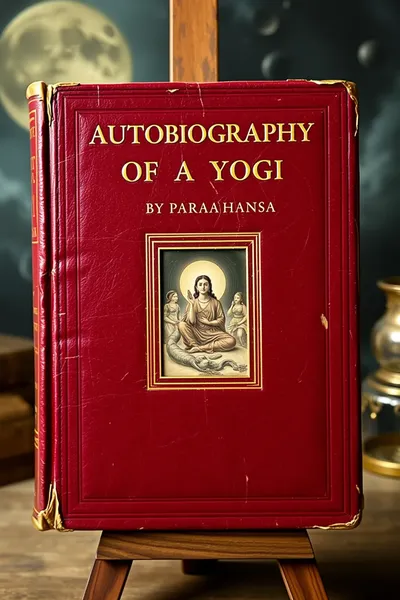
This volume is for individuals interested in exploring Christian scripture through an Eastern spiritual lens. It appeals to those who seek deeper, metaphysical meanings beyond literal interpretations of biblical narratives. Readers who have an existing appreciation for Yogananda's "Autobiography of a Yogi" will find a continuation of his unique blend of practical spirituality and profound theological insight. It's also for those questioning traditional dogma and searching for a more personal, experiential connection to divine principles.
### Historical Context
"The Second Coming of Christ" emerged from a period of heightened interest in Eastern spirituality in the West, following figures like Swami Vivekananda and the broader Theosophical movement. Yogananda himself arrived in America in 1920 and established the Self-Realization Fellowship, significantly popularizing Kriya Yoga. His teachings during this era, spanning the 1920s through the 1950s, influenced many thinkers and spiritual seekers. The book's posthumous publication in 1984 placed it within a continuing spiritual renaissance, where comparative religion and mystical traditions gained wider academic and popular traction, even as some traditional religious institutions viewed such interpretations with skepticism.
### Key Concepts
The central concept is the "Christ Consciousness," presented not as a unique historical figure but as an omnipresent divine awareness achievable through spiritual discipline. Yogananda elaborates on the "Cosmic Creation" and the "Divine Word" (Logos), drawing parallels between biblical accounts and yogic cosmology. He emphasizes "Self-Realization" as the ultimate goal, a state of oneness with God achieved through techniques like meditation and Kriya Yoga. The book also interprets biblical events and parables as allegories for inner spiritual struggles and triumphs, guiding the reader toward understanding the soul's journey back to its divine source.
💡 Why Read This Book?
• Gain a unique yogic perspective on Jesus's teachings, understanding "Christ Consciousness" not just as a historical event but as an achievable state of divine awareness, as explored in the book's extensive interpretations of the Gospels. • Discover how Yogananda connects biblical creation narratives to the yogic concept of the "Divine Word" (Logos), providing a cross-cultural understanding of universal spiritual principles. • Learn about "Self-Realization" as the ultimate goal, a concept central to Yogananda's teachings since his arrival in America in 1920, and how it relates to overcoming spiritual ignorance through meditation.
⭐ Reader Reviews
Honest opinions from readers who have explored this book.
❓ Frequently Asked Questions
What is Yogananda's interpretation of the "Second Coming of Christ"?
Yogananda interprets the "Second Coming of Christ" not as a singular future event, but as the individual's attainment of "Christ Consciousness" through spiritual practices like meditation and Kriya Yoga, leading to inner divine realization.
How does "The Second Coming of Christ" relate to "Autobiography of a Yogi"?
Both works by Yogananda Paramahansa share a common philosophical foundation rooted in Kriya Yoga and Self-Realization Fellowship principles. "The Second Coming of Christ" specifically focuses on biblical interpretation, expanding on themes of divine consciousness introduced in his earlier autobiography.
What is the "Christ Consciousness" according to Yogananda?
The "Christ Consciousness" is presented as the omnipresent divine awareness, the creative intelligence of God, which Jesus embodied and which all individuals can realize within themselves through dedicated spiritual practice.
Is this book a literal interpretation of the Bible?
No, "The Second Coming of Christ" offers a metaphysical and esoteric interpretation of biblical texts, seeking to reveal underlying spiritual truths through the lens of yogic philosophy and comparative religion.
When was "The Second Coming of Christ" first published?
The book "The Second Coming of Christ" by Paramahansa Yogananda was first published in 1984, several years after his passing in 1952.
What spiritual tradition does Yogananda draw from?
Yogananda draws primarily from the yogic tradition of India, specifically the lineage of Kriya Yoga, and integrates these teachings with his interpretation of Christian scriptures and universal spiritual principles.
🔮 Key Themes & Symbolism
Christ Consciousness as Universal
This work posits that "Christ Consciousness" is not solely the domain of the historical Jesus but an omnipresent divine awareness that can be attained by all individuals. Yogananda argues that Jesus demonstrated this consciousness, and through spiritual discipline, meditation, and understanding the "Divine Word," individuals can awaken this inner Christ potential. The book reinterprets biblical events as allegories for the soul's journey toward this universal divine state, moving beyond a singular historical figure to an attainable spiritual realization accessible to everyone.
Biblical Allegory and Yogic Cosmology
Yogananda systematically reinterprets key narratives and teachings from the New Testament, particularly the Gospels, as allegories for inner spiritual truths. He draws parallels between biblical concepts and yogic cosmology, such as the "Divine Word" (Logos) corresponding to the primordial creative sound (Aum) in Hindu philosophy. Miracles are explained as the result of advanced spiritual control over the forces of nature, reflecting the yogic mastery over the mind and body. This approach seeks to reveal a unified, universal wisdom underlying diverse religious expressions.
The Path of Self-Realization
Central to the book is the concept of "Self-Realization" – the ultimate goal of spiritual life, understood as the direct experience of oneness with God. Yogananda presents Kriya Yoga, a specific meditation technique he brought to the West in 1920, as a powerful method for accelerating this process. The book guides the reader through the steps of purifying the mind, transcending ego identification, and ultimately achieving liberation and divine union, framing Jesus's life and teachings as a blueprint for this inner transformation.
The Second Coming as Inner Awakening
The title itself signifies a shift in perspective: the "Second Coming" is not an external event but an internal spiritual awakening. Yogananda suggests that when individuals individually and collectively achieve a higher state of consciousness – the Christ Consciousness – this constitutes the true "Second Coming." It represents a new era of spiritual understanding and human evolution, driven by the realization of divine principles within oneself, rather than an apocalyptic, otherworldly return.
💬 Memorable Quotes
“The Second Coming of Christ is the realization of the Christ Consciousness in the heart of every devotee.”
— This highlights Yogananda's core thesis: the transformative power of Christ's message lies in its potential for universal, individual attainment, not merely historical recollection.
“The Bible is a book of yogic science.”
— This provocative statement frames the Christian scriptures not just as religious text but as a manual for spiritual development and self-mastery, aligning it with Eastern yogic traditions.
“Jesus taught that man is inherently divine, a child of God.”
— This interpretation emphasizes the inherent spiritual nature of humanity, a key tenet in many mystical traditions and a foundational belief for achieving Self-Realization.
“Through meditation, one can commune with the Divine Word.”
— This links the practical spiritual discipline of meditation directly to the esoteric concept of the "Divine Word" (Logos), suggesting a direct experiential path to understanding creation.
“Miracles are the result of controlled will and understanding of cosmic laws.”
— This offers a rational, albeit spiritual, explanation for biblical miracles, presenting them as demonstrations of advanced spiritual attainment and mastery over natural forces.
🌙 Esoteric Significance
Tradition
This work draws heavily from the yogic tradition, particularly the lineage of Kriya Yoga as taught by Paramahansa Yogananda. It positions itself within a universalist esoteric framework, seeking to demonstrate the underlying unity between ancient Indian spiritual science and the teachings of Jesus Christ. It departs from traditional exegesis by employing yogic principles to interpret biblical narratives, viewing scripture as a guide to inner transformation and divine realization rather than solely historical or dogmatic accounts.
Symbolism
Key symbols include the "Christ Consciousness," representing divine awareness and the potential for God-realization within every individual. The "Divine Word" (Logos) is another crucial symbol, often equated with the cosmic sound Aum in yogic traditions, signifying the creative power of God. Jesus himself is presented not just as a historical figure but as an archetype of one who fully embodied this Christ Consciousness, demonstrating mastery over the material world and the inner self.
Modern Relevance
Yogananda's approach continues to influence contemporary spiritual seekers interested in the intersection of Eastern and Western mysticism. His emphasis on meditation, Kriya Yoga, and the attainment of "Christ Consciousness" resonates with modern practitioners of mindfulness and contemplative prayer. Thinkers and teachers in the New Age movement and various yoga and meditation communities often reference his interpretations, seeking a more holistic and experiential understanding of spirituality that transcends traditional religious boundaries.
👥 Who Should Read This Book
• Students of comparative religion and comparative mysticism seeking to understand the parallels between yogic philosophy and Christian teachings. • Practitioners of meditation and yoga interested in deepening their spiritual practice through the lens of biblical wisdom. • Seekers questioning traditional religious dogma and looking for metaphysical interpretations of spiritual texts that emphasize personal experience and divine realization.
📜 Historical Context
Paramahansa Yogananda's "The Second Coming of Christ," published in 1984, emerged from a spiritual milieu shaped by the increasing popularity of Eastern philosophies in the West. Yogananda himself was a pivotal figure, arriving in America in 1920 to establish the Self-Realization Fellowship and teach Kriya Yoga. His teachings gained traction during a period that saw figures like Aldous Huxley exploring mysticism and comparative religion. This era also witnessed a broader interest in Theosophy and Neo-Vedanta. While Yogananda's work offered a unique synthesis, it existed alongside diverse interpretations of Christianity and other spiritual movements. The book's posthumous release placed it within a continuing wave of spiritual exploration, though its deep dives into metaphysical exegesis might have been viewed with skepticism by more orthodox Christian denominations, who often favored literal interpretations of scripture.
📔 Journal Prompts
The nature of the "Christ Consciousness" as presented by Yogananda and its distinction from the historical Jesus.
Reflect on the "Divine Word" (Logos) and its potential connection to creation in your own spiritual understanding.
How does the concept of "Self-Realization" as the ultimate goal inform your current spiritual path?
Analyze the interpretation of biblical miracles as demonstrations of spiritual control over cosmic laws.
Consider the "Second Coming" as an internal awakening versus an external event.
🗂️ Glossary
Christ Consciousness
The omnipresent divine intelligence and awareness of God, embodied by Jesus and attainable by all individuals through spiritual practice and realization.
Divine Word (Logos)
The creative principle or primordial sound through which God manifests the universe, often identified with Aum in yogic traditions.
Self-Realization
The direct, experiential knowing of God and one's true divine nature; the ultimate goal of spiritual evolution.
Kriya Yoga
An ancient yogic science and meditation technique, revived by Paramahansa Yogananda, designed to accelerate spiritual evolution and promote Self-Realization.
Cosmic Creation
The process by which the universe is brought into existence through the will and energy of the Divine, as understood through yogic cosmology.
Yogic Science
A systematic approach to spiritual development, encompassing meditation, ethical principles, and self-discipline, aimed at achieving union with the Divine.
Metaphysical Interpretation
An approach to understanding texts or phenomena by focusing on underlying spiritual principles and abstract truths rather than literal or material aspects.