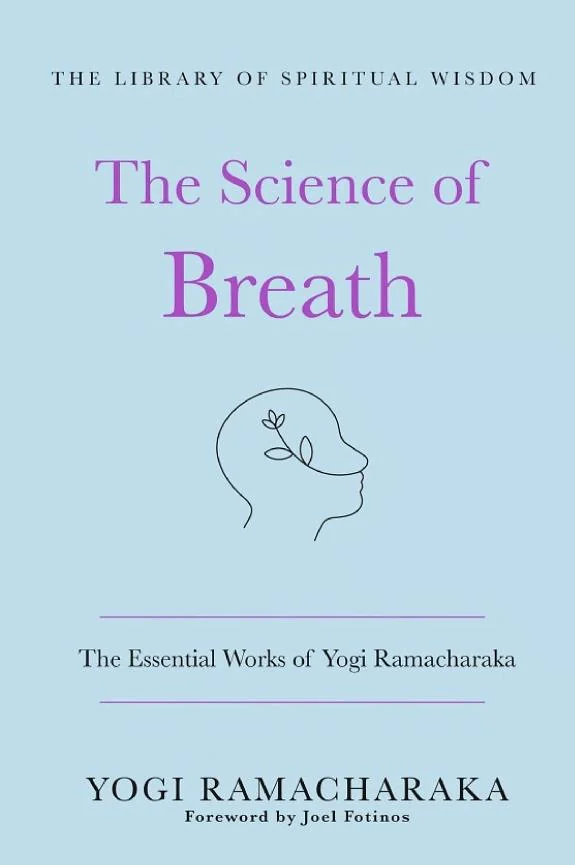
The Science of Breath: The Essential Works of Yogi Ramacharaka
 78
78

The Science of Breath: The Essential Works of Yogi Ramacharaka
The Science of Breath presents a cogent argument for the primacy of breath as a tool for human enhancement, a concept that feels both ancient and remarkably modern. William Walker Atkinson, as Yogi Ramacharaka, succeeds in demystifying complex yogic principles, rendering them accessible through clear, directive prose. The strength lies in its systematic breakdown of breath's influence across physical, mental, and even psychic domains. However, the sheer breadth of topics covered across the five integrated works can feel somewhat diffuse at times; the connection between breath and psychic healing, for instance, is asserted more than exhaustively demonstrated within these pages. A particularly illuminating section discusses the "conscious control of the breath," detailing how specific inhalations and exhalations can alter mental states, moving beyond mere physiological function to a mechanism for will-training. This collection is a valuable historical document and a practical guide, though readers seeking deep, nuanced philosophical debates might find it somewhat introductory. It serves as a solid entry point into the practical application of yogic science.
📝 Description
78
<p>### What It Is</p><p>The Science of Breath collects foundational texts by William Walker Atkinson, writing under the pseudonym Yogi Ramacharaka. Originally published in the early 20th century, this compilation offers a systematic approach to understanding the vital role of breath in physical, mental, and spiritual development. It presents yogic principles stripped of overt religious dogma, focusing instead on their practical application for self-mastery and enhanced consciousness. The volume integrates five distinct works, providing a comprehensive overview of Ramacharaka's early teachings on breath control, psychic healing, and mental discipline.</p><p></p><p>### Who It's For</p><p>This work is intended for individuals seeking a practical, philosophical framework for improving their well-being through conscious breathing. It appeals to students of esoteric philosophy, Eastern thought, and self-improvement who are interested in the underlying principles of yogic science. Those curious about the mind-body connection, the nature of consciousness, and the potential for mental expansion will find valuable material. It is suitable for both beginners seeking an accessible introduction to yogic concepts and experienced practitioners looking to deepen their understanding of pranayama and its effects.</p><p></p><p>### Historical Context</p><p>Published in the era of burgeoning interest in Eastern philosophies in the West, Yogi Ramacharaka's writings emerged alongside movements like Theosophy and the broader New Thought. William Walker Atkinson, a prolific author, synthesized various spiritual and philosophical traditions, presenting them in digestible formats for a Western audience. His work, particularly on yogic philosophy, appeared during a period when figures like Swami Vivekananda were also introducing Vedanta and Yoga to America. Ramacharaka's approach, emphasizing scientific and practical aspects, distinguished it from more purely devotional or academic treatments of Indian philosophy available at the time.</p><p></p><p>### Key Concepts</p><p>The core of this collection revolves around the concept of Prana, the vital life force believed to be transmitted through breath. The texts explain how controlling and directing Prana, through specific breathing exercises (pranayama), can influence one's physical health, mental clarity, and psychic abilities. It posits that the breath is a direct link between the physical and subtle bodies, offering a powerful tool for transformation. The collection also explores the mind's capacity for development, the principles of mental causation, and the potential for healing through focused intention and energetic manipulation, all underpinned by the mastery of breath.</p>
⭐ Reader Reviews
Honest opinions from readers who have explored this book.
❓ Frequently Asked Questions
Who was Yogi Ramacharaka, and why did he use a pseudonym?
Yogi Ramacharaka was the pen name of William Walker Atkinson, a prolific writer on New Thought and esoteric subjects in the early 20th century. He adopted pseudonyms to explore various spiritual traditions and philosophical ideas without limiting his public persona.
What are the five books included in 'The Science of Breath' collection?
The collection typically includes 'The Science of Breath', 'The Science of Psychic Healing', 'Raja Yoga or Mental Development', 'The Hindu-Yogi Science of Breath', and 'Fourteen Lessons in Yogi Philosophy and Oriental Occultism'.
Is this book religious or philosophical?
While drawing from yogic philosophy originating in India, the work is presented in a secular, practical manner, focusing on the scientific and psychological aspects of breath control and mental development rather than religious dogma.
What is Prana, according to Ramacharaka?
Prana is described as the universal vital energy or life force that permeates all existence and is absorbed by the body through breathing. Ramacharaka emphasizes that its conscious control is key to health and spiritual advancement.
Can beginners practice the breathing techniques described?
Yes, the book is structured to guide beginners through the fundamental principles and practices of breath control, starting with basic exercises and progressing to more advanced concepts.
When was William Walker Atkinson active as a writer?
William Walker Atkinson was most active as a writer from the late 19th century through the early 20th century, with many of his key works, including those under the Yogi Ramacharaka name, published between 1903 and 1912.
🔮 Key Themes & Symbolism
Breath as Universal Energy
The central thesis is that breath is not merely a biological function but the primary vehicle for Prana, the fundamental life force. The texts meticulously explore how the quality and control of one's breath directly correlate with vitality, mental acuity, and spiritual awareness. Ramacharaka presents breath as the tangible link between the physical body and the subtle energetic planes, offering a practical means to harness this universal energy for personal transformation and well-being.
Mental Cultivation Through Breath
Beyond physical benefits, the collection emphasizes the profound impact of breath control on the mind. It details how disciplined breathing practices can quiet mental chatter, enhance concentration, and strengthen willpower. The work posits that by mastering the breath, one gains dominion over one's thoughts and emotions, paving the way for higher states of consciousness and the development of latent mental powers, as explored in the Raja Yoga sections.
Energetic Healing Principles
The book delves into the early 20th-century Western understanding of yogic principles applied to healing. It suggests that by manipulating Prana through breath, individuals can influence their own health and potentially the health of others. This aspect focuses on the mind's role in generating and directing vital energy, proposing that conscious breathwork can help rebalance energetic systems and promote recovery, as outlined in 'The Science of Psychic Healing'.
Practical Yogic Philosophy
Ramacharaka's approach is distinctly practical, aiming to extract the universal principles from yogic traditions and present them in a logical, accessible framework. The collection eschews complex rituals or sectarian doctrines, focusing instead on observable effects and actionable techniques. This makes yogic philosophy and its transformative potential available to a broader audience interested in self-improvement and understanding the deeper workings of mind and body.
💬 Memorable Quotes
“The breath is the link between the physical and the spiritual.”
— This concise statement encapsulates the core idea that breath acts as a bridge, connecting the tangible, material world with the subtle, non-physical realms of consciousness and spirit.
“The control of the breath is the control of the mind.”
— This highlights the foundational principle that by mastering the rhythm and depth of respiration, one gains a powerful mechanism for influencing and directing one's thoughts, emotions, and mental focus.
“All life is dependent upon Prana.”
— This emphasizes the vital importance of Prana, the universal life force transmitted through breath, as the essential energy that sustains all living beings and their activities.
“The mind can heal the body.”
— This paraphrased concept points to the book's exploration of the mind's power in influencing physical well-being, particularly through focused intention and the directed use of vital energy via breath.
“Develop your mental faculties through systematic practice.”
— This represents the practical call to action within the text, encouraging readers to engage in disciplined exercises, primarily breathwork, to systematically enhance their cognitive abilities and psychic potential.
🌙 Esoteric Significance
Tradition
This work fits within the broader Hermetic and New Thought traditions, which sought to extract universal laws and principles from various spiritual systems, including Yoga. Ramacharaka secularizes and systematizes yogic concepts, particularly pranayama, aligning them with the Hermetic maxim 'As above, so below' by demonstrating the macrocosmic influence of breath on the microcosm of the human body and mind. It departs from strict Hindu orthopraxy by emphasizing practical application over ritual or devotional adherence.
Symbolism
The primary symbol is the breath itself, representing Prana, the vital life force and the active principle of the universe. The inhalation signifies the reception of this energy, while the exhalation represents its outward expression and control. The texts implicitly use the body as a microcosm of the cosmos, where the regulation of breath (a seemingly simple act) mirrors the control of universal energies, leading to expanded consciousness and physical harmony.
Modern Relevance
Contemporary practices in mindfulness, breathwork therapy, and even certain somatic healing modalities echo Ramacharaka's foundational concepts. Modern yoga instructors and wellness practitioners often draw upon the accessible explanations of pranayama presented in works like this. Thinkers in consciousness studies and alternative health continue to explore the mind-body connection, finding resonance with Ramacharaka's emphasis on breath as a key regulator of physiological and psychological states.
👥 Who Should Read This Book
['• Aspiring practitioners of pranayama: Individuals seeking a structured, foundational understanding of yogic breathing techniques and their effects on physical and mental health.', '• Students of Western Esotericism: Those interested in how Eastern philosophies were adapted and integrated into Western esoteric thought during the early 20th century.', '• Self-improvement enthusiasts: Readers looking for practical, accessible methods to enhance mental clarity, concentration, and overall vitality through conscious breath control.']
📜 Historical Context
The Science of Breath emerged in the early 20th century, a period marked by intense Western fascination with Eastern philosophies, notably Vedanta and Yoga, spurred by figures like Swami Vivekananda who lectured in the US starting in 1893. William Walker Atkinson, writing as Yogi Ramacharaka, capitalized on this interest, synthesizing yogic principles with New Thought and Hermetic ideas. His work aimed to present these teachings in a systematic, practical, and often secularized manner, distinguishing it from purely religious or academic approaches. This era saw a proliferation of esoteric literature; Atkinson's accessible style contrasted with the more dense philosophical treatises. While figures like Helena Blavatsky and the Theosophical Society were also influential, Ramacharaka's focus on breath as a controllable mechanism for physical and mental enhancement offered a distinct, actionable path for self-improvement seekers.
📔 Journal Prompts
The relationship between conscious inhalation and the reception of vital energy (Prana).
Applying breath control techniques to manage mental states discussed in 'Raja Yoga'.
The concept of the breath as a bridge between physical and subtle realms.
Investigating the mind's role in healing, as suggested in 'The Science of Psychic Healing'.
Personal experiences with altering breath patterns and their observed effects.
🗂️ Glossary
Prana
The universal vital life force or energy that permeates all existence and is absorbed by the body through breathing. Ramacharaka emphasizes its conscious control for health and spiritual development.
Pneuma
A Greek term often translated as 'spirit' or 'breath', used in the context of vital force, comparable to the concept of Prana in yogic philosophy.
Yogi
An individual who practices Yoga, a spiritual discipline aiming for union with the divine or ultimate reality. In Ramacharaka's context, it refers to one who masters yogic principles, particularly breath control and mental discipline.
Psychic Healing
The practice of influencing health and well-being through mental energy, intention, and the manipulation of vital forces (like Prana), often facilitated by conscious breathing techniques.
Raja Yoga
A system of Yoga focused on mental development and control, often involving meditation, concentration, and breath regulation to achieve higher states of consciousness.
Mental Development
The process of enhancing one's cognitive abilities, willpower, concentration, and overall mental capacity, often through disciplined practices like those described by Ramacharaka.
Will
The faculty of conscious and intentional choice; Ramacharaka links the strengthening of the will directly to the practice of breath control.