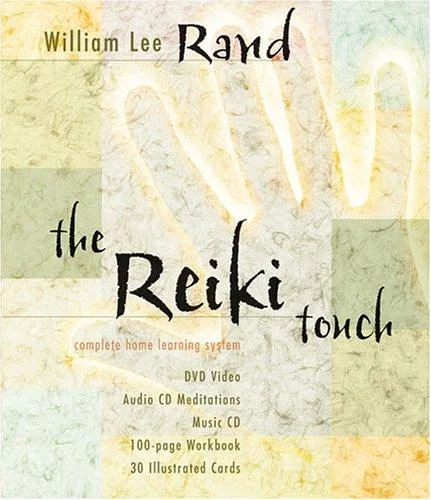
The Reiki Touch
 75
75

The Reiki Touch
William Lee Rand’s The Reiki Touch presents a clear, if somewhat earnest, exposition of the energy healing modality he has been instrumental in popularizing. Rand avoids the more esoteric embellishments that sometimes accompany discussions of Reiki, focusing instead on its practical application and historical lineage. The book’s strength lies in its systematic approach; Rand meticulously details the attunement process and the hand positions, making the material accessible to newcomers. One particularly effective section explains the concept of "Kenyoku" or "dry bathing," a self-purification technique. However, the text occasionally leans towards an overly simplistic framing of energy work, potentially downplaying the nuanced understanding required for deeper energetic engagement. While effective as an introductory text, readers seeking a more philosophical or complex exploration of consciousness and healing might find it somewhat lacking. Nevertheless, for those beginning their journey with Reiki, The Reiki Touch offers a solid, well-structured foundation.
📝 Description
75
### What It Is
The Reiki Touch offers a foundational exploration of the energy healing system known as Reiki, as developed and disseminated by William Lee Rand. The work functions as both an introduction for novices and a reference for those seeking to deepen their understanding of Reiki principles and practices. It covers the origins of the system, its core tenets, and practical applications for self-healing and assisting others. The book aims to clarify the mechanics of channeling universal life force energy through the hands, emphasizing its accessible nature regardless of prior spiritual or healing experience.
### Who It's For
This text is primarily intended for individuals drawn to energy work, complementary therapies, and personal spiritual development. It serves those curious about Reiki, whether they are considering training, have recently begun their practice, or are established practitioners looking for a comprehensive overview of its foundational philosophy. Students of comparative spiritual traditions and those interested in the history of modern healing modalities will also find value in its structured approach.
### Historical Context
The development of Reiki is largely attributed to Mikao Usui in early 20th century Japan, with William Lee Rand playing a significant role in its transmission and adaptation to Western audiences starting in the late 20th century. Rand's work, including The Reiki Touch, emerged during a period of burgeoning interest in Eastern spiritual practices and alternative healing methods in the West, particularly from the 1980s onwards. This era saw numerous modalities gain traction, often presented through books and workshops that translated complex traditions into more digestible formats for a global audience.
### Key Concepts
The book elucidates several core concepts central to Reiki practice. These include the nature of "universal life force energy" (often referred to as Ki or Qi), the concept of "attunement" as a necessary initiation process facilitated by a Reiki Master, and the "laying on of hands" as the primary method for energy transfer. It also details the historical lineage of Reiki, tracing its roots back to Usui Sensei. The system's inherent simplicity and its focus on balance and well-being are consistently highlighted.
💡 Why Read This Book?
• Understand the foundational principles of Reiki, including the concept of "universal life force energy," as presented by a key figure in its Western dissemination, which provides a clear starting point for beginners. • Learn about the historical development of Reiki, tracing its origins to Mikao Usui in early 20th century Japan, offering context that differentiates it from other energy healing systems. • Gain practical knowledge of "attunement" and "laying on of hands" techniques, enabling a direct, hands-on approach to exploring energy flow for personal well-being.
⭐ Reader Reviews
Honest opinions from readers who have explored this book.
❓ Frequently Asked Questions
When was The Reiki Touch first published?
The Reiki Touch by William Lee Rand was first published in 2005, marking a significant contribution to the literature available on Reiki during a period of increasing global interest in the practice.
Who developed the Reiki system that this book discusses?
The Reiki system discussed in The Reiki Touch was developed by Mikao Usui in Japan in the early 20th century. William Lee Rand is credited with its extensive transmission and adaptation to Western audiences.
What is the core concept of Reiki as explained in the book?
The core concept of Reiki, as explained in The Reiki Touch, is the channeling of "universal life force energy" through the hands to promote balance and well-being, accessible to anyone through attunement.
Does the book explain how to become a Reiki practitioner?
Yes, The Reiki Touch explains the necessity of "attunement" by a Reiki Master as a crucial step for anyone wishing to practice Reiki, detailing the process and its significance.
Is The Reiki Touch suitable for absolute beginners to energy healing?
Absolutely. The book is designed with beginners in mind, offering a clear introduction to Reiki principles, history, and fundamental techniques like the "laying on of hands."
What historical period is relevant to the origins of Reiki discussed in the book?
The book references the early 20th century in Japan as the period when Mikao Usui developed the Reiki system, providing historical grounding for the practice.
🔮 Key Themes & Symbolism
Universal Life Force Energy
Central to The Reiki Touch is the concept of "universal life force energy," often termed Ki or Qi. Rand explains this as a pervasive, intelligent energy that animates all living things and can be channeled for healing. The book demystifies this energy, presenting it not as an abstract spiritual force but as a tangible element accessible through focused intention and the "laying on of hands." It is the fundamental power source that practitioners learn to direct, facilitating balance and restoring vitality in oneself and others. The accessibility of this energy is a key tenet, implying it is available to all who learn to connect with it.
Attunement and Initiation
The process of "attunement" is presented as the essential gateway to practicing Reiki. According to The Reiki Touch, this is a sacred and unique initiation performed by a Reiki Master, which awakens and aligns the student's energy system to channel universal life force energy effectively. Rand details how this process, often involving specific symbols and energy transmissions, is non-denominational and experiential. It is through attunement that one receives the ability to perform Reiki, distinguishing it from mere meditative or visualization techniques and marking the transition from student to practitioner.
The Laying on of Hands
The primary method of Reiki application explored in The Reiki Touch is the "laying on of hands." Rand outlines specific hand positions and sequences designed to address various areas of the body, promoting relaxation and energetic balance. The book emphasizes the intuitive nature of this practice, suggesting that practitioners often feel or are guided to where the energy is most needed. This technique is presented as a simple yet powerful way to transfer healing energy, encouraging a connection between giver and receiver that fosters a sense of peace and well-being.
Historical Lineage
Understanding the historical lineage of Reiki is a significant component of The Reiki Touch. Rand traces the practice back to its founder, Mikao Usui, who developed the system in Japan during the early 20th century. The book highlights Usui's intention to create a system that was both spiritually uplifting and practical for everyday life. By detailing this lineage, Rand provides a historical anchor for Reiki, differentiating it from more recent or synthesized healing modalities and underscoring its established roots in Japanese spiritual traditions.
💬 Memorable Quotes
“Reiki is a subtle energy that can be channeled to help the body heal itself.”
— This statement captures the essence of Reiki as presented by Rand: a gentle yet potent force that supports the body's innate capacity for recovery and balance. It emphasizes the 'self-healing' aspect, positioning Reiki as a facilitator rather than a direct curative agent.
“Attunement is the process that allows a person to connect with and channel Reiki.”
— This highlights the critical role of attunement, framing it as the indispensable key that unlocks a practitioner's ability to work with universal life force energy. It underscores that Reiki ability is not learned through mere study but is conferred through a specific energetic transmission.
“The laying on of hands is the primary method for directing Reiki energy.”
— This succinctly describes the core physical practice of Reiki. It clarifies that the hands serve as the conduits through which the channeled energy is applied, providing a direct and tangible method for healing practitioners.
“Mikao Usui founded the system of Reiki in Japan in the early 1900s.”
— This factual statement anchors the origin of Reiki, attributing its creation to a specific individual and historical period. It provides essential context for the practice's development and its roots in Japanese culture.
“Reiki works to bring about balance and harmony.”
— This paraphrase emphasizes the ultimate goal of Reiki practice. It suggests that the energy channeled aims to restore equilibrium within the recipient, fostering a state of inner peace and alignment across physical, emotional, and energetic levels.
🌙 Esoteric Significance
Tradition
Reiki's esoteric lineage is primarily rooted in Japanese spiritual traditions, particularly Shinto and Buddhist concepts of Ki (life force energy). While not strictly Hermetic or Kabbalistic, it shares with these traditions an emphasis on channeling subtle energies for personal development and healing. William Lee Rand's work fits within the broader modern esoteric movement that seeks to integrate Eastern wisdom with Western psychological and healing paradigms. It departs from some older esoteric systems by focusing on a specific, simplified energetic transmission method rather than complex ritual or symbolic systems.
Symbolism
While The Reiki Touch focuses more on practical application than deep symbolic analysis, the concept of "universal life force energy" itself can be seen as a fundamental energetic symbol. The "laying on of hands" is another key motif, symbolizing direct connection, compassion, and the transfer of vital energy. The historical lineage tracing back to Mikao Usui also functions symbolically, representing the integrity and established wisdom of the practice, grounding it in a specific, revered origin.
Modern Relevance
Today, Reiki continues to be a widely practiced modality within complementary and alternative medicine. Modern thinkers and practitioners in fields like energy psychology, somatic experiencing, and integrative healthcare often incorporate Reiki principles or practices. Its accessible nature makes it relevant to contemporary wellness movements and self-care trends, resonating with individuals seeking non-invasive methods to manage stress and promote well-being, often discussed alongside concepts from mindfulness and bioenergetics.
👥 Who Should Read This Book
• Individuals new to energy healing who seek a clear, structured introduction to the principles and practice of Reiki, focusing on its origins and core techniques. • Practicing energy workers and holistic therapists interested in understanding the historical development and foundational philosophy of Reiki as disseminated by a key Western proponent. • Seekers of personal development and spiritual growth who are curious about accessible methods for cultivating inner balance and supporting their own or others' well-being through energy work.
📜 Historical Context
The Reiki system, as detailed in The Reiki Touch, emerged from the work of Mikao Usui in Japan during the early 20th century, a period marked by spiritual revitalization and interest in various healing arts. Usui Sensei sought to synthesize elements of Eastern philosophy and healing practices into a system accessible to all. William Lee Rand's role, particularly from the late 20th century onwards, was pivotal in transmitting and adapting Reiki to Western cultures. This occurred during a broader wave of enthusiasm for Eastern spiritual traditions and alternative therapies in the West, alongside movements like Theosophy and various forms of yoga and meditation. Rand's efforts to standardize training and disseminate information, culminating in works like this, coincided with a growing interest in holistic health and mind-body connection, often contrasting with purely biomedical approaches. Contemporary figures like Diane Stein were also publishing on energy healing, contributing to a burgeoning field.
📔 Journal Prompts
The concept of "universal life force energy" and its perceived flow through the "laying on of hands."
Reflecting on the "attunement" process and its significance for channeling energy.
Personal experiences with energy work or the potential for energetic balance.
The historical journey of Reiki from Mikao Usui to its Western transmission.
Exploring the "laying on of hands" in the context of self-care and intuitive guidance.
🗂️ Glossary
Reiki
A Japanese form of energy healing, developed by Mikao Usui, that involves the practitioner channeling "universal life force energy" through the hands to promote relaxation and healing.
Ki
The Japanese word for "universal life force energy." It is believed to be the vital energy that animates all living things and can be consciously channeled for healing purposes.
Attunement
A process performed by a Reiki Master that initiates an individual into the practice of Reiki, enabling them to channel universal life force energy. It is considered essential for practice.
Laying on of Hands
The primary technique used in Reiki where the practitioner places their hands on or above the recipient's body to facilitate the flow of healing energy.
Mikao Usui
The founder of the Reiki system, a Japanese Buddhist who developed the practice in the early 20th century. His original teachings form the foundation of modern Reiki.
Reiki Master
An individual who has completed advanced levels of Reiki training and is qualified to initiate others into the practice through attunement and teach Reiki techniques.
Energetic Balance
A state of harmony and equilibrium within the body's energy system, which Reiki aims to restore, leading to improved physical, emotional, and mental well-being.