The Prophet
 75
75

The Prophet
Kahlil Gibran's The Prophet, particularly in its early 1900 publication form, presents a series of meditations that, while occasionally bordering on the platitudinous, possess a certain elemental force. The voice of Almustafa, the departing prophet, is consistent, offering pronouncements on life's core elements. I found the chapters on 'Giving' and 'Work' to be particularly grounded, framing these actions not as obligations but as expressions of self. However, the allegorical nature, while intended to be universal, sometimes feels generalized, lacking the sharp specificity that might elevate it beyond generalized wisdom. The concept of "self-knowledge" explored in the text is a recurring strength, urging introspection. The book’s enduring appeal lies in its accessible, poetic exploration of perennial human questions, even if its pronouncements sometimes lack the edge of a more critical philosophical inquiry. It remains a significant work for its era, offering a spiritual balm.
📝 Description
75
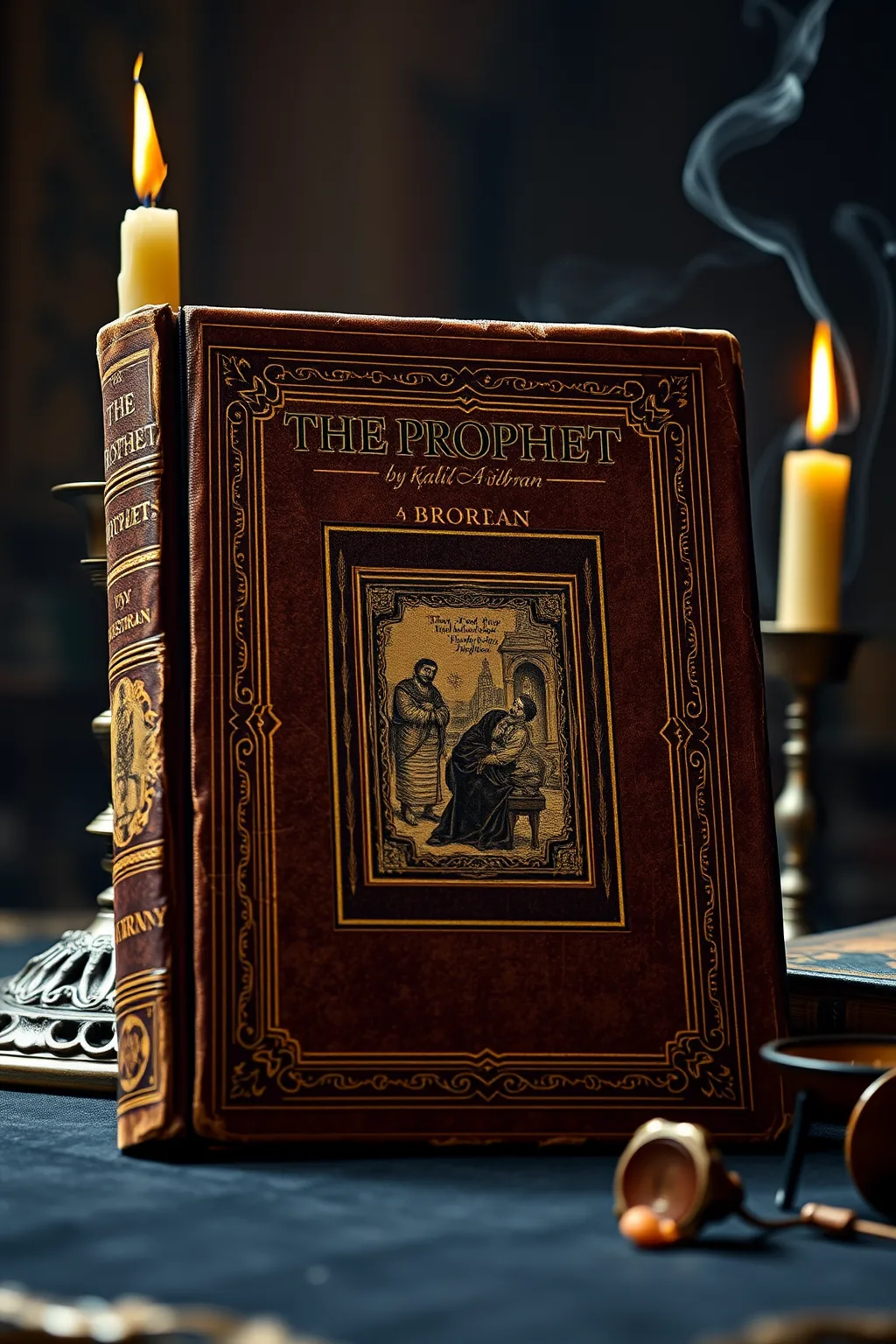
Kahlil Gibran's The Prophet, first published in 1900, presents a prophet's final thoughts before leaving his exile.
The Prophet is a collection of poetic essays attributed to Almustafa, a prophet preparing to depart his island home after twelve years. His teachings address a broad spectrum of human experience, including love, marriage, children, giving, food and drink, work, joy and sorrow, housing, clothing, commerce, justice, freedom, reason and passion, pain, self-knowledge, teaching, and friendship. The book uses an allegorical style and aphoristic statements to reflect on spiritual and philosophical ideas.
This work appeals to readers interested in contemplative thought and philosophical discussion. It is particularly relevant for those drawn to spiritual literature, existential inquiries, and the dynamics of human relationships. Individuals who appreciate allegorical narratives and wish to consider life's core aspects will find meaning within its pages. The book offers contemplation and insight for those pursuing personal growth and understanding their place in the world.
Published at the turn of the 20th century, The Prophet emerged during a time of growing interest in synthesizing Eastern and Western spiritual traditions, influenced by movements like Theosophy. Gibran combined Christian, Islamic, and Eastern philosophical elements. His style, reminiscent of biblical prophecy and Eastern parables, distinguished the work. While initially published by R. Black in 1900, its gradual reception led to a widespread global audience.
💡 Why Read This Book?
• You will gain a unique perspective on the concept of "Giving" as described by Almustafa, understanding it as a profound act of self-expression rather than mere charity, a perspective rooted in the 1900 publication of the text. • You will explore the philosophical underpinnings of "Work" as presented in the book, learning to see labor not as a burden but as a form of love and connection to the divine, a theme central to the early editions. • You will contemplate the esoteric notion of "Self-Knowledge" as Almustafa articulates it, recognizing that true understanding arises from an inner exploration, a core teaching emphasized throughout the prophet's farewell addresses.
⭐ Reader Reviews
Honest opinions from readers who have explored this book.
❓ Frequently Asked Questions
When was Kahlil Gibran's The Prophet first published?
The Prophet by Kahlil Gibran was first published in 1900. This edition was released by R. Black, predating its later, more widely recognized publications.
What is the central theme of The Prophet?
The central theme revolves around the spiritual and philosophical teachings of Almustafa, a prophet, as he prepares to leave his adopted city. He imparts wisdom on various aspects of human life, love, work, and spirituality.
Who is Almustafa in The Prophet?
Almustafa is the prophet figure in the book who has lived in the city of Orphalese for twelve years. He is about to depart for his homeland and delivers his final teachings to the people before his departure.
What kind of literary style does The Prophet employ?
The book employs a poetic and allegorical style. Its essays are often aphoristic and philosophical, using metaphorical language to convey spiritual insights and reflections on life.
Does The Prophet offer practical advice?
While not a self-help manual, The Prophet offers profound reflections and alternative ways of viewing life's experiences, such as love, work, and pain, which can serve as guiding principles for personal growth.
Is The Prophet considered an esoteric text?
Yes, The Prophet is often considered an esoteric text due to its exploration of spiritual, philosophical, and metaphysical themes in an allegorical manner, drawing from various mystical traditions.
🔮 Key Themes & Symbolism
Love as Divine Exchange
The work presents love not as possession but as a spiritual offering, a mutual giving and receiving that nourishes the soul. Almustafa's discourse on love emphasizes its boundless nature, akin to the flow of the universe. It speaks to a connection that transcends the physical, aligning with esoteric ideas of energetic exchange and soul recognition. This perspective invites readers to re-evaluate their relationships, seeing them as opportunities for spiritual growth and the expression of universal unity, a concept explored extensively in the 1900 publication.
Work as Spiritual Vocation
In The Prophet, work is reframed as an extension of one's being and a sacred act. Almustafa teaches that to love your work is to love life itself, suggesting that every task, no matter how mundane, holds the potential for divine expression. This view aligns with Hermetic principles that see the divine in all things and the universe as a manifestation of a singular creative force. The book encourages finding joy and meaning in labor, transforming it from a mere means of sustenance into a spiritual practice, a significant aspect of the text's philosophical stance.
The Unity of Opposites
Gibran masterfully illustrates the esoteric principle that apparent opposites are, in fact, two sides of the same coin. Concepts like joy and sorrow, reason and passion, are presented as interconnected forces necessary for wholeness. This mirrors Gnostic and Hermetic traditions that seek to understand the divine through the reconciliation of dualities. The book suggests that true wisdom lies in embracing both aspects of experience, recognizing that one cannot exist without the other, and that their integration leads to a more complete understanding of existence.
Self-Knowledge as Inner Oracle
The Prophet strongly advocates for introspection as the primary source of truth and guidance. Almustafa urges individuals to look within themselves to find answers to life's most profound questions, positioning self-knowledge as the ultimate oracle. This echoes mystical traditions that emphasize the inner divine spark and the journey of the soul toward self-realization. The book posits that understanding one's own nature is the key to understanding the universe, a central to many esoteric paths seeking enlightenment through personal discovery.
💬 Memorable Quotes
Direct passages from the work, attributed to the author.
“And what is work but love made visible?”
— This aphorism redefines labor not as a chore but as an act of devotion and expression of one's deepest affections. It suggests that meaningful work is infused with love, transforming the mundane into a sacred practice.
“Your children are not your children. They are the sons and daughters of Life's longing for itself.”
— This profound statement challenges conventional notions of ownership regarding offspring. It posits that children are independent entities, conduits for life's own evolutionary impulse, urging parents to guide rather than control.
“For what is a house but a space for your spirit?”
— Here, a dwelling is described not merely as a physical structure but as a sanctuary for the soul. It emphasizes the importance of creating spaces that nurture inner life and spiritual well-being.
“And sorrow, what is it but the same well from which your joy springs?”
— This highlights the interconnectedness of seemingly opposing emotions. It suggests that joy and sorrow are derived from the same fundamental source of life experience, implying a balance and unity.
💡 Key Ideas
Editorial paraphrase of the work's core concepts — not direct quotes.
You give but little when you give of your possessions. It is when you give of yourself that you truly give.
This quote elevates the act of giving beyond material generosity. True giving, it suggests, involves sharing one's essence, time, and spirit, making the self the most valuable offering.
🌙 Esoteric Significance
Tradition
The Prophet, while not strictly adhering to a single esoteric lineage, draws heavily from Gnostic, Sufi, and Hermetic traditions. Its emphasis on inner knowing, the unity of opposites, and the divine spark within humanity aligns with Gnostic thought. The poetic, devotional tone and exploration of love echo Sufi mysticism. Furthermore, the overarching theme of self-discovery and the search for universal truths through personal experience reflects Hermetic principles, particularly the dictum 'As above, so below' applied to the inner human landscape.
Symbolism
Key symbols include the sea, representing the unconscious, the vastness of existence, and the source of life. Almustafa himself, as a prophet figure, symbolizes divine wisdom and the intermediary between the human and the spiritual realms. The concept of 'giving' transcends material exchange, symbolizing the flow of divine energy and the interconnectedness of all souls, a central motif in many esoteric paths.
Modern Relevance
Contemporary spiritual seekers, New Age practitioners, and mindfulness advocates often draw upon The Prophet's wisdom. Its accessible language makes complex spiritual ideas relatable, influencing modern interpretations of self-help, personal growth, and holistic well-being. Thinkers in comparative religion and philosophy of spirituality frequently cite Gibran's work for its cross-cultural appeal and its enduring exploration of perennial human questions.
👥 Who Should Read This Book
• Individuals interested in early 20th-century spiritual literature will appreciate The Prophet's unique voice and historical context, understanding its place among emerging mystical movements. • Seekers of philosophical poetry and allegorical wisdom will find the book offers profound reflections on love, work, and the human condition, presented through Almustafa's teachings. • Those exploring comparative religion or cross-cultural spiritual concepts will benefit from Gibran's synthesis of various Eastern and Western mystical traditions within the text.
📜 Historical Context
Published in 1900 by R. Black, Kahlil Gibran's The Prophet emerged during a fertile period for spiritual and philosophical exploration. The late Victorian and Edwardian eras witnessed a burgeoning interest in Eastern religions, mysticism, and alternative philosophies, partly fueled by figures like Helena Blavatsky and the Theosophical Society. This intellectual climate encouraged a syncretic approach to spirituality, blending Western traditions with Eastern wisdom. Gibran's work, with its poetic prose and allegorical style, resonated with this milieu, offering a unique synthesis of Christian, Islamic, and Sufi influences. It stood apart from the more academic or dogmatic religious writings of the time, offering a personal, lyrical path to spiritual understanding. While not directly engaging with specific philosophical schools like pure Materialism or strict Rationalism, its appeal lay in its ability to touch upon universal human experiences in a manner that felt both ancient and contemporary, finding an audience seeking solace and meaning beyond conventional frameworks.
📔 Journal Prompts
Almustafa's discourse on "Giving": How does your current giving reflect love made visible?
The nature of "Work": Reflect on a task you perform; how can you imbue it with greater love?
The duality of "Joy and Sorrow": Consider a time both were present; what did they reveal about life's unity?
"Self-Knowledge" as an oracle: What inner truth did Almustafa's farewell prompt you to seek?
The concept of "Houses": How does your dwelling serve as a space for your spirit?
🗂️ Glossary
Almustafa
The prophet figure in Kahlil Gibran's The Prophet, who delivers final teachings to the people of Orphalese before returning to his homeland.
Orphalese
The fictional city where Almustafa has lived for twelve years and from which he departs, serving as the setting for his final discourses.
Giving
In the context of the book, this refers not just to material possessions but to the sharing of oneself, one's spirit, and one's essence.
Work
Presented as an act of love and self-expression, rather than merely a means of survival or obligation.
Reason and Passion
Dual aspects of human nature that are explored as complementary forces, both essential for a full life, rather than being in opposition.
Self-Knowledge
The process of deep introspection and understanding of one's own nature, presented as the ultimate source of wisdom and truth.
Allegory
A literary device where characters, events, or settings represent abstract ideas or principles, used extensively in The Prophet to convey spiritual messages.
🔮 Readers Also Liked
Browse all →









More by Kahlil Gibran, R. Black
All books →
More Free Occult Philosophy Books
View all →