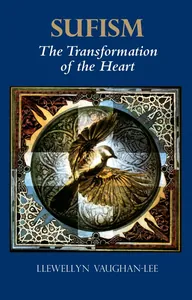
The prayer of the heart in Christian & Sufi mysticism

 74
74

The prayer of the heart in Christian & Sufi mysticism
Llewellyn Vaughan-Lee’s exploration of the prayer of the heart in Christian and Sufi traditions offers a compelling, if occasionally generalized, comparison. The book’s strength lies in its consistent focus on the heart as the seat of divine connection, moving beyond doctrinal differences to highlight shared contemplative methods. Vaughan-Lee writes with a gentle authority, making complex spiritual ideas accessible. However, the work sometimes feels more like an extended essay than a deeply scholarly treatise, lacking the granular detail one might expect from a comparative academic study. The discussion on Christian hesychasm, while present, could benefit from more extensive engagement with figures beyond the most commonly cited. Nevertheless, for those seeking an introduction to the interior life common to these two great traditions, the book provides a valuable and serene perspective.
📝 Description
74
### What It Is This 2012 work by Llewellyn Vaughan-Lee examines the profound parallels between the contemplative practices of Christian and Sufi mysticism, focusing specifically on the development and expression of the "prayer of the heart." It traces how this inner prayer, a direct communion with the Divine, manifests across distinct yet spiritually convergent traditions.
### Who It's For Readers interested in comparative mysticism, esoteric spirituality, and the practical application of prayer and meditation will find this book illuminating. It is particularly suited for those exploring the hidden connections between Eastern and Western contemplative paths, and for individuals seeking to deepen their own spiritual practice through ancient wisdom.
### Historical Context The book situates its discussion within the broader landscape of mystical theology and contemplative practice, drawing on historical figures and texts from both Christian and Islamic traditions. It implicitly engages with the historical periods when these traditions flourished and interacted, such as the medieval era and beyond, highlighting shared spiritual impulses.
### Key Concepts Vaughan-Lee explores the concept of the 'heart' not merely as a physical organ, but as the spiritual center of human consciousness. He discusses the practice of *dhikr* (remembrance of God) in Sufism and its parallels in Christian hesychasm, emphasizing the role of repetition, stillness, and direct divine experience as pathways to spiritual realization.
💡 Why Read This Book?
• Understand the concept of the 'heart' as a spiritual center, distinct from its physical form, a core idea in both Christian and Sufi mysticism. • Learn about the practice of *dhikr* (Sufi remembrance) and its striking parallels with Christian hesychasm, offering concrete techniques for inner prayer. • Gain insight into the spiritual convergence between two major world religions, fostering a deeper appreciation for shared contemplative paths as presented in this 2012 work.
⭐ Reader Reviews
Honest opinions from readers who have explored this book.
❓ Frequently Asked Questions
What is the 'prayer of the heart' discussed in Llewellyn Vaughan-Lee's book?
The 'prayer of the heart' refers to a direct, inner communion with the Divine, cultivated through contemplative practices. It's seen as the spiritual center of human consciousness, a concept explored in both Christian and Sufi traditions since at least the medieval period.
How does Llewellyn Vaughan-Lee compare Christian and Sufi mysticism?
Vaughan-Lee highlights their shared emphasis on the heart as the locus of spiritual experience and the use of practices like repetition and stillness to achieve direct divine connection, drawing parallels between Sufi *dhikr* and Christian hesychasm.
What is *dhikr*?
*Dhikr*, meaning remembrance or invocation, is a central Sufi practice involving the repetition of divine names or phrases to achieve constant awareness of God. This work explores its spiritual function.
What is hesychasm?
Hesychasm is a tradition of contemplative prayer in Eastern Orthodox Christianity, characterized by stillness and the Jesus Prayer. Vaughan-Lee draws parallels between its aims and methods and those found in Sufism.
When was 'The Prayer of the Heart in Christian & Sufi Mysticism' first published?
The book was first published in 2012, making it a relatively contemporary exploration of ancient mystical traditions.
Who is Llewellyn Vaughan-Lee?
Llewellyn Vaughan-Lee is a Sufi teacher and author known for his writings on spiritual practice, mysticism, and the contemporary spiritual landscape, often bridging Eastern and Western contemplative insights.
🔮 Key Themes & Symbolism
The Heart as Spiritual Center
This work posits the heart not as a biological pump but as the metaphysical core of awareness and divine connection. Vaughan-Lee draws from both Sufi cosmology and Christian contemplative theology to illustrate how the heart is the locus where humanity can directly encounter the Divine. It is the 'organ' through which sacred love and gnosis are received and expressed, a concept central to the mystical paths explored since at least the early centuries of Christianity and the formative period of Sufism.
Inner Prayer and Divine Remembrance
The book meticulously contrasts and compares the practices of inner prayer. It examines Sufi *dhikr*, the continuous remembrance of God through repetition, with Christian practices such as the Jesus Prayer and hesychasm. The emphasis is on the active cultivation of presence and the silencing of the discursive mind, leading to a state of unceasing prayer that transcends mere petition and becomes a state of being.
Mystical Convergence
A primary theme is the underlying unity of spiritual experience across seemingly disparate religious frameworks. Vaughan-Lee argues that the profound depths of Christian and Sufi mysticism, despite their differing theological expressions, arrive at similar truths about the nature of reality and the human soul's journey. This convergence is presented as evidence of a universal spiritual impulse accessible to all sincere seekers.
The Path of Love
Love is presented as the ultimate expression and driving force of the prayer of the heart. In both traditions, the journey inward is fundamentally a journey toward divine love, transforming the individual and aligning them with the compassionate essence of creation. This love is not merely an emotion but a powerful, active principle that guides the mystic toward union and service.
💬 Memorable Quotes
“The heart is the place where we meet God.”
— This statement encapsulates the book's core thesis: that the spiritual heart, rather than external dogma or ritual alone, serves as the primary interface between the human and the divine, the point of direct encounter.
“In Sufism, the practice of dhikr is a constant remembrance of God.”
— This highlights a key Sufi practice explored in the book, emphasizing its active, ongoing nature as a means of maintaining divine consciousness throughout daily life.
“Christian mystics also sought stillness and direct experience.”
— This interpretation points to the parallels drawn between Sufi remembrance and Christian contemplative traditions like hesychasm, focusing on the shared goal of inner quietude and immediate divine perception.
“The prayer of the heart is not learned, but awakened.”
— This suggests that the capacity for profound spiritual connection is inherent within the human being, requiring cultivation and awakening rather than external acquisition.
“Love is the language of the soul.”
— This aphorism underscores the book's emphasis on love as the fundamental essence of spiritual realization and the primary mode of communication between the soul and the Divine.
🌙 Esoteric Significance
Tradition
The work draws heavily on Sufism, a prominent esoteric tradition within Islam, and Christian contemplative mysticism, particularly its more esoteric and apophatic strands. It fits within a broader Hermetic and Neoplatonic framework that emphasizes the soul's journey toward the Divine through inner purification and direct experience. Vaughan-Lee's approach aligns with modern esoteric movements that seek universal truths across religions, often privileging experiential knowledge over exoteric doctrine.
Symbolism
The central symbol is the 'heart,' understood not just emotionally but as the spiritual center of being, the 'inner eye' through which God is perceived. Another motif is 'stillness' or *sukūn* (Sufi), representing the cessation of ego-driven thought and the opening to divine presence. The repetition of divine names or mantras (as in *dhikr* or the Jesus Prayer) also functions symbolically, acting as a 'key' to unlock deeper states of consciousness.
Modern Relevance
This book resonates with contemporary seekers interested in mindfulness, meditation, and interfaith dialogue. It speaks to practitioners in various spiritual paths, including Western esotericism, New Age spirituality, and secular contemplative communities, who are seeking practical methods for inner transformation. Thinkers and teachers focused on somatic spirituality and the integration of mind, body, and spirit find its emphasis on the heart particularly relevant.
👥 Who Should Read This Book
• Individuals exploring comparative religion and mysticism, seeking to understand the common threads between Sufi and Christian spiritual paths. • Practitioners of meditation and contemplative prayer, looking for guidance on cultivating inner stillness and direct experience of the Divine. • Students of esoteric traditions interested in the concept of the 'heart' as a spiritual center and its role in mystical ascent.
📜 Historical Context
Published in 2012, Llewellyn Vaughan-Lee's work emerges in an era of renewed interest in contemplative practices and comparative religion. It engages with a long lineage of mystical thought, implicitly referencing figures like Rumi and Ibn Arabi in the Sufi tradition, and Hesychast masters and Christian mystics such as Meister Eckhart or Julian of Norwich from the Christian side. The book arrives at a time when scholars and practitioners alike are exploring the 'unitive' aspects of religious experience, seeking common ground between diverse faith traditions. It implicitly navigates the post-Enlightenment skepticism towards direct spiritual experience, offering a counter-narrative grounded in historical practice. While not directly engaging with a specific contemporary controversy, it contributes to a broader discourse that challenges rigid religious boundaries and emphasizes shared human spiritual aspirations, a discourse influenced by figures like Huston Smith who championed interfaith understanding.
📔 Journal Prompts
Reflect on the concept of the 'heart' as the spiritual center of awareness.
Consider the practice of *dhikr* and its potential parallels in your own contemplative exercises.
How does the idea of 'divine remembrance' challenge your current understanding of prayer?
Explore the notion of 'stillness' as a gateway to spiritual insight.
What does the convergence of Christian and Sufi mystical aims suggest about the universal nature of spiritual longing?
🗂️ Glossary
Prayer of the Heart
A direct, unceasing inner communion with the Divine, cultivated through contemplative practices, understood as emanating from the spiritual center of the human being.
Dhikr
An Arabic term from Sufism meaning 'remembrance' or 'invocation,' often involving the repetition of divine names or phrases to maintain constant awareness of God.
Hesychasm
A contemplative tradition within Eastern Orthodox Christianity, emphasizing inner stillness and the Jesus Prayer ('Lord Jesus Christ, Son of God, have mercy on me').
Spiritual Center
The metaphysical core of consciousness, often identified with the heart, through which direct experience of the Divine is possible.
Contemplative Practice
Methods aimed at achieving deep inner stillness and direct spiritual insight, transcending discursive thought and ordinary perception.
Mysticism
The pursuit of knowledge of the ultimate reality or of a spiritual truth by direct experience, intuition, or insight, often involving union with the Divine.
Gnosis
Spiritual knowledge, often understood as direct, intuitive apprehension of divine truths, particularly prominent in certain Christian and Hellenistic traditions.