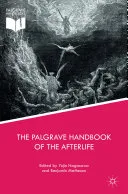
The Palgrave Handbook of the Afterlife
 77
77

The Palgrave Handbook of the Afterlife
The Palgrave Handbook of the Afterlife presents a commendably broad survey, tackling a subject often shrouded in dogma with academic rigor. Nagasawa and Matheson have assembled contributions that systematically dissect the philosophical coherence of notions like rebirth and the traditional Abrahamic afterlife states. A particular strength lies in its engagement with ancient Mesopotamian and Egyptian views on the underworld, providing a crucial historical bedrock often neglected in more recent treatments. However, the collection occasionally falters in its esoteric coverage; while it touches upon concepts like Purgatory, the exploration of more complex, non-Abrahamic spiritual continuities, such as those found in Hermetic or Gnostic traditions, feels somewhat underdeveloped. The sheer density of philosophical argument may also prove challenging for readers without a background in analytic philosophy. Despite these limitations, the handbook offers a valuable, if sometimes dry, resource for understanding the intellectual history of life after death. It serves as a critical reference for the academic study of eschatology.
📝 Description
77
Published in 2023, this handbook examines diverse perspectives on life after death.
This volume provides a scholarly examination of various ideas about what happens after death. It goes beyond simple belief systems to analyze the philosophical, historical, and scientific bases for concepts of existence beyond the physical body. The book carefully looks at ideas about the soul's continuation, the nature of eternal places, and rebirth, connecting speculative thought with careful reasoning.
Academics, theologians, philosophers, and students of comparative religion will find this book useful. It is for those who want a deep, analytical understanding of beliefs about the end of life. It moves past personal stories to engage with complex theories. People interested in how afterlife ideas have changed across cultures and belief systems will also gain from it.
This handbook situates discussions of the afterlife within broader philosophical and religious traditions. It considers how beliefs about death and what follows have shaped human ethics and societies across history. The work engages with both theological doctrines and philosophical arguments, examining their logical structure and cultural impact. It bridges discussions of speculative thought with reasoned inquiry, drawing on historical examples from antiquity to contemporary debates.
💡 Why Read This Book?
• Gain a nuanced understanding of the philosophical arguments surrounding the afterlife, specifically how thinkers in the 2017 collection analyze the coherence of Heaven and Hell. • Explore the historical trajectory of afterlife beliefs, tracing their roots back to ancient Mesopotamian concepts of the underworld. • Grasp the detailed philosophical examinations of rebirth and reincarnation as presented in scholarly discourse, moving beyond popular interpretations.
⭐ Reader Reviews
Honest opinions from readers who have explored this book.
❓ Frequently Asked Questions
What is the primary focus of The Palgrave Handbook of the Afterlife?
The handbook provides a scholarly overview of advanced thought on life after death, encompassing historical, religious, philosophical, and scientific perspectives on concepts like heaven, hell, and rebirth.
When was The Palgrave Handbook of the Afterlife first published?
The handbook was first published on October 12, 2017.
Who are the editors of this handbook?
The editors are Yujin Nagasawa and Benjamin Matheson, who compiled scholarly essays on the topic.
Does the book discuss scientific theories about the afterlife?
Yes, the handbook includes scientific thinking alongside historical, religious, and philosophical approaches to the idea of existence beyond death.
What specific afterlife concepts are examined in detail?
The book examines traditional notions such as heaven, hell, purgatory, and rebirth, analyzing their philosophical coherence and historical development.
Is this book suitable for beginners interested in the afterlife?
While comprehensive, the handbook offers a sophisticated, scholarly overview, making it best suited for academics, theologians, and serious students rather than casual readers.
🔮 Key Themes & Symbolism
Philosophical Coherence
This handbook critically assesses the logical consistency and philosophical arguments supporting various notions of the afterlife. It moves beyond mere description of beliefs to engage with the rational frameworks underpinning concepts such as eternal reward/punishment and the mechanics of reincarnation. The work scrutinizes whether these ideas can withstand rigorous philosophical inquiry, examining the conditions required for a coherent understanding of existence beyond the physical realm.
Historical Evolution of Belief
A significant thread traces the development of afterlife concepts across millennia. From ancient Egyptian beliefs about the Duat to the formation of Christian doctrines of Heaven and Hell, the book charts how cultural and religious contexts shaped eschatological thought. This historical perspective provides crucial context for understanding the diversity and persistence of these ideas throughout human civilization.
Comparative Religious Doctrines
The volume offers detailed comparisons of major religious traditions' views on what happens after death. It contrasts Abrahamic concepts like Purgatory with Eastern notions of rebirth and karma, highlighting both commonalities and divergences. This comparative approach reveals the varied human attempts to grapple with mortality and the possibility of continued consciousness.
Scientific and Materialist Challenges
The handbook also considers the impact of scientific and materialist worldviews on afterlife beliefs. It engages with arguments that challenge the possibility of disembodied existence and explores how philosophical responses have been formulated. This section addresses the tension between empirical observation and speculative or faith-based understandings of post-mortem reality.
💬 Memorable Quotes
Direct passages from the work, attributed to the author.
“The philosophical coherence of traditional notions of the afterlife.”
— This highlights the handbook's core academic mission: to evaluate whether concepts like heaven, hell, and rebirth are logically sound and philosophically defensible.
“Starting with an overview of ancient thought on the topic.”
— This indicates the book's commitment to historical depth, grounding its analysis in the earliest known human speculations about existence after death.
“Examining in detail the philosophical coherence of the main traditional notions of the nature of the afterlife including heaven, hell, purgatory and rebirth.”
— This emphasizes the detailed, analytical approach taken towards key eschatological concepts, focusing on their logical structure and philosophical validity.
“Comprehensive coverage encompasses historical, religious, philosophical and scientific thinking.”
— This underscores the interdisciplinary nature of the handbook, aiming for a holistic understanding by integrating diverse fields of inquiry.
“Sophisticated, scholarly overview of the most advanced thought regarding the idea of life after death.”
— This defines the target audience and the intellectual level of the content, aiming at advanced academic discourse rather than popular speculation.
🌙 Esoteric Significance
Tradition
While not explicitly aligned with a single esoteric lineage, the handbook's rigorous examination of concepts like rebirth and spiritual continuation provides a critical framework for understanding beliefs found within traditions like Theosophy or certain Hermetic schools. It offers a scholarly lens through which esoteric practitioners can analyze the philosophical underpinnings of their own doctrines, distinguishing between faith-based tenets and reasoned arguments.
Symbolism
The book dissects symbols inherent in afterlife concepts: the celestial area of Heaven often symbolizes ultimate peace and divine union, while Hell represents separation and suffering. Rebirth, particularly in Eastern thought, symbolizes cyclical existence and the potential for spiritual evolution or karmic retribution. The handbook analyzes these symbolic representations not just as metaphors but as integral components of coherent belief systems.
Modern Relevance
Contemporary thinkers exploring consciousness, artificial intelligence, and the nature of identity find relevance in the handbook's philosophical dissections. Philosophers of mind and ethicists grappling with personhood beyond the physical body can utilize its arguments. Furthermore, scholars of comparative religion and cultural studies draw upon its historical and doctrinal analyses to understand enduring human concerns about mortality and transcendence.
👥 Who Should Read This Book
• Academic researchers in philosophy of religion, comparative theology, and religious studies seeking a comprehensive overview of scholarly thought on eschatology. • Graduate students in relevant fields needing foundational texts for understanding the philosophical and historical dimensions of afterlife concepts. • Skeptics and critical thinkers interested in the logical and evidential basis for beliefs about life after death, presented through rigorous analysis.
📜 Historical Context
Published in 2017, The Palgrave Handbook of the Afterlife emerged during a period of renewed academic interest in the philosophy of religion and consciousness studies. It responded to a landscape where, while popular interest in the afterlife remained high, rigorous philosophical engagement often lagged behind. The work situates itself within a tradition of scholarly inquiry that includes figures like David Lewis and Peter van Inwagen, who explored personal identity and persistence through time, relevant to post-mortem existence. While not directly engaging with fringe spiritualist movements, it implicitly acknowledges their cultural persistence by providing a counterpoint of reasoned analysis. The handbook's approach contrasts sharply with more speculative or theological treatments prevalent in non-academic circles, offering a secular, philosophical lens. Its publication aimed to consolidate and advance the academic conversation on eschatology, providing a resource for researchers seeking a comprehensive overview of established arguments and historical perspectives.
📔 Journal Prompts
The philosophical coherence of heaven and hell.
Ancient Mesopotamian conceptions of the underworld.
The concept of rebirth across different traditions.
Scientific challenges to disembodied existence.
The historical development of Purgatory.
🗂️ Glossary
Eschatology
The branch of theology concerned with death, judgment, and the final destiny of the soul and of humankind.
Rebirth
The concept, found in several religions and philosophies, that an individual's essential being or soul begins a new life in a different physical body or form after biological death.
Philosophical Coherence
The logical consistency and internal validity of a set of beliefs or concepts; whether they can be held together without contradiction.
Abrahamic Religions
Religions that trace their common origin to Abraham, including Judaism, Christianity, and Islam, often sharing core theological concepts.
Duat
The ancient Egyptian concept of the underworld, the area of the dead, traversed by the sun god Ra during the night.
Materialism
The philosophical view that matter is the fundamental substance in nature, and that all phenomena, including mental states and consciousness, are results of material interactions.
Purgatory
In Catholic theology, a state or place of temporary punishment in which souls destined for Heaven undergo purification to remove unexpiated guilt.