The origins of popular superstitions and customs

 76
76

The origins of popular superstitions and customs
Knowlson’s 1930 compendium offers a methodical exploration of how superstitions and customs become ingrained. Its strength lies in its sheer breadth, cataloging beliefs from diverse cultures and historical periods with a detached, academic precision. The section detailing the origins of common fears, like the association of black cats with ill luck, provides concrete examples of how cultural narratives solidify. However, the work occasionally suffers from a late Victorian/early modern perspective, sometimes framing these beliefs as mere curiosities or evolutionary dead ends rather than acknowledging their deeper psychological or social functions. The lack of a strong theoretical through-line, while making it accessible, also prevents a more integrated understanding. It remains a valuable, if somewhat dated, reference for tracing specific cultural phenomena.
📝 Description
76
T. Sharper Knowlson's 1930 book traces the origins of common superstitions and customs.
First published in 1930, T. Sharper Knowlson's work examines the roots of numerous beliefs and practices found across human societies. It acts as a comprehensive record, detailing how superstitions, folklore, and rituals develop and become integrated into social norms. The book looks at how these customs, often stemming from old anxieties or understandings of the cosmos, continue to shape collective behavior.
Knowlson's study is useful for those interested in folklore, comparative religion, anthropology, and cultural history. It addresses the psychological and social factors behind belief systems, especially the persistence of tradition alongside rational thought. Scholars and practitioners of esoteric traditions might find value in seeing how certain symbolic practices originated.
Published in the interwar period, Knowlson's book emerged when psychology and cultural studies were developing. It reflects an effort to understand human behavior, viewing traditional beliefs through the lens of earlier developmental stages. While less theoretical than contemporaries like Sir James Frazer, Knowlson's work provides a focused look at specific customs, offering a historical perspective on practices that often intersect with esoteric traditions.
💡 Why Read This Book?
• Gain insight into the origins of specific superstitions, such as the widespread belief in lucky charms, understanding how these practices arose from ancient attempts to control fate. • Explore the psychological roots of common fears and taboos detailed in the chapter on omens, learning how societal anxieties are codified into ritualistic behaviors. • Understand the historical context of early 20th-century folkloric study by examining Knowlson's approach, which reflects the scientific yet often dismissive attitudes of the era towards non-rational beliefs.
⭐ Reader Reviews
Honest opinions from readers who have explored this book.
❓ Frequently Asked Questions
When was The Origins of Popular Superstitions and Customs first published?
The book was first published in 1930, placing it within the interwar period when academic interest in folklore and comparative religion was significant.
What kind of superstitions does T. Sharper Knowlson discuss?
Knowlson discusses a wide array, including beliefs surrounding luck (good and bad), omens, amulets, charms, numbers, and various ritualistic practices intended to ward off misfortune or attract good fortune.
Does the book offer psychological interpretations of superstitions?
Yes, while not as deeply theoretical as later psychological analyses, the book explores the underlying human desires for control and explanations that drive the formation and persistence of superstitions.
Is this book a primary source for esoteric practices?
While not a manual for esoteric practices, it provides historical context and origins for many customs and beliefs that have esoteric or symbolic significance in various traditions.
What is the author's perspective on these customs?
Knowlson generally adopts an academic and analytical stance, aiming to trace the historical and cultural development of superstitions rather than endorsing or condemning them.
Where can I find information on the author, T. Sharper Knowlson?
Information on T. Sharper Knowlson is sparse, typical of many authors of specialized works from the early 20th century, but his 1930 publication remains a key reference in its field.
🔮 Key Themes & Symbolism
Sympathetic Magic
The book extensively details the principle of sympathetic magic, where like affects like or where a person or object can influence another through a connection. Knowlson examines how this ancient concept underpins many rituals, from using effigies to influence individuals to the belief that certain actions can attract or repel specific outcomes. This theme is crucial for understanding the logic behind many seemingly irrational customs, revealing a worldview where connections, not just causality, govern events.
Omens and Portents
A significant portion of the work is dedicated to the interpretation of omens – signs or events believed to predict future occurrences. Knowlson traces the origins of beliefs concerning birds, celestial phenomena, animal behavior, and even chance encounters as indicators of good or ill fortune. This theme highlights humanity's enduring quest to decipher the future and gain a sense of control over an unpredictable world, often through symbolic interpretation.
The Persistence of Tradition
Knowlson's analysis implicitly addresses why certain beliefs and customs, even when logically unfounded, continue to be practiced. The book illustrates how these traditions become embedded in social fabric, passed down through generations, and often serve psychological or social functions—providing comfort, reinforcing group identity, or offering explanations for the inexplicable. This persistence is a core element in understanding cultural inertia and the power of collective belief.
Symbolism in Everyday Life
The work reveals the pervasive role of symbolism in shaping everyday practices and beliefs. Numbers, colors, animals, and objects are shown to carry specific meanings that influence behavior, from avoiding certain numbers (like 13) to the use of amulets for protection. This theme underscores how seemingly mundane items and occurrences are imbued with deeper significance within cultural frameworks, connecting the ordinary to the extraordinary.
💬 Memorable Quotes
Direct passages from the work, attributed to the author.
“The superstition that breaking a mirror brings seven years' bad luck is traced to the belief that the mirror captured a portion of the soul.”
— This highlights how ancient beliefs about the soul and its connection to physical objects can manifest in modern superstitions, even after the original metaphysical underpinnings are forgotten.
“Many customs related to childbirth and infancy stem from a desire to protect the vulnerable new life from unseen malevolent forces.”
— This points to the fundamental human drive for protection and the tendency to personify threats when faced with the unknown, especially concerning the fragile beginnings of life.
“The fear of the number thirteen is often linked to its association with betrayal and misfortune in various religious and historical narratives.”
— This illustrates how specific numerical associations, often originating from significant historical or mythical events, can become deeply ingrained cultural taboos.
“The use of amulets and charms is presented as a practical application of sympathetic magic, intended to attract specific benefits or ward off harm.”
— This explains the functional aspect of talismans and protective objects, viewing them not as mere trinkets but as tools designed to influence reality through symbolic means.
“Knowlson notes the widespread belief that certain animals, like black cats, carry omens due to their association with the nocturnal and the mysterious.”
— This demonstrates how the perceived characteristics of nature, particularly those linked to darkness and the unseen, are often projected onto animals, leading to symbolic interpretations of their presence.
🌙 Esoteric Significance
Tradition
While not explicitly tied to a single esoteric lineage, Knowlson's work engages with themes common in Western Esotericism, such as sympathetic magic, numerology, and the symbolic power of objects and animals. It provides a historical and anthropological grounding for practices found in Hermeticism, Kabbalah, and folk magic, examining their pre-rational or proto-rational origins before they were codified within specific mystical systems.
Symbolism
Key symbols explored include the number thirteen, often associated with ill fortune due to its presence in significant historical or religious events (e.g., the Last Supper). Black cats are examined as symbols of bad luck, tied to ancient associations with the night and witchcraft. Amulets and charms are presented as tangible symbols of protection or good fortune, embodying the belief in focused intent and symbolic efficacy.
Modern Relevance
Contemporary practitioners of modern witchcraft, paganism, and various forms of folk magic often draw upon historical analyses like Knowlson's to understand the roots of their craft. Psychologists studying belief formation and cognitive biases find value in the historical data presented. Additionally, cultural historians and folklorists continue to reference the book for its extensive cataloging of practices that inform our understanding of collective psychology and cultural transmission.
👥 Who Should Read This Book
• Students of folklore and comparative religion seeking to understand the historical development and cross-cultural prevalence of common superstitions. • Anthropologists and cultural historians interested in the social and psychological functions of belief systems and traditional practices. • Individuals exploring the origins of esoteric symbolism and practices, looking to connect modern rituals to their ancient roots and folk traditions.
📜 Historical Context
T. Sharper Knowlson's *The Origins of Popular Superstitions and Customs* emerged in 1930, a period marked by significant intellectual shifts. The burgeoning fields of psychology, led by figures like Sigmund Freud and Carl Jung, were beginning to offer new frameworks for understanding the human psyche, including the roots of irrational beliefs. Anthropology, too, was developing more systematic methods for studying cultures, with works like Sir James Frazer's *The Golden Bough* (first published 1890, expanded thereafter) influencing popular and academic thought on magic, religion, and ritual. Knowlson's book, while less theoretically ambitious than Frazer's, contributed to this broader effort to clarify and catalogue human practices. It arrived at a time when rationalism was ascendant, yet the persistence of traditional beliefs and superstitions was a subject of fascination and study. The reception was generally that of an academic reference, fitting into the growing body of comparative folklore literature, though it did not provoke major controversy or widespread critical debate.
📔 Journal Prompts
The symbolic meaning of black cats in folklore, as discussed by Knowlson.
The underlying anxieties that drive the belief in omens.
How the principle of sympathetic magic might manifest in contemporary actions or beliefs.
The persistence of specific customs despite rational explanations.
Tracing the origin of a personal superstition back to the concepts presented in the book.
🗂️ Glossary
Sympathetic Magic
A form of magic based on the principle that like produces like or that a person or thing can affect another through a like resemblance or connection.
Omen
An event or occurrence believed to be a sign or warning of a future good or evil.
Amulet
An object worn or carried, believed to protect the wearer from evil or bring good luck.
Taboo
A social or religious custom prohibiting or restricting a particular practice or the use or handling of a particular person, place, or thing.
Folklore
The traditions, beliefs, customs, stories, and sayings of a community, typically passed on by word of mouth.
Charm
A spoken spell or uttered word or words believed to have a magical effect; also, an object on which such a spell is inscribed or associated.
Superstition
A belief or way of behaving that is based on fear of the unknown and of luck or magic or on any belief that is not based on known forces.
🔮 Readers Also Liked
Browse all →








More by T. Sharper Knowlson
All books →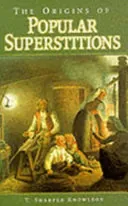
More Free Occult Philosophy Books
View all →