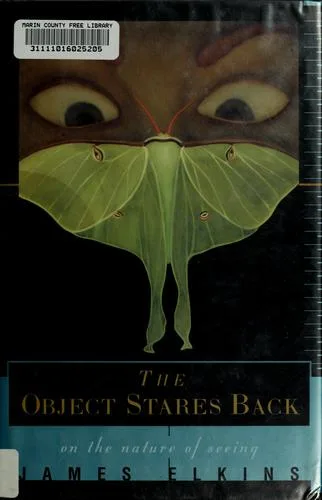
The object stares back

 74
74

The object stares back
Elkins’s "The object stares back" offers a compelling, if sometimes dense, examination of how certain objects refuse to be mere passive recipients of our gaze. He moves adeptly from discussions of religious icons to the unsettling nature of medical illustrations, demonstrating how the inanimate can possess a potent, almost sentient, quality. A particular strength lies in his analysis of how religious art, through its intended devotional function, often engenders an experience of being observed by the divine or the sacred, a concept he extends to secular objects with disturbing efficacy. However, the book's academic rigor occasionally leads to prose that can feel opaque, requiring considerable readerly effort. Elkins's discussion of the photographic uncanny, particularly his engagement with the unsettling nature of certain daguerreotypes, provides a concrete anchor for his more abstract arguments. It’s a demanding but rewarding text for those willing to confront the active presence of the visual world.
📝 Description
74
### What It Is
James Elkins's "The object stares back" is an exploration into the nature of vision and representation, particularly as it pertains to objects that possess an uncanny or disturbing quality. It moves beyond simple aesthetics to investigate the psychological and philosophical dimensions of how we perceive and are perceived by the world around us. The book examines instances where objects seem to defy passive observation, asserting a presence that demands a response from the viewer. This is not a guide to object manipulation, but a critical inquiry into the phenomenology of looking and being looked at by inanimate forms.
### Who It's For
This work is intended for readers who engage with art, philosophy, and critical theory with a keen interest in the unsettling. It will appeal to those who find themselves drawn to the darker, more enigmatic aspects of visual culture and the uncanny in everyday objects. Scholars of visual studies, art history, and psychoanalysis will find rich material here, as will anyone interested in how our perception is shaped by the inherent qualities of the objects we encounter. It is for the viewer who questions not just what they see, but why it appears as it does.
### Historical Context
Published in 1996, "The object stares back" emerged during a period of intense theoretical discourse surrounding postmodernism, visual culture, and the nature of the subject-object relationship. Elkins was writing in dialogue with thinkers who were re-evaluating the legacy of phenomenology and semiotics, particularly concerning the impact of the visual on consciousness. The book's focus on the active, often unsettling, nature of objects can be seen as a counterpoint to earlier, more purely structuralist or formalist approaches to art and perception that dominated mid-20th century criticism.
### Key Concepts
The book engages with the concept of the "uncanny" as described by Freud, applying it to the visual field and the experience of confronting certain objects. It discusses the "gaze" not merely as a human act but as something objects can reciprocate, creating a disquieting feedback loop. Elkins also touches upon the idea of "haunting" in relation to artifacts and images, exploring how they can retain a potent presence that transcends their material form or historical moment.
💡 Why Read This Book?
• Gain a new framework for understanding the unsettling power of certain images and artifacts, as explored through Elkins's analysis of the "gaze" exchanged between viewer and object. • Appreciate the historical context of visual theory in the mid-1990s, understanding how Elkins engaged with postmodernism and phenomenology to reframe perception. • Develop a critical lens for analyzing how religious art and iconography, as discussed in the book, establish a powerful, reciprocal relationship with the observer.
⭐ Reader Reviews
Honest opinions from readers who have explored this book.
❓ Frequently Asked Questions
What is the central argument of James Elkins's 'The object stares back'?
The book argues that certain objects possess an active presence, returning the viewer's gaze and unsettling our passive perception. It explores how this phenomenon, termed the 'object gaze,' challenges our understanding of representation and the subject-object dynamic.
When was 'The object stares back' first published?
The book was first published in 1996, placing it within the intellectual currents of late 20th-century visual theory and postmodern discourse.
What kind of objects does Elkins analyze in the book?
Elkins examines a diverse range of objects, including religious icons, medical illustrations, photographs (like daguerreotypes), and other artifacts that exhibit an uncanny or potent visual presence.
Does the book offer practical advice on dealing with unsettling objects?
No, 'The object stares back' is primarily a theoretical and philosophical inquiry. It analyzes the phenomenology of perception rather than providing practical methods for managing unsettling visual experiences.
Who would benefit most from reading 'The object stares back'?
Academics and students in visual studies, art history, philosophy, and psychoanalysis, as well as general readers interested in the psychology of perception and the uncanny, will find this work valuable.
What does Elkins mean by the 'object gaze'?
The 'object gaze' refers to the perceived ability of an object to 'look back' at the viewer, disrupting the assumption that vision is a one-way street. It suggests objects can exert a powerful, almost sentient, influence on our perception.
🔮 Key Themes & Symbolism
The Reciprocal Gaze
Elkins probes the unsettling notion that objects can return our gaze, disrupting the traditional subject-object dichotomy. This concept, explored through analyses of art and artifacts, suggests that perception is not a passive reception but an active, often disquieting, exchange. The book examines how certain images and artifacts seem to possess an agency, compelling the viewer into a dialogue that transcends mere visual appreciation. This reciprocal relationship is central to understanding how inanimate forms can exert a powerful psychological influence.
The Uncanny in Visual Representation
Drawing on Freudian concepts, Elkins investigates the uncanny effect produced by specific objects and images. These are not simply aesthetically displeasing but evoke a sense of dread or familiarity that is deeply unsettling. The work delves into how religious iconography, medical illustrations, and certain photographic images (like daguerreotypes) achieve this unsettling quality, often by blurring the lines between the animate and inanimate, the familiar and the alien. It questions the boundaries of what we consider 'normal' perception.
Object Agency and Presence
A core theme is the idea that objects are not inert but can possess a form of agency or potent presence. This presence is felt in their ability to command attention, evoke emotion, or even seem to exert influence over the viewer. Elkins explores how this perceived agency manifests across different cultural and historical contexts, from ancient idols to modern media. The book challenges us to consider the inherent power within the material world and our complex, often unconscious, responses to it.
Perception Beyond the Aesthetic
This work moves beyond purely aesthetic analysis to consider the deeper psychological and philosophical implications of how we see. It interrogates the very mechanisms of vision and how our understanding of reality is constructed through our encounters with objects. Elkins suggests that our perception is constantly being shaped and challenged by the visual field, urging readers to look more critically at the objects that populate their world and the unspoken dialogues they engage in.
💬 Memorable Quotes
“Objects possess the ability to return our gaze.”
— This statement encapsulates Elkins's central thesis: that the act of seeing is not unilateral. Objects, through their form, context, or perceived history, can seem to actively engage the viewer, creating a disquieting sense of reciprocity.
“The uncanny arises from the familiar made strange.”
— Elkins applies this Freudian concept to visual phenomena, suggesting that unsettling feelings often stem from encountering something that is recognizable yet imbued with an alien or disturbing quality, challenging our sense of normalcy.
“Religious icons are designed to be looked at, but also to look back.”
— This interpretation highlights how sacred images are often intended to create a sense of divine presence and active engagement, implying the icon is not merely a passive representation but a conduit for a powerful, reciprocal spiritual connection.
“Photographs can hold a disturbing temporal echo.”
— This refers to the power of photographs, particularly older ones like daguerreotypes, to evoke a strong sense of the past and the presence of those depicted, sometimes in a way that feels uncanny or even spectral to the modern viewer.
“The boundary between the animate and inanimate is more fluid than we assume.”
— Elkins challenges the clear distinction we often make between living and non-living things, suggesting that our perception and the nature of certain objects can blur this line, leading to experiences of the uncanny or a sense of object agency.
🌙 Esoteric Significance
Tradition
While not explicitly aligned with a single esoteric lineage, "The Object Stares Back" deeply engages with concepts relevant to Hermeticism and Gnosticism through its exploration of perception, representation, and the hidden life within objects. The Hermetic principle "As above, so below" finds a visual corollary in Elkins's examination of how internal states (perception, dread) are mirrored or evoked by external forms. The Gnostic concern with the material world as potentially deceptive or possessing a hidden, active power also resonates, particularly in the discussion of objects that 'stare back' and disrupt our conventional understanding of reality.
Symbolism
The book implicitly works with symbols of the 'returning gaze' – eyes in art, mirrors, or reflective surfaces – which symbolize self-awareness, judgment, or the uncanny presence of the other. Another motif is the 'haunted object,' representing the persistence of memory, trauma, or spiritual residue within material forms. These symbols challenge the viewer's passive role, suggesting that objects are not inert but carriers of meaning and potential agency that can profoundly affect our psychological and even spiritual state.
Modern Relevance
Contemporary thinkers in fields like affect theory, new materialism, and object-oriented ontology (like Graham Harman) draw on similar ideas about the agency and presence of non-human entities. Elkins's work provides a crucial theoretical precursor for understanding how contemporary art, digital media, and even everyday technology create complex, often unsettling, interactions that challenge human-centered views of perception and reality. His analysis of the uncanny in visual culture remains highly relevant for interpreting the psychological impact of our increasingly image-driven world.
👥 Who Should Read This Book
• Students of visual culture and art history seeking to deepen their understanding of perception, representation, and the uncanny effects in art. • Philosophers and theorists interested in phenomenology, the subject-object relationship, and the psychological impact of the visual world. • Artists and designers grappling with the power of their creations and how objects can actively engage an audience beyond mere aesthetics.
📜 Historical Context
Published in 1996, James Elkins's "The object stares back" emerged in the fertile ground of late 20th-century visual theory. This era was marked by critical engagement with postmodernism, post-structuralism, and the burgeoning field of visual culture studies. Elkins was participating in a conversation that sought to move beyond formalist analysis and semiotics, questioning the nature of the subject-object relationship in a media-saturated world. Contemporary thinkers like Rosalind Krauss and Hal Foster were exploring similar territories regarding the gaze and the uncanny in art and photography. The book's focus on the unsettling power of objects can be seen as a response to, and an extension of, earlier psychoanalytic theories of the uncanny, notably Freud's 1919 essay. While not a direct engagement with religious studies per se, its analysis of icons implicitly touched upon the phenomenology of religious experience, a field gaining academic traction. The book's reception was primarily within academic circles, appreciated for its theoretical depth in visual studies and art history.
📔 Journal Prompts
The object's return gaze: How does the concept of the reciprocal gaze alter your perception of everyday items?
Reflecting on the uncanny: Identify an object or image that evokes an uncanny feeling for you and describe its specific qualities.
The agency of icons: Consider a religious or cultural icon; in what ways does it seem to 'look back' at you?
Beyond the aesthetic: Analyze a piece of art or an artifact, focusing not on its beauty but on its unsettling or powerful presence.
The boundary of the animate: Explore an instance where you felt a non-living object possessed a distinct presence or agency.
🗂️ Glossary
Object Gaze
The concept that objects can possess an active presence, returning the viewer's gaze and disrupting the passive assumption of visual perception. It implies a reciprocal relationship between observer and observed.
Uncanny
A psychological concept describing a feeling of unease, dread, or strangeness evoked by something that is paradoxically familiar yet alien or disturbing.
Phenomenology
A philosophical approach that focuses on the study of conscious experience as experienced from the first-person point of view, emphasizing subjective perception and lived experience.
Reciprocal Gaze
The idea that looking is a two-way process, where the object being looked at also seems to engage in the act of seeing or returning the viewer's attention.
Object Agency
The perceived capacity of inanimate objects to exert influence, possess presence, or actively engage with the human observer, challenging the notion of their passivity.
Representation
The act or manner of depicting, describing, or referring to something; in art and theory, it concerns how subjects or objects are presented or symbolized.
Iconography
The visual images and symbols used in a work of art or the study or interpretation of these.