The Night Before Christmas
 79
79

The Night Before Christmas
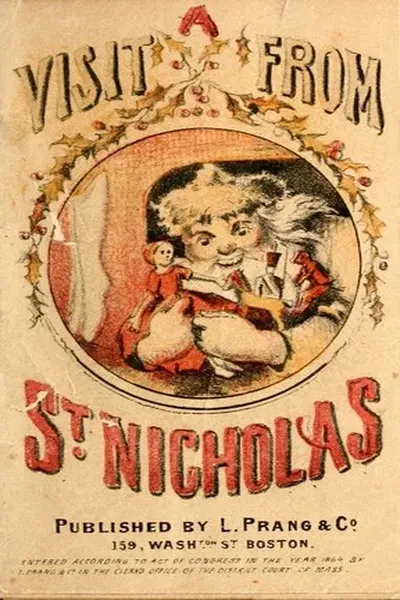
Clement Clarke Moore's "A Visit from St. Nicholas" (more commonly known as "The Night Before Christmas") functions less as literature and more as a cultural artifact, so deeply embedded is its imagery in global consciousness. Its strength lies in its sheer pervasiveness; the visual of Saint Nicholas with his "droll little mouth / Turned up like a bow" and "eight tiny reindeer" has become the definitive portrayal. However, from a critical standpoint, the verse itself is serviceable rather than exceptional, adhering to a consistent rhythm and rhyme scheme without offering profound poetic innovation. The passage describing Saint Nicholas's "twinkling eyes" and "dimpled cheeks" effectively cements his jovial, benevolent persona. While its literary merit may be debated, its cultural impact is undeniable, solidifying a specific vision of Christmas Eve.
Verdict: A foundational piece of holiday iconography, more significant for what it created than for its intrinsic poetic qualities.
📝 Description
79
### What It Is
This text, first published anonymously in 1857, presents a vivid narrative of a pre-Christmas Eve visit from Saint Nicholas. It details his arrival via reindeer-drawn sleigh, his entry into a home, and his distribution of toys to sleeping children. The work has become a foundational piece of Western Christmas lore, shaping popular imagery of Santa Claus and his nocturnal rounds.
### Who It's For
Readers interested in the cultural evolution of holiday traditions and the iconography of Saint Nicholas will find this work illuminating. It appeals to those who appreciate classic poetry and its enduring impact on collective imagination. Scholars of folklore, American literature, and the history of children's literature may also engage with its foundational role.
### Historical Context
The poem emerged during the mid-19th century, a period of burgeoning American literary identity and a romanticized view of domestic and holiday customs. It was published in *The New-Yorker* and later attributed to Clement Clarke Moore. This era saw a growing interest in children's literature and the codification of holiday rituals that would become central to modern Christmas celebrations.
### Key Concepts
The narrative centers on the figure of Saint Nicholas, transforming him into the familiar, jolly character of Santa Claus. Key elements include the magical transport via flying reindeer, the silent descent into a home, and the symbolic act of gift-giving. The poem also encapsulates a sense of wonder and familial warmth associated with the holiday season.
💡 Why Read This Book?
• Understand the origins of the modern Santa Claus image, learning how Clement Clarke Moore's 1823 poem specifically described the reindeer and sleigh that define him. • Appreciate the evolution of Christmas folklore by examining the poem's influence on subsequent cultural depictions of the holiday figure. • Connect with the specific imagery of Saint Nicholas's arrival, as detailed in the poem's verses, and consider its symbolic representation of generosity and nocturnal magic.
⭐ Reader Reviews
Honest opinions from readers who have explored this book.
❓ Frequently Asked Questions
Who first published 'The Night Before Christmas'?
The poem, originally titled 'A Visit from St. Nicholas,' was first published anonymously in the *Troy Sentinel* newspaper on December 23, 1823. It was later attributed to Clement Clarke Moore in 1837.
What is the original title of 'The Night Before Christmas'?
The poem's original title is 'A Visit from St. Nicholas.' This title more accurately reflects its narrative content, focusing on the event of the visit itself.
How many reindeer are mentioned in the poem?
The poem explicitly names eight reindeer: Dasher, Dancer, Prancer, Vixen, Comet, Cupid, Dunder (later often changed to Donner), and Blitzen. Saint Nicholas is described as having a sleigh 'all laden with toys.'
When was Clement Clarke Moore's poem first published?
Clement Clarke Moore's poem 'A Visit from St. Nicholas' was first published anonymously in 1823. It gained widespread popularity and was later attributed to him.
What is the central theme of 'The Night Before Christmas'?
The central theme is the magical, benevolent visit of Saint Nicholas on Christmas Eve, bringing gifts and joy to sleeping children, fostering a sense of wonder and familial warmth.
What era saw the rise of 'The Night Before Christmas'?
The poem gained significant traction in the mid-19th century, particularly after its attribution to Clement Clarke Moore in 1837, during a period of developing American Christmas traditions.
🔮 Key Themes & Symbolism
The Archetypal Santa
The poem is foundational in solidifying the modern Western archetype of Santa Claus. It moves beyond earlier, more austere depictions of Saint Nicholas to present a jolly, plump figure with twinkling eyes and a red suit. This transformation, detailed in the poem's verses, imbues the character with an accessible, grandfatherly warmth, making him an ideal bringer of childhood dreams and gifts. The specific descriptions of his "dimpled cheeks" and "little round belly" are crucial to this enduring image.
Nocturnal Magic and Descent
A central theme is the magical, silent descent into the domestic sphere. Saint Nicholas arrives not with fanfare but with quiet stealth, his sleigh pulled by "eight tiny reindeer" landing "on the roof." This nocturnal visitation imbues the night before Christmas with an air of mystery and enchantment. The act of entering homes without disturbance, "not one was awake," emphasizes the dreamlike quality of the event, transforming a familiar space into a stage for the miraculous.
The Gift of Wonder
The poem centers on the distribution of gifts, but more profoundly, it presents the gift of wonder itself. The "stocking hung by the chimney with care" becomes a vessel for anticipation and delight. The "toys" are not mere objects but symbols of benevolent magic and parental affection. The poem taps into the child's perspective, where the impossible becomes real for one night, fostering a profound sense of joy and the belief in benevolent forces at work in the world.
Codification of Yuletide Ritual
Published in 1823, the poem played a significant role in shaping and codifying contemporary Yuletide rituals. It provided concrete imagery for a holiday still in flux. The specific details—the reindeer, the sleigh, the stockings, the chimney—became integral components of the Christmas Eve experience for generations. This textual representation helped standardize the visual and narrative elements associated with the holiday's climax.
💬 Memorable Quotes
“When, what to my wondering eyes should appear, But a miniature sleigh, and eight tiny reindeer.”
— This line captures the moment of astonishment and the introduction of the poem's most iconic elements: the sleigh and the reindeer. It signals the transition from quiet anticipation to magical realization.
“He was chubby and plump, a right jolly old elf.”
— This description firmly establishes the jovial, benevolent persona of Saint Nicholas, moving away from more stern historical interpretations and cementing the image of a cheerful gift-giver.
“With a wink of his eye and a twist of his head, Soon gave me to know I had nothing to dread;”
— This conveys the reassuring and non-threatening nature of the visitor. It emphasizes the comfort and safety associated with his presence, despite his supernatural arrival.
“Then laying his finger aside of his nose, And giving a nod, up the chimney he rose!”
— This vividly depicts Saint Nicholas's departure, highlighting his effortless, magical ascent up the chimney, reinforcing the fantastical nature of his visit.
“And I heard him exclaim, ere he drove out of sight, Happy Christmas to all, and to all a good night!”
— This concluding line serves as a benediction, encapsulating the spirit of the holiday and leaving the reader with a sense of peace and goodwill.
🌙 Esoteric Significance
Tradition
While not explicitly occult, the poem taps into archetypal themes present in various esoteric traditions, particularly those focused on benevolent spirits, liminal spaces, and the magic of the winter solstice. It aligns with concepts of the 'Otherworld' or 'Faerie' realms briefly intersecting with the mundane, a motif found in Celtic and Germanic folklore. The benevolent, otherworldly visitor delivering gifts echoes shamanic journeys and the distribution of spiritual boons.
Symbolism
The reindeer, often seen as psychopomps or spirit guides in various mythologies, symbolize the ability to traverse realms – here, the sky. The chimney represents a portal between the domestic, known world and the mysterious, external realm from which the gift-bringer emerges. The gifts themselves can be interpreted as symbolic blessings or manifestations of divine providence, delivered during a sacred night.
Modern Relevance
Contemporary pagan and neo-pagan traditions, particularly those celebrating Yule, often draw upon the poem's archetypal imagery of the winter spirit. Modern interpretations of Santa Claus in popular culture, despite commercialization, still largely adhere to the benevolent, gift-giving archetype first vividly articulated by Moore. The poem's enduring power lies in its successful encapsulation of a collective, hopeful fantasy.
👥 Who Should Read This Book
• Cultural historians and folklorists seeking to understand the roots of modern Christmas iconography and the evolution of holiday traditions in America. • Literary students interested in the impact of poetry on popular culture and the formation of enduring national myths. • Parents and educators looking for a classic text that evokes the magic and wonder of childhood holiday experiences.
📜 Historical Context
The mid-19th century, particularly the 1820s and 1830s, was a fertile period for the development of distinctly American cultural traditions, including Christmas. While European antecedents existed, writers like Clement Clarke Moore, with his 1823 poem 'A Visit from St. Nicholas,' helped to codify and popularize specific imagery that would define the holiday in the United States. The poem emerged during a time when Christmas was transitioning from a more boisterous, less family-centric observance to the domesticated, gift-focused celebration we recognize today. It gained further traction when Moore publicly acknowledged authorship in 1837. This period also saw the rise of other influential Christmas figures and narratives, such as Washington Irving's descriptions of Christmas in his *The Sketch Book of Geoffrey Crayon, Gent.* (1819–1820), though Moore's work provided the most enduring visual template for Santa Claus.
📔 Journal Prompts
Saint Nicholas's silent descent into the home.
The symbolic meaning of the eight tiny reindeer.
The transformation of the sleeping child's room into a magical space.
The specific qualities attributed to Saint Nicholas's appearance.
The final benediction: 'Happy Christmas to all, and to all a good night!'
🗂️ Glossary
Saint Nicholas
A historical Christian bishop from Myra (modern-day Turkey) known for his generosity. He evolved into the legendary figure who delivers gifts to children on Christmas Eve, heavily influenced by this poem's depiction.
Elf
In the context of the poem, 'elf' is used poetically to describe Saint Nicholas, emphasizing his small, perhaps otherworldly or magical, nature rather than a literal classification.
Reindeer
A species of deer native to arctic and subarctic regions. In the poem, they are anthropomorphized and magically endowed with the ability to fly, pulling Saint Nicholas's sleigh.
Sleigh
A vehicle mounted on runners, used for traveling over snow or ice. The poem describes a 'miniature sleigh' pulled by reindeer.
Chimney
A vertical channel or pipe that transports smoke and combustion gases up from a fire or furnace. In the poem, it serves as the magical entry and exit point for Saint Nicholas.
Stocking
A long sock or similar receptacle hung up by children on Christmas Eve to receive gifts from Santa Claus, as described in the poem.
Yuletide
The period around Christmas, especially the winter solstice season. The poem is deeply associated with the traditions of Yuletide.