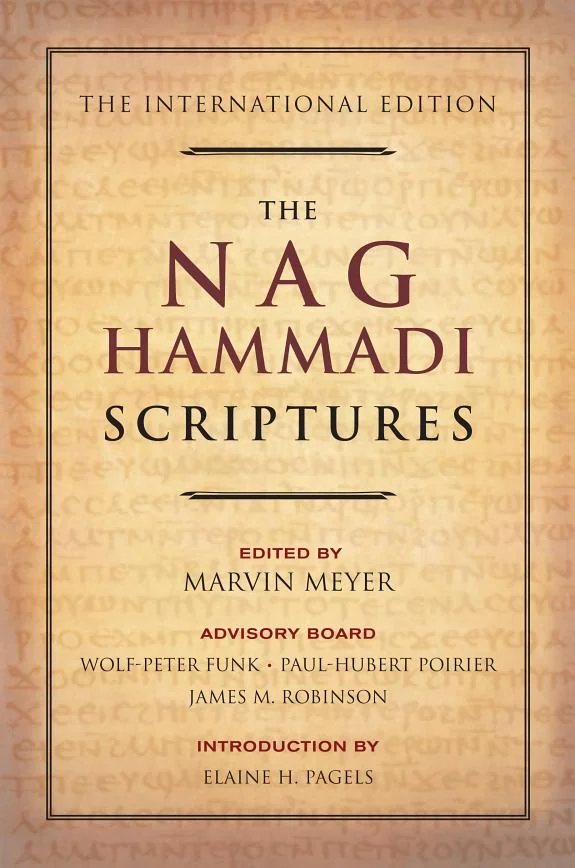
The Nag Hammadi scriptures
 74
74

The Nag Hammadi scriptures
The sheer breadth of the Nag Hammadi collection, meticulously translated and presented by Meyer and Funk, is its most striking feature. It’s not a single narrative but a mosaic of voices from a lost theological landscape. The Gospel of Thomas, with its cryptic sayings, remains a powerful draw, offering an alternative perspective on Jesus’ teachings that bypasses later dogmatic developments. However, the sheer volume and the often esoteric language can be daunting for the uninitiated. The lack of extensive introductory commentary for each individual text, beyond what is provided in the general introductions, means readers must often piece together the significance of each codex themselves. A passage like the depiction of Sophia's fall in the *Apocryphon of John* exemplifies the complex, mythic cosmology that defines much of this material. Ultimately, this is less a book to be read cover-to-cover and more a library to be consulted, offering unparalleled access to the heterodox currents of early religious thought.
📝 Description
74
### What It Is The Nag Hammadi Scriptures presents a collection of early Christian and Gnostic texts discovered in 1945 near the town of Nag Hammadi in Upper Egypt. These codices, written primarily in Coptic, offer a unique window into a diverse range of beliefs and practices that existed alongside, and often in opposition to, orthodox Christianity in the first few centuries CE. The collection includes gospels, apocalypses, wisdom texts, and treatises, many of which were considered heretical and subsequently suppressed by early Church fathers.
### Who It's For This compilation is essential for scholars of early Christianity, Gnosticism, and religious history. It is also crucial for practitioners and students of esoteric traditions seeking direct access to primary source material that has profoundly influenced Western esotericism. Anyone interested in alternative spiritualities, the historical Jesus outside the canonical Gospels, or the philosophical underpinnings of diverse religious movements will find significant value here.
### Historical Context Unearthed in 1945, the Nag Hammadi library provides a counterpoint to the New Testament canon. Its contents reveal a vibrant, often contentious, religious landscape in Roman Egypt. These texts were likely produced and preserved by ascetics in the Egyptian desert, possibly affiliated with the Pachomian monastic movement or other desert communities. The existence of these documents challenges the narrative of a singular, monolithic early Christian orthodoxy, highlighting the plurality of theological ideas present during the formative period of Christianity, a period that also saw the rise of Neoplatonism and other philosophical schools.
### Key Concepts The scriptures explore themes of divine knowledge (gnosis), the nature of the divine (often conceived as an ineffable, transcendent source beyond the material world), the role of a redeemer figure (often Jesus, but interpreted differently from the canonical Gospels), the flawed creator deity (the Demiurge), and the spiritual journey of the human soul. Concepts like the aeons, the pleroma, and the spark of divinity within humanity are central to many of these texts, offering a distinct cosmological and soteriological framework.
💡 Why Read This Book?
• Gain direct access to the sayings of Jesus as preserved in the Gospel of Thomas, offering a unique perspective on his teachings distinct from the canonical Gospels. • Understand the concept of the 'Demiurge' as presented in texts like the *Apocryphon of John*, a flawed creator god contrasted with the true, transcendent divine. • Explore the Gnostic myth of Sophia, detailing her descent and the subsequent creation of the material world, as found in various Nag Hammadi texts.
⭐ Reader Reviews
Honest opinions from readers who have explored this book.
❓ Frequently Asked Questions
When were the Nag Hammadi scriptures discovered?
The Nag Hammadi scriptures were discovered in December 1945 by local peasants near the town of Nag Hammadi in Upper Egypt. The find consisted of thirteen papyrus codices containing over fifty texts.
What is Gnosticism?
Gnosticism was a diverse set of religious movements in the early centuries CE characterized by the belief that salvation comes through secret knowledge (gnosis). Gnostics often viewed the material world as a flawed creation and sought liberation from it.
What is Coptic?
Coptic is the final stage of the Egyptian language, written using a modified Greek alphabet. The Nag Hammadi texts are significant because they are written in Coptic, providing invaluable linguistic and textual evidence.
Who was the Demiurge in Gnostic thought?
The Demiurge, prominent in many Nag Hammadi texts, is typically understood as a lesser, often ignorant or malevolent, creator deity responsible for the material universe, distinct from the ultimate, unknowable God.
Are the Nag Hammadi scriptures part of the Bible?
No, the Nag Hammadi scriptures are not part of the biblical canon. They were largely considered heretical by early orthodox Christianity and were excluded from the Bible.
What is the significance of the Gospel of Thomas?
The Gospel of Thomas is significant because it contains a collection of sayings attributed to Jesus, presented without narrative, offering insights into early Christian teachings that differ from the four canonical Gospels.
🔮 Key Themes & Symbolism
The Divine Spark and Gnosis
A central theme is the concept of a divine spark trapped within the human soul, alienated in the material world. Salvation is achieved not through faith or works in the conventional sense, but through direct, intuitive knowledge, or 'gnosis'. This knowledge reveals the true divine origin of the soul and the path to liberation from the cycles of reincarnation and the ignorance imposed by the material cosmos. Texts like the *Gospel of Truth* emphasize this inner awakening as the key to spiritual freedom.
The Gnostic Cosmology
Many Nag Hammadi texts present a complex cosmology that contrasts the perfect, transcendent God (often called the Monad or the Pleroma) with a flawed creator of the material world, the Demiurge. This dualistic worldview explains the presence of suffering and evil as inherent to the material realm, which is seen as an imperfect emanation or a mistake in the divine order. The role of figures like Sophia (Wisdom) is often pivotal in explaining the origin of this flawed creation.
Alternative Christology
The figure of Jesus Christ is interpreted in diverse ways, often differing significantly from orthodox Christian doctrine. In texts like the *Gospel of Thomas*, Jesus is primarily a revealer of gnosis, his teachings focusing on inner spiritual understanding rather than his sacrificial death. Other texts explore his divine nature, his post-resurrection appearances, and his role as a guide for the soul's ascent, emphasizing his function as a spiritual teacher and liberator.
The Nature of the Material World
The material world is generally depicted as a prison or an illusion, created by a lesser, ignorant deity (the Demiurge) rather than the supreme God. This perspective imbues the texts with a sense of urgency for spiritual escape. The physical body is often seen as a hindrance or a temporary vessel for the divine soul. This view contrasts sharply with the orthodox Christian emphasis on the goodness of creation and the incarnation of God in human flesh.
💬 Memorable Quotes
“Jesus said, 'Know what is in front of your face, and what is hidden from you will be revealed to you.'”
— This saying from the *Gospel of Thomas* encapsulates the Gnostic emphasis on direct, intuitive knowledge. It suggests that immediate perception and awareness are keys to unlocking deeper, hidden spiritual truths, rather than relying on external dogma or revelation.
“The world came into being through a mistake.”
— This paraphrased concept reflects the Gnostic view of the material universe as a flawed creation, often attributed to the Demiurge's ignorance or arrogance. It underscores the Gnostic belief that the material realm is not the ultimate reality and is inherently imperfect.
“And the light came into the darkness, and the darkness did not comprehend it.”
— This highlights the Gnostic theme of the divine light (representing gnosis or the true God) entering the material world (darkness, ignorance). The inability of the darkness to comprehend the light signifies the alienation of the spiritual from the material and the ignorance of those bound by the material realm.
“The kingdom of God is inside you.”
— A central idea found in the *Gospel of Thomas*, this points to the immanent nature of the divine. It suggests that spiritual realization and connection to God are not external pursuits but rather an internal discovery, accessible through self-awareness and inner gnosis.
“Sophia desired to bring forth something from herself alone, and her product was a creature of light.”
— This summarizes a key element of the Sophia myth found in texts like the *Apocryphon of John*. It describes the Gnostic creation narrative where the aeon Sophia, through an unintended act, brings forth a flawed creation, initiating the process that leads to the material world.
🌙 Esoteric Significance
Tradition
The Nag Hammadi scriptures are foundational to Gnosticism, a prominent esoteric tradition within early Christianity. They represent a departure from mainstream Christianity by emphasizing direct, experiential knowledge (gnosis) as the path to salvation, often positing a complex cosmology involving emanations from a transcendent God and a flawed creator of the material world. This tradition significantly influenced later Western esoteric movements, including Hermeticism and certain strands of Renaissance magic and Kabbalah, offering alternative cosmologies and soteriological frameworks.
Symbolism
Key symbols include the 'Divine Spark' (pneuma), representing the fragment of the divine trapped within the human soul, seeking liberation. The 'Demiurge' symbolizes the ignorance or malevolence of the creator of the material world, often depicted as a lion-faced serpent, contrasting with the true, unknowable God. 'Sophia' (Wisdom) is a pivotal figure whose descent and error initiate the creation of the flawed material realm, embodying both divine aspiration and the source of cosmic imperfection.
Modern Relevance
Contemporary esoteric practitioners, Jungian psychologists, and scholars of religion continue to draw heavily on the Nag Hammadi texts. Carl Jung's interest in Gnosticism profoundly influenced his analytical psychology, particularly his theories on archetypes and the collective unconscious. Modern Gnostic revival movements and esoteric orders frequently reference these scriptures for their cosmological models, spiritual practices, and philosophical insights into the nature of consciousness and the material world.
👥 Who Should Read This Book
• Students of Comparative Religion: Individuals seeking to understand the pluralistic religious landscape of the early Common Era and the development of Christian theology will find primary source material unavailable elsewhere. • Esoteric Practitioners: Those interested in Gnosticism, Hermeticism, or alternative spiritual paths will gain direct insight into the foundational texts that shaped these traditions. • Scholars of Ancient Philosophy: Researchers examining the intersection of Hellenistic philosophy, Egyptian religion, and early Christian thought will find invaluable data on diverse metaphysical systems.
📜 Historical Context
The discovery of the Nag Hammadi library in 1945 near Nag Hammadi, Egypt, provided an unprecedented look into the diversity of early religious thought, particularly Gnosticism, during the first few centuries CE. These Coptic texts offered primary source material that countered the dominant narrative of a unified early Church, as articulated by figures like Irenaeus, who wrote extensively against Gnostic teachings in the late 2nd century. The texts likely originated from monastic communities in the Egyptian desert, potentially as a reaction to or parallel development with the burgeoning monastic movement spurred by figures like Pachomius. This era (roughly 2nd-4th centuries CE) was a crucible of religious and philosophical ideas, with Neoplatonism, Mithraism, and various mystery cults competing for adherents alongside nascent forms of Christianity. The suppression of these texts by orthodox authorities underscores their perceived threat to the developing Christian establishment.
📔 Journal Prompts
The concept of the Demiurge and its implications for understanding the material world.
Reflections on the 'Divine Spark' and its presence within the human psyche.
Comparing the sayings of Jesus in the Gospel of Thomas with those in the canonical Gospels.
The role of Sophia in the Gnostic creation myths and its symbolic meaning.
Exploring the path to gnosis as described in the various Nag Hammadi texts.
🗂️ Glossary
Gnosis
Greek for 'knowledge.' In Gnosticism, it refers to intuitive, experiential, or revealed knowledge of the divine, considered essential for salvation and liberation from the material world.
Demiurge
A term for the creator of the material universe in Gnostic cosmology, typically depicted as a lesser, ignorant, or malevolent deity distinct from the supreme, transcendent God.
Sophia
Greek for 'Wisdom.' A key figure in Gnostic mythology, often depicted as an aeon whose desire or error leads to the creation of the material world and the entrapment of divine sparks within it.
Pleroma
Greek for 'fullness.' In Gnosticism, it refers to the totality of divine powers and emanations that constitute the realm of the supreme God, existing in perfection beyond the material world.
Aeon
In Gnostic cosmology, emanations or divine beings that exist in pairs within the Pleroma, representing various aspects of the supreme God before the creation of the material world.
Coptic
The final stage of the ancient Egyptian language, written using a modified Greek alphabet. The Nag Hammadi library is primarily preserved in Coptic translations.
Codex
An ancient manuscript book, consisting of sheets of papyrus, parchment, or paper folded into quires and bound together. The Nag Hammadi library consists of thirteen such codices.