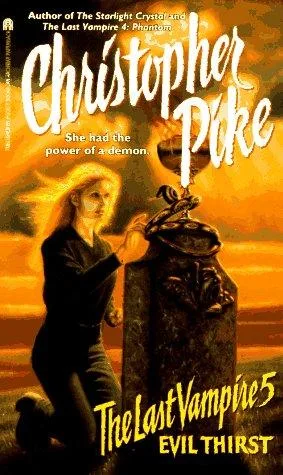
The Last Vampire 5. Evil Thirst
 83
83

The Last Vampire 5. Evil Thirst
Christopher Pike’s The Last Vampire 5: Evil Thirst offers a familiar, yet effective, continuation of his established vampire mythos. The strength of this installment lies in Pike’s consistent ability to inject relatable adolescent angst into supernatural scenarios. The narrative’s exploration of the protagonist’s ancient weariness juxtaposed with the immediate dramas of her younger companions creates a compelling dynamic. However, the plot occasionally leans into predictable tropes of the genre, with certain romantic entanglements feeling less organic than they might. A particularly effective sequence involves the protagonist confronting a moral dilemma regarding a mortal she has grown to care for, forcing her to reconcile her predatory instincts with burgeoning affection. Despite its occasional reliance on YA conventions, the book delivers a satisfying, if not entirely surprising, conclusion to its immediate arc. It remains a solid entry for series fans seeking continued supernatural intrigue.
📝 Description
83
### What It Is
The Last Vampire 5: Evil Thirst is a 1996 young adult supernatural thriller penned by Christopher Pike, continuing a series that often blends elements of horror, romance, and paranormal mystery. This installment focuses on the ongoing saga of a centuries-old vampire and the mortal characters entangled in her dangerous existence. The narrative typically explores themes of immortality, love across vast spans of time, and the moral compromises inherent in eternal life. Pike’s approach often grounds fantastical elements in relatable adolescent concerns, making the supernatural accessible to a younger audience.
### Who It's For
This book is primarily aimed at readers who have followed the series from its inception and are invested in the character arcs established in previous volumes. It will appeal to fans of supernatural fiction, particularly those who enjoy vampire lore presented with a contemporary, accessible style. Readers interested in narratives that explore the emotional and psychological toll of long life, as well as the complexities of forbidden or unusual relationships, will find material here. It’s suitable for young adults and older teens seeking genre fiction with a touch of darker fantasy.
### Historical Context
Published in 1996, The Last Vampire 5 emerged during a resurgence of interest in vampire fiction, partly fueled by Anne Rice's popular Vampire Chronicles, which had been exploring complex vampire identities since the 1970s. Pike's work, however, occupied a different niche, focusing on a more direct YA audience. The late 1990s saw a boom in teen paranormal romance and horror, a trend Pike helped pioneer. Unlike the more literary or gothic approaches of some contemporaries, Pike’s novels were characterized by straightforward plotting and relatable, if supernatural, protagonists, often dealing with issues of morality and consequence in a way that distinguished them from the more adult-oriented horror of the era.
### Key Concepts
Central to Evil Thirst is the concept of vampirism as both a curse and a form of eternal existence, often intertwined with themes of predatory desire and the struggle for control. The narrative explores the psychological burden of immortality, where the protagonist grapples with centuries of accumulated memories, lost loves, and the inherent violence of her nature. Relationships, particularly those between vampires and mortals, are examined through the lens of power dynamics and existential longing. The book also touches upon the idea of destiny versus free will, as characters attempt to navigate predetermined paths or break free from their supernatural constraints, questioning whether true connection is possible across the chasm of mortality.
💡 Why Read This Book?
• Learn how Christopher Pike presents the eternal struggle between predatory instinct and emotional connection, as seen in the protagonist's internal conflicts. • Understand the specific challenges of maintaining relationships across vast temporal distances, a concept central to the vampire-mortal dynamic explored from the 1996 publication. • Discover how Pike grounds supernatural horror in the relatable emotional landscape of young adulthood, a hallmark of his writing style since the series began.
⭐ Reader Reviews
Honest opinions from readers who have explored this book.
❓ Frequently Asked Questions
What is the publication year of The Last Vampire 5: Evil Thirst?
The Last Vampire 5: Evil Thirst was first published in 1996, placing it within a significant period for young adult supernatural fiction.
Who is the author of The Last Vampire series?
The author of The Last Vampire series, including Evil Thirst, is Christopher Pike, known for his popular young adult thrillers.
What are the main themes in The Last Vampire 5?
Main themes include immortality, the nature of vampirism as both a gift and curse, forbidden love, and the psychological toll of long life.
Is this book suitable for younger readers?
Yes, it is generally suitable for young adults and older teens, as Christopher Pike's writing style is accessible and focuses on relatable character issues within a supernatural framework.
Does The Last Vampire 5: Evil Thirst require reading the previous books?
While it can be enjoyed standalone, reading the previous installments in The Last Vampire series will provide a deeper understanding of the characters and ongoing plotlines.
What makes Christopher Pike's vampires distinct?
Pike's vampires often grapple with moral complexities and emotional turmoil, blending ancient power with contemporary adolescent concerns, distinguishing them from more traditional gothic portrayals.
🔮 Key Themes & Symbolism
The Weight of Immortality
Evil Thirst delves into the psychological burden of an unending existence. The protagonist, a centuries-old vampire, carries the weight of countless memories, lost loves, and the inherent violence of her nature. This theme contrasts the allure of eternal life with its profound isolation and the moral compromises required to sustain it. Pike explores how longevity can lead to detachment and a struggle to form genuine connections, making immortality a profound curse as much as a supernatural gift.
Predation and Desire
The narrative examines vampirism through the lens of primal urges and control. The 'evil thirst' is not merely physical but also represents a deeper, existential craving that drives the vampire's actions. This theme interrogates the boundaries between predator and protector, desire and destruction. Pike uses these dynamics to explore the dark side of attraction and the often-unseen power struggles inherent in relationships, particularly between the immortal and the mortal.
Mortal-Human Connection
Despite the supernatural elements, the book highlights the significance of human connection. The vampire's entanglement with mortals often forces her to confront her own humanity and the choices she makes. This theme explores whether love and empathy can transcend the vast chasm of mortality and immortality. Pike uses these relationships to question the nature of identity and belonging, suggesting that even an eternal being can yearn for genuine companionship and understanding.
Destiny vs. Free Will
Characters in Evil Thirst often grapple with predetermined paths, whether bound by supernatural lineage or past events. The narrative probes the extent to which individuals can escape their inherent nature or chosen fate. This theme questions whether the vampire is inherently a monster or a victim of circumstance, and if her actions are dictated by her vampiric state or by conscious choice. It explores the struggle for agency in a world governed by ancient rules and prophecies.
💬 Memorable Quotes
“She had lived so long, seen empires rise and fall, yet a simple mortal's smile could still disarm her.”
— This interpretation highlights the core conflict of an ancient vampire: her vast experience versus her vulnerability to simple human connection. It speaks to the enduring power of genuine emotion, even for an immortal being who has witnessed immense historical change.
“The thirst was a constant companion, a whisper in her blood that demanded to be heard.”
— This paraphrased concept captures the pervasive and inescapable nature of the vampire's predatory drive. It emphasizes that the 'thirst' is not just a physical need but an intrinsic part of her being, always present and influencing her existence.
“He saw her not as a monster, but as someone lost in time, seeking solace.”
— This highlights a key character dynamic where a mortal perceives the vampire's true inner state beyond her supernatural identity. It suggests the possibility of empathy and understanding bridging the gap between mortal and immortal beings.
“Centuries of existence had taught her patience, but also a profound loneliness.”
— This interpretation underscores the dual nature of immortality as depicted in the book. While granting immense perspective and control, it simultaneously inflicts a deep, isolating solitude that shapes the character's emotional landscape.
“Was love a choice, or was it simply another instinct she could not control?”
— This question probes the essence of love within the context of supernatural beings. It challenges whether affection is a deliberate act or an uncontrollable force, mirroring the vampire's struggle with her own predatory instincts.
🌙 Esoteric Significance
Tradition
While not explicitly tied to a single esoteric tradition like Hermeticism or Gnosticism, Pike's work taps into broader archetypes found in occult literature concerning eternal life and the vampiric principle. The concept of an ancient, powerful being entangled with humanity echoes Gnostic ideas of divine sparks trapped in the material world or Neoplatonic discussions of the soul's journey. The vampiric entity can be seen as a metaphor for primal, consuming forces that exist both within and outside the human psyche, a theme explored in various esoteric psychologies.
Symbolism
The vampire herself serves as a potent symbol of immortality, embodying both the allure of eternal existence and its inherent corruption or isolation. Blood, a central motif, symbolizes life force, vitality, and the ultimate connection or violation between beings. The contrast between the vampire's ancient, often dark, existence and the fleeting, vibrant lives of mortals symbolizes the tension between the eternal and the temporal, spirit and flesh, themes recurrent in many mystical philosophies.
Modern Relevance
Pike's exploration of immortal beings grappling with modern dilemmas and emotional complexities resonates with contemporary paranormal romance and urban fantasy. Thinkers and writers in these genres continue to explore themes of eternal love, the moral ambiguities of power, and the psychological impact of long life. Modern practitioners of esoteric psychology might also find value in Pike's portrayal of internal conflicts and the struggle to integrate primal urges with conscious will, viewing the vampire as a metaphor for shadow aspects of the self.
👥 Who Should Read This Book
• Young adult readers seeking supernatural thrillers with romantic elements, particularly those who enjoy vampire lore presented in an accessible, contemporary style. • Fans of Christopher Pike's previous works who wish to continue the narrative of The Last Vampire series and explore further character development. • Readers interested in exploring themes of immortality, forbidden love, and the moral consequences of eternal life through a YA lens.
📜 Historical Context
Published in 1996, Christopher Pike's The Last Vampire 5: Evil Thirst arrived during a vibrant period for young adult fiction, particularly in the supernatural and horror genres. This era saw a marked increase in vampire-themed literature aimed at younger audiences, a trend Pike himself had significantly influenced since the 1980s. His work often stood apart from the more gothic or literary explorations of vampirism found in authors like Anne Rice, whose Vampire Chronicles had already established a complex, adult-oriented mythology by the mid-90s. Pike's approach was characterized by accessible prose, relatable teen protagonists (even when they were ancient vampires), and a focus on moral dilemmas and romantic entanglements. The late 1990s were also a time when paranormal romance began to gain significant traction, laying groundwork for phenomena like the Twilight Saga in the following decade. Evil Thirst contributed to this burgeoning market, offering a blend of suspense, romance, and classic vampire tropes tailored for a contemporary YA readership.
📔 Journal Prompts
The vampire's internal conflict between her ancient nature and her growing affections.
The symbolic meaning of the 'evil thirst' in relation to personal desires.
Reflections on the human connections that anchor the immortal protagonist.
The challenges of maintaining identity across vast spans of time.
How the narrative explores the concept of destiny versus personal choice for supernatural beings.
🗂️ Glossary
Vampirism
In Pike's work, vampirism is depicted as an eternal state of being, often involving a need for blood or life force, and granting supernatural abilities alongside profound psychological and moral challenges.
Immortality
The condition of living forever. In Evil Thirst, it is presented not just as endless life but as a state fraught with loneliness, loss, and the burden of accumulated history.
The Thirst
The primal, often uncontrollable, urge or need that defines a vampire's existence. In this context, it represents both a physical craving and a deeper, existential hunger.
Mortal
A being destined to die; a human. The relationship between mortals and immortals is a central theme, exploring themes of love, vulnerability, and the passage of time.
Supernatural Thriller
A genre that combines elements of horror and suspense with supernatural or paranormal phenomena, often involving creatures or powers beyond the natural world.
YA Fiction
Young Adult fiction, a category typically aimed at readers aged 12-18, often focusing on themes of identity, relationships, and coming-of-age, even within fantastical settings.
Archetype
A recurring symbol or motif in literature and mythology that represents universal patterns of human nature. The vampire is a powerful archetype in fiction.