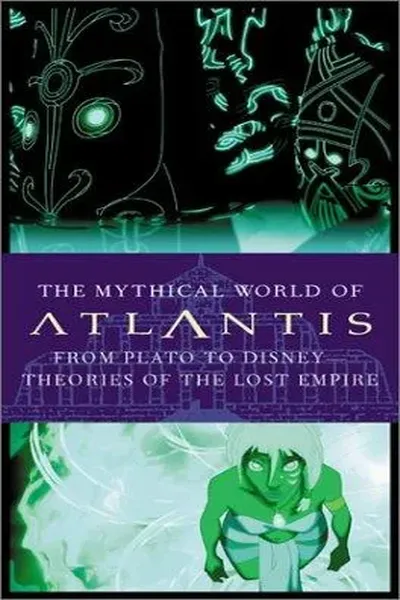
The journal of Milo Thatch

 80
80

The journal of Milo Thatch
Jeff Kurtti's "The Journal of Milo Thatch" attempts to lend a scholarly yet personal veneer to the mythos surrounding the linguist of Atlantis. The strength of the work lies in its detailed imagining of Thatch's research, presenting his quest not as mere adventure but as a rigorous, albeit fictional, academic pursuit. The book successfully conjures the atmosphere of dusty archives and arcane decipherments. However, a notable limitation is the inherent difficulty in verifying the 'source material' itself; the journal reads as a constructed narrative rather than a found document. A particularly compelling element is the imagined decipherment of the "Shepherd's Journal," which hints at the practical application of Thatch's linguistic skills in unlocking Atlantean secrets. The work ultimately offers a compelling, if speculative, character study for dedicated fans of the Atlantis narrative. It serves as a fictionalized footnote to a legend.
📝 Description
80
### What It Is The Journal of Milo Thatch presents a fictionalized account of the famed linguist and cartographer's personal writings, ostensibly compiled by Jeff Kurtti. Published in 2001, this work purports to offer a window into Thatch's inner thoughts, research processes, and personal reflections, particularly concerning his obsessive pursuit of Atlantis and its legendary secrets. It functions as a narrative framework, imbuing the character's known adventures with a more intimate, scholarly, and perhaps even mystical dimension.
### Who It's For This journal appeals to enthusiasts of Atlantis lore, Atlantean archaeology, and speculative history. Readers interested in the character of Milo Thatch beyond his animated film appearances will find value here. It is also suited for those who appreciate fictionalized historical documents and narratives that blend exploration with a sense of hidden knowledge, particularly those drawn to the romanticized ideals of discovery and lost civilizations.
### Historical Context The early 21st century saw a continued popular fascination with lost civilizations and pseudoscientific exploration, a trend The Journal of Milo Thatch taps into. Following the popularization of Atlantis myths by figures like Ignatius Donnelly in the late 19th century, and its subsequent adoption by occult and esoteric circles, Thatch's character emerged as a modern embodiment of the dedicated seeker. The book's publication in 2001 aligns with a period where digital media was beginning to reshape how historical and speculative content was consumed, yet this work remained rooted in the tangible artifact of a personal journal.
### Key Concepts The central concepts revolve around the pursuit of Atlantis, the interpretation of ancient texts and maps, and the personal cost of such singular dedication. Thatch's journal explores the idea of knowledge as a sacred trust, the potential for ancient civilizations to hold keys to forgotten technologies or spiritual truths, and the psychological landscape of an individual driven by a grand, potentially mythical, quest. It also touches upon the intersection of linguistics, archaeology, and esoteric belief systems.
💡 Why Read This Book?
• Gain insight into Milo Thatch's fictionalized research methods for Atlantis, including his engagement with specific ancient cartographical symbols mentioned in the text, offering a unique perspective on the legend. • Experience the personal toll and intellectual fervor of a dedicated seeker, as depicted through the journal entries, providing a tangible sense of the character's drive beyond the animated films. • Understand the blend of speculative archaeology and linguistic decipherment Thatch employs, illustrated by the imagined interpretation of the "Shepherd's Journal," which reveals how such pursuits might unlock hidden histories.
⭐ Reader Reviews
Honest opinions from readers who have explored this book.
❓ Frequently Asked Questions
Is "The Journal of Milo Thatch" based on real historical documents?
No, "The Journal of Milo Thatch" is a fictional work created by Jeff Kurtti, first published in 2001. It imagines the personal writings of the character Milo Thatch, a linguist and explorer known from popular media, as he pursues the legendary lost continent of Atlantis.
What is the primary focus of Milo Thatch's research in this journal?
The journal's primary focus is Milo Thatch's obsessive quest to find Atlantis. It details his research into ancient texts, maps, and linguistic clues he believes will lead him to the lost civilization.
Does the journal mention specific Atlantean artifacts or locations?
While the journal is fictional, it elaborates on Thatch's theoretical framework for locating Atlantis, referencing concepts and potential artifacts that serve his narrative quest. Specific locations are implied through his decipherment of ancient cartography.
Who is Jeff Kurtti, the author of this journal?
Jeff Kurtti is an author and historian known for his work on Disney animation and film history. "The Journal of Milo Thatch" is an example of his engagement with fictional narratives and characters, expanding their lore.
What is the 'Shepherd's Journal' mentioned in relation to Milo Thatch?
The 'Shepherd's Journal' is a fictional document within the narrative of Milo Thatch's quest. Kurtti uses it as a plot device, portraying Thatch as deciphering its cryptic contents to find clues leading to Atlantis.
Is this book related to the Disney movie 'Atlantis: The Lost Empire'?
Yes, Milo Thatch is the protagonist of the 2001 Disney animated film 'Atlantis: The Lost Empire.' This journal, also published in 2001, expands upon the character's background and research in a fictionalized personal account.
🔮 Key Themes & Symbolism
The Obsessive Quest
The journal chronicles Milo Thatch's singular dedication to finding Atlantis, portraying it not merely as an academic pursuit but as an all-consuming passion. It delves into the psychological landscape of an individual driven by a monumental, perhaps mythical, objective. This theme explores the personal sacrifices and the intellectual rigor required when one commits entirely to uncovering a lost world, framing Thatch's journey as a deep dive into esoteric cartography and forgotten linguistics.
Deciphering Ancient Secrets
A core element is the meticulous, fictionalized process of deciphering ancient texts and maps that Thatch believes hold the key to Atlantis. The work highlights the intersection of linguistics, archaeology, and speculative interpretation. It presents Thatch's engagement with symbols and forgotten languages as a method of unlocking profound historical truths, suggesting that lost civilizations communicate through coded messages accessible only to the dedicated scholar.
Knowledge and Its Guardians
The journal implicitly explores the idea of knowledge as a guarded treasure. Thatch's quest suggests that the secrets of Atlantis were deliberately hidden or lost, and their rediscovery requires not just intellect but a profound respect for the past. This theme touches upon the responsibility that comes with uncovering such powerful information, and the potential dangers if it falls into the wrong hands, aligning with common esoteric narratives of hidden wisdom.
The Romantic Ideal of Discovery
This work taps into the romantic ideal of the explorer venturing into the unknown, driven by curiosity and the allure of the undiscovered. Thatch embodies the figure of the scholar-adventurer, whose pursuit of Atlantis represents the ultimate act of discovery. The journal frames this quest within a narrative that appeals to a desire for wonder and the belief that profound mysteries of history and civilization still await revelation.
💬 Memorable Quotes
“The ink fades, but the map endures.”
— This aphorism suggests that while physical records may degrade over time, the underlying knowledge or geographical truths they represent possess a more permanent quality, waiting to be rediscovered.
“Every glyph a whisper from a drowned age.”
— This paraphrased concept conveys the idea that ancient inscriptions and symbols are not mere decorations but are direct, albeit faint, communications from lost civilizations, holding vital clues.
“To seek Atlantis is to seek the origin.”
— This captures the notion that the pursuit of Atlantis is not just about finding a physical place, but about understanding humanity's most ancient roots and the foundational principles of civilization.
“The greatest barrier is not distance, but belief.”
— This highlights the psychological and societal resistance to extraordinary claims, suggesting that overcoming skepticism and doubt is a more significant challenge than the physical act of exploration.
“Cartography is the language of the world's memory.”
— This conceptualization elevates maps beyond simple representations of space, presenting them as mnemonic devices that encode the history and collective memory of civilizations.
🌙 Esoteric Significance
Tradition
While not directly aligning with a single established esoteric tradition like Hermeticism or Gnosticism, the work draws from the broader currents of esoteric lore that have long embraced the Atlantis myth. It echoes Theosophical ideas about ancient, advanced civilizations and the possibility of recovering their lost wisdom. The journal's focus on deciphering ancient symbols and texts also resonates with Kabbalistic and Hermetic traditions that view language and symbols as keys to hidden realities.
Symbolism
Key symbols likely explored include ancient maps, which represent not just geography but hidden knowledge and pathways to the past; glyphs and unknown scripts, symbolizing lost languages and the secrets they contain; and the concept of the 'Heart Stone' or similar artifacts, often depicted in Atlantis lore as sources of power or concentrated wisdom, representing the core essence of the lost civilization.
Modern Relevance
The enduring appeal of Atlantis, as channeled through works like this fictional journal, continues to influence contemporary speculative fiction and alternative history communities. Modern practitioners of esotericism, particularly those interested in ancient mysteries and lost civilizations, may find inspiration in Thatch's methodical yet passionate approach. The work's blend of scholarly pursuit and mythic quest resonates with modern searches for meaning and hidden truths beyond conventional historical narratives.
👥 Who Should Read This Book
• Fans of the Atlantis legend seeking a deeper, fictionalized dive into the character of Milo Thatch and his personal research methods. • Readers interested in speculative archaeology and fictionalized historical accounts that blend academic rigor with mythic exploration. • Enthusiasts of adventure narratives that focus on the intellectual pursuit of lost knowledge and the romantic ideal of discovery.
📜 Historical Context
Published in 2001, coinciding with the animated film's release, "The Journal of Milo Thatch" emerged during a period of sustained popular interest in Atlantis, a mythos significantly shaped by Ignatius Donnelly's 1882 work "Atlantis: The Antediluvian World." Donnelly's theories, which posited Atlantis as a literal historical place and the source of global myths, paved the way for its adoption by esoteric and New Age circles. While the book itself is fictional, it taps into this enduring fascination, presenting Milo Thatch as a modern embodiment of the dedicated Atlantis seeker. The early 2000s saw a burgeoning online community discussing esoteric topics, making this fictional journal a digital-age artifact of an ancient legend. Unlike purely academic explorations, this work embraced the romantic, speculative, and quasi-mystical dimensions of the Atlantis narrative, aligning with contemporary popular culture's appetite for lost civilizations and hidden histories.
📔 Journal Prompts
The decipherment of the Shepherd's Journal and its implications for locating Atlantis.
Reflect on the personal cost of a singular, all-consuming quest like Milo Thatch's.
Consider the symbolic meaning of ancient maps as presented in the journal.
What does the pursuit of Atlantis represent beyond a geographical search?
Analyze the tension between empirical evidence and esoteric belief in Thatch's research.
🗂️ Glossary
Atlantis
A legendary island or continent, first mentioned by the ancient Greek philosopher Plato, said to have been a powerful naval power that sank into the ocean in a single day and night of misfortune.
Cartography
The science or practice of drawing maps. In the context of the journal, it refers to the study and interpretation of ancient maps as sources of hidden information.
Linguistics
The scientific study of language. Milo Thatch is depicted as an expert in this field, using his skills to decipher ancient scripts related to Atlantis.
Glyph
A hieroglyphic character or symbol; a pictographic symbol. Used in the journal to represent the written language of ancient or lost civilizations.
Shepherd's Journal
A fictional document within the narrative that Milo Thatch is depicted as deciphering, containing clues to the location or nature of Atlantis.
Esoteric
Intended for or likely to be understood by only a small number of people with a specialized knowledge or interest. Pertaining to hidden or secret knowledge.
Antediluvian
Of or relating to the period before the biblical Flood. Often associated with ancient, pre-Flood civilizations like Atlantis.